End-to-end battery recycling and second-life application solutions that recover 95%+ of critical materials while giving retired batteries a new purpose. VoltCrave Power is building the circular economy for energy storage.
The industry's most comprehensive recycling ecosystem — closing the loop on every battery chemistry with industry-leading recovery rates and certified second-life pathways.




Reduce your carbon footprint by up to 75% compared to virgin material mining. Prevent hazardous battery waste from reaching landfills.
Recover up to 98% of critical materials including lithium, cobalt, nickel, and manganese through our advanced hydrometallurgical processes.
Stay ahead of EU Battery Regulation 2027 mandates and global EPR requirements with fully documented, certified recycling chains.
Turn end-of-life batteries into a revenue stream. Recovered materials and second-life applications deliver measurable ROI for your business.
A proven six-stage industrial process that transforms end-of-life batteries into high-purity raw materials ready for new battery production.
UN 38.3 compliant logistics with fire-resistant containers and real-time GPS tracking. Safe collection from OEMs, fleet operators, and collection points worldwide.
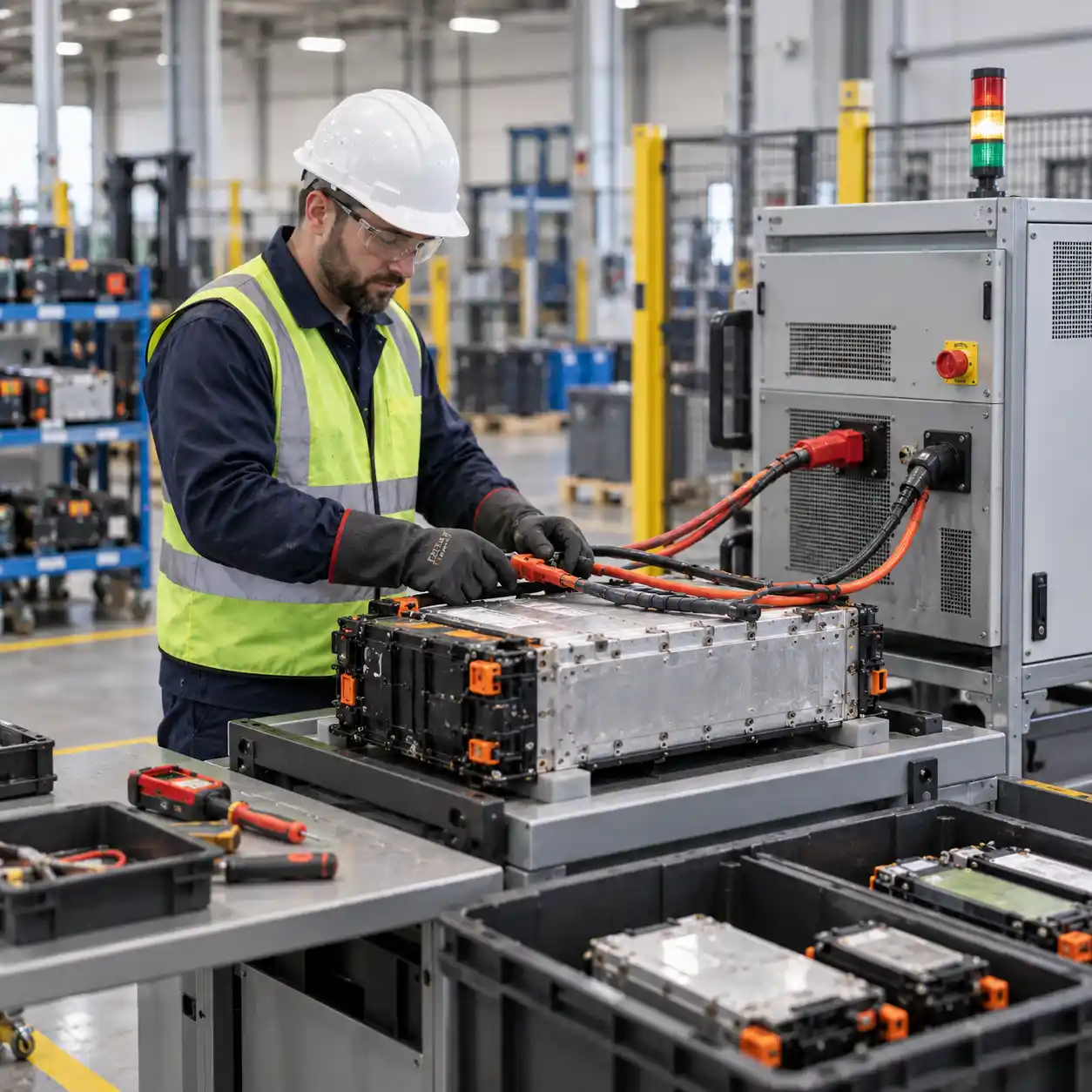
Complete electrical discharge to eliminate residual energy. Comprehensive diagnostic testing to classify battery state and determine optimal processing route.
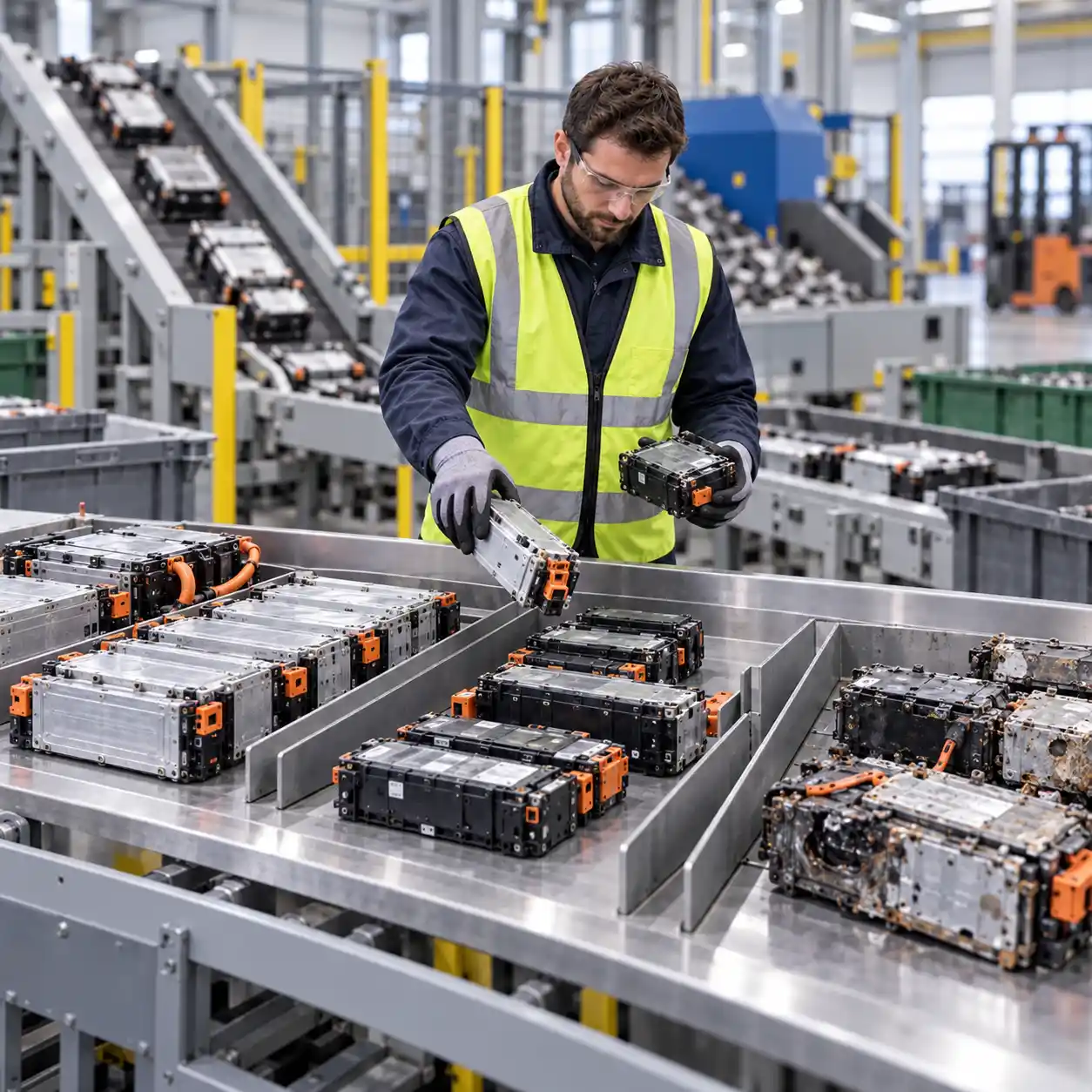
Precision module and cell separation using automated disassembly systems. Housing, wiring, and electronics removed for separate recycling streams.
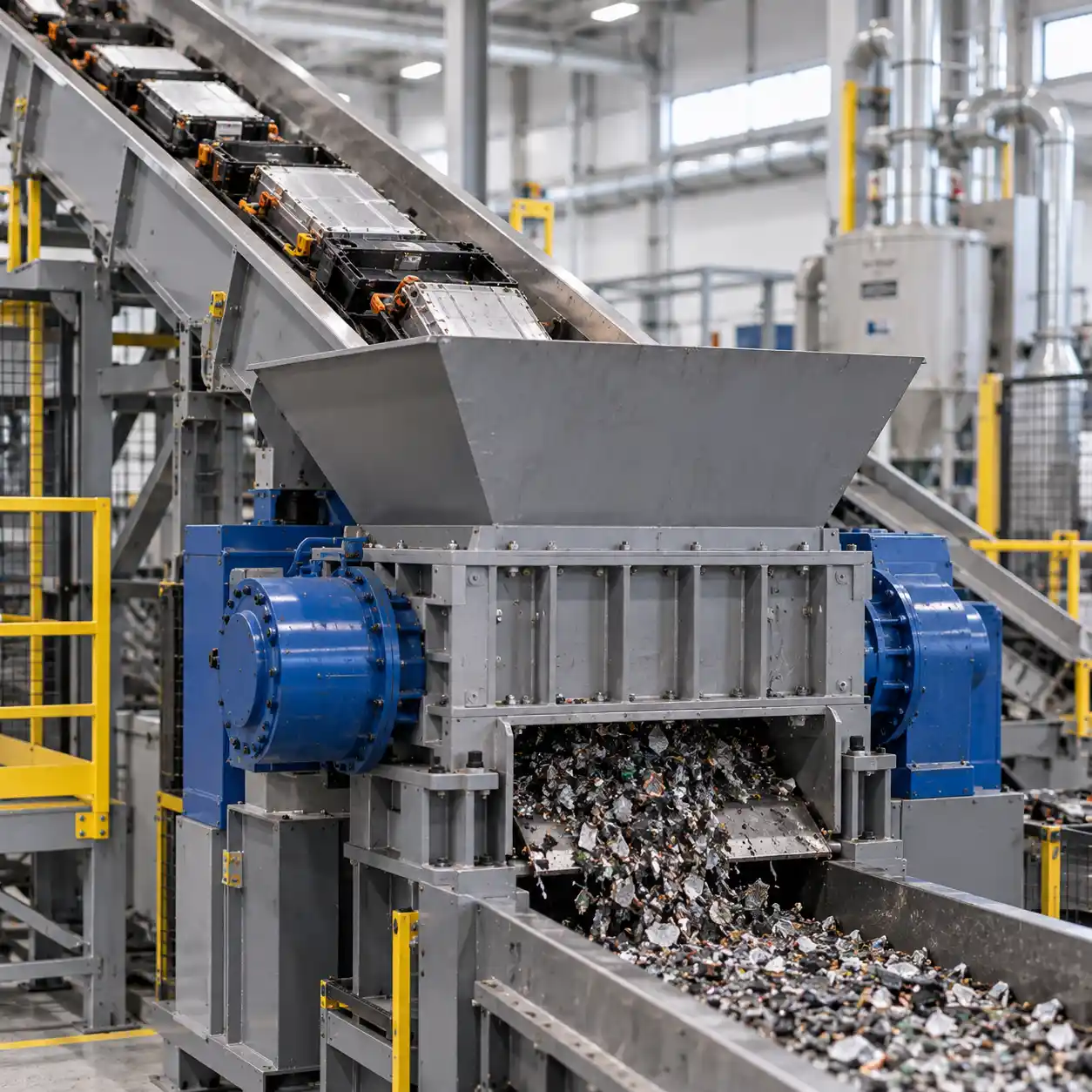
Inert atmosphere shredding producing high-purity black mass. Advanced mechanical separation isolates cathode and anode materials from current collectors.
Selective leaching and solvent extraction recovering lithium, cobalt, nickel, and manganese at battery-grade purity. Closed-loop water system minimizes environmental impact.
Final refinement to battery-grade specifications. Recovered materials feed directly into new cell production — completing the circular battery economy.
End-to-end logistics engineered for hazardous battery materials — fully compliant, fully tracked, fully safe.
Convenient collection at any of our partner facilities worldwide. Safe, certified drop boxes designed specifically for end-of-life lithium batteries.
500+ Collection PointsDedicated fleet service for OEMs, fleet operators, and industrial sites with large battery volumes. Scheduled or on-demand collection with trained handlers.
Fleet Service for Large VolumesSeamless OEM take-back program integration. White-label collection solutions that plug directly into your existing reverse logistics supply chain.
OEM Take-Back ProgramsSafety Features
Fire-Resistant Containers
A60-rated steel containers with thermal insulation designed to contain thermal runaway events during transport.
Real-Time GPS Tracking
Live geolocation monitoring with geofence alerts. Complete chain-of-custody visibility from pickup to processing facility.
Certified Handlers
All personnel are ADR-certified dangerous goods safety advisors with specialized lithium battery handling training.
Thermal Monitoring
Continuous temperature and gas sensors inside transport containers with automated alerting to our 24/7 operations center.
Our advanced hydrometallurgical process extracts high-purity battery metals with industry-leading recovery rates — turning waste into a strategic resource stream.
Technology Comparison
We employ hydrometallurgical processing as our primary recovery method — delivering higher purity, lower emissions, and broader material recovery compared to traditional pyrometallurgical smelting.
| Parameter | Hydrometallurgical (Our Process) | Pyrometallurgical (Smelting) |
|---|---|---|
| Lithium Recovery | 95%+ Full recovery achievable | 0-5% Lost in slag |
| Energy Consumption | Low Aqueous chemistry | Very High 1400-1600°C furnaces |
| CO2 Emissions | 60-75% lower vs virgin mining | Higher Fossil fuel dependent |
| Output Purity | Battery-grade Direct precursor synthesis | Alloy mix Requires further refining |
| Graphite Recovery | 90%+ Preserved for reuse | 0% Burned as fuel |
| Water Usage | Closed-loop 95% water recycled | N/A Dry process |
Environmental Benefit vs Virgin Mining
When an EV battery no longer meets automotive performance thresholds, it still retains 70-80% capacity — perfect for stationary energy storage applications.
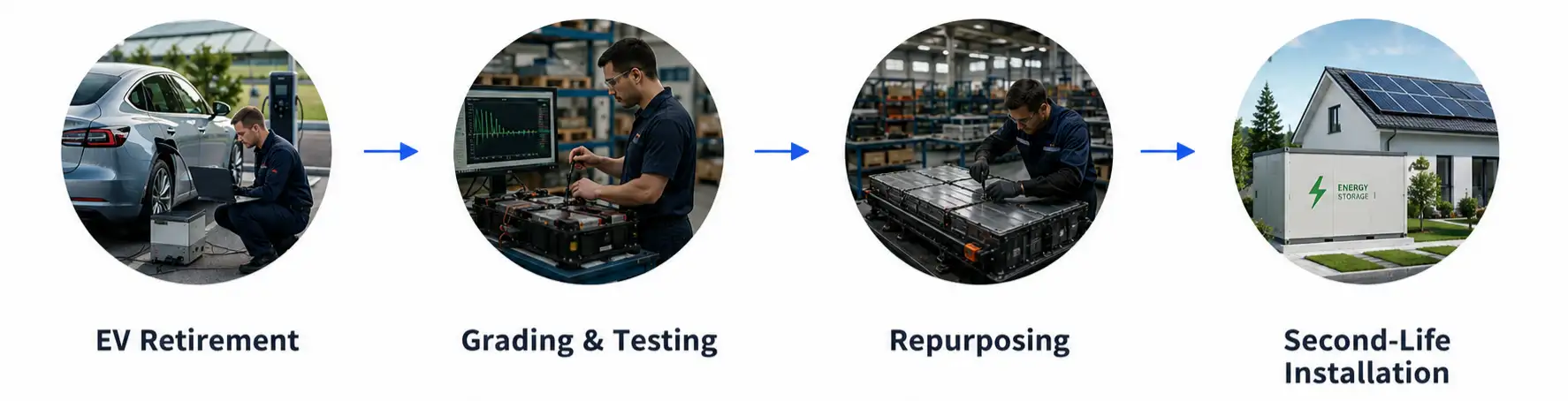
Home Energy Storage
Repurposed battery packs provide affordable home backup and solar self-consumption for residential customers.
Commercial & Industrial
Reduce demand charges with second-life battery storage systems sized for commercial and industrial facilities.
Telecom Infrastructure
Reliable backup power for cell towers and communication infrastructure using certified second-life battery modules.
EV Charging Stations
Buffer storage for fast-charging stations, absorbing grid peaks and enabling off-peak charging economics.
Every ton of battery material we recycle displaces the need for virgin mining — delivering quantifiable reductions in carbon, water, and land impact.
CO2 Reduction
Compared to virgin mining and processing of battery metals. Verified by independent lifecycle analysis.
Water Savings
Compared to lithium brine extraction and conventional mining. Closed-loop water system with 95% recycling.
Less Land Use
Industrial recycling footprint versus open-pit and brine mining operations. No tailings or overburden.
Less Energy
Energy required versus primary extraction. Hydrometallurgy at ambient pressure, far below smelting temperatures.
The EU Battery Regulation (2023/1542) mandates that by 2027, all industrial and EV batteries placed on the EU market must have documented recycled content declarations, carbon footprint declarations, and due diligence policies for raw materials. VoltCrave's recycling ecosystem positions your business for full compliance — delivering auditable chain-of-custody documentation, verified recovery rates, and digital battery passports that meet the regulation's traceability requirements.
ESG Reporting Benefits
Documented CO2 savings for your value chain emissions reporting — verifiable data for CDP, SBTi, and GRI frameworks.
Complete chain-of-custody records and material flow certificates for every batch processed through our facilities.
Strengthen your EcoVadis, MSCI, and Sustainalytics ratings with certified circular economy partnership data.
Clear answers to the most common questions about battery recycling, second-life applications, and regulatory compliance.
We recycle all major lithium-ion battery chemistries including LCO, LFP, NMC, NCA, and LMO, as well as nickel-metal hydride (NiMH) batteries. This covers EV traction batteries, e-bike and e-scooter packs, consumer electronics cells, and industrial/stationary storage modules. Our hydrometallurgical process is chemistry-agnostic, meaning we can recover valuable materials regardless of the cathode composition.
Black mass is the fine powder produced by shredding and mechanically separating battery cells. It contains the cathode and anode active materials — lithium, cobalt, nickel, manganese, and graphite — in a concentrated form. High-purity black mass is the critical intermediate product in battery recycling: the cleaner the black mass, the more efficient and economical the downstream hydrometallurgical recovery. Our process achieves consistent black mass purity exceeding 98%.
Safety is engineered into every stage. Batteries are transported in A60 fire-rated containers with thermal monitoring. Processing begins with deep discharge to eliminate residual energy. Shredding occurs under inert nitrogen atmosphere to prevent thermal events. Our facilities are ISO 45001 certified, staffed by ADR-trained hazardous materials specialists, and equipped with multi-layered fire suppression systems. We maintain a zero-incident safety record across all operations.
Second-life batteries are EV battery packs or modules that have fallen below automotive performance thresholds (typically 70-80% original capacity) but still have significant useful life for less demanding stationary applications. Every second-life unit we produce undergoes rigorous grading, capacity testing, internal resistance screening, and safety diagnostics. All packs are certified to IEC 62619, UL 1973, and UN 38.3 standards, and come with a full warranty. They are as safe as new stationary storage when properly tested and managed.
The EU Battery Regulation (2023/1542) introduces mandatory requirements phased in through 2027: carbon footprint declarations, recycled content minimums (16% cobalt, 6% lithium, 6% nickel by 2031), due diligence for raw materials, and digital battery passports with QR-code traceability. Businesses placing batteries on the EU market must demonstrate compliance across the entire value chain. Our recycling services provide the auditable documentation, recovery certificates, and passport data you need to meet these obligations.
Recycling costs depend on battery chemistry, volume, condition, and logistics requirements. However, high-value chemistries (NMC, NCA with significant cobalt and nickel content) often generate a net-positive return — the recovered materials have tangible market value. LFP batteries have lower contained material value but our efficient process keeps costs competitive. We provide transparent per-kilogram pricing with no hidden fees. Contact us for a volume-based quote tailored to your specific battery stream.
Yes. Our hydrometallurgical process recovers materials from all commercial lithium-ion chemistries — LCO, LFP, NMC, NCA, LMO — as well as NiMH and lead-acid batteries (through separate dedicated lines). While recovery rates and the economic value of recovered materials vary by chemistry, every battery type we process achieves landfill diversion. Even LFP, which contains no cobalt or nickel, yields recoverable lithium, copper, aluminum, and graphite. No battery we receive goes to landfill.
Getting started is straightforward. Contact our team for an initial consultation — we will assess your battery volumes, chemistries, locations, and compliance requirements. We then design a tailored collection and recycling program, including container provision, logistics scheduling, documentation workflows, and reporting cadence. Most programs are operational within 4-6 weeks of agreement. We handle all regulatory paperwork, transport permits, and recycling certificates so your team can focus on your core business.
Our team of battery recycling specialists is ready to help with your specific requirements.
Get in Touch →