Energy Storage Solutions

Powering a Sustainable Future with Advanced Energy Storage

Industry-leading battery energy storage systems engineered for grid-scale, commercial, and residential applications. From cell to system, VoltCrave Power delivers safe, intelligent, and scalable energy storage solutions trusted across 50+ countries.

15 GWh+Global Deployments
99.3%System Efficiency
50+Countries Served

Engineering Excellence in Energy Storage

As a vertically integrated manufacturer, we control every stage of the value chain — from lithium-ion cell production to fully integrated energy storage systems. This end-to-end ownership delivers unmatched quality, reliability, and cost efficiency for our partners worldwide.

🏭

Vertical Integration

Full control from cell manufacturing to system assembly. Every component is engineered and tested under one roof, ensuring seamless compatibility and traceability.

8+ GW
Annual Production Capacity
🔋

LFP Core Technology

Lithium Iron Phosphate chemistry delivers superior thermal stability, longer cycle life, and inherent safety without cobalt supply chain concerns.

6,000+
Cycle Life at 80% DoD
💧

Liquid Cooling

Advanced liquid thermal management maintains optimal cell temperature within ±2°C across the entire system, extending lifespan by up to 30%.

±2°C
Cell Temperature Uniformity
🧠

AI-Powered BMS

Proprietary battery management system with machine learning predicts degradation, optimizes charge/discharge, and prevents faults before they occur.

99.5%
Fault Prediction Accuracy
BESS Manufacturer LFP Battery Storage Energy Storage Systems Vertical Integration ESS AI Battery Management Liquid Cooled BESS

Energy Storage for Every Scale

From portable power stations for weekend adventures to gigawatt-hour utility deployments stabilizing national grids — our technology portfolio spans the full spectrum of energy storage applications.

🏕️

Portable & Outdoor

Lightweight portable power stations and rugged outdoor units for camping, job sites, and emergency response

Learn More
🏠

Residential

Whole-home backup & solar self-consumption for energy independence

Learn More
🏭

Commercial & Industrial

Peak shaving, TOU arbitrage, and demand charge management

Learn More

Utility-Scale

Grid stabilization, renewable integration, and ancillary services

Learn More
🔌

UPS & Critical Power

Uninterruptible power for data centers, hospitals, and critical infrastructure

Learn More

Find Your Power

From a pocket-sized 145 Wh companion to a 5,376 Wh LiFePO₄ workhorse — every station built on the same 8-layer BMS platform with solar-ready charging, multi-port output, and global certifications.
Ultra-Portable
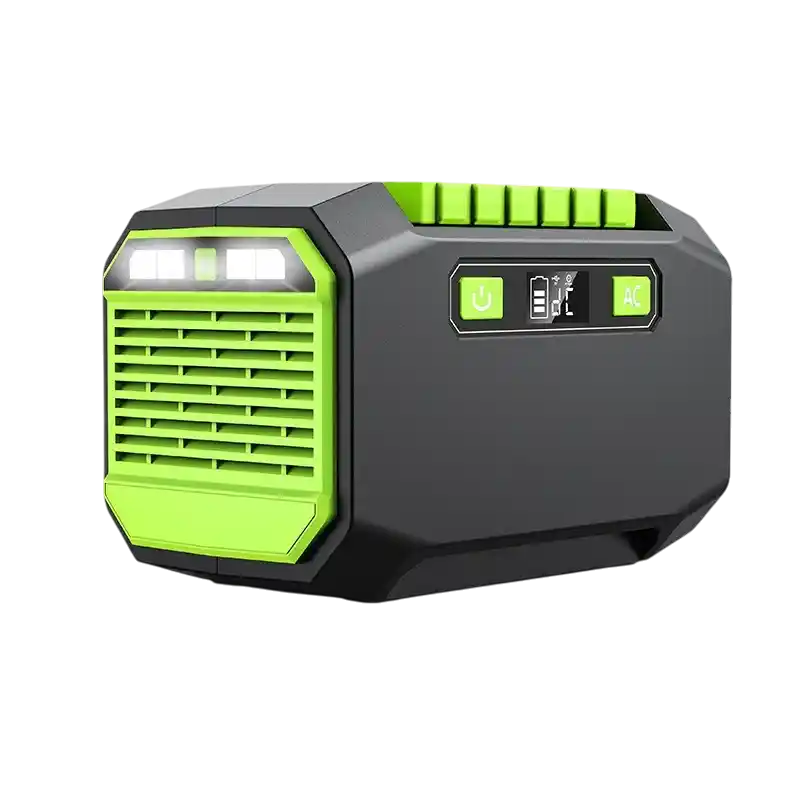
200W Mini Portable Power Station 145Wh
Model A1
200W Mini Portable Power Station
145 Wh

39,000 mAh · 1.3 kg · 196×108×126 mm

200W AC Output
 USB-A + 1× USB-C
 DC 9–12.6V/10A
6.5h Recharge (DC 15V)
Solar DC 26V / 2A
1,000+ Cycles
View Details →
Best Seller
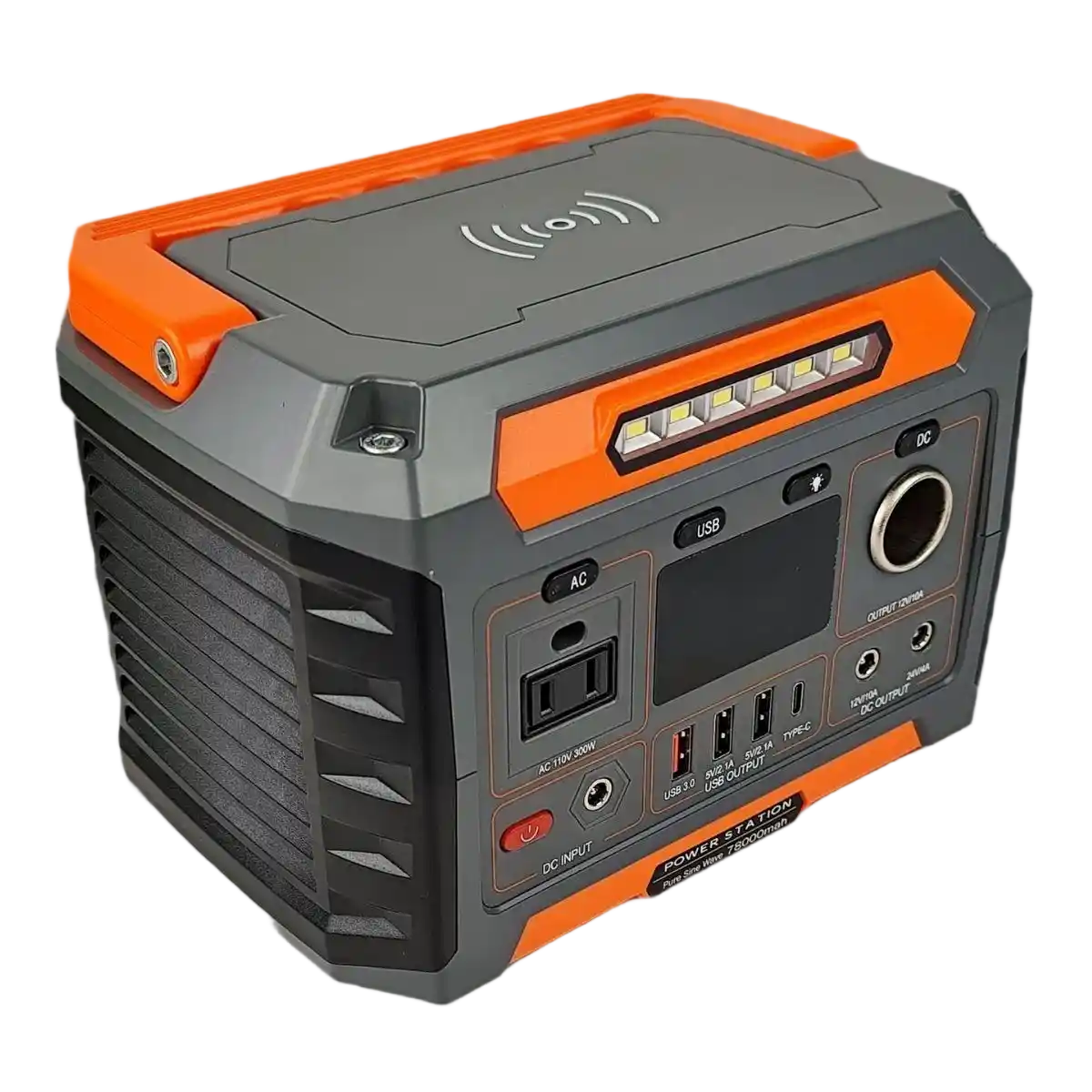
300W Portable Power Station 288Wh
Model A3B
300W Portable Power Station
288 Wh

78,000 mAh · 3.2 kg · 210×146×157 mm

300W AC Output
 USB (A + C + 3.0)
 DC + Cigar Socket
Solar 13–26V / 3A
5W Wireless Charging
3W LED Light
View Details →
Heavy-Duty
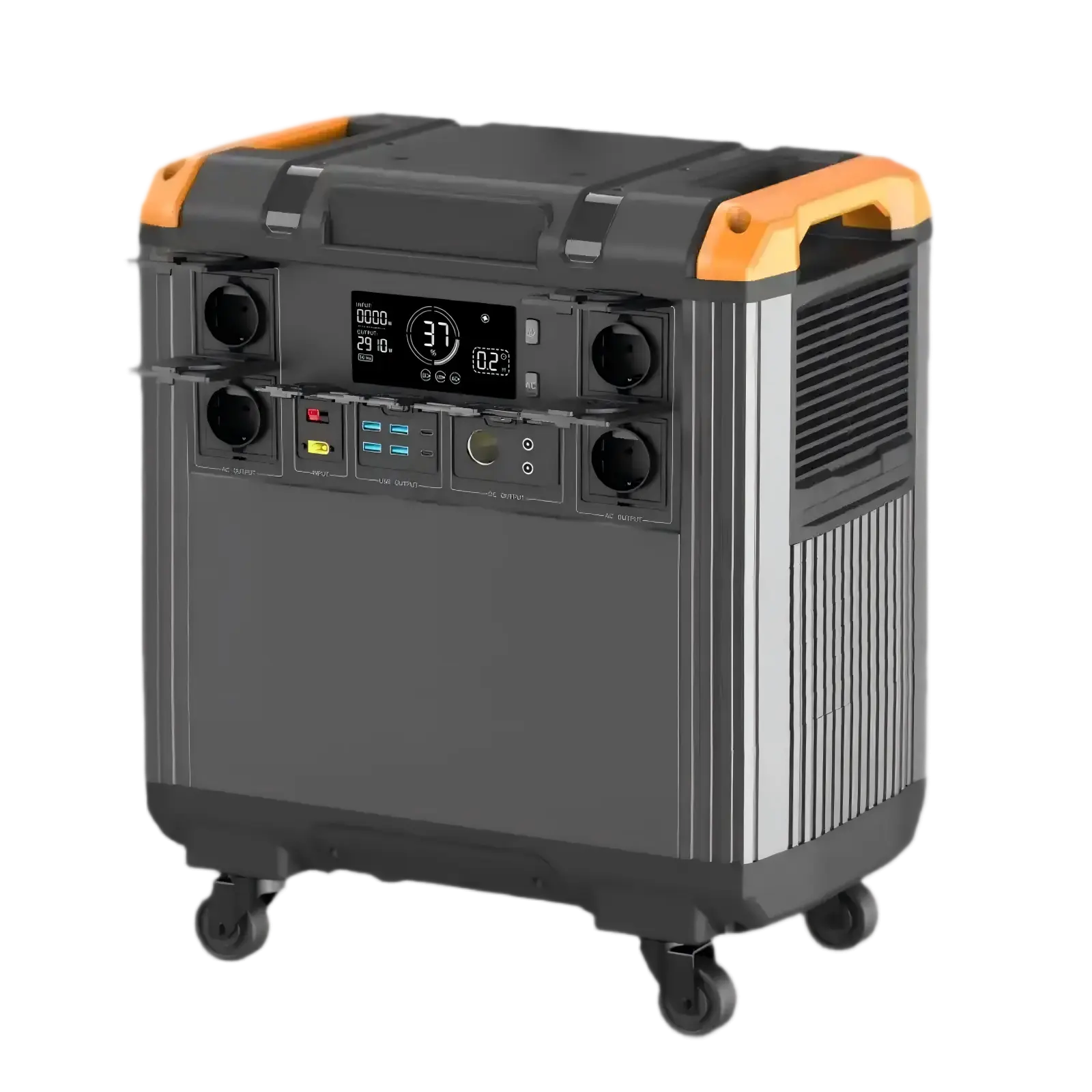
LiFePO4 3000W Portable Power Station 5376Wh
Model T50
LiFePO₄ 3000W Power Station
5,376 Wh

1,680,000 mAh · 56 kg · 470×290×560 mm

3,000W Pure Sine Wave
 USB-C PD 100W
 USB QC 3.0 + DC
1,600W AC Fast Charge
MPPT Solar 650–1,200W
<10ms UPS Switchover
View Details →
Spec Comparison
A1 · Mini
200W / 145Wh
A3B · Mid-Range
300W / 288Wh
T50 · Heavy-Duty
3,000W / 5,376Wh
Battery Chemistry
Li-ion
Li-ion
LiFePO₄
AC Output
200W
300W
3,000W (×4 outlets)
Capacity
145 Wh
288 Wh
5,376 Wh
USB-C
1× 5V/2A
1× 5–9V/2A
2× PD 100W
Solar Input
DC 26V / 2A
13–26V / 3A
MPPT 650–1,200W
Recharge Time
~6.5h
~6h
~4h (1,600W AC)
UPS Function
<10ms
Weight
1.3 kg
3.2 kg
56 kg
Dimensions
196×108×126 mm
210×146×157 mm
470×290×560 mm
Cycle Life
1,000+
1,000+
3,000+
8-Layer BMS Protection
Automotive-grade battery management with sub-100µs fault response on every unit — over-charge, over-discharge, short-circuit, temperature cutoff, and cell balancing.
Solar-Ready Charging
Every station accepts solar input — compact 26V panels for the A1, up to 1,200W MPPT arrays for the T50. Full off-grid recharge in 3–6 hours via sun alone.
OEM / ODM Ready
Private-label with custom logo, color, plug standards, packaging, and localized manuals. Factory-direct pricing, exclusive territory rights for qualified distributors.

Power Your Home With Complete Energy Independence

  • Solar Self-Consumption — Store excess solar generation during the day for use at night, reducing grid reliance by up to 80%.
  • Time-of-Use Optimization — Intelligently charge during off-peak rates and discharge during peak hours for maximum savings.
  • Whole-Home Backup — Seamless transition to battery power during grid outages, keeping lights, HVAC, and appliances running.
  • VPP Ready — Participate in Virtual Power Plant programs to monetize your battery by providing grid services.
  • 15-Minute Installation — Modular plug-and-play design enables rapid installation by certified partners.
  • EV Charger Integration — Direct integration with EV charging stations for solar-to-vehicle energy management.

📊 Technical Specifications

Capacity Range 10 – 30 kWh
Cycle Life 6,000+ Cycles
Cell Chemistry LFP (LiFePO4)
Design Life 15 Years
Round-Trip Efficiency 96%
Safety Certification UL 9540A, IEC 62619
Warranty 5 Years
☀️

Solar Homeowner

Maximize your rooftop solar ROI by storing excess daytime energy for evening use and reducing export to the grid.

🏠

Grid-Connected Home

Optimize electricity bills with automated time-of-use shifting while maintaining backup readiness for outages.

🌲

Off-Grid / Backup

Complete energy autonomy for remote locations or reliable backup for critical home systems during emergencies.

Transform Your Energy From an Operating Cost to a Revenue Asset

2.5 – 4 Years
Typical Payback Period
30 – 45%
Annual Energy Cost Reduction
15+ Years
System Design Life
24/7
AI-Optimized Operation
📉

Peak Shaving

Automatically discharge during demand peaks to eliminate costly demand charges from your electricity bill. No manual intervention required.

Save 30-70% on demand charges

TOU Arbitrage

Charge when electricity is cheap, discharge when rates are high. The AI engine predicts price curves and optimizes dispatch accordingly.

20-40% bill reduction
☀️

Solar Self-Consumption

Maximize the value of on-site solar by storing surplus for later use instead of exporting at low feed-in tariffs.

Up to 90% self-consumption
🛡️

Backup Power

Protect critical operations from grid outages with sub-20ms switchover. Keep production lines, cold storage, and data systems running.

Eliminate downtime costs
🌐

Grid Services

Monetize your asset by participating in frequency regulation, capacity markets, and demand response programs through our VPP platform.

Additional revenue stream
🌍

Carbon Compliance

Meet ESG targets and avoid carbon penalties by integrating storage with renewable energy. Generate verifiable carbon credits.

Scope 2 emission reduction

🏭 Industries We Serve

🏭 Manufacturing
❄️ Cold Chain
🏬 Commercial Real Estate
🖲 Data Centers
🏥 Healthcare
🌾 Agriculture

Grid-Scale Energy Storage, Deployed at Speed

Delivering gigawatt-hour class battery energy storage systems engineered for grid stability, renewable integration, and ancillary services at the scale modern power networks demand.

110 GW
Global BESS in 2025
11×
Growth Since 2021
90%
LFP Adoption Rate
15 Years
System Warranty

AC Block Architecture

01
LFP Battery ModulePrismatic LFP cells with integrated liquid cooling plate
02
Battery RackMultiple modules in series-parallel with rack-level BMS
03
DC Battery Container10ft/20ft/40ft container with thermal management
04
PCS & TransformerBi-directional inverter and MV transformer skid
05
Grid InterconnectionHV substation with EMS for plant-level control

System Features

  • Containerized Design — Factory pre-assembled and tested, reducing on-site commissioning time by 60%.
  • DC-Coupled or AC-Coupled — Flexible architecture supports both configurations for new builds or retrofits.
  • Grid-Forming Capable — Advanced inverters provide synthetic inertia and black-start capability.
  • N+1 Redundancy — All critical subsystems including thermal management and BMS are fully redundant.
  • SCADA Integration — Full DNP3, Modbus, and IEC 61850 protocol support for seamless utility integration.
  • Fire Suppression — Multi-layer aerosol and gas-based fire suppression system with thermal runaway detection.
Parameter20ft Container40ft ContainerCustom
DC Capacity3.44 – 3.73 MWh5.02 – 6.88 MWhUp to 10+ MWh
AC Power1.25 – 1.72 MW2.5 – 3.45 MWScalable
Cell TypeLFP PrismaticLFP PrismaticLFP Prismatic
CoolingLiquid (±2°C)Liquid (±2°C)Liquid or Air
Round-Trip Efficiency≥ 94%≥ 94%≥ 93%
Operating Temp-30°C to +55°C-30°C to +55°CCustom
Altitude≤ 4000m≤ 4000m≤ 5000m
Warranty15 Years15 Years15 Years

Deployment Process

1
Feasibility
Site survey, grid assessment, energy modeling
2
Engineering
Detailed design, interconnection study, permitting
3
Manufacturing
Factory assembly, FAT testing, logistics
4
Commissioning
On-site installation, SAT, grid synchronization
5
Operations
Remote monitoring, predictive maintenance, O&M

Everything You Need to Know About Energy Storage

What is a Battery Energy Storage System (BESS)? +
A Battery Energy Storage System (BESS) captures electrical energy from the grid or renewable generation sources, stores it in rechargeable batteries, and releases it when needed. Modern BESS installations serve multiple functions: peak shaving to reduce demand charges, time-of-use arbitrage to capitalize on electricity price differentials, backup power for critical loads during outages, and grid services including frequency regulation and voltage support. A complete system includes battery modules, power conversion system (PCS), thermal management, battery management system (BMS), and energy management system (EMS).
How safe is LFP compared to NMC battery chemistry? +
Lithium Iron Phosphate (LFP) is widely recognized as the safest lithium-ion chemistry available for stationary energy storage. Key safety advantages over NMC (Nickel Manganese Cobalt) include: a significantly higher thermal runaway threshold (270°C vs approximately 210°C for NMC), no release of oxygen during decomposition (eliminating the self-sustaining fire risk), superior structural stability of the olivine crystal structure, and dramatically reduced risk of cascading thermal propagation between cells. All VoltCrave Power systems exclusively use LFP chemistry, and our UL 9540A-certified designs include multi-layer fire suppression as an additional safeguard.
How long do energy storage batteries last? +
VoltCrave LFP batteries are rated for 6,000+ cycles at 80% depth of discharge (DoD) while maintaining at least 70% of original capacity. For a system cycling once daily, this translates to over 15 years of reliable operation. With our advanced liquid cooling maintaining cell temperatures within ±2°C, calendar life extends beyond 20 years. Real-world data from our earliest installations (8+ years in the field) shows degradation rates below 1.5% per year, outperforming our published warranty curves. The combination of LFP chemistry, precision thermal management, and AI-driven charge optimization ensures industry-leading longevity.
What maintenance do energy storage systems require? +
LFP-based energy storage systems require dramatically less maintenance than legacy lead-acid or even NMC-based alternatives. There is no electrolyte to top up, no equalization charging required, and no terminal corrosion to clean. We recommend annual visual inspections of cable connections, cooling system filters, and enclosure integrity. Our AI-powered monitoring platform continuously tracks cell voltages, temperatures, and state-of-health, alerting operations teams to any anomalies before they require on-site intervention. For C&I and utility systems, we offer comprehensive O&M service plans that include remote monitoring, periodic on-site inspections, and performance reporting.
Can energy storage work with my existing solar installation? +
Yes, absolutely. VoltCrave systems support both AC-coupled and DC-coupled configurations. For homes and businesses with existing solar PV, AC-coupled (retrofit) is the most common approach — the battery system connects on the AC side and operates independently of your solar inverter, making it compatible with virtually any existing solar installation. For new installations, DC-coupled offers higher round-trip efficiency by eliminating an additional AC/DC conversion stage. During our site assessment, our engineering team evaluates your existing equipment, electrical panel, and energy profile to recommend the optimal configuration.
What certifications do VoltCrave Power systems hold? +
Our systems are certified to the most stringent international standards. Safety certifications include UL 9540 (Energy Storage Systems), UL 9540A (Thermal Runaway Fire Propagation), IEC 62619 (Secondary Lithium Cells), and IEC 62477 (Power Conversion Equipment). Battery transport certification includes UN 38.3. For grid interconnection, our systems comply with IEEE 1547 (North America), VDE-AR-N 4110/4120 (Germany), G99 (UK), and other regional grid codes. We maintain ISO 9001, ISO 14001, and ISO 45001 certifications across our manufacturing facilities.
What warranty comes with VoltCrave energy storage systems? +
We offer industry-leading warranty coverage: 10 years standard on residential and commercial & industrial systems, and 20 years on utility-scale deployments. Our warranty covers both manufacturing defects and performance — we guarantee that your system will retain at least 70% of its initial usable capacity by the end of the warranty period. Extended warranty options up to 25 years are available for utility projects. All warranties are backed by our vertically integrated supply chain, meaning we control quality from cell to system and can stand behind our products with confidence.
How do I determine the right system size for my needs? +
System sizing is a data-driven process. For residential customers, we analyze your 12-month interval (or monthly) electricity usage, solar generation data (if applicable), and any TOU tariff structure. For C&I customers, we require 15-minute interval data from your utility to model demand patterns and identify peak shaving opportunities. For utility-scale projects, our team conducts comprehensive grid studies including load flow analysis, stability assessment, and revenue stacking optimization. Every project receives a free feasibility analysis with ROI projections before any commitment. Contact our team with your energy data to get started.

Still Have Questions?

Our energy storage specialists are ready to provide detailed answers tailored to your specific application and requirements.

Speak With an Expert →

This website uses cookies

We use cookies to personalize content, provide social media features, and analyze our traffic. We also share information about your use of our site with our analytics partners. You can change your preferences at any time. For more information, please see our Privacy Policy and Cookie Policy. Privacy Policy