
Why BMS Is Critical for LiFePO4 Battery Performance and Safety
For businesses purchasing energy storage products, battery technology is not only about capacity and price. Long-term reliability, safety performance, and customer satisfaction are equally important factors.
Many distributors and system integrators face a common challenge: two batteries may have similar specifications, but their real-world performance and lifespan can be completely different.
The reason is often related to one key component — the Battery Management System (BMS).
A reliable BMS controls, monitors, and protects lithium battery operation. It plays a major role in preventing battery damage, improving system stability, and extending service life.
For LiFePO4 battery solutions, the BMS is especially important because it manages charging and discharging conditions that directly influence safety and battery durability.
When buyers evaluate energy storage suppliers, they should not only ask:
- What battery capacity does the product have?
- What battery cells are used?
- What is the product price?
They should also ask:
- What type of BMS is installed?
- How does the BMS protect the battery?
- How does the supplier ensure long-term battery reliability?
Understanding the relationship between BMS technology and battery performance helps buyers select better products and reduce future after-sales problems.
As an experienced energy storage provider, Voltcrave Power focuses on developing reliable battery solutions with safety-focused designs, helping global customers build stable energy storage systems.
What Is a Battery Management System (BMS)?
A Battery Management System is an electronic control system designed to monitor and manage rechargeable batteries.
In lithium battery applications, the BMS works as the “control center” of the battery pack.
Its main purpose is to ensure that every battery cell operates within a safe range.
A BMS continuously monitors important parameters, including:
- Battery voltage
- Cell voltage balance
- Charging current
- Discharging current
- Battery temperature
- State of charge (SOC)
- State of health (SOH)
By analyzing this information, the BMS can automatically adjust battery operation and activate protection functions when abnormal conditions occur.
For energy storage buyers, the quality of the BMS directly affects:
- Product safety
- Battery reliability
- Maintenance requirements
- Customer experience
This is why a professional battery management system for lithium ion batteries is considered one of the most important parts of a complete battery solution.
How Does a BMS Work in LiFePO4 Batteries?
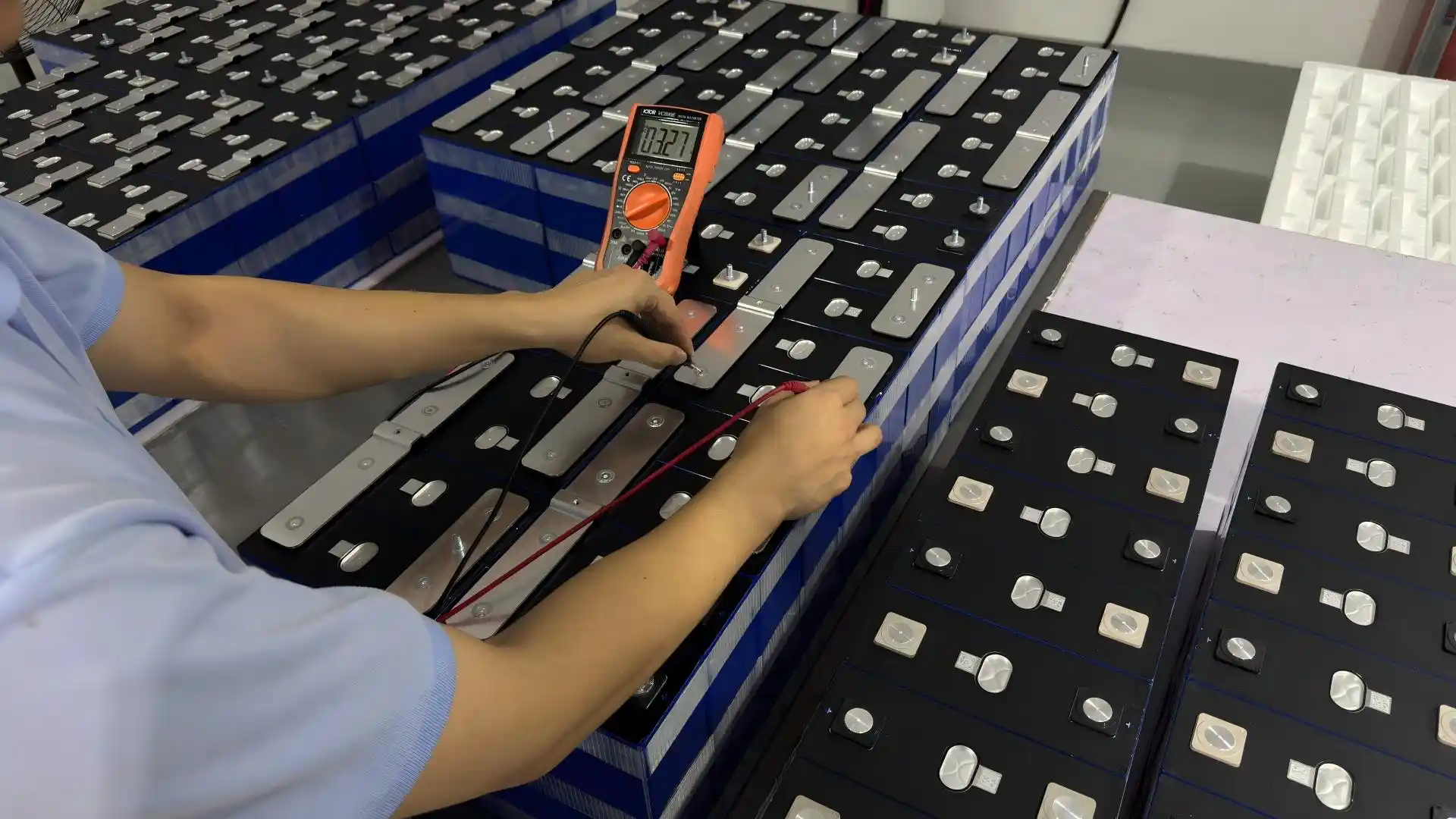
A LiFePO4 battery consists of multiple battery cells connected together.
Although LiFePO4 chemistry is known for its excellent stability and safety characteristics, individual cells can still experience problems if they are operated outside recommended conditions.
The BMS solves this issue by managing the entire battery pack.
The basic working process includes four steps:
1. Monitoring Battery Conditions
The BMS collects real-time information from battery cells.
It monitors:
- Voltage differences between cells
- Temperature changes
- Current flow
- Charging status
This allows the system to identify potential problems before they become serious.
2. Cell Balancing
During charging and discharging, individual battery cells may not maintain exactly the same voltage.
Over time, this imbalance can reduce usable capacity and shorten battery life.
The BMS performs cell balancing to ensure:
- Equal energy distribution
- Better charging efficiency
- Improved battery consistency
For large battery packs used in residential or commercial systems, cell balancing is essential.
3. Protection Control
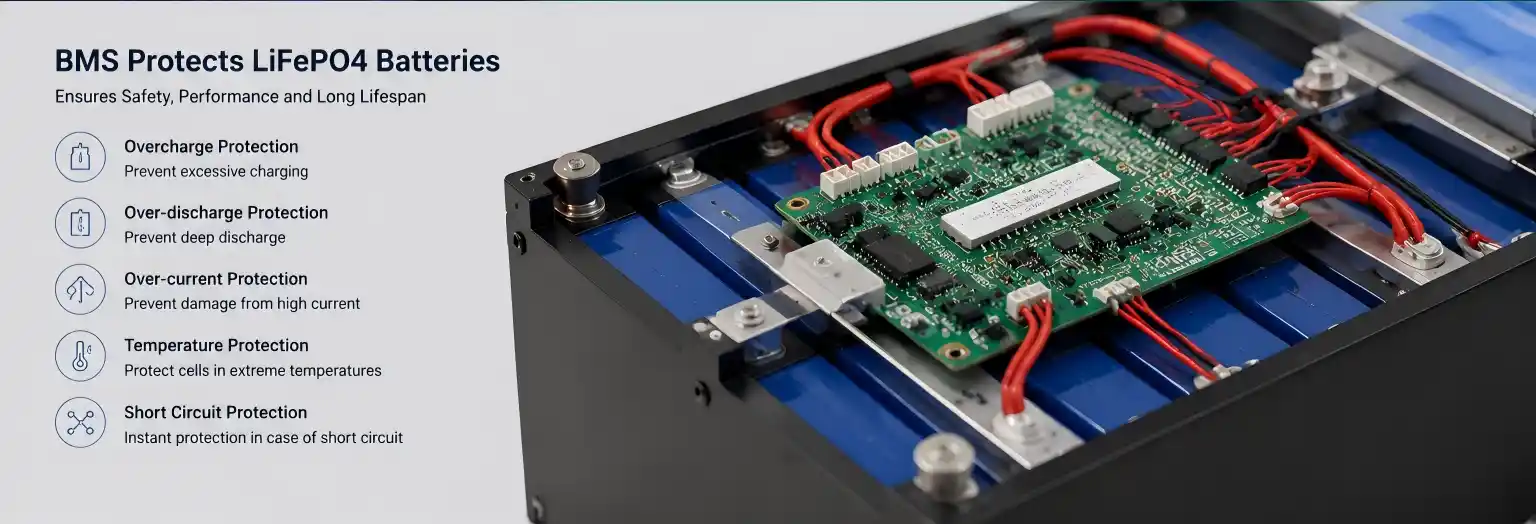
One of the most important functions of BMS technology is battery protection.
A high-quality BMS can prevent:
| Protection Function | Purpose |
|---|---|
| Overcharge protection | Prevents excessive charging voltage |
| Over-discharge protection | Prevents deep battery discharge |
| Over-current protection | Protects against excessive current flow |
| Short-circuit protection | Reduces safety risks |
| Temperature protection | Prevents operation outside safe temperature range |
These protection functions are essential for maintaining LiFePO4 battery safety in different application environments.
4. Communication and Monitoring
Modern energy storage systems often require intelligent monitoring.
Advanced BMS solutions can communicate with:
- Inverters
- Energy management systems
- Monitoring platforms
- Smart control devices
This allows users and installers to understand battery performance and detect potential issues.
Why LiFePO4 Battery Safety Depends on BMS Quality
LiFePO4 batteries are widely used in energy storage applications because of their:
- High thermal stability
- Long cycle life
- Low risk of thermal runaway
- Reliable performance
However, even high-quality battery chemistry requires proper management.
The BMS is one of the most important factors affecting LiFePO4 battery safety.
Without effective battery management, problems may occur, including:
- Uneven cell aging
- Reduced available capacity
- Shortened battery lifespan
- Increased maintenance requirements
For B2B buyers, these issues can lead to:
- Higher warranty costs
- Customer complaints
- Project delays
- Reduced brand reputation
Therefore, when selecting an energy storage supplier, buyers should evaluate both battery chemistry and BMS technology.
How BMS Affects LiFePO4 Battery Lifespan
One of the biggest advantages of LiFePO4 batteries is their long service life.
However, achieving a long LiFePO4 battery lifespan depends on many factors:
- Battery cell quality
- Charging conditions
- Operating temperature
- Depth of discharge
- BMS performance
A reliable BMS helps extend battery life by maintaining optimal operating conditions.
Relationship Between BMS Functions and Battery Lifespan
| BMS Function | Impact on Battery Lifespan |
|---|---|
| Cell balancing | Reduces uneven cell aging |
| Temperature monitoring | Prevents heat-related degradation |
| Charge control | Prevents battery stress |
| Discharge protection | Avoids deep discharge damage |
| Health monitoring | Supports preventive maintenance |
For commercial buyers, a longer battery lifespan means:
- Lower replacement frequency
- Reduced operating costs
- Better customer satisfaction
This is why evaluating BMS quality is essential when purchasing lithium battery energy storage systems.
Common BMS Problems Buyers Should Avoid
Many battery-related issues are not caused by battery cells themselves but by poor battery management solutions.
Poor Cell Balancing Capability
If a BMS cannot properly balance cells, some cells may become overcharged while others remain undercharged.
This can gradually reduce battery capacity.
Limited Protection Functions
Low-quality BMS solutions may provide only basic protection.
For professional energy storage applications, buyers should confirm whether the BMS supports:
- Multiple protection mechanisms
- Temperature monitoring
- Communication functions
- Fault detection
Lack of System Compatibility
A battery system must work properly with:
- Solar inverters
- Chargers
- Energy management systems
A professional supplier should ensure BMS compatibility before delivery.
Need help matching this topic to a real battery project?
Send your target application, capacity range, certification market, and order plan. VoltCrave can recommend a practical product direction.