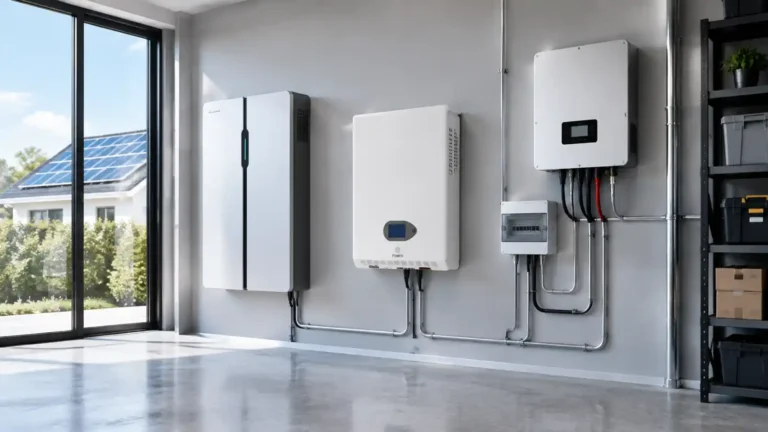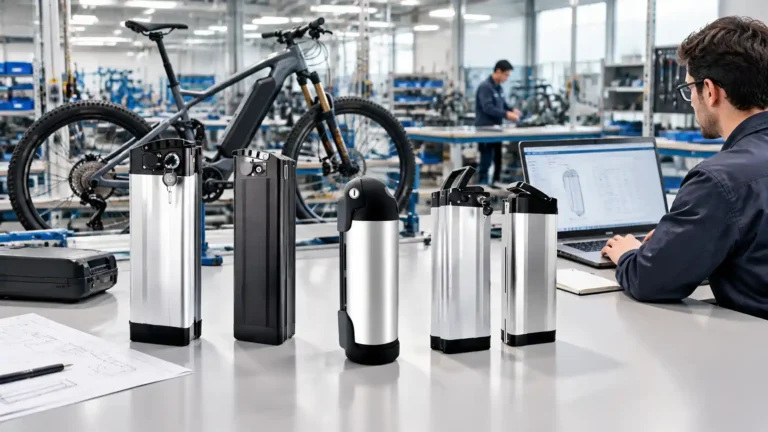
Two homeowners can buy a solar battery backup system with the same nameplate capacity and pay prices that differ by a factor of two. Neither is being cheated. The difference comes from decisions made long before a quote is issued, and most of them are invisible in a product listing.
This article explains what actually drives the cost of a home solar battery backup system, in the order the money is spent. It is written for buyers who need to compare quotations on equal terms, not for readers looking for a single number.
Why there is no single price for a home battery backup system
The search for a definitive price fails because the category is not a single product. It spans systems that differ in usable capacity, inverter architecture, certification scope, and target market, and each of these changes the bill.
What people are actually asking
Searchers who look for cost usually want one of three things: a rough budget number to sanity-check a quote, a way to compare two proposals, or a sense of whether the price they were given is reasonable. Only the third question can be answered without knowing the configuration. The first two cannot, and any source that gives a flat number without qualification is guessing.
Why a factory price differs from an installed price
A price quoted by a manufacturer covers the product and its documentation. An installed price covers that product plus site survey, mounting, electrical work, permitting, inspection, and the installer’s margin. The gap between the two is often larger than the equipment cost itself, which is why the same system appears at very different numbers depending on where in the chain the quote is issued. When comparing, the first step is to establish which of the two you are looking at.
What you are actually paying for
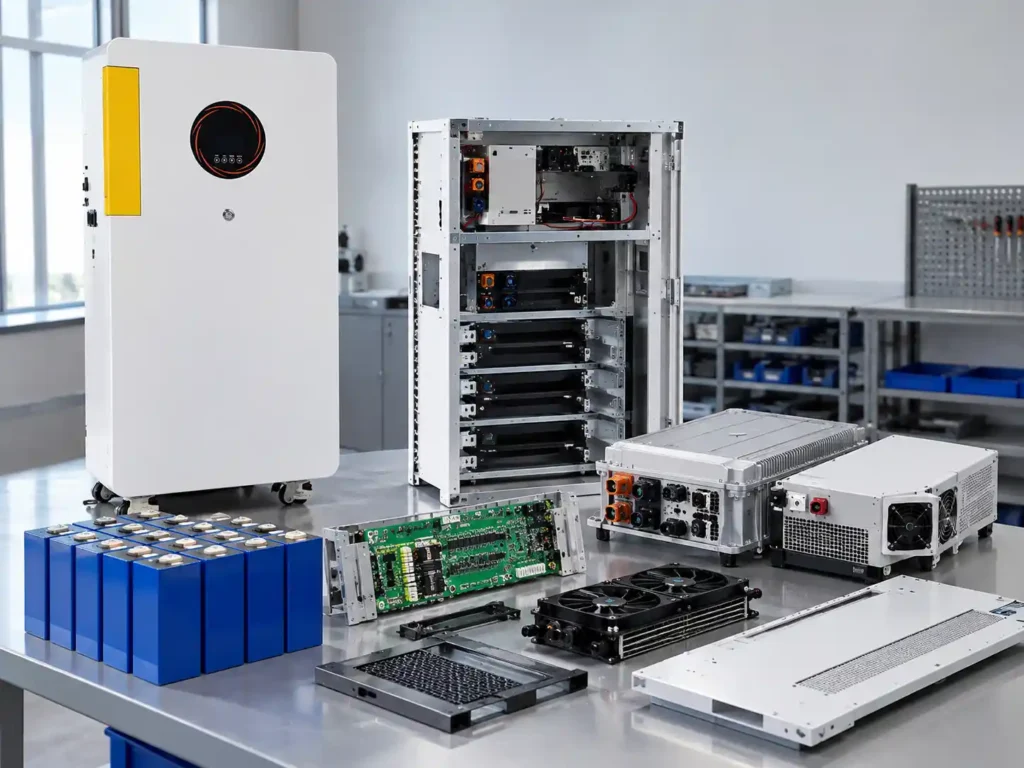
The cost of a residential battery system is the sum of several distinct components. Understanding the list makes a quote readable.
Battery cells and pack
The battery pack, built from LiFePO4 cells, is usually the largest single line item, and the dominant driver of both price and lifespan. Cell chemistry sets the baseline: LiFePO4 cells cost more per unit of energy than some alternatives, and in return they carry a longer cycle life and a more stable thermal profile. Within the same chemistry, cells are graded, and the difference between an automotive-grade cell with documented test data and an unverified “grade A” label is a real cost difference with real consequences for service life. VoltCrave’s battery cells and components category sets out the cell technologies and specifications used across its residential systems.
Battery management system
The BMS is a small cost line with an outsized effect on reliability. It governs overcharge and over-discharge cut-off, current limits, cell balancing, and temperature-derated charging. A system built around a lower-specification BMS costs less to make and is more exposed to the failure modes that end in premature capacity loss. When two quotes differ and the cells look equivalent, the BMS specification is one of the places the difference usually lives.
Inverter and power electronics
Whether the system includes a hybrid inverter or relies on an existing inverter changes the cost structure substantially. An all-in-one system packages battery, inverter, and energy management into one enclosure, and VoltCrave’s 16kWh all-in-one residential ESS is an example of that approach built around an integrated 6kW hybrid inverter. A battery-only or AC-coupled system is cheaper on the equipment line but may require additional hardware and labor at installation. The comparison is only meaningful when the scope of both options is written down.
Enclosure, thermal management, and structure
Housing, cabinet, racking, cooling or heating provisions, and the mechanical design that holds the cells under compression all contribute cost. These components are easy to overlook because they do not appear in a capacity figure, yet they determine whether the system survives its intended environment. A unit rated for indoor installation and one built for an unconditioned outdoor location are not the same product at the same price.
Certification and testing
Certification is a cost line that varies with target market. A system sold into North America may need to demonstrate compliance with stationary battery safety standards and thermal runaway testing; a European project brings its own requirements. Testing is paid for either once at the factory and amortized across a production run, or repeatedly by the buyer during market entry. Certification scope is one of the most reliable explanations for price differences between otherwise similar systems, and it is also the item most often missing from informal quotes.
Logistics, duties, and compliance
Batteries are classified as dangerous goods for transport, which adds packaging, documentation, and freight cost that ordinary cargo does not carry. Distance, destination country, duty treatment, and Incoterms all move the landed cost. Two quotations that agree on the equipment price can still land at different totals once shipping terms and duties are applied.
The variables that move the price most
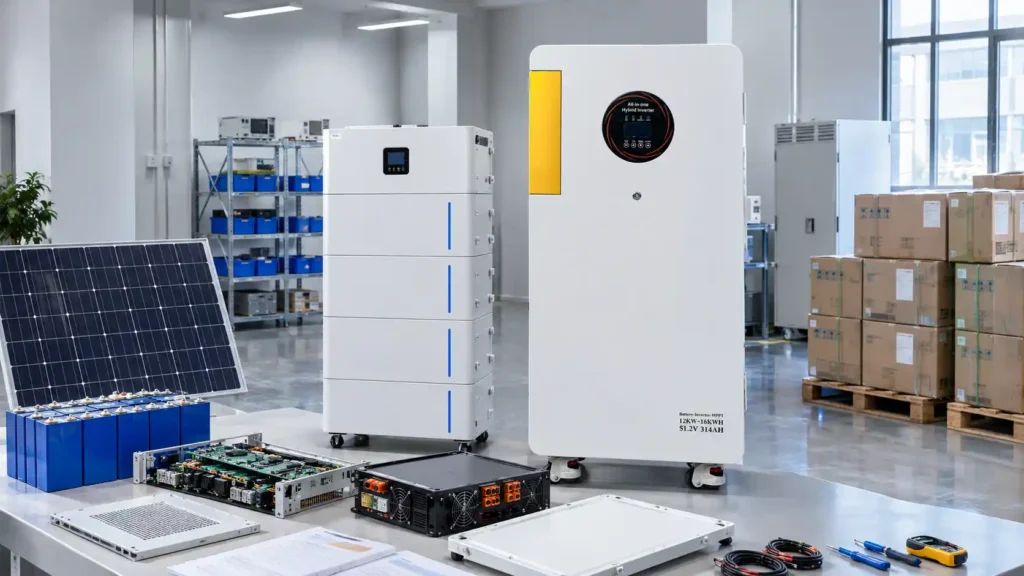
Within a fixed cost structure, a handful of choices push a project toward one end of the range or the other.
Usable capacity versus nameplate capacity
Capacity figures can refer to total installed energy or to usable energy after the depth-of-discharge limit is applied. A system advertised at one number may deliver meaningfully less in practice. Comparing systems on nameplate capacity alone rewards the manufacturer who quotes the more flattering figure, not the one who delivers more usable energy.
Cell grade and cycle life
Cycle life is quoted against specific test conditions, usually a stated depth of discharge. A claim of a high cycle count at a shallow discharge is not equivalent to the same count at a deep one. The cells that support a strong cycle-life claim under demanding conditions cost more than those that support the claim only under gentle ones.
All-in-one versus split configuration
An all-in-one system concentrates battery, inverter, and controls in a single unit, which simplifies installation and reduces the number of interfaces to coordinate. A split configuration can be cheaper on equipment and more flexible in layout, but shifts cost toward labor and integration. The cheaper-looking option is not always the cheaper project.
Certification scope by target market
A system certified for the market where it will be installed avoids repeat testing and inspection delays. A system that requires additional certification on arrival carries a hidden cost that may not appear until after purchase. For a project with a fixed commissioning date, this is often the decisive variable.
Order volume and customization
A standard configuration ordered in volume costs less per unit than a customized build ordered in small quantities. Customization touches enclosure design, communication protocols, connector types, and firmware, and each change carries engineering and tooling cost. For projects with modest volumes, standard configurations generally offer the better value.
How to compare quotes on equal terms
The most common source of confusion is not a dishonest quote but two quotes that describe different things.
The specification items to normalize
Before comparing prices, bring every quotation onto the same footing on these points:
| Item | Why it changes the comparison |
|---|---|
| Usable capacity and its depth-of-discharge basis | Two identical nameplate figures can deliver different usable energy |
| Cell grade and the test data behind it | Grade claims without supporting data are not comparable |
| BMS protection functions and thresholds | Determines exposure to premature degradation |
| Inverter: included, separate, or none | Changes both equipment and installation scope |
| Operating temperature range | Indoor and outdoor units are different products |
| Cycle-life claim and its stated test conditions | A count is meaningless without the depth of discharge behind it |
| Certification scope and target market | Repeat testing is a real cost |
| Incoterms and what the price includes | Landed cost differs from ex-works price |
Which certification claims to verify
Ask for the standard, the testing body, and the scope of application, not just a logo. A certificate that covers a cell is not the same as one that covers the assembled system, and a standard relevant to portable batteries does not automatically satisfy stationary storage requirements. VoltCrave’s certification overview lists the standards held across safety, EMC, transport, and environmental categories, which is a useful reference for what a complete certification set looks like. Verifying the scope before purchase is cheaper than discovering the gap during commissioning.
Where VoltCrave Power fits
Manufacturing and product range
VoltCrave Power manufactures residential energy storage systems and has done so since 2011, with production bases in Dongguan and Hunan. The residential energy storage range covers configurations from compact home units to larger whole-home systems, including an all-in-one design that integrates a hybrid inverter, a mid-capacity all-in-one, and a high-capacity home backup system with a mobile cabinet structure.
Verification and certification coverage
Every unit passes IQC, IPQC, FQC, and OQC inspection stages, and the company holds certifications including UL 1973, UL 9540A, IEC 62619, UN 38.3, and ISO 9001, alongside more than 450 standards across safety, EMC, transport, and environmental categories. OEM and ODM programs are available for buyers who need a configuration matched to a specific market, and sample units can be requested for evaluation before committing to volume.
How quoting works
Because the cost of a system depends on the factors described above, VoltCrave quotes per project rather than publishing a list price. A quotation is built from the target market, the required capacity and usable energy, the certification scope, and the order volume.
FAQs
What determines the cost of a home solar battery backup system?
The main drivers are battery cell chemistry and grade, BMS specification, whether an inverter is included, enclosure and thermal design, certification scope for the target market, and logistics. Usable capacity and order volume set the scale. No single figure applies across configurations.
Why do two systems with the same capacity cost different amounts?
Nameplate capacity hides differences in usable energy, cell grade, cycle-life conditions, BMS protection, and certification scope. Two systems that read the same on a specification sheet can differ substantially in the cost of the components that determine lifespan and safety.
Is an all-in-one system more expensive than a separate battery and inverter?
It depends on the scope being compared. An all-in-one system concentrates cost in one unit and reduces installation labor and interface risk. A split configuration can be cheaper on equipment while shifting cost toward labor and integration. The project cost is what matters, not the equipment price alone.
How does certification affect the price?
Certification requires testing against the standards of the target market. A system already certified for the destination avoids repeat testing and delays. A system that needs additional certification on arrival carries a cost that may not appear in the initial quote, which is why certificate scope should be confirmed before purchase.
Does ordering more units reduce the price?
Yes, generally. Standard configurations at volume cost less per unit than customized builds at low volume, because engineering and tooling costs are spread across more units. For smaller projects, a standard configuration usually offers better value than a customized one.
What should I confirm before accepting a quote?
Confirm the usable capacity and its depth-of-discharge basis, the cell grade with supporting test data, the BMS protection functions, whether an inverter is included, the operating temperature range, the cycle-life claim and its test conditions, the certification scope, and the Incoterms. Normalizing these items makes quotes comparable.
Final checklist
The cost of a home solar battery backup system is not a number to look up. It is the outcome of a set of choices about cells, electronics, enclosure, certification, and logistics, and it can be compared properly only when those choices are written down.
Before accepting any quotation, confirm the eight specification items above, verify the scope of every certification claim, and establish whether the price you are looking at is a factory price or an installed price. Buyers who do this usually find that the apparent price gap between competing systems narrows once the scopes are aligned, or that it reflects a real and identifiable difference worth paying for.
If you are specifying a residential battery system for a project, share the target market, required capacity, and certification scope, and VoltCrave’s engineering team will review the configuration against your application.
Need help matching this topic to a real battery project?
Send your target application, capacity range, certification market, and order plan. VoltCrave can recommend a practical product direction.