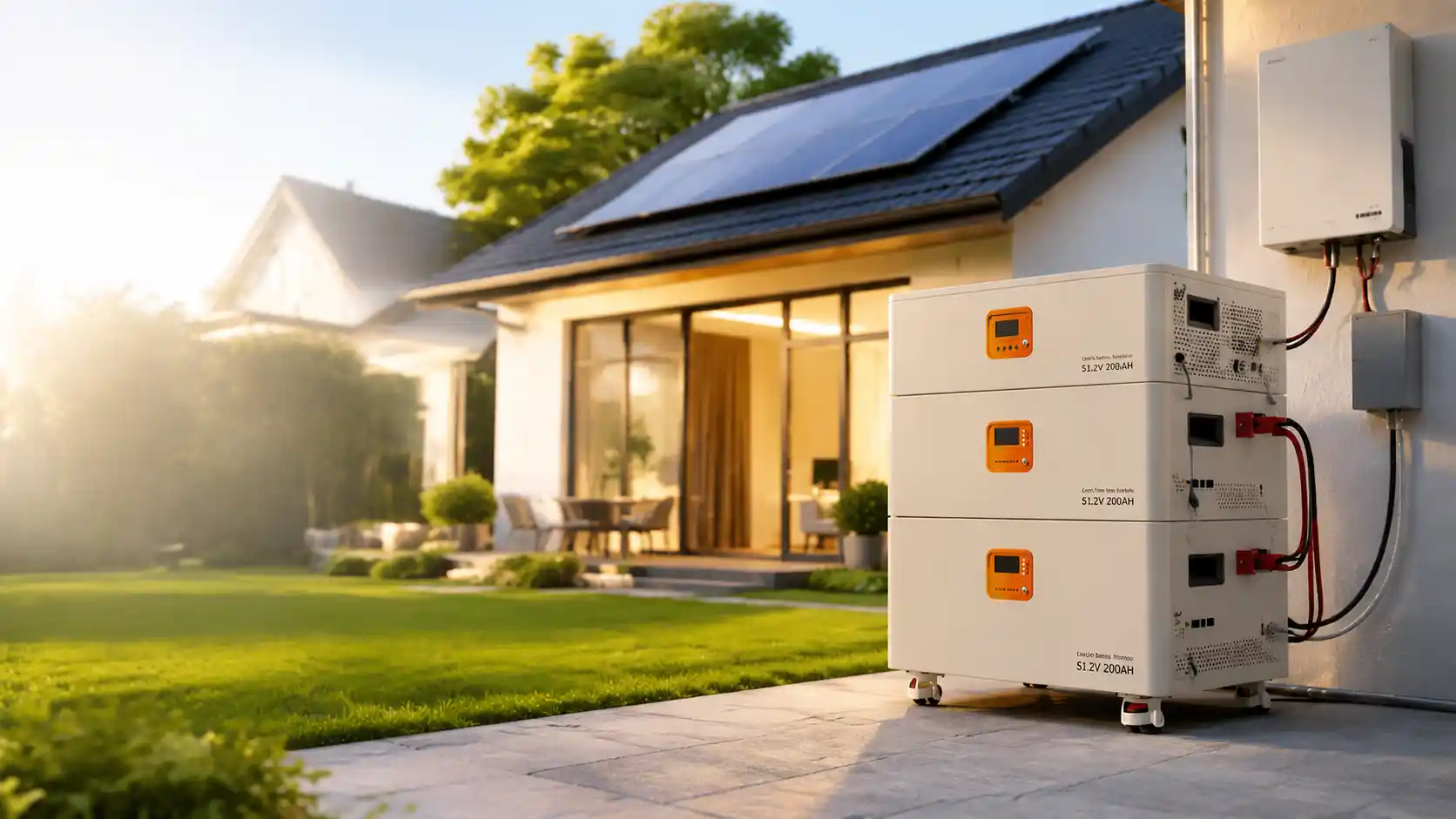
The Growing Demand for Flexible Residential Energy Storage Solutions
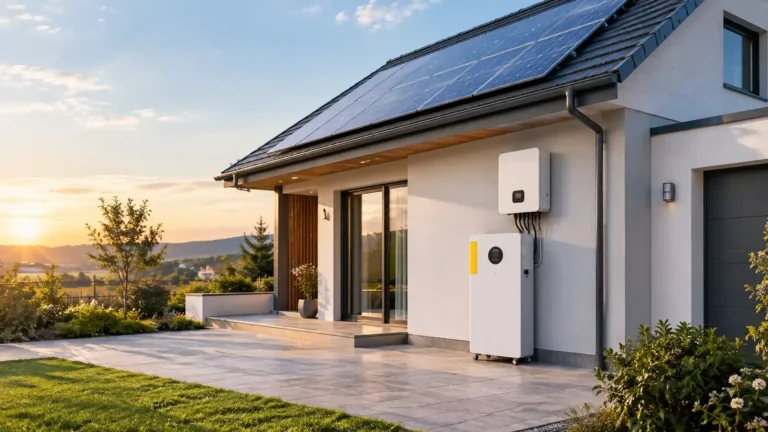
The residential solar market is experiencing rapid growth as homeowners increasingly look for reliable energy independence, lower electricity costs, and backup power solutions. However, for solar installers, this market expansion also creates new challenges.
Many installation companies are facing difficulties when selecting suitable battery systems for different residential projects.
A typical installer may need to complete projects ranging from small homes requiring basic backup power to larger properties requiring higher energy storage capacity. Traditional fixed-capacity battery systems often make this process more complicated because each project requires different specifications.
Common challenges include:
- Limited battery capacity options
- Difficult installation processes
- High transportation costs
- Complex inventory management
- Limited expansion capability after installation
For example, one homeowner may only need a 5kWh storage solution for essential household loads, while another customer may require 15kWh or more because of electric vehicles, heating systems, or higher daily electricity consumption.
Using the same battery configuration for every project can create problems. Oversized systems increase unnecessary costs, while undersized systems may result in customer dissatisfaction.
This is why more solar professionals are adopting Stackable Energy Storage Systems for residential applications.
Unlike traditional battery systems with fixed capacity, stackable solutions allow installers to combine multiple battery modules according to specific project requirements. This provides greater flexibility while reducing installation complexity.
For solar companies, the benefits include:
| Installer Challenge | How Stackable Systems Help |
|---|---|
| Different customer energy requirements | Flexible capacity expansion |
| Complex product selection | One modular platform supports multiple applications |
| Difficult transportation | Smaller battery modules are easier to handle |
| Future upgrade requirements | Additional modules can be added later |
| High inventory pressure | Fewer product models are required |
For businesses that want to expand their residential energy storage market, choosing flexible battery technology has become an important competitive advantage.
As a professional energy storage manufacturer, VoltCrave Power provides scalable residential battery solutions designed for installers, distributors, and energy companies worldwide.
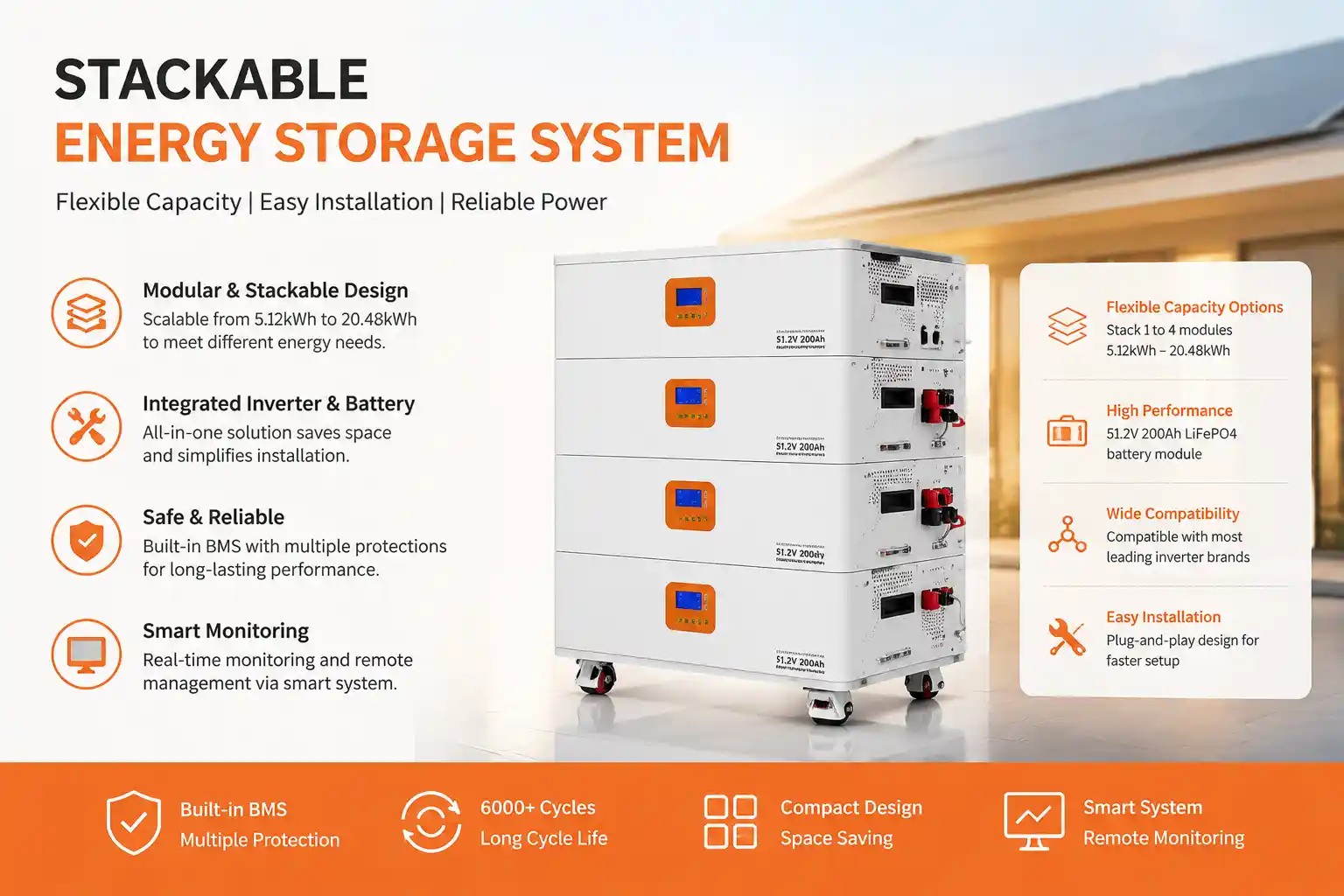
What Are Stackable Energy Storage Systems?
Understanding the Modular Structure Behind Stackable Battery Solutions
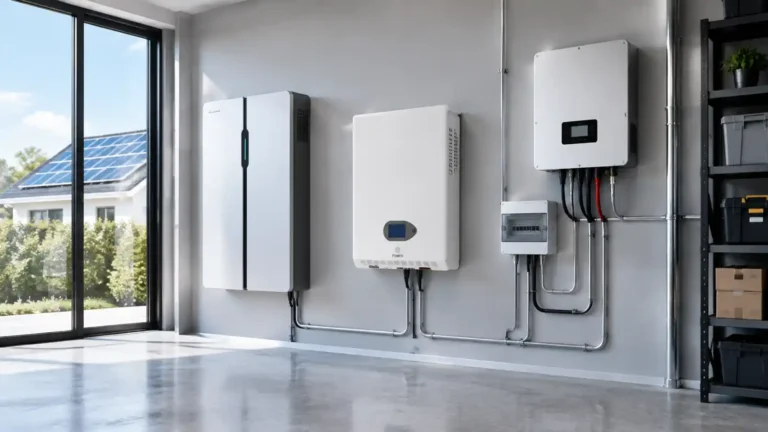
Stackable Energy Storage Systems are modular battery solutions designed to provide flexible energy storage capacity through multiple connected battery units.
Instead of relying on a single large battery cabinet, these systems use independent battery modules that can be combined according to project requirements.
A complete stackable system usually includes:
| Component | Main Function |
|---|---|
| Battery modules | Store electrical energy for residential use |
| Battery Management System (BMS) | Monitor battery safety and performance |
| Hybrid inverter | Converts stored energy into usable household electricity |
| Communication system | Enables monitoring and system management |
| Mounting structure | Provides stable modular installation |
The modular architecture allows installers to design systems based on actual household energy consumption rather than forcing customers into fixed configurations.
For example:
| Residential Project Type | Recommended Approach |
|---|---|
| Small apartment | Lower number of battery modules |
| Standard family home | Medium-capacity modular configuration |
| Large villa | Multiple battery module combinations |
| Future expansion project | Add additional modules when needed |
This flexibility is one of the main reasons solar installers are moving away from traditional fixed-capacity batteries.
Why Solar Installers Prefer Stackable Energy Storage Systems
Easier Installation Reduces Labor Costs
Installation efficiency directly affects the profitability of solar companies.
Many traditional battery systems require complex preparation before installation, including:
- Heavy equipment handling
- Additional installation space
- More complicated wiring procedures
- Longer commissioning time
For installers managing multiple projects every month, these factors can significantly increase labor costs.
A stackable lithium battery design simplifies the installation process because each module is easier to transport, position, connect, and configure.
The practical benefits include:
- Reduced installation time
- Lower labor requirements
- Easier project scheduling
- Improved installation consistency
For example, when installing batteries in residential buildings with limited access space, modular battery units can be moved more easily compared with large integrated battery cabinets.
This allows installers to complete projects faster while improving overall customer experience.
Flexible Capacity Configuration Meets Different Customer Needs
One of the biggest limitations of traditional battery systems is the lack of scalability.
Residential energy requirements are constantly changing.
A homeowner may initially install solar panels only for basic electricity savings. However, future needs may increase because of:
- Electric vehicle charging
- Additional household appliances
- Home offices
- Smart home devices
- Higher backup power expectations
With modular energy storage system designs, installers can create expandable solutions that grow together with customer needs.
Instead of replacing the entire battery system, additional modules can be added when required.
This creates advantages for both installers and homeowners:
| For Installers | For Homeowners |
|---|---|
| More flexible project design | Lower initial investment |
| Additional upgrade opportunities | Expand capacity in the future |
| Easier product recommendations | Longer system usability |
| Better customer relationships | Improved energy independence |
For solar companies, this means they can provide long-term energy solutions rather than one-time installations.
How Stackable Lithium Battery Technology Improves Residential Energy Projects
Better Scalability for Long-Term Energy Planning
Energy consumption patterns are changing worldwide.
Many residential customers are adding more electrical equipment, increasing their demand for energy storage.
A stackable lithium battery system provides a practical solution because it allows storage capacity to increase without replacing the entire system.
This is especially important for:
- New residential developments
- Premium home energy projects
- Solar-plus-storage installations
- Backup power applications
For installers, scalability also creates additional revenue opportunities.
Instead of completing one installation and ending the customer relationship, companies can provide future expansion services when energy requirements increase.
Improved Transportation and Handling Efficiency
Transportation and installation logistics are often overlooked during battery purchasing decisions.
However, for installers and distributors, handling efficiency directly impacts project costs.
Large battery cabinets may create challenges during:
- International shipping
- Warehouse management
- Residential transportation
- On-site installation
Stackable Energy Storage Systems reduce these challenges because modular battery units are easier to package, transport, and install.
Benefits include:
| Logistics Factor | Modular Battery Advantage |
|---|---|
| Shipping | Flexible packaging options |
| Storage | Easier warehouse management |
| Installation | Simpler handling process |
| Maintenance | Individual modules can be managed separately |
For global suppliers and installers, these advantages help improve project efficiency.
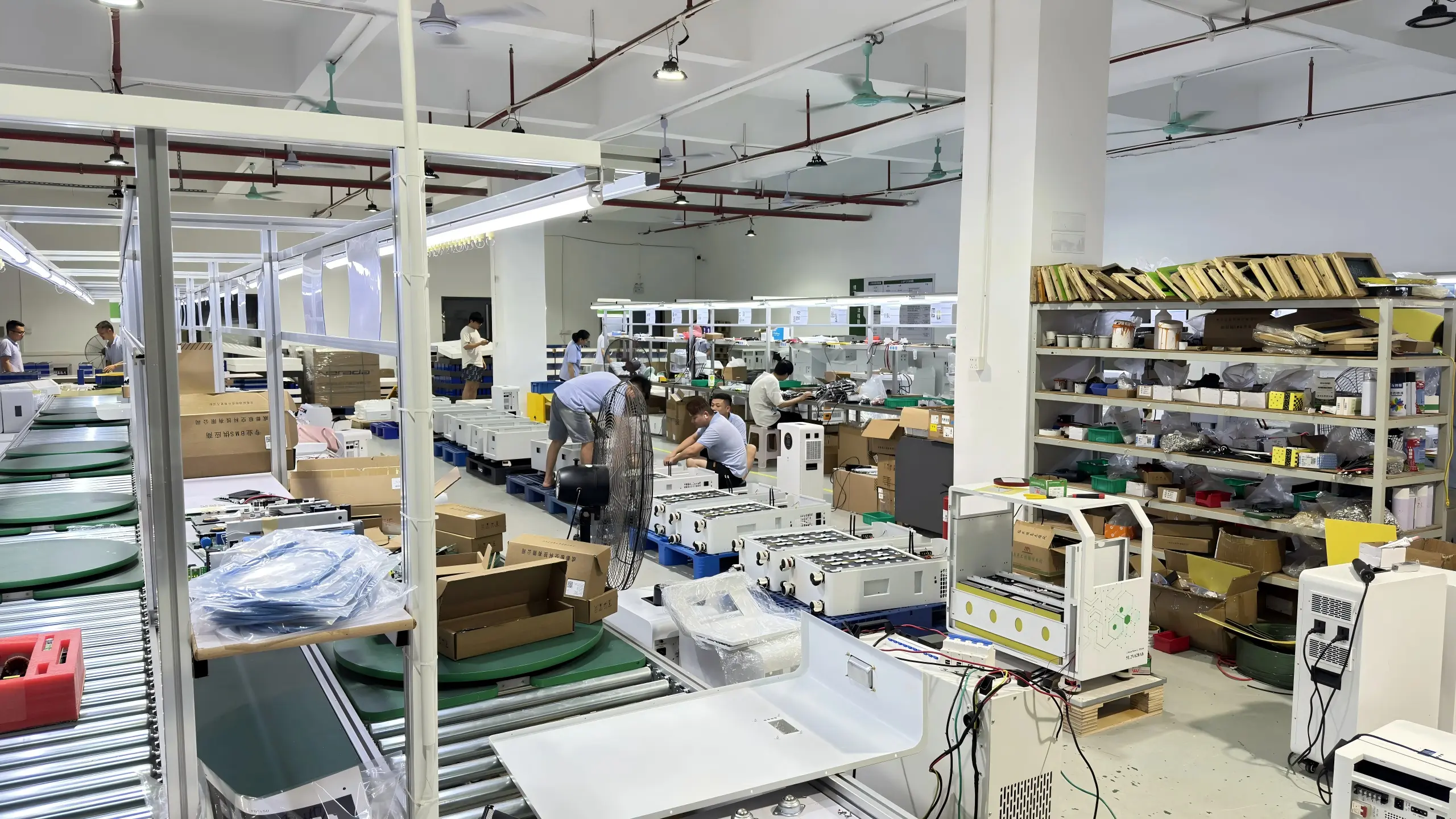
Need help matching this topic to a real battery project?
Send your target application, capacity range, certification market, and order plan. VoltCrave can recommend a practical product direction.