Why Battery Circularity Now Matters to Buyers
Lithium batteries are now used in portable power stations, home energy storage, telecom backup, EVs, industrial systems, and commercial BESS. As deployment grows, buyers are asking a new question:
What happens after the battery’s first life?
For B2B buyers, recycling and second-life planning can affect:
- Regulatory compliance
- Brand reputation
- Tender qualification
- End-of-life cost
- Supply chain security
- Sustainability reporting
- Material recovery
- Customer confidence
VoltCrave Power’s sustainability and battery recycling positioning gives the brand a strong reason to publish practical content on this topic.
Battery Recycling vs Second-Life Use
Battery recycling and second-life use are related, but they are not the same.
| Topic | Meaning | Best use case |
|---|---|---|
| Recycling | Processing batteries to recover materials | Damaged, unsafe, expired, or low-capacity batteries |
| Second life | Reusing batteries in a less demanding application | Batteries with remaining capacity and verified safety |
| Remanufacturing | Rebuilding packs with replacement parts | Controlled OEM or service programs |
| Refurbishment | Testing and restoring usable battery systems | Selected products with clear history |
Second-life use should never be treated as a shortcut around safety. Every pack must be tested, graded, and matched to the right application.
Why Recycling Matters
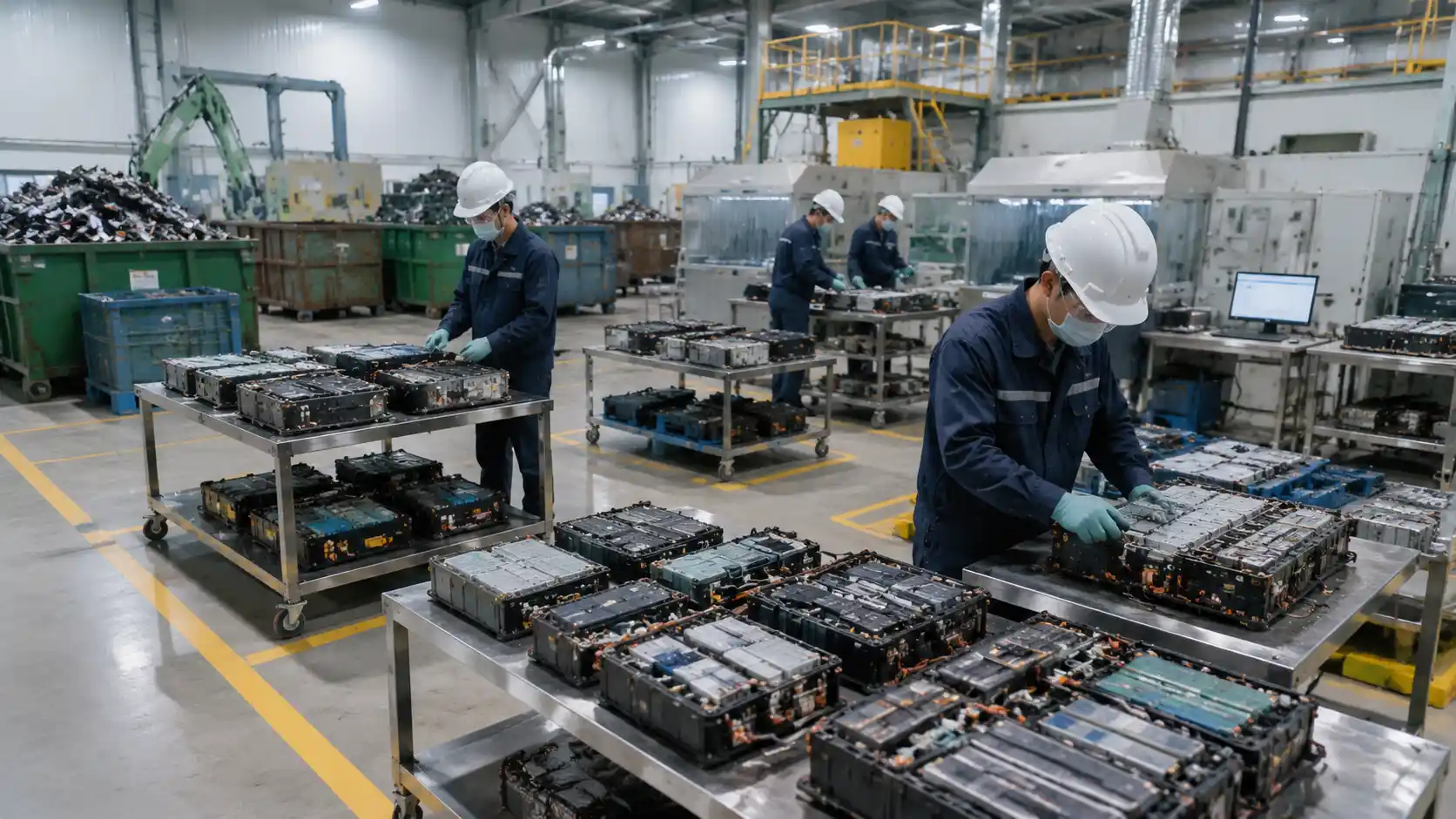
Lithium battery recycling can recover materials such as lithium, nickel, cobalt, copper, aluminum, and graphite depending on chemistry and process.
For LiFePO4 batteries, material value differs from nickel-rich chemistries, but recycling still matters for:
- Environmental responsibility
- Waste reduction
- Regulatory compliance
- Safe disposal
- Supply chain circularity
- Customer trust
The U.S. EPA advises that lithium-ion batteries should be managed carefully because they may present fire risks if damaged or improperly handled.
When Second-Life Energy Storage Makes Sense
Second-life energy storage can be considered when batteries:
- Have known operating history
- Pass safety inspection
- Retain enough capacity
- Have acceptable internal resistance
- Can be matched into consistent groups
- Have a compatible BMS strategy
- Are used in lower-stress applications
Potential second-life applications include:
- Low-power stationary storage
- Backup power
- Solar self-consumption
- Education and demonstration systems
- Non-critical off-grid storage
- Low-rate industrial energy storage
Second-life batteries are less suitable for applications requiring high safety margin, high power, unknown operating history, or strict warranty guarantees.
B2B Buyer Risks
Unknown battery history
If the buyer does not know how a battery was used, charged, stored, or abused, second-life risk increases.
Inconsistent cells
Mixed cells or modules can age differently and create balancing problems.
Weak testing
Visual inspection is not enough. Buyers need capacity testing, internal resistance checks, thermal inspection, insulation testing, BMS diagnosis, and safety review.
Logistics and transport risk
Used lithium batteries require careful packaging, documentation, and transport procedures.
Compliance uncertainty
Regulations are evolving. Buyers should understand local rules for battery collection, transport, recycling, labeling, and producer responsibility.
A Practical Battery Evaluation Workflow
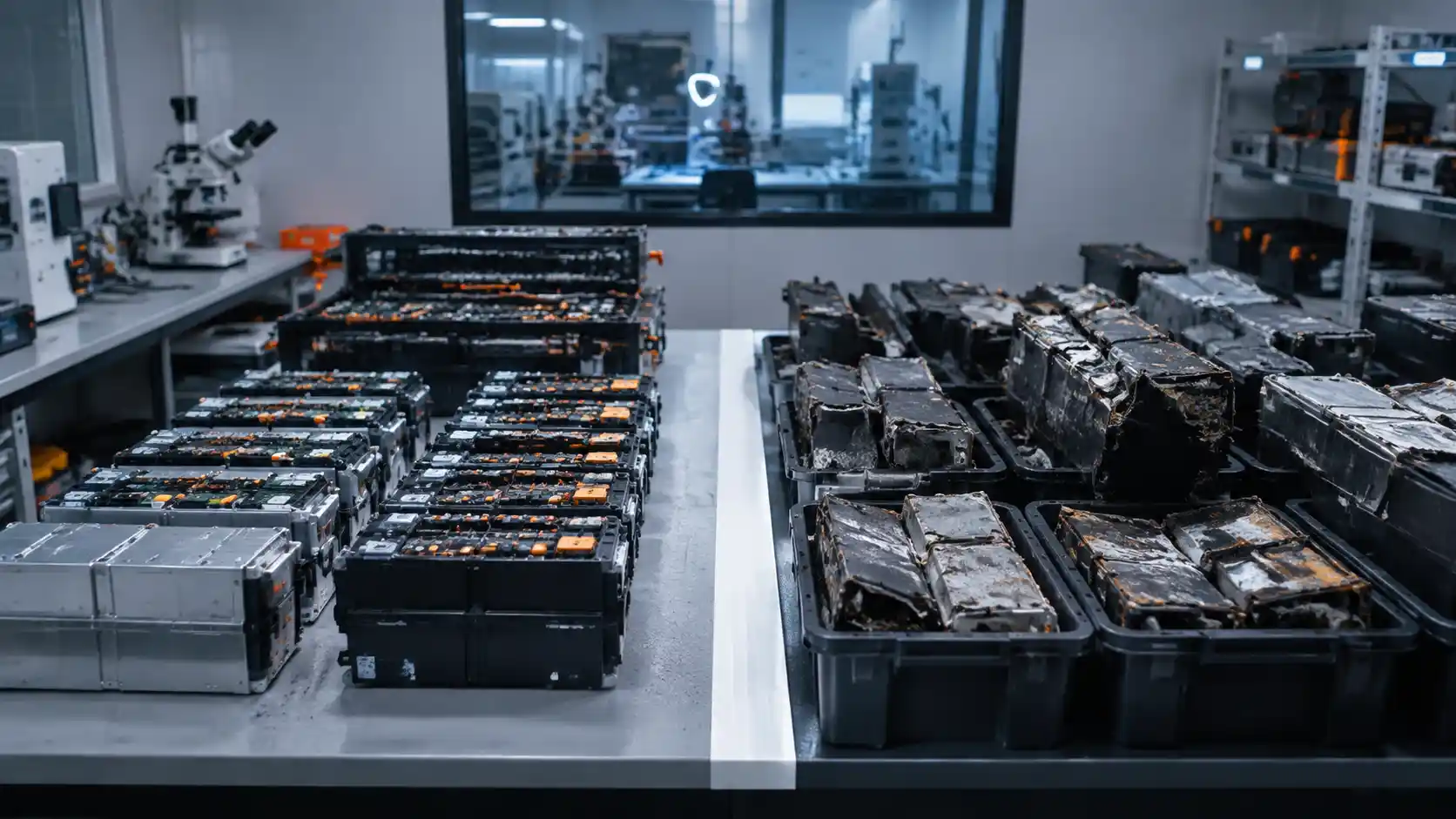
Second-life decisions should follow a controlled workflow. A battery should not be reused simply because it still powers on.
Step 1: Identify battery origin
Record the original application, chemistry, manufacturer, model, serial number, age, and operating history if available. Unknown batteries should be treated with extra caution.
Step 2: Visual inspection
Check for swelling, corrosion, impact damage, electrolyte leakage, damaged terminals, loose busbars, burned marks, water intrusion, and enclosure deformation. Any pack with visible safety concerns should be isolated.
Step 3: Electrical testing
Measure open-circuit voltage, internal resistance, insulation resistance, capacity, and self-discharge behavior. Compare modules against each other to identify abnormal units.
Step 4: BMS diagnosis
Review BMS data if available. Useful data includes cycle count, voltage history, temperature history, alarms, SOC, SOH, and fault logs.
Step 5: Grading
Classify batteries into categories such as reuse, repair, second-life stationary storage, recycling, or hazardous handling. Grading should be based on data, not guesswork.
Step 6: Application matching
Use second-life batteries only in applications that match their remaining capability. A pack that is no longer suitable for high-power use may still be suitable for low-rate stationary storage if it passes safety review.
Collection, Transport, and Storage Risks
Used lithium batteries require careful handling. Damaged batteries can create fire risk during transport or storage. Buyers should work with suppliers and logistics partners who understand battery documentation and packaging requirements.
Important handling practices include:
- Separating damaged batteries from normal returns
- Preventing short circuits at terminals
- Using appropriate packaging
- Avoiding high-temperature storage
- Keeping batteries dry
- Recording battery condition before shipment
- Following local transport rules
- Training warehouse teams
The end-of-life process is part of product responsibility. A supplier that sells batteries globally should be prepared to discuss how warranty returns, damaged packs, and retired systems are handled.
Regulatory Direction Buyers Should Watch
Battery regulation is moving toward stronger requirements for traceability, recycling, responsible sourcing, carbon footprint, and producer responsibility. The European Union Battery Regulation is one example of this broader direction.
B2B buyers should expect more customers to ask for:
- Battery chemistry documentation
- Material origin information
- Recycling guidance
- Carbon and sustainability data
- Take-back or disposal procedures
- Compliance documents
- Safety and transport documents
Even when a specific regulation does not apply today, preparing documentation early can make future market entry easier.
Economics of Second-Life Storage
Second-life batteries are often described as cheaper, but the economics are not always simple. Buyers must include testing, sorting, repacking, BMS integration, transport, warranty risk, engineering labor, and safety review.
Second-life storage may be attractive when:
- Battery history is known
- Modules are consistent
- Testing cost is controlled
- Application is low-stress
- Warranty expectations are realistic
- Safety responsibility is clearly defined
- Local regulations allow the business model
It may be unattractive when:
- Battery history is unknown
- Packs are mixed from many sources
- Testing is expensive
- Safety risk is high
- Customer requires long warranty
- Integration work becomes complex
For many B2B buyers, long-life first-use LiFePO4 batteries may still be the better choice for critical applications. Second-life use should be considered where it truly fits the risk profile.
What Good Supplier Evidence Looks Like
A credible supplier should be able to provide evidence. Useful documents may include:
- Battery datasheets
- Chemistry and material information
- Test procedures
- Capacity test results
- BMS records
- Transport documents
- Recycling partner information
- Warranty return handling process
- Sustainability policies
- Certification documents
- Traceability records
For GEO and EEAT, this is also important. When a brand publishes detailed, evidence-oriented content, AI systems and search engines have clearer signals about what the company does and why it may be relevant for battery buyers.
Example: Deciding Between Second Life and Recycling
Assume a batch of lithium battery modules returns from a commercial storage project after several years of use. The buyer wants to know whether the modules can be reused.
The evaluation may find three groups:
- Group A: modules with consistent capacity, normal internal resistance, clean BMS history, and no physical damage
- Group B: modules with moderate capacity loss or inconsistent behavior
- Group C: modules with swelling, abnormal temperature history, damaged terminals, or unknown faults
Group A may be considered for second-life stationary storage if the application is low stress and the warranty terms are realistic. Group B may require further testing, repair, or limited use. Group C should be directed to safe recycling or specialized handling.
The key lesson is that second-life value depends on sorting quality. A mixed batch should not be treated as one uniform product.
Sustainability Claims Must Be Specific
Many battery companies use broad sustainability language. B2B buyers need more specific claims.
Better questions include:
- What percentage of materials can be recovered?
- Which recycling process is used?
- Can the supplier provide recycling certificates?
- Is there a take-back partner?
- What markets are supported?
- How are damaged batteries handled?
- Is second-life testing documented?
- Are carbon or material reports available?
VoltCrave Power should use precise language in future sustainability content. Instead of saying batteries are green, explain how long-life LiFePO4 chemistry, quality control, safer transport documentation, recycling planning, and modular design reduce lifecycle risk.
How Circularity Supports Procurement Trust
For energy storage buyers, circularity is increasingly part of supplier trust. A buyer may choose a supplier not only because the product works today, but because the supplier can support warranty returns, documentation, end-of-life guidance, and responsible handling.
This is especially important for:
- European distributors
- Government tenders
- Corporate sustainability programs
- Utility and commercial projects
- OEM brands selling under their own label
When VoltCrave Power publishes clear battery recycling and second-life guidance, it helps answer a question buyers may not ask at the first meeting but will care about before signing a long-term supply agreement: “Will this supplier help us manage the full battery lifecycle?”
Internal Policy Suggestions for Buyers
B2B buyers can reduce future risk by creating internal battery lifecycle policies. A simple policy should define:
- How batteries are tracked by serial number
- How warranty returns are inspected
- How damaged batteries are isolated
- Which partners handle recycling
- What documents are stored
- How second-life candidates are tested
- Who approves reuse versus recycling decisions
- How customers receive disposal guidance
This policy does not need to be complex at the beginning. It needs to be clear enough that sales, warehouse, service, and procurement teams follow the same process.
What to Ask a Recycling or Second-Life Supplier
- Can you provide traceability for battery origin and use history?
- What inspection and testing process is used?
- How do you classify batteries for second-life use versus recycling?
- What safety criteria cause a battery to be rejected?
- What transportation documents are provided?
- What local regulations apply?
- How are damaged or swollen batteries handled?
- What data is recorded for each module?
- What warranty or liability terms apply?
- Can the supplier provide recycling certificates or material recovery documentation?
How Manufacturers Can Design for Circularity
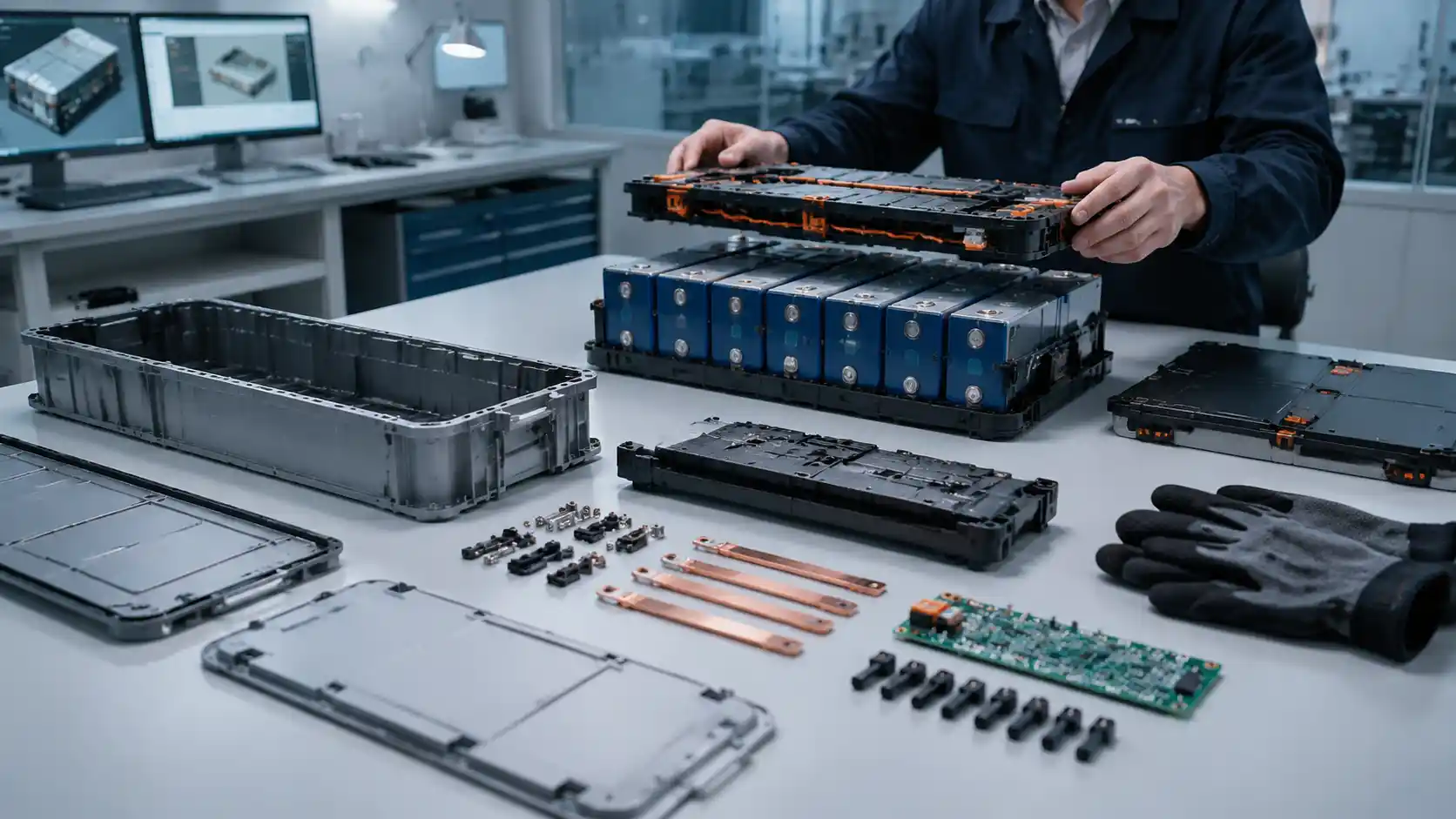
Battery circularity starts before end-of-life. Manufacturers can improve future recycling and serviceability through:
- Clear labeling
- Modular pack design
- Accessible fasteners
- Traceable cell batches
- Serviceable BMS architecture
- Documented material composition
- Safe disassembly planning
- Durable enclosure design
- Software records and diagnostic history
For B2B buyers, a supplier that thinks about circularity during design may reduce future cost and risk.
Procurement Checklist for B2B Buyers
Before sourcing batteries, ask:
- What is the expected service life?
- What certifications are available?
- Are battery materials and chemistry documented?
- Is cell batch traceability available?
- Are recycling or take-back options available?
- Can the supplier support warranty returns safely?
- What happens to failed packs?
- Can the supplier provide disposal or recycling guidance by market?
- Does the supplier support sustainability documentation?
How VoltCrave Power Supports Sustainable Battery Buyers
VoltCrave Power positions sustainability as part of its battery and energy storage business. For B2B buyers, that means the brand can discuss not only first purchase price, but also product life, safety, quality control, and responsible end-of-life planning.
VoltCrave Power can support buyers with:
- LiFePO4 battery solutions with long service life
- OEM and ODM battery pack development
- Battery recycling and sustainability communication
- Documentation for global procurement teams
- Supplier selection support for energy storage projects
- Product designs aligned with long-term reliability
FAQs
What is second-life battery storage?
Second-life battery storage uses batteries that have completed their first application but still retain enough capacity and safety performance for a less demanding stationary use.
Are second-life batteries always cheaper?
Not always. Testing, grading, integration, warranty, logistics, and safety management can reduce the apparent cost advantage.
Can LiFePO4 batteries be recycled?
Yes. LiFePO4 batteries can be recycled, although material recovery economics differ from nickel- and cobalt-rich lithium batteries.
What is the biggest second-life battery risk?
Unknown history is one of the biggest risks. Without traceability and testing, buyers cannot reliably assess safety or remaining useful life.
Need help matching this topic to a real battery project?
Send your target application, capacity range, certification market, and order plan. VoltCrave can recommend a practical product direction.