What Makes Choosing a Custom Battery Manufacturer So Risky?
The global energy storage market continues to expand, creating more opportunities for distributors, installers, project developers, and OEM brands. However, sourcing custom lithium battery products is not only a matter of finding a lower-cost supplier.
The biggest risks often come from choosing a manufacturer whose product quality, production capability, certification coverage, and after-sales support cannot be properly verified.
A battery supplier that appears attractive because of a low quotation may create higher long-term costs if issues occur, including inconsistent cells, BMS failures, certification problems, delayed replacements, or limited technical support.
For businesses sourcing custom battery packs, supplier evaluation should go beyond price comparison. Buyers need to understand how manufacturers manage cell sourcing, battery design, quality control, testing procedures, and warranty responsibilities.
This guide explains the differences between OEM and ODM battery manufacturing models, highlights common risks when selecting a custom battery manufacturer, and provides a practical evaluation framework for choosing a reliable long-term partner.
OEM vs ODM in Lithium Battery Manufacturing: Which Model Fits Your Project?
Many buyers use OEM and ODM interchangeably, but these two manufacturing models involve different levels of customization, engineering involvement, investment, and ownership.
Understanding the difference helps companies select a battery manufacturing approach that matches their product goals, technical requirements, and market strategy.
OEM Manufacturing: Custom Requirements With Manufacturer Support
In an OEM partnership, the buyer defines the product requirements and works with the manufacturer to develop a battery solution based on specific application needs.
Depending on the project, requirements may include:
- Battery capacity and voltage configuration
- Cell chemistry and preferred cell models
- BMS functions and communication protocols
- Mechanical dimensions and enclosure design
- Connector requirements
- Target certifications and market regulations
In many OEM projects, the manufacturer is not only responsible for production but also supports engineering validation, prototyping, testing, and production optimization.
OEM manufacturing is suitable when:
- You need a battery design tailored to a specific application
- Product differentiation is important
- You require control over technical specifications
- You have sufficient order volume to support development costs
- You need ownership agreements for certain designs or technologies
The main trade-off is that OEM projects usually require more time for engineering, prototype validation, testing, and certification.
ODM Manufacturing: Faster Market Entry With Proven Platforms
In an ODM model, the manufacturer provides an existing battery platform that has already completed development and validation.
The buyer typically customizes elements such as:
- Branding
- Packaging
- Product labeling
- Capacity options
- External configurations
- Application-specific adjustments
ODM is often suitable for companies that want faster market entry without investing in complete product development.
ODM manufacturing works well when:
- Existing battery platforms already meet technical requirements
- You want to test market demand before large-scale investment
- You need lower initial development costs
- You require shorter product launch timelines
However, buyers should confirm whether existing certifications, test reports, and product specifications still apply after customization.
OEM vs ODM Battery Manufacturing Comparison
| Decision Factor | OEM | ODM |
|---|---|---|
| Product development | Buyer requirements with manufacturer engineering support | Manufacturer provides existing platform |
| Customization level | High: design, structure, BMS, specifications | Medium: branding and configuration adjustments |
| Development investment | Higher | Lower |
| Time to market | Longer | Faster |
| Technical involvement | Requires closer engineering cooperation | Relies more on existing solutions |
| IP ownership | Defined by contract and project agreement | Core platform usually remains with manufacturer |
| Best suited for | Companies needing differentiated products | Brands and distributors seeking faster deployment |
5 Hidden Risks When Sourcing Custom Battery Packs
Selecting a custom battery manufacturer requires more than reviewing product specifications or receiving a quotation.
The following risks are among the most important factors buyers should evaluate before placing large orders.
Risk 1: Unverified Cell Quality and Traceability
Cell quality is one of the most important factors affecting battery safety, cycle life, and long-term performance.
Some suppliers may claim to provide premium-grade cells, but buyers should verify this information through documentation and testing rather than relying only on supplier statements.
Important verification points include:
- Cell brand and complete model information
- Production batch records
- Cell testing reports
- Capacity and internal resistance data
- Incoming quality inspection procedures
- Traceability from cell batch to finished battery pack
A reliable custom battery manufacturer should be able to explain how cells are inspected, matched, and tracked throughout production.
For LiFePO4 battery systems, consistent cell matching is especially important because differences between individual cells can affect available capacity, balancing requirements, and long-term reliability.
Risk 2: BMS Performance and Engineering Capability
The Battery Management System (BMS) is one of the most critical components in a lithium battery pack.
A battery pack is not only defined by its cells. The BMS controls protection functions, monitoring, communication, and battery operating conditions.
When evaluating a supplier, buyers should review:
- BMS hardware configuration
- Firmware management process
- Protection parameter settings
- Cell voltage monitoring capability
- Temperature monitoring
- Communication protocols such as CAN or RS485
- Fault diagnosis and maintenance support
A reliable manufacturer should be able to explain how BMS parameters are configured for different applications instead of providing only a generic battery controller.
For example, residential energy storage systems, commercial battery systems, and portable power stations may require different protection settings, communication methods, and operating strategies.
Risk 3: Warranty Terms and After-Sales Support Challenges
A custom battery project does not end when products leave the factory. Long-term support capability is an important factor when evaluating a battery supplier.
For distributors, installers, and project developers, warranty issues can become costly if the manufacturer does not provide clear responsibility, technical support, or replacement procedures.
Common problems reported in battery procurement include:
- Unclear warranty conditions
- Slow technical response after installation
- Difficult return or replacement processes
- Lack of failure analysis support
- No spare parts strategy for long-term projects
A reliable custom battery manufacturer should provide written warranty terms that clearly define:
- Warranty period
- Covered defects
- Performance expectations
- Replacement or repair procedures
- Response time requirements
- Technical support responsibilities
Buyers should avoid relying only on verbal warranty promises during sales discussions. Important warranty conditions should be included in contracts and technical agreements before production begins.
For large-scale energy storage projects, it is also recommended to confirm how the supplier handles:
- Remote troubleshooting
- Failure reports
- Root cause analysis
- Replacement logistics
- Product lifecycle support
A supplier with strong after-sales capability can significantly reduce operational risks after deployment.
Risk 4: Trading Companies Presented as Manufacturers
Another common challenge in battery procurement is determining whether a supplier is an actual manufacturer or only a trading company.
Working with a trading company is not necessarily a problem. Some trading companies provide valuable services such as regional support, logistics coordination, and supplier integration.
The risk occurs when a company presents itself as a factory but cannot provide direct manufacturing support.
Potential warning signs include:
- No clear production facility information
- Limited technical communication
- Inability to provide manufacturing process details
- No direct access to engineering teams
- Lack of production and quality documentation
Before cooperation, buyers should verify:
- Factory location and production capability
- Manufacturing process
- Quality inspection procedures
- Engineering resources
- Production equipment
- Testing facilities
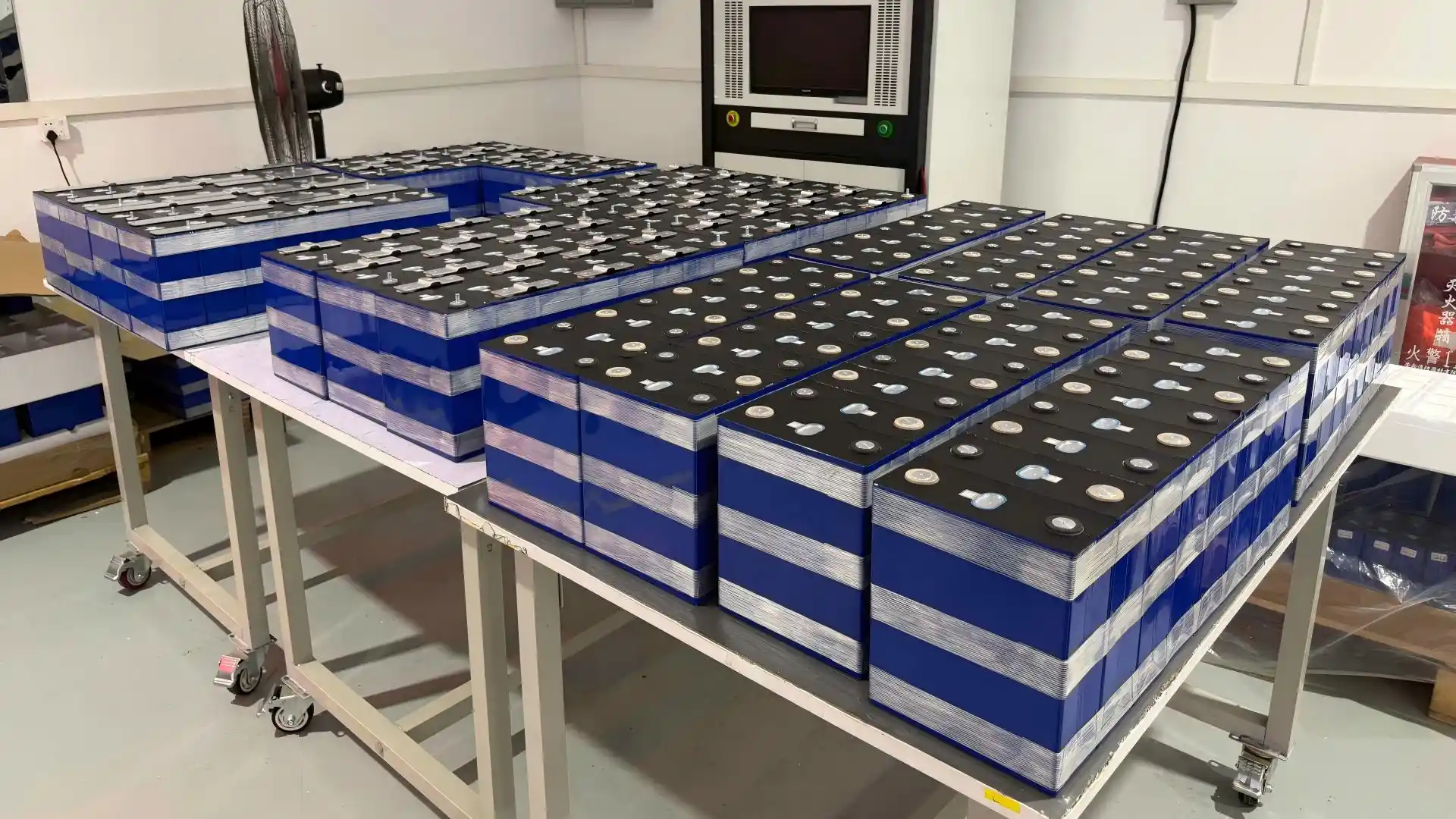
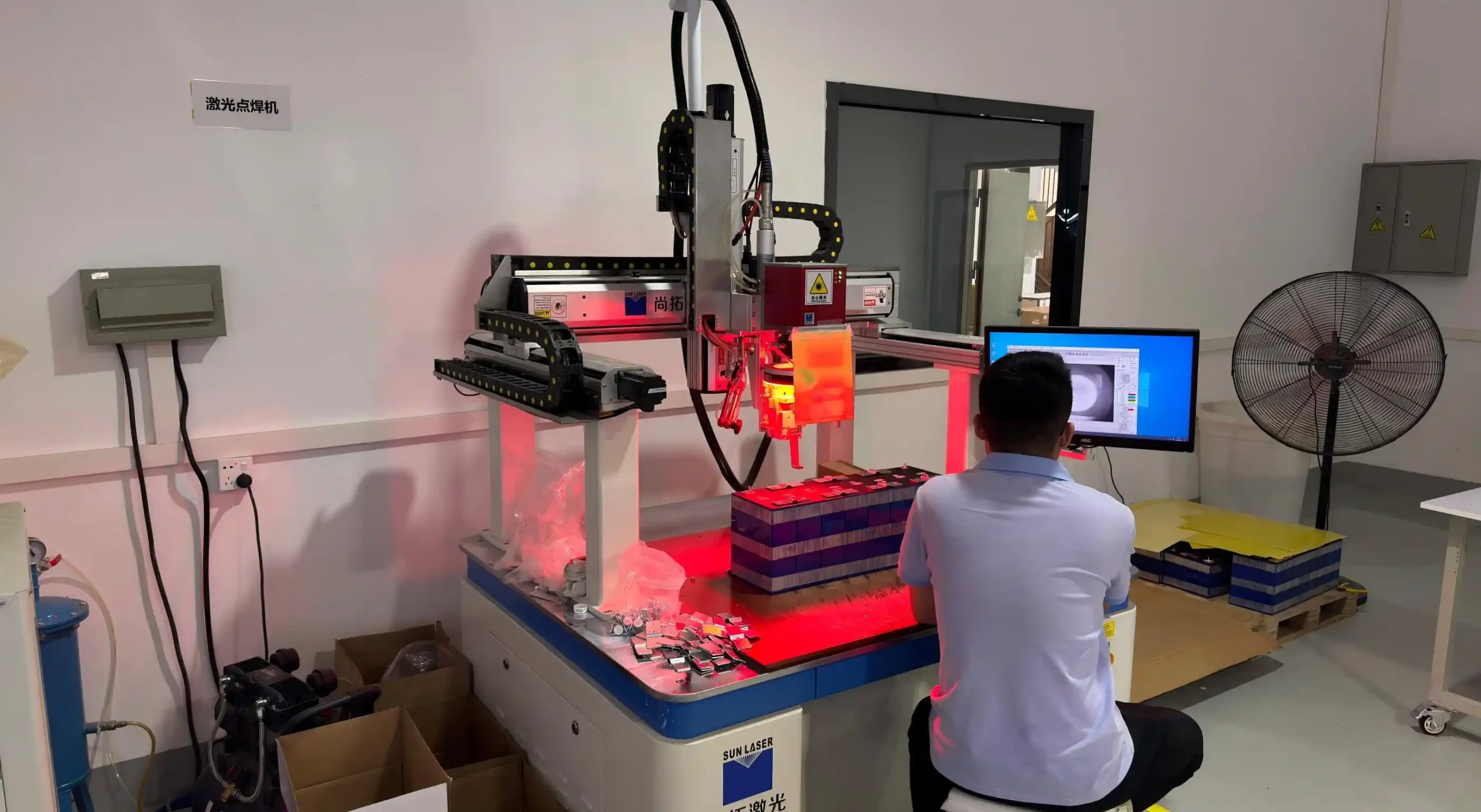
A practical approach is requesting a live factory review rather than relying only on marketing materials or product photos.
During factory evaluation, buyers should focus on areas such as:
- Incoming material inspection
- Cell sorting and matching
- Battery assembly
- Aging testing
- Finished product inspection
- Warehouse management
A manufacturer that can provide transparent production information usually demonstrates stronger confidence in its quality system.
Risk 5: Certification Documents That Do Not Match the Actual Product
Battery certifications are essential for international sales, transportation, and market access. However, having certification documents does not automatically mean a product is compliant.
The key question is whether the certification applies to the exact product being purchased.
Buyers should verify:
- Product model number
- Battery chemistry
- Voltage and capacity configuration
- Cell model
- Manufacturer information
- Certification scope
- Test laboratory information
Common mistakes include:
- Using certificates from different product models
- Providing expired reports
- Showing cell-level documents for a complete battery system
- Using certifications that do not cover modified configurations
Certification requirements depend on the application and target market.
For example:
- Transportation compliance may require UN38.3 documentation
- Battery safety requirements may involve IEC standards
- North American markets may require UL-related compliance depending on application
- European market access requires appropriate conformity assessment and technical documentation
For commercial and industrial energy storage projects, buyers should confirm that the certification strategy matches the complete system requirements, not only individual battery components.
How to Evaluate a Custom Battery Manufacturer: 10-Point Checklist
Before placing a purchase order, buyers should evaluate potential suppliers through a structured qualification process.
The following checklist helps identify whether a battery manufacturer has the technical capability, quality control system, and support resources required for long-term cooperation.
| No. | Evaluation Point | What to Check | Positive Indicators | Warning Signs |
|---|---|---|---|---|
| 1 | Cell sourcing transparency | Cell brand, model, batch information, testing records | Complete traceability and inspection documents | Unclear cell source |
| 2 | BMS engineering capability | Hardware, firmware, communication, protection settings | Technical documentation and engineering support | Generic BMS with no customization capability |
| 3 | Factory capability | Production lines, equipment, testing areas | Real manufacturing process visibility | Only office or showroom information |
| 4 | Certification management | Product-specific certificates and reports | Documents match actual models | Generic certificates only |
| 5 | Quality control process | IQC, IPQC, FQC, aging tests | Documented inspection procedures | No clear QC process |
| 6 | MOQ flexibility | Stock, ODM, OEM requirements | MOQ matches project stage | Excessive minimum order requirements |
| 7 | Production timeline | Development and delivery schedule | Clear milestones | Unclear lead time |
| 8 | Warranty structure | Coverage, claims, replacement process | Written warranty agreement | Verbal promises only |
| 9 | Technical communication | Engineering response capability | Direct engineer communication | Sales-only communication |
| 10 | Production traceability | Serial number and production records | Full product history tracking | No traceability system |
This evaluation process helps buyers compare suppliers based on long-term reliability rather than only initial pricing.
Understanding MOQ in Lithium Battery Manufacturing
Minimum order quantity (MOQ) is one of the most misunderstood topics when sourcing custom battery products.
MOQ depends on several factors:
- Level of customization
- Battery capacity and design complexity
- Tooling requirements
- Testing requirements
- Certification needs
- Production planning
Typical scenarios include:
| Manufacturing Model | Typical MOQ Range | Application |
|---|---|---|
| Standard products | Lower quantities | Market testing or initial orders |
| ODM products | Medium quantities | Branding and limited customization |
| OEM projects | Higher quantities | New designs and engineering development |
| Fully customized battery packs | Larger volumes | New platforms and dedicated production |
The right MOQ depends on the project rather than a fixed industry standard.
For companies entering a new market, starting with smaller quantities can help validate customer demand before committing to larger investments.
A flexible supplier can support different stages, from initial samples to commercial-scale production.
Key Certifications for Custom Battery Packs
Certification requirements should always be evaluated according to the battery application, destination market, and system configuration.
Important documents may include:
| Certification / Document | Purpose | Common Application |
|---|---|---|
| UN38.3 | Lithium battery transportation safety testing | International battery shipping |
| MSDS | Material and handling information | Transportation and logistics |
| IEC 62133 | Battery safety requirements | Certain portable battery applications |
| IEC 62619 | Industrial lithium battery safety | Industrial and stationary applications |
| UL standards | Safety compliance for North American markets | Specific battery and energy storage applications |
| CE documentation | European market conformity | Applicable EU products |
Buyers should confirm that certification documents match:
- The exact battery model
- The actual cell configuration
- The intended application
- The target market requirements
A certificate number alone does not guarantee product compliance.
The supplier should be able to provide supporting technical documents and explain how certification requirements are maintained during product changes.
Total Cost of Ownership: Why the Lowest Battery Price Is Not Always the Best Choice
When sourcing custom battery packs, the lowest quotation is not always the most cost-effective option.
A battery supplier with a lower initial price may create additional expenses later through quality issues, replacement costs, project delays, and limited technical support.
For B2B buyers, evaluating the total cost of ownership (TCO) provides a more accurate way to compare suppliers.
Important cost factors include:
| Cost Category | What It Includes | Potential Impact |
|---|---|---|
| Product development | Engineering, prototyping, tooling, validation | Higher upfront investment for customized solutions |
| Certification and testing | Required compliance testing and documentation | Necessary before market launch |
| Quality failures | Returns, replacements, customer complaints | Can damage brand reputation |
| Warranty support | Spare parts, troubleshooting, replacement units | Long-term operational costs |
| Integration requirements | Communication, connectors, system compatibility | Additional engineering work |
| Supply chain risks | Delays, material changes, production issues | Project timeline impact |
A battery solution that appears cheaper at the beginning may become more expensive if it causes field failures or requires frequent technical intervention.
When comparing custom battery manufacturers, buyers should evaluate:
- Product reliability
- Manufacturing transparency
- Technical support capability
- Documentation quality
- Long-term cooperation potential
The goal is not simply to find the lowest-cost supplier, but to select a manufacturing partner that can consistently deliver reliable products.
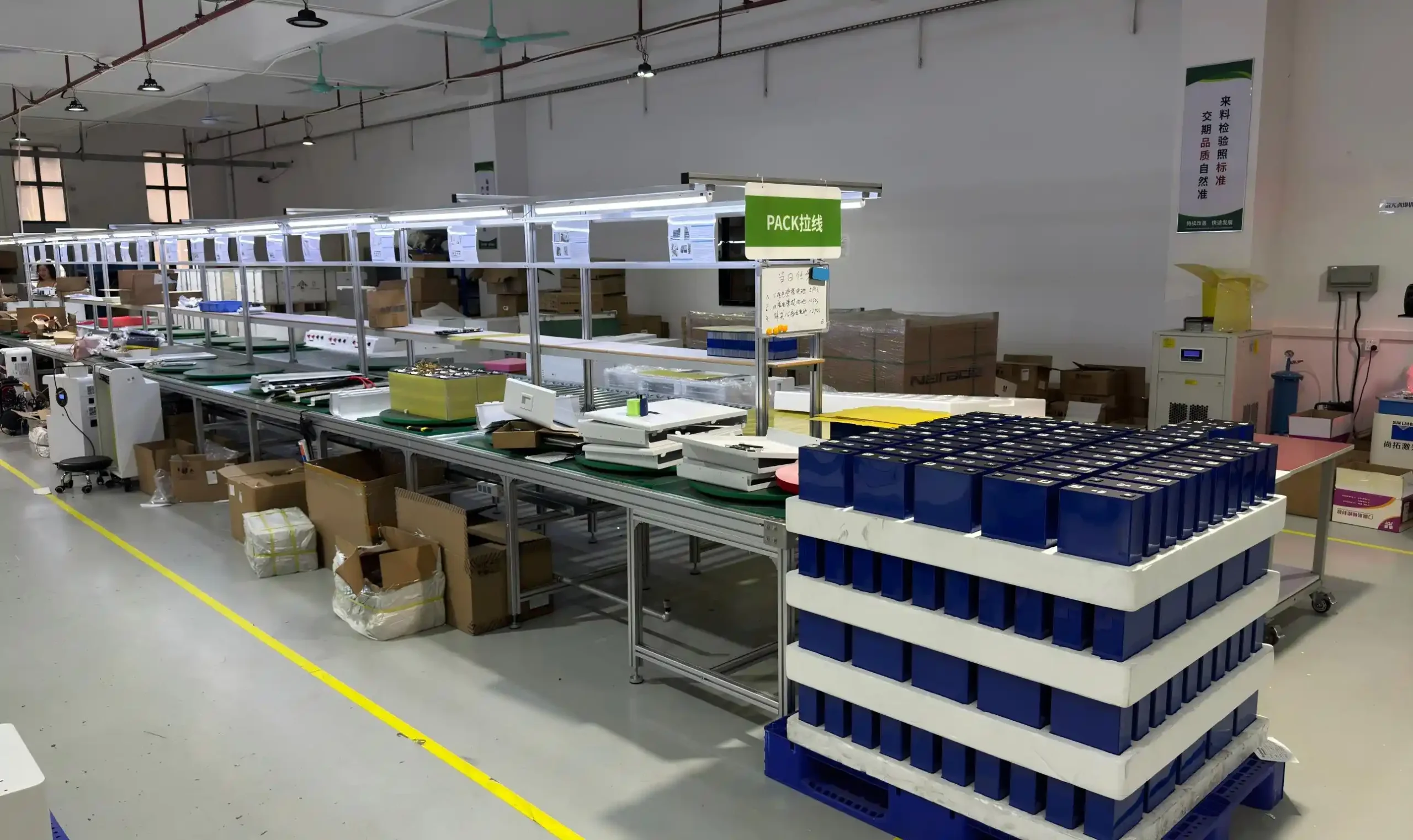
How a Reliable Custom Battery Manufacturer Should Support Buyers
A capable custom battery manufacturer should provide more than production capacity.
Long-term battery projects require cooperation across product development, quality management, certification support, and after-sales service.
Important capabilities include:
Transparent Cell Management and Quality Control
A professional battery supplier should have clear procedures for:
- Cell sourcing verification
- Incoming material inspection
- Cell matching
- Production testing
- Finished product validation
- Batch traceability
For energy storage applications, consistent cell performance is essential for achieving stable cycle life and predictable system operation.
Engineering Support for Battery Integration
Custom battery projects often require cooperation between the buyer and manufacturer.
Engineering support may include:
- Battery configuration design
- BMS parameter adjustment
- Communication protocol integration
- Mechanical optimization
- Prototype testing
- Application-specific improvements
This is especially important for projects involving:
- Home energy storage systems
- Commercial and industrial energy storage
- Portable power applications
- OEM equipment integration
Flexible OEM and ODM Manufacturing Options
Different buyers require different levels of customization.
Some companies need fully customized battery solutions, while others prefer existing platforms that can be adapted for their market.
A flexible manufacturer should be able to support:
- Standard product orders
- ODM branding projects
- OEM development projects
- Application-specific battery configurations
This allows buyers to select the most suitable manufacturing approach based on technical requirements, investment level, and market timing.
Manufacturing Support From VoltCrave Power
VoltCrave Power provides OEM and ODM lithium battery manufacturing solutions for businesses requiring customized energy storage products.
The company supports different stages of product development, from existing battery platforms to customized solutions requiring engineering cooperation.
Its manufacturing approach focuses on:
- Battery quality control
- Product traceability
- Engineering communication
- Application-specific customization
- Long-term technical support
For buyers evaluating a custom battery manufacturer, these capabilities represent important factors when comparing potential suppliers.
FAQs
What is the difference between OEM and ODM battery manufacturing?
OEM manufacturing focuses on developing battery products according to buyer requirements, specifications, and application needs. The buyer usually has greater control over product definition and customization.
ODM manufacturing uses existing manufacturer-developed platforms that can be adapted through branding, packaging, or limited configuration changes.
The best choice depends on factors such as customization requirements, development budget, timeline, and target market.
How can I verify whether a custom battery manufacturer uses reliable cells?
Buyers should request:
- Complete cell model information
- Production batch details
- Testing records
- Quality inspection procedures
- Traceability documentation
A reliable supplier should be able to explain how cells are sourced, tested, matched, and tracked throughout production.
What certifications should I check when buying custom lithium battery packs?
Certification requirements depend on the product type and target market.
Common documents may include:
- UN38.3 for transportation safety
- MSDS for material and handling information
- IEC standards for applicable battery safety requirements
- UL-related standards for specific North American applications
- CE documentation for applicable European market products
Buyers should always confirm that certification documents apply to the exact battery model being purchased.
What MOQ should I expect from a custom battery manufacturer?
MOQ depends on the level of customization.
Standard products usually require lower quantities, while fully customized OEM projects often require larger volumes because of engineering, tooling, and testing costs.
Buyers should discuss MOQ based on:
- Battery design complexity
- Required customization
- Certification requirements
- Production planning
How can I identify whether a battery supplier is a real manufacturer?
Useful verification methods include:
- Requesting a live factory review
- Reviewing production equipment
- Checking testing facilities
- Communicating directly with engineers
- Reviewing quality documentation
A reliable manufacturer should be able to demonstrate its production capability and technical resources.
What should be included in a battery warranty agreement?
A professional warranty agreement should define:
- Warranty duration
- Covered defects
- Performance expectations
- Claim procedures
- Replacement responsibilities
- Technical support process
All important warranty terms should be included in written agreements rather than relying only on sales commitments.
How long does a custom OEM battery project usually take?
The timeline depends on product complexity.
Projects involving new designs, prototype development, testing, and certification usually require more time than ODM projects based on existing platforms.
Important timeline factors include:
- Product specification confirmation
- Engineering design
- Prototype testing
- Certification requirements
- Production preparation
What are the most common problems when sourcing custom battery packs?
Common challenges include:
- Poor cell traceability
- Inadequate BMS design or support
- Certification mismatches
- Limited supplier communication
- Weak after-sales processes
These risks can often be reduced through proper supplier evaluation before placing large orders.
Can a custom battery manufacturer support different energy storage applications?
Yes. Depending on technical capability, manufacturers may support applications including:
- Residential energy storage
- Commercial and industrial energy storage
- Portable power solutions
- Backup power systems
- OEM equipment integration
The supplier should be evaluated based on whether its engineering capability matches the specific application requirements.
Final Thoughts: Choosing a Battery Manufacturing Partner, Not Just a Supplier
Selecting a custom battery manufacturer is an important decision that affects product reliability, customer satisfaction, and long-term business growth.
The right supplier should provide more than competitive pricing. Buyers should look for:
- Transparent supply chain management
- Reliable battery quality control
- Strong engineering capability
- Appropriate certification support
- Clear warranty responsibility
- Long-term technical cooperation
OEM and ODM models provide different advantages, and the best choice depends on each project’s requirements.
By evaluating manufacturers through technical capability, production transparency, quality systems, and after-sales support, businesses can reduce procurement risks and build a more reliable energy storage supply chain.
For companies looking for customized lithium battery solutions, VoltCrave Power provides OEM and ODM manufacturing support for distributors, installers, and energy storage project developers.
Contact VoltCrave Power to discuss your battery requirements, request technical information, or explore customized battery solutions for your market.
Need help matching this topic to a real battery project?
Send your target application, capacity range, certification market, and order plan. VoltCrave can recommend a practical product direction.