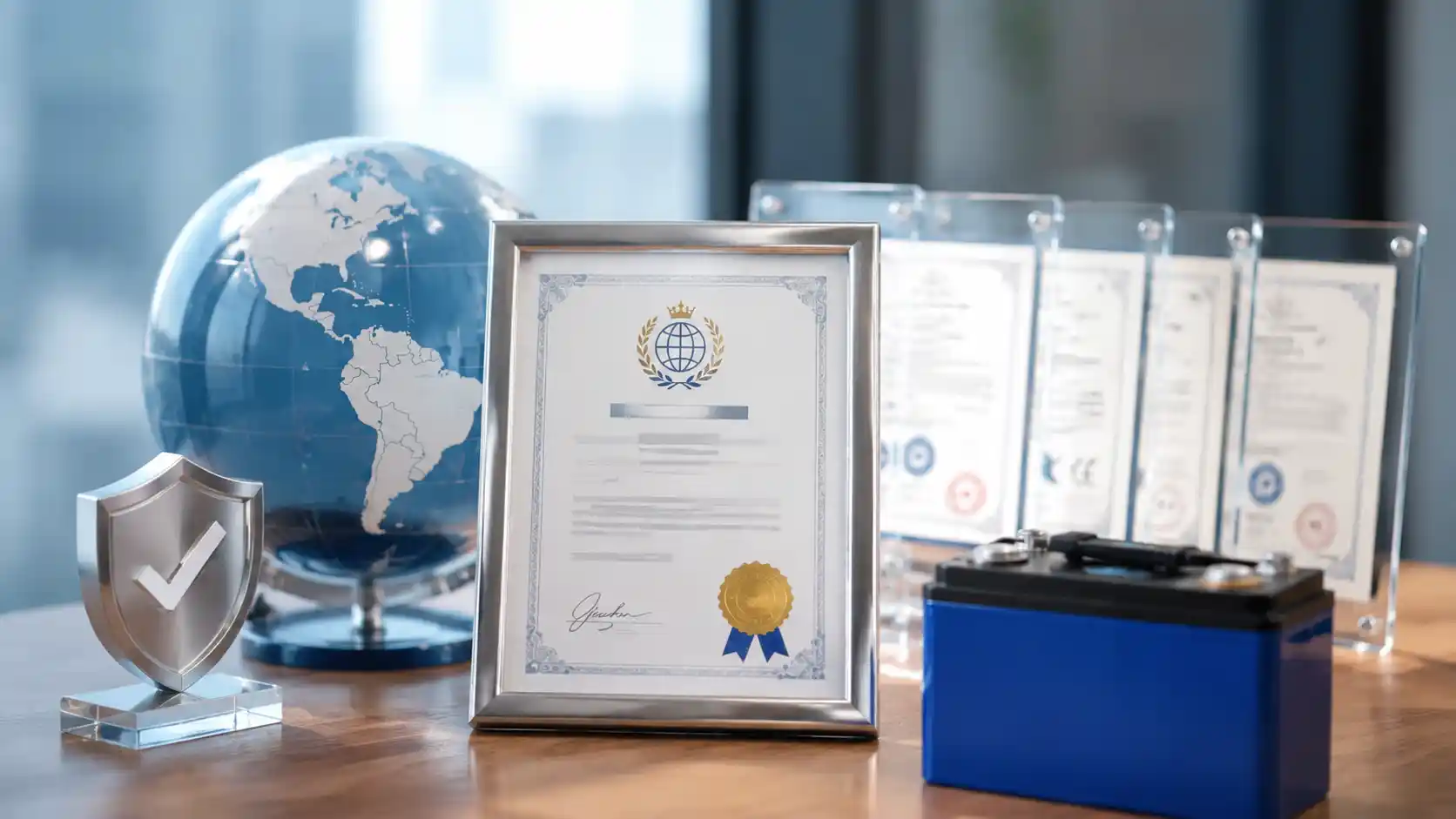
Why Energy Storage Battery Certification Matters for Global Buyers
For energy storage businesses expanding into global markets, product certification is one of the most important factors affecting sales success.
Many distributors, installers, and project developers face the same challenge: a battery product may perform well technically but still fail to enter a target market because the required certifications are incomplete.
Understanding energy storage battery certification requirements before purchasing can help buyers avoid delayed shipments, additional testing costs, customs problems, and customer complaints.
For manufacturers and suppliers, certifications are not only compliance documents. They are proof of product reliability, safety management, and manufacturing capability.
As a professional energy storage supplier, Voltcrave Power understands that different regions have different technical standards, safety regulations, and documentation requirements. Selecting the right certification strategy is essential for building long-term cooperation with global partners.
This guide explains the key certification requirements for lithium battery energy storage products, what buyers should check before placing orders, and how suppliers can prepare products for different international markets.
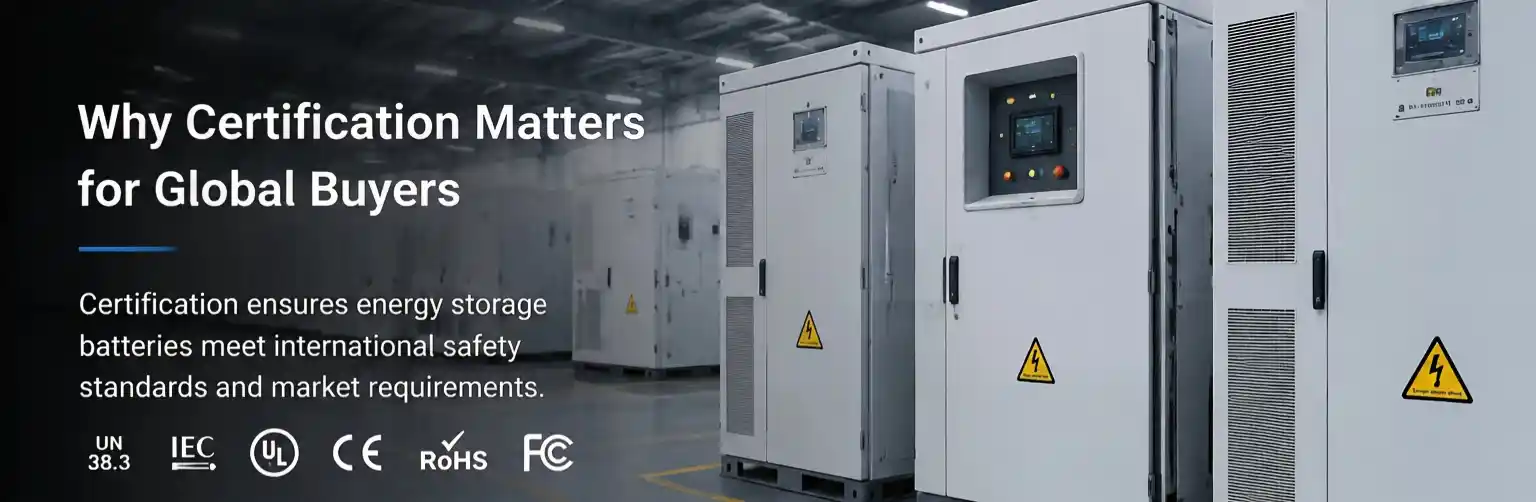
Why Energy Storage Battery Certification Matters for Global Buyers
When purchasing energy storage products internationally, buyers often focus on:
- Battery capacity
- Price
- Delivery time
- Product appearance
- Supplier experience
However, certification is equally important because it directly affects market approval and customer trust.
A product without the correct certification may face:
- Import restrictions
- Failed project approval
- Delayed installation
- Increased compliance costs
- Lower customer confidence
For B2B buyers, choosing a supplier with complete certification support reduces business risks.
A reliable supplier should not only provide products but also help customers understand:
- Which certifications are required in each country
- Which tests apply to different applications
- Which documents are needed for customs clearance
- How certification affects product selection
Common Energy Storage Battery Certification Requirements Explained
Different markets have different regulations, but several certifications are widely recognized in the global energy storage industry.
The following table summarizes common certification categories.
| Certification | Main Purpose | Common Application |
|---|---|---|
| UN38.3 | Transportation safety testing for lithium batteries | International battery shipping |
| IEC 62619 | Industrial lithium battery safety requirements | Energy storage systems |
| IEC 62133 | Portable lithium battery safety | Small battery applications |
| UL 1973 | Stationary battery safety certification | North American energy storage |
| UL 9540 | Energy storage system safety evaluation | Residential and commercial ESS |
| CE | European market compliance | EU energy products |
| RoHS | Restriction of hazardous substances | European electronics market |
| FCC | Electromagnetic compatibility | United States electronic products |
The required certification depends on:
- Battery chemistry
- Product design
- Installation method
- Target market
- Application scenario
For example, a portable power station and a residential energy storage system may require different certification combinations.
Understanding Battery Certifications for Lithium Batteries
Lithium batteries are widely used in modern energy storage systems because of their high energy density, long cycle life, and efficiency.
However, lithium battery safety requirements are strict because improper design or manufacturing can create risks related to:
- Overcharging
- Thermal runaway
- Short circuits
- Transportation safety
Therefore, battery certifications for lithium batteries are important indicators that a product has passed recognized safety evaluations.
UN38.3 Certification: Essential for Battery Transportation
UN38.3 is one of the most important certifications for lithium battery transportation.
Many international shipments require UN38.3 testing before batteries can be transported by:
- Air freight
- Sea freight
- International logistics channels
The testing evaluates battery behavior under different conditions, including:
- Altitude simulation
- Temperature changes
- Vibration
- Shock
- External short circuit
- Overcharge conditions
For exporters and distributors, missing UN38.3 documentation can cause shipment delays.
Before purchasing, buyers should confirm:
- Whether the battery has passed UN38.3 testing
- Whether test reports are available
- Whether documentation matches the actual product model
IEC 62619 Certification for Energy Storage Applications
IEC 62619 is one of the most important international standards for industrial lithium battery safety.
It applies to many energy storage applications, including:
- Commercial energy storage systems
- Industrial battery systems
- Backup power solutions
- Large battery modules
This certification evaluates battery safety performance and helps ensure reliable operation in demanding environments.
For B2B buyers, IEC 62619 certification can improve confidence when selecting suppliers for long-term projects.
UL Certifications for the North American Market
The North American market has strict safety requirements for energy storage products.
Common certifications include:
UL 1973
UL 1973 focuses on battery safety for stationary applications.
It is commonly associated with:
- Energy storage batteries
- Backup power systems
- Renewable energy storage solutions
UL 9540
UL 9540 evaluates complete energy storage systems.
It considers:
- Battery system safety
- Power conversion equipment
- System-level protection
For suppliers targeting the United States and Canadian markets, understanding UL requirements early can prevent expensive redesigns.
Market-Specific Energy Storage Certification Requirements
Different regions have different compliance expectations.
A supplier that understands regional requirements can help customers enter markets faster.
European Market Requirements
European customers commonly require:
- CE marking
- RoHS compliance
- EMC testing
- Battery safety documentation
For residential and commercial applications, buyers may also require additional system-level approvals depending on installation conditions.
North American Market Requirements
North American buyers often focus on:
- UL standards
- Safety testing reports
- Installation compliance
- Grid-related requirements
Projects involving residential or commercial energy storage usually require stronger documentation support.
Asian Market Requirements
Asian markets vary significantly by country.
Buyers may need:
- Local safety approvals
- Transportation certifications
- Electrical compliance documents
Working with suppliers experienced in multiple regions helps reduce market entry difficulties.
Certification Checklist Before Purchasing Energy Storage Batteries
Before placing an order, buyers should review the following checklist:
| Verification Item | Why It Matters |
|---|---|
| Certification validity | Prevent outdated or incorrect documents |
| Product model matching | Ensure certificates apply to purchased products |
| Testing reports | Confirm technical compliance |
| Factory quality system | Evaluate manufacturing reliability |
| Battery cell information | Verify battery safety level |
| Warranty policy | Reduce future business risks |
Many procurement problems happen because buyers confirm certification too late.
The best approach is to discuss certification requirements before product development or bulk purchasing.
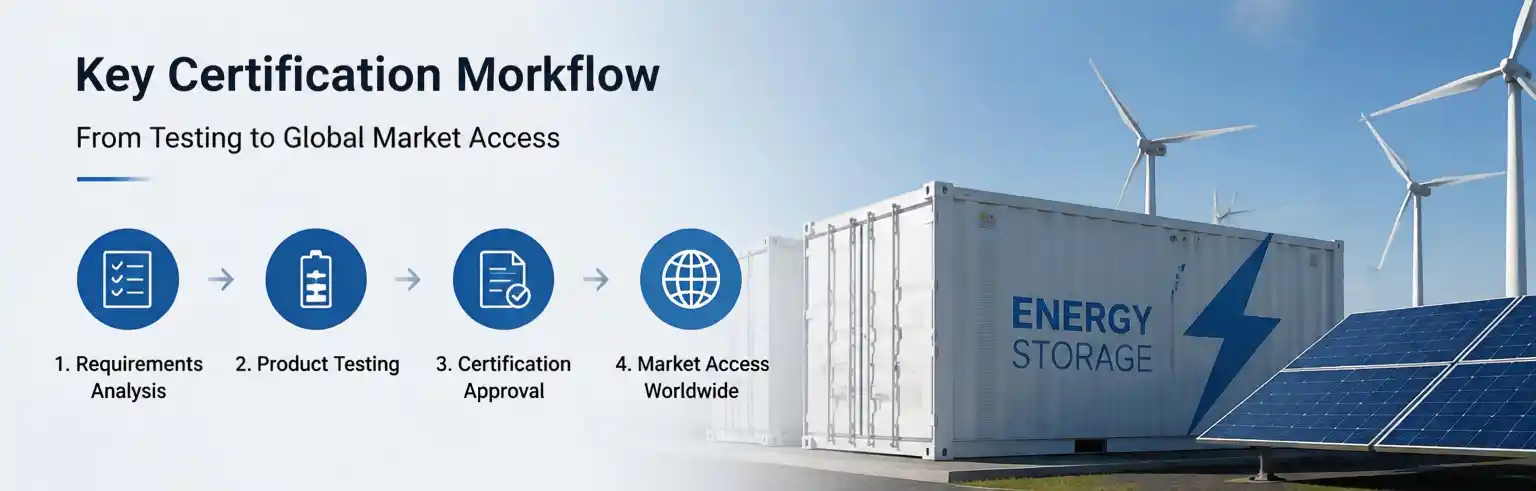
How to Choose an Energy Storage Supplier With Strong Certification Capability
For distributors and project developers, certification documents are only valuable when they match real manufacturing capability.
A common purchasing mistake is selecting a supplier based only on price and receiving certification documents later. This often creates unexpected problems during market approval or customer installation.
A professional energy storage battery certification process requires cooperation between product design, battery selection, production control, and testing management.
Before choosing a supplier, buyers should evaluate several important factors.
Verify Whether Certifications Match the Actual Product
One of the most common problems in international energy storage purchasing is certificate mismatch.
For example:
- The certificate belongs to an older battery model
- The testing report uses different battery cells
- The certification covers only a component, not the complete system
- Product specifications have changed after certification
Buyers should always verify:
| Check Item | Questions Buyers Should Ask |
|---|---|
| Product model | Does the certificate match the exact purchased model? |
| Battery chemistry | Is the tested battery type the same? |
| Capacity range | Does the certification cover this capacity? |
| Manufacturing location | Is the production facility the same? |
| Testing date | Is the certification still valid? |
A reliable supplier should provide transparent documentation and explain certification coverage clearly.
Certification Challenges Faced by Global Energy Storage Buyers
Different customers experience different certification difficulties depending on their market.
Challenge 1: Entering a New Country Market
Many distributors want to expand into new regions but are unsure about local requirements.
For example:
A company importing residential energy storage products into Europe may need different documents compared with a company selling portable energy solutions in North America.
Without proper preparation, buyers may experience:
- Customs delays
- Additional testing costs
- Product modification requirements
- Project approval delays
The solution is selecting a supplier that understands international compliance requirements.
Challenge 2: Balancing Cost and Certification Requirements
Some buyers avoid certified products because they believe certification increases purchasing costs.
However, low-cost products without proper compliance may create higher long-term expenses.
Potential costs include:
- Failed shipments
- Customer returns
- Warranty claims
- Re-certification expenses
- Market reputation damage
For B2B businesses, certification should be considered an investment in market stability.
Challenge 3: Managing Different Product Categories
Energy storage products are not all regulated in the same way.
Different applications may require different certification strategies.
| Product Type | Typical Certification Focus |
|---|---|
| Portable power station | Transportation safety, battery safety, EMC |
| Residential energy storage system | System safety, electrical compliance |
| Commercial energy storage system | Industrial safety standards, installation requirements |
| Customized OEM battery products | Product-specific testing requirements |
Before ordering, buyers should clearly define the application scenario.
How Voltcrave Power Supports Global Certification Requirements
For international buyers, selecting a supplier with certification awareness can significantly simplify the procurement process.
Voltcrave Power focuses on providing reliable energy storage solutions for global markets by supporting customers with:
Product Compliance Guidance
Different markets have different requirements.
Our team helps customers understand:
- Applicable certification standards
- Product documentation requirements
- Market-specific compliance considerations
Quality-Focused Manufacturing
Certification is not only about obtaining documents.
Long-term product reliability depends on:
- Battery cell quality
- Production consistency
- Safety protection design
- Quality inspection procedures
A strong manufacturing process helps maintain consistent product performance.
Flexible OEM and Customization Support
Many distributors and brand owners require customized energy storage products.
Voltcrave Power supports:
- OEM branding
- Product customization
- Packaging solutions
- Application-based configurations
MOQ options:
| Cooperation Type | MOQ |
|---|---|
| Standard inventory products | 10–20 units |
| OEM/private label products | 300–500 units |
| Customized projects | Based on product requirements |
This allows customers to test markets while maintaining scalability.
Why Certification Should Be Considered Before Mass Production
For OEM customers, certification planning should happen before manufacturing begins.
A common mistake is completing product design first and checking certification requirements later.
This can lead to:
- Product redesign
- Additional testing costs
- Delayed production schedules
A better process is:
- Define target market
- Confirm certification requirements
- Select suitable battery technology
- Complete product design
- Conduct testing
- Begin mass production
This approach reduces risks and improves market launch efficiency.
Future Trends in Energy Storage Battery Certification
The global energy storage market continues to grow, and certification requirements are becoming more detailed.
Future trends include:
Higher Safety Requirements
As energy storage systems become larger, governments and customers are paying more attention to:
- Thermal safety
- Fire prevention
- System monitoring
- Battery management technology
More Regional Compliance Standards
Different countries are developing their own energy policies and technical requirements.
Suppliers serving global customers need stronger compliance knowledge.
Greater Focus on Supply Chain Transparency
Buyers increasingly want information about:
- Battery cell sources
- Manufacturing processes
- Quality management systems
- Environmental compliance
Suppliers with transparent documentation will have stronger advantages.
FAQs
What certification is required for lithium battery energy storage products?
The required certification depends on the product type and target market. Common requirements include UN38.3 for transportation, IEC 62619 for industrial batteries, UL standards for North America, and CE-related compliance for Europe.
Why are battery certifications for lithium batteries important for distributors?
Battery certifications for lithium batteries help distributors reduce compliance risks, improve customer confidence, and avoid problems related to shipping, installation approval, and market entry.
Do all energy storage batteries need the same certifications?
No. Certification requirements depend on battery capacity, application scenario, installation method, and destination market. Portable power stations, residential systems, and commercial systems may require different testing standards.
How can buyers verify whether a supplier’s certification is reliable?
Buyers should check whether certification documents match the exact product model, battery specifications, manufacturing location, and current production version.
What should I ask an energy storage supplier before placing a bulk order?
Buyers should ask about:
- Available certifications
- Testing reports
- Battery cell information
- Quality control procedures
- Warranty support
- OEM capability
Does certification increase energy storage product costs?
Certification may increase initial development costs, but it helps reduce long-term risks by preventing compliance issues, returns, and market access problems.
What MOQ does Voltcrave Power support for certified energy storage products?
Voltcrave Power supports flexible cooperation models.
Standard inventory products usually start from 10–20 units, while OEM/private label and customized projects generally start from 300–500 units depending on requirements.
Can Voltcrave Power help customers prepare products for different markets?
Yes. Voltcrave Power works with global customers to provide product information, certification guidance, and customized energy storage solutions according to different market requirements.
Build a Reliable Global Energy Storage Supply Chain With Voltcrave Power
Choosing the right certification strategy is one of the most important steps for companies entering the global energy storage market.
For distributors, wholesalers, installers, and brand owners, working with a supplier that understands certification requirements can reduce business risks and accelerate market expansion.
Voltcrave Power provides professional energy storage solutions with flexible OEM support, quality-focused manufacturing, and international market experience.
Whether you are sourcing residential energy storage systems, commercial energy solutions, or portable power products, our team can help you select suitable solutions based on your target market requirements.
Partner With Voltcrave Power for Certified Energy Storage Solutions
Contact Voltcrave Power today to discuss your certification requirements, product specifications, and OEM cooperation opportunities. Build a reliable energy storage product portfolio with a supplier focused on quality, compliance, and long-term partnership.
https://voltcravepower.com/contact/
Need help matching this topic to a real battery project?
Send your target application, capacity range, certification market, and order plan. VoltCrave can recommend a practical product direction.