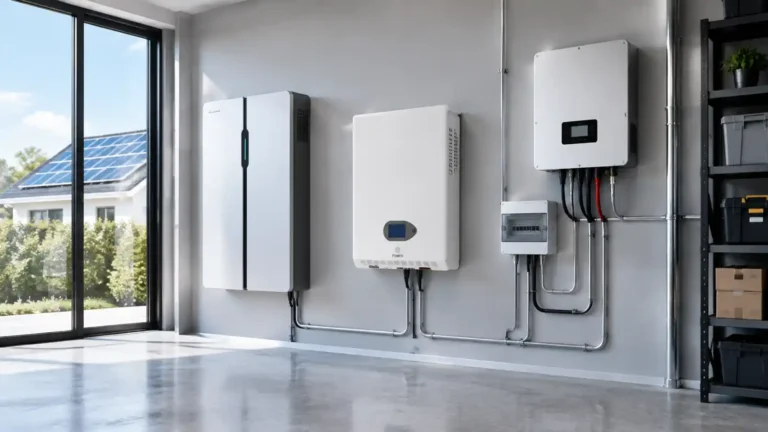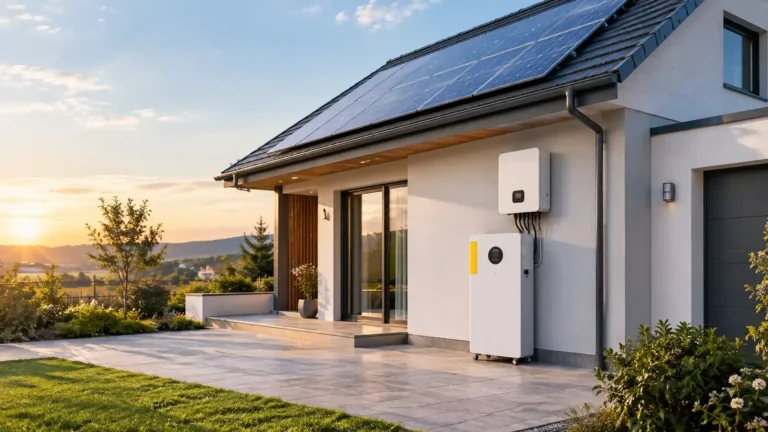
A home battery can make sense even if you do not have solar panels. That sounds counterintuitive to some buyers because the word “battery” is often linked to solar self-consumption. In reality, many homeowners want backup power first and solar later, or backup power only. Some live in areas with unstable grid service. Some want to protect medical devices, internet, refrigeration, lighting, and communication during outages. Others want a quieter, cleaner backup option than a generator.
This guide explains when a home battery backup system without solar is a smart purchase, how grid-charged backup works, what to size, and what to ask a supplier before you buy. It is written for homeowners, installers, distributors, and energy consultants who need a practical answer rather than a sales pitch.
Voltcrave Power works across residential and commercial storage, so the main lesson is clear: a good battery strategy starts with the loads you care about most, not with the assumption that every home must be solar-first.
Quick Answer: Does a Home Battery Without Solar Make Sense?
Yes, it can make sense if you care about outage protection, quiet operation, backup for essential devices, time-of-use optimization, or future solar readiness. A home battery without solar is not trying to replace the grid all the time. It is usually there to protect a subset of important circuits or to provide short-duration backup during outages.
The decision becomes stronger when outages are frequent, when your local grid is unreliable, when you need power for critical equipment, or when a generator is not desirable because of noise, fuel storage, maintenance, or emissions. The battery can also be charged from the grid during low-cost periods and held ready for backup or tariff management.
The key is to set expectations correctly. A battery-only home backup system usually does not aim to power every load in the house for days at a time. It aims to support essential loads intelligently and keep the home functional during the most disruptive hours.
Why Buyers Choose Battery Backup Before Solar
Many people imagine solar panels first and battery later. In practice, the buying order is often different. A homeowner may need immediate resilience because outages have already disrupted daily life. A small business may want a backup solution before committing roof space or permitting budget to solar. A landlord may want a battery backup system as a resilience feature without remodeling the roof or electrical service right away.
Battery-only backup is also attractive when the roof is shaded, structurally limited, leased, or not ready for a solar project. Some homes have messy roof layouts or future renovation plans that make solar timing difficult. In those cases, a battery can solve the urgent problem now and leave solar as a later upgrade.
Another reason is simplicity. Solar plus battery adds generation, metering, and additional integration steps. A grid-charged battery backup system can be easier to explain and sometimes faster to deploy, especially when the immediate goal is keeping the lights on and the refrigerator cold.
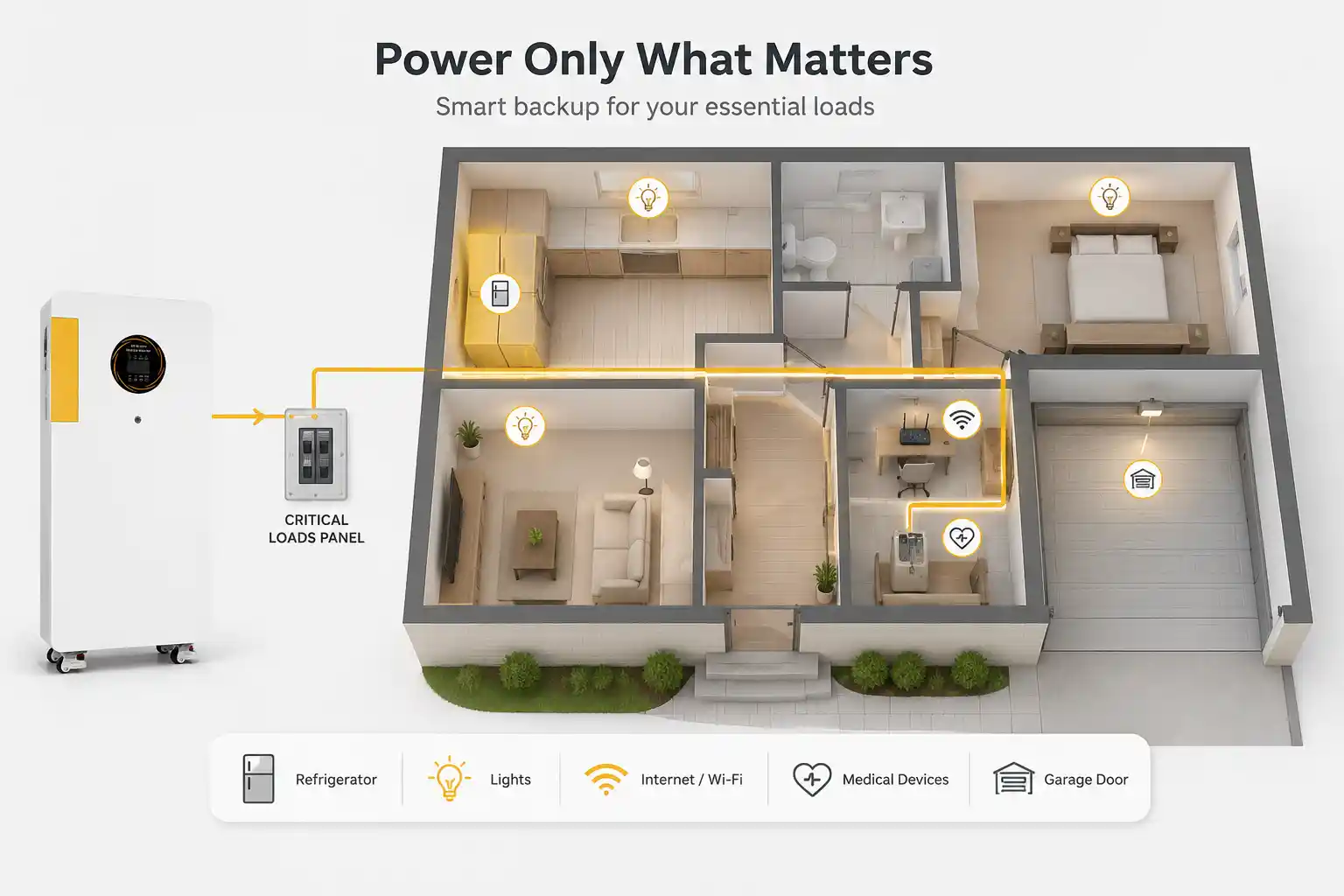
Start with Essential Loads, Not the Whole House
The biggest sizing mistake is assuming the battery must cover every circuit in the home. That is not how most practical systems are designed. Instead, homeowners should identify essential loads. These are the devices and circuits that actually matter during an outage.
Typical essential loads include the refrigerator, freezer, internet router, a few lights, phone charging, medical devices, a garage door opener, sump pump, and perhaps one or two convenience circuits. In hotter climates, a small or medium cooling load may be important. In colder climates, heating controls or circulation equipment may matter more.
When you separate essential loads from whole-house loads, the battery size becomes clearer. You no longer pay for backup capacity you will barely use. This also gives the installer a better electrical design target and often produces a more economical project.
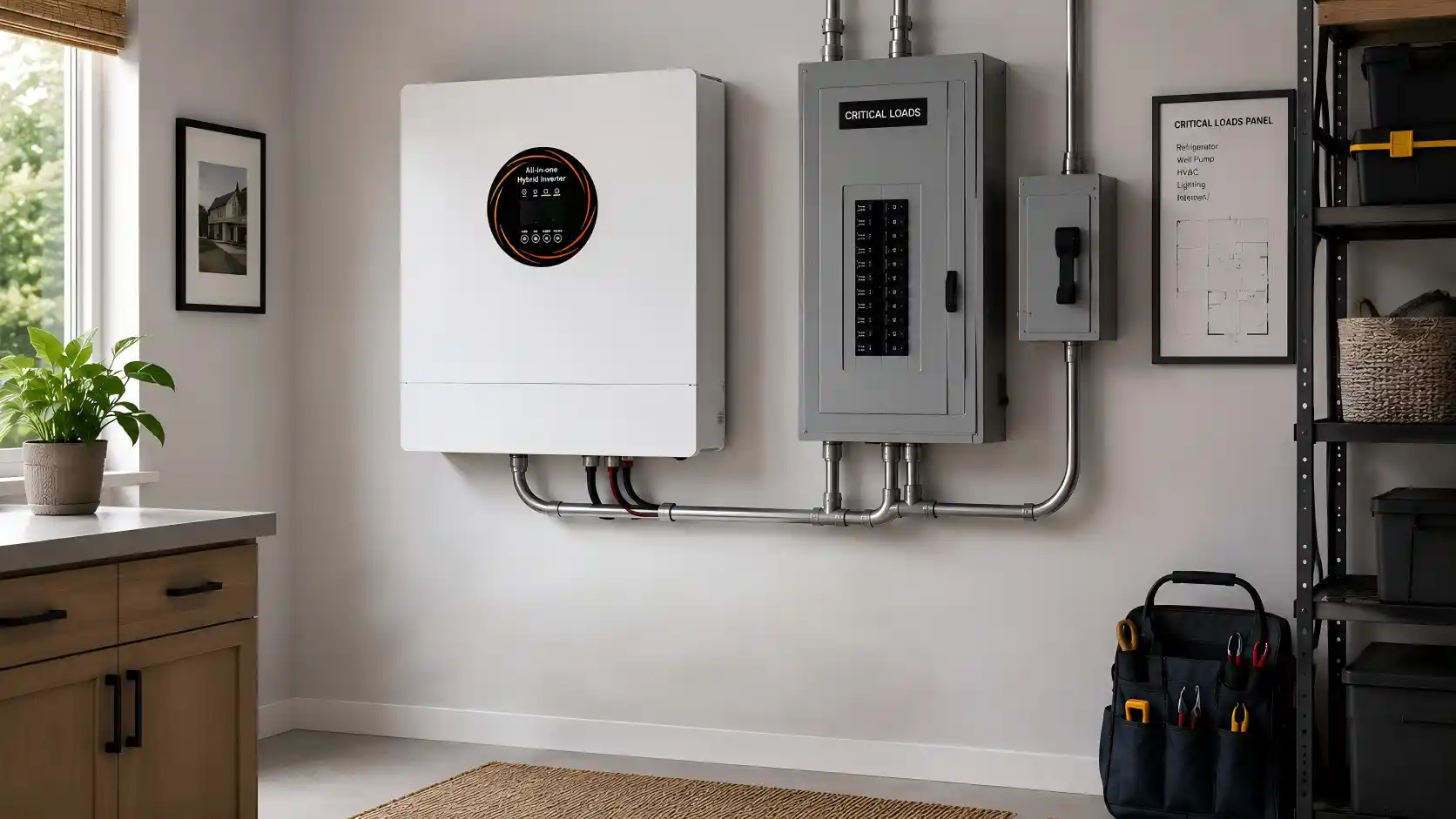
A critical loads panel is usually the cleanest way to do this. It isolates the circuits you want to support during outages and leaves the rest of the home on the main panel. That keeps installation more manageable and makes battery runtime easier to estimate.
How Grid Charging Works
A battery backup system without solar usually charges from the grid. That can happen automatically when utility power is present. The battery may remain fully charged as a standby reserve, or it may charge according to a time-based strategy. Some systems charge during lower-cost periods and hold energy for potential outages or high-cost periods.
This means the battery does not need sunlight to be useful. The grid becomes the charging source, and the battery becomes the storage layer. In a resilient design, the battery is always ready to support the essential loads panel when the grid fails.
For homeowners, the important questions are simple. How fast can the battery recharge? Can it maintain standby state without unnecessary cycling? Does it support time-of-use optimization? Can it be configured to prioritize outage readiness over tariff optimization? The answer depends on the battery, inverter, and control logic.
A good supplier should explain the charging profile clearly. Buyers should also ask whether grid charging is allowed in their market and whether any local rules affect backup-only installations.
How to Size a Battery Without Guesswork
Sizing should begin with your essential loads and the number of backup hours you want. If your critical load average is modest, the battery can be smaller than you think. If you want air conditioning, well pump support, or longer outage coverage, the battery needs to be larger.
A simple process works well. First, list the circuits you want backed up. Second, estimate their real-world power draw. Third, decide how many hours of autonomy you want. Fourth, add a reserve margin for conversion losses, battery depth of discharge, and unexpected spikes. Fifth, confirm inverter peak power and startup surge handling.
For example, a home that only needs refrigeration, lighting, internet, and a few outlets may need a relatively compact system. A home that wants to support HVAC, cooking, laundry, and full-family usage is a very different design. The mistake is not underestimating battery cost. The mistake is sizing from wishful thinking instead of real loads.
Voltcrave Power usually recommends a load-first approach. The battery should be chosen to match the outage profile, not the other way around.
What to Ask Before You Buy
Before buying a home battery without solar, ask about usable capacity, continuous output, surge output, round-trip efficiency, backup transfer time, communication with the inverter, indoor or outdoor installation rating, warranty terms, and low-temperature behavior.
Ask the supplier whether the battery can be expanded later. Ask whether the system can be configured for backup-only use now and solar integration later. Ask what happens if utility outages are frequent. Ask whether the product is suitable for your local electrical code and installer preferences.
You should also ask about monitoring. A home backup system is more reassuring when the homeowner can see charge status, fault history, and backup readiness from a simple app or display. Monitoring is not a luxury feature. It often determines whether the customer trusts the system.
AC-Coupled, Hybrid, and Standalone Options
Home backup systems without solar can be designed in different ways. Some are standalone battery systems dedicated to backup. Some are hybrid systems ready for future solar. Some are AC-coupled with an inverter architecture that simplifies retrofit use.
For many buyers, the best option depends on future plans. If solar is likely later, choose a battery and inverter stack that will not force a redesign. If backup-only use is the near-term goal, a simpler configuration may be better. If the home already has solar, the architecture may need to match the existing equipment.
This is why product selection should be tied to the site, not just the catalog. A battery that looks excellent in a brochure may be awkward in a retrofit. A system that is slightly more expensive but easier to integrate can save installers many hours and reduce homeowner frustration.
Costs, Incentives, and Payback
A battery without solar is usually purchased for resilience first, not pure financial return. That said, some homes can still benefit from time-of-use savings or demand management if the utility structure supports it. In those cases, the battery may help reduce high-cost consumption periods while also serving as backup.
Do not assume the system will pay for itself quickly without checking rates and usage patterns. Some customers will see a strong resilience value with only a modest bill impact. Others may gain meaningful tariff savings if the system is configured correctly. The economics depend on the utility structure, outage risk, battery cycling policy, and local incentives.
When explaining the project to a customer, separate financial return from resilience value. A homeowner who lives through frequent outages may value the battery even if the bill savings are moderate. That is an honest and more durable selling approach.
Common Mistakes Buyers Make
The first mistake is buying too much battery because they think the whole house must stay online. The second mistake is buying too little because they underestimate startup surges and hidden loads. The third mistake is ignoring inverter compatibility. The fourth mistake is forgetting backup transfer behavior.
Another common mistake is not planning the critical loads panel carefully. A poorly chosen circuit list can make a battery look weak when the real issue is load selection. Finally, some buyers focus only on capacity and forget the support system: monitoring, app usability, warranty, and installer experience.
A good home battery project is not just a hardware purchase. It is an electrical and user-experience design decision.
What Installers and Distributors Should Explain
Installers and distributors should help the homeowner understand what the battery will and will not do. Will it back up the entire house or only selected circuits? How long will it run under normal outage conditions? How long does it take to recharge? Can loads be expanded later? Will the battery be connected to a future solar system?
If the buyer understands these points up front, they are far more satisfied after installation. Clear communication is also a strong trust signal for your brand. For private-label or OEM programs, this matters as much as the hardware itself.
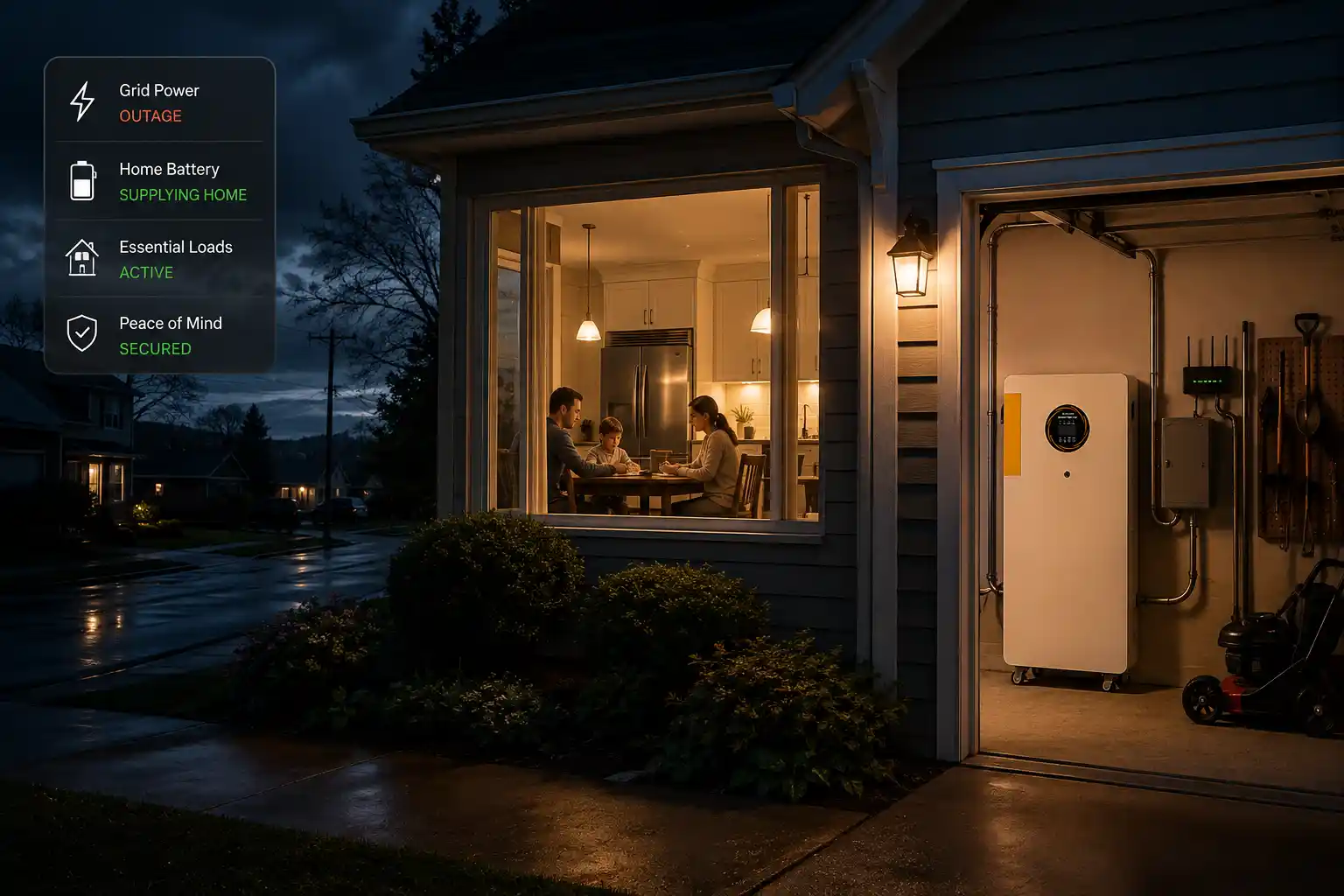
Why Backup-Only Systems Can Be a Smart First Step
A battery without solar can be a good first step into home energy storage . It solves an urgent problem now, keeps the electrical design manageable, and leaves room for solar later. For many households, that is exactly the right sequence.
It can also serve as a confidence builder. Once the homeowner sees how the battery works during an outage, they are often more open to a second-stage solar project. That means battery-only systems can create a future upgrade path rather than a dead-end purchase.
For distributors and installers, that is a useful commercial strategy. A battery backup installation can create trust, documentation, and a visible resilience win before the customer takes the next step.
FAQ
Can a home battery work without solar panels?
Yes. It can charge from the grid and provide backup power for selected loads during outages or for time-based energy management.
Is battery backup without solar worth it?
It can be, if the buyer values outage protection, quiet operation, simple installation, or future solar readiness.
Will a battery power the whole house?
It can, but that is not the default design for many homes. Most systems are better when they back up essential loads first.
Should I choose a generator instead?
It depends on your priorities. A generator may offer longer runtime, while a battery is quieter, cleaner, and often easier to automate.
Final Thoughts
A home battery backup system without solar is not a compromise. For the right buyer, it is the most direct solution to resilience, outage protection, and essential-load continuity. The important thing is to define the goal honestly. If the goal is full-house backup for days, the design will be different. If the goal is to keep essential systems running quietly and automatically, a battery can be a strong fit.
The best results come from load-first sizing, clear communication, and realistic expectations. That is the approach Voltcrave Power supports for residential buyers who want a backup system that feels practical from day one and expandable later if solar becomes part of the plan.
Need help matching this topic to a real battery project?
Send your target application, capacity range, certification market, and order plan. VoltCrave can recommend a practical product direction.