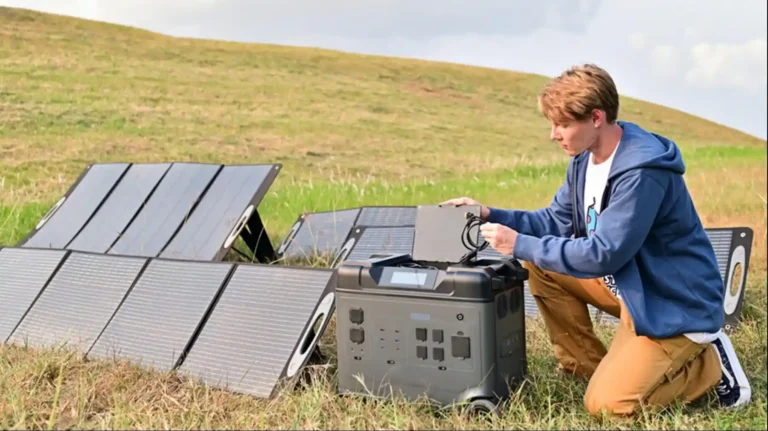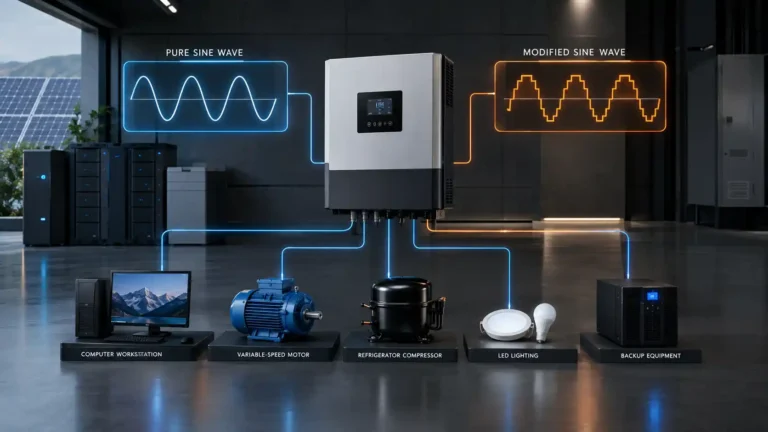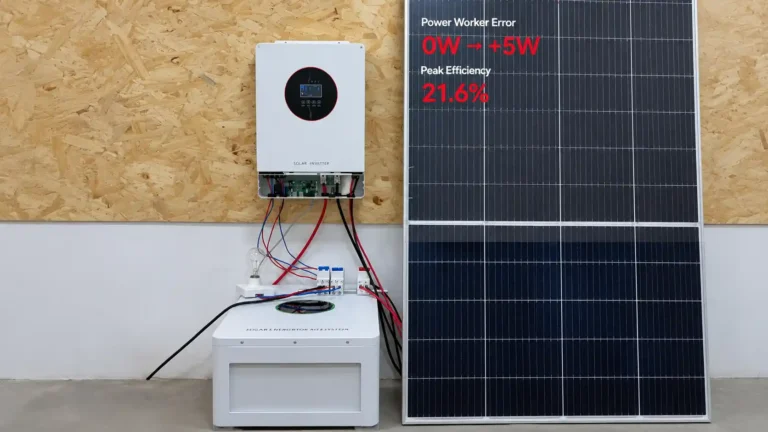
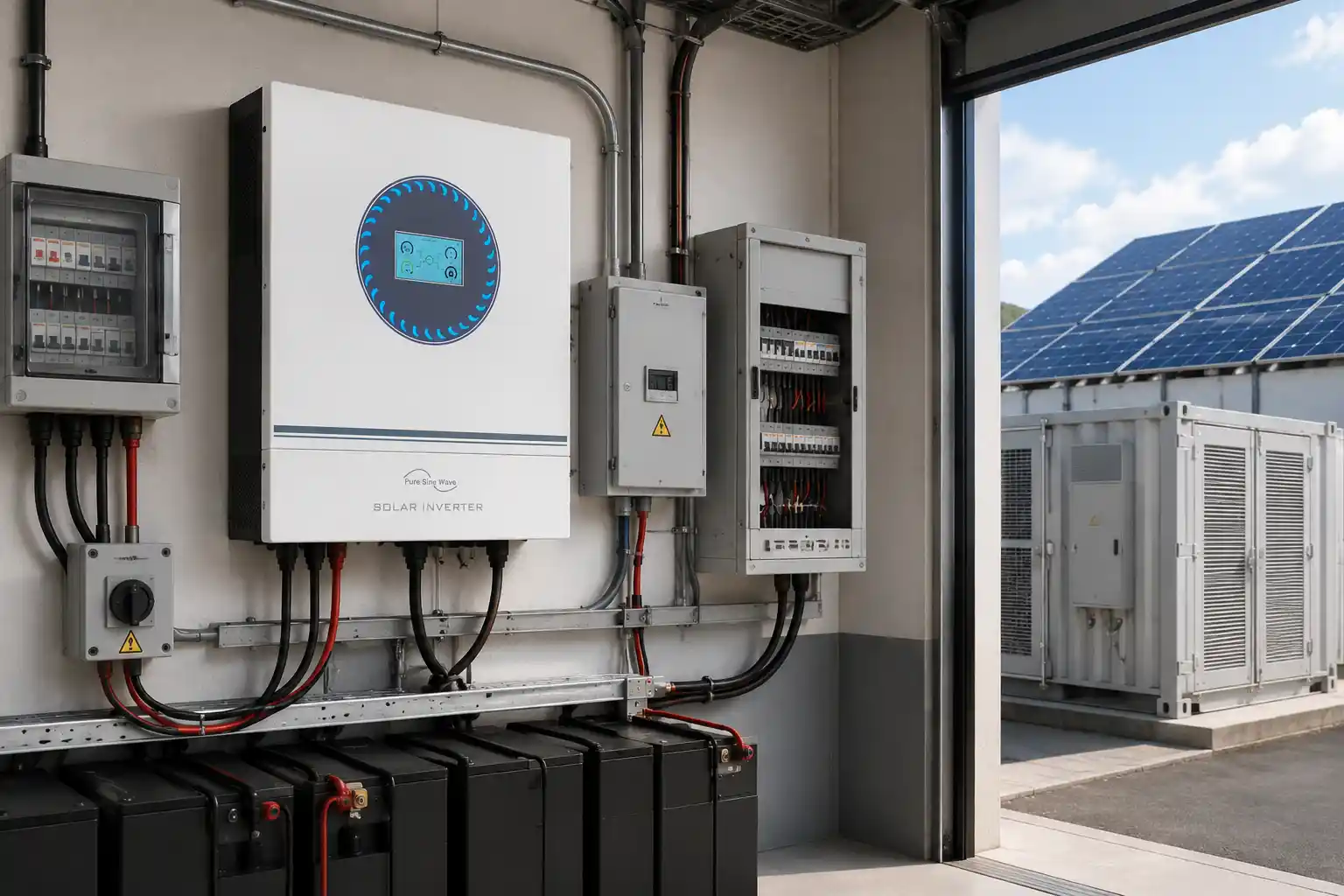
Choosing between an off-grid inverter and a hybrid inverter is no longer as simple as asking whether a project has access to the utility grid.
Many modern off-grid inverter/chargers can accept utility or generator AC input, charge batteries, and switch automatically between power sources. Hybrid inverters can combine solar, batteries, grid interaction, backup power, and energy management in one system.
Because their functions increasingly overlap, the product label alone is not enough.
For installers, distributors, EPCs, and project buyers, the real question is:
Which inverter architecture best fits the project’s grid conditions, backup needs, battery system, generator requirements, load profile, and future expansion plans?
Quick Decision: Which Direction Should You Consider?
Use these questions as a first filter.
| Project Question | If Yes, Consider |
|---|---|
| Is the site permanently without utility power? | Off-grid inverter or hybrid model approved for permanent off-grid use |
| Do you need legal grid export? | Hybrid inverter with required grid certification |
| Do you need zero-export operation? | Hybrid inverter with CT/meter control |
| Will a generator be an important backup source? | Prioritize strong generator integration |
| Do you have pumps, compressors, or motors? | Prioritize surge capability, regardless of inverter type |
| Do you already have grid-tied solar? | Hybrid replacement or compatible AC-coupled storage |
| Could grid power become available later? | Consider future grid compatibility |
| Do you need peak shaving or time-of-use control? | Hybrid inverter is usually the stronger fit |
This is only a starting point. Final selection should always be based on the specific inverter model and project requirements.
Key Terms Buyers Should Understand
Before comparing products, it helps to separate a few commonly confused terms.
Off-grid inverter: Designed to supply AC loads from batteries and other local energy sources without depending on the utility grid for normal operation.
Off-grid inverter/charger: An off-grid inverter that can also accept AC input from a generator or utility source for battery charging or load bypass.
Hybrid inverter: Typically manages solar PV, battery storage, loads, and grid interaction within one platform.
Grid-interactive: Able to operate in coordination with the utility grid. Export capability depends on product design, certification, and local rules.
Zero-export: Controls the system so that solar or battery power is not intentionally exported to the utility grid.
EPS / backup output: A dedicated output that supplies selected loads during a grid outage.
Black start: The ability to restart a system from battery or another local source when utility power is unavailable.
The most important point is simple:
Using utility AC is not the same as being approved for grid export.
Can an Off-Grid Inverter Use Utility Power?
Yes. Many off-grid inverter/chargers can accept utility AC.
Depending on the model, utility power may be used to:
- Charge the battery
- Supply loads through bypass
- Support the system when battery SOC is low
- Switch automatically between utility and battery operation
A typical sequence might be:
Solar and battery supply loads → battery reaches a configured limit → utility supports loads or charges the battery → system returns to solar and battery operation
But this does not automatically make the product a grid-interactive hybrid inverter.
If a project needs export, zero-export control, or formal grid interconnection, verify:
- Grid synchronization
- Export function
- Zero-export control
- CT or smart-meter support
- Anti-islanding protection
- Regional grid certification
Action Item
Do not ask only:
“Does this inverter have AC input?”
Ask:
“Can this model legally and technically operate in parallel with the grid in my target market?”
What Actually Makes a Hybrid Inverter Different?
The main strength of a hybrid inverter is energy coordination.
Depending on the model, it may manage:
- PV generation
- Battery charging
- Battery discharge
- Utility power
- Backup loads
- Time-of-use operation
- Peak shaving
- Zero-export control
- Grid export
This makes hybrid inverters particularly attractive for residential and commercial projects that need both solar storage and grid interaction.
However, “hybrid” does not mean every feature is automatically included.
Some models may not support:
- Generator control
- Permanent off-grid operation
- Whole-building backup
- PV-only backup
- Parallel expansion
- Grid export in every country
Always verify the specific operating modes.
What Happens When the Grid Fails?
Backup performance is one of the most important differences between projects.
A hybrid inverter may have an EPS or backup output, but that does not automatically mean the entire building remains powered during an outage.
You need to check:
- Which loads are connected to backup
- Maximum backup output power
- Battery availability
- Transfer time
- Black-start capability
- PV behavior during an outage
- Whether a critical-load panel is required
For ordinary residential loads, a short interruption may be acceptable.
For:
- IT equipment
- Telecom systems
- Controllers
- Sensitive electronics
the allowed interruption may be much shorter.
Action Item
If continuity matters, compare the inverter’s specified transfer time with the actual ride-through requirement of the connected equipment.
Do not assume every “backup” inverter behaves like a UPS.
Can a Hybrid Inverter Run Permanently Off-Grid?
Some can. Some should not be selected for that purpose.
This is especially important for:
- Remote farms
- Telecom sites
- Rural properties
- Islands
- Remote commercial sites
- Mining support applications
A system that experiences occasional grid outages is different from a system expected to operate without utility power for years.
For permanent off-grid projects, verify:
- Approved off-grid operating mode
- Battery-only restart
- Generator support
- Surge capability
- Parallel operation
- Battery communication
- Environmental derating
- Warranty conditions
- Spare parts
- Technical support
A hybrid inverter may offer excellent value, but extra features do not automatically make it suitable for long-term off-grid duty.
Why Do Some Fully Off-Grid Projects Still Use Hybrid Inverters?
This is becoming more common.
Some hybrid inverters offer:
- Competitive pricing
- Integrated MPPT
- Good battery compatibility
- Higher power options
- Parallel expansion
- Strong monitoring
- Generator support
- Future grid functionality
For some projects, a hybrid model can therefore make economic sense even if the site has no current grid connection.
However, the decision should not be based only on price.
Compare:
Purchase price + installation + generator integration + battery compatibility + expansion + serviceability
The lowest-cost inverter is not always the lowest-cost system.
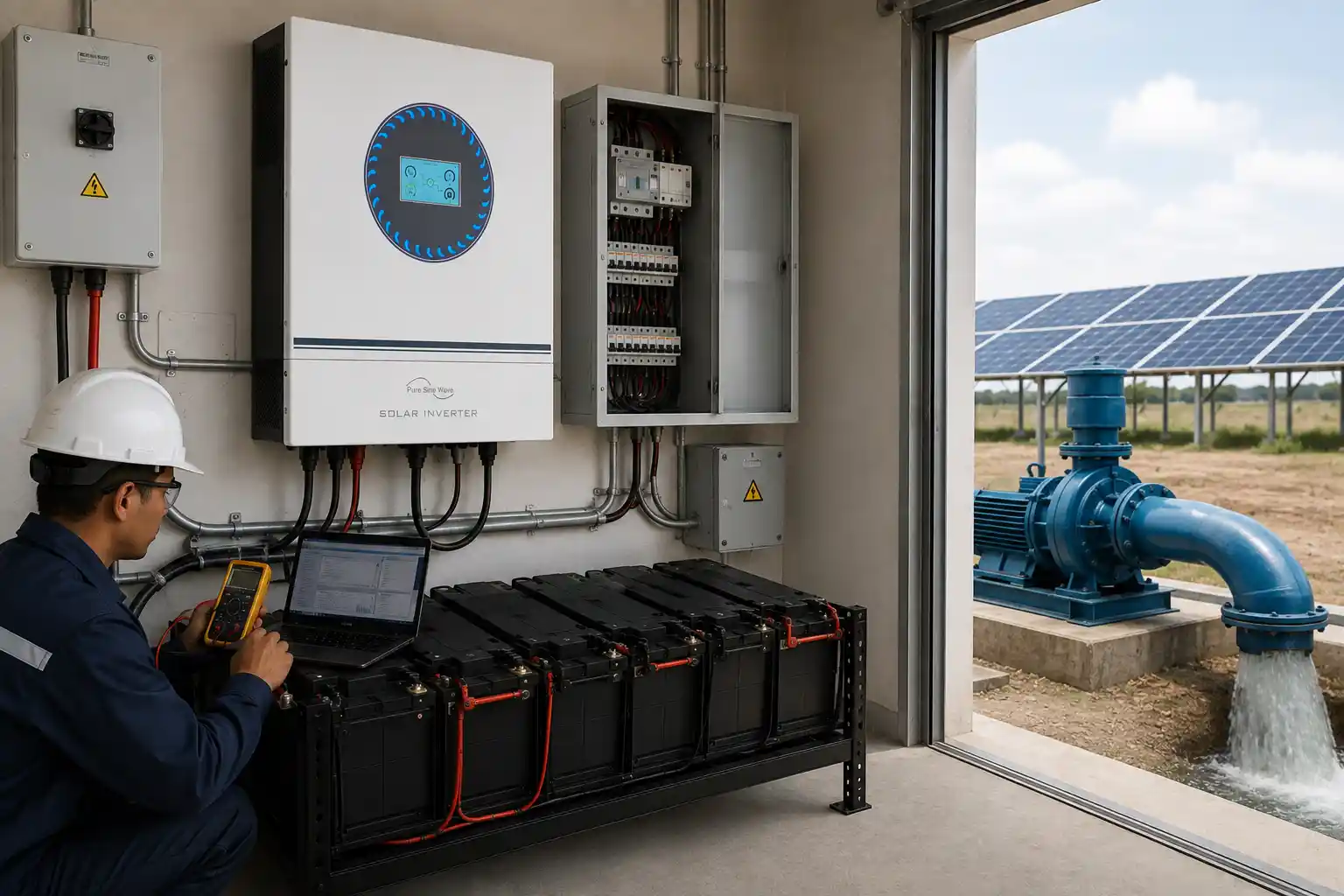
Surge Loads: Rated kW Is Not Enough
This is particularly important for off-grid and backup systems.
Loads such as:
- Pumps
- Compressors
- Air conditioners
- Refrigeration equipment
- Motors
- Workshop tools
can draw much more power during startup than during normal operation.
For example, suppose a motor normally runs at 3kW.
Its startup demand may be significantly higher for a short period.
Now compare two hypothetical inverters:
- Inverter A: very high peak power, but only for a brief instant
- Inverter B: slightly lower peak power, but can sustain the overload for several seconds
Inverter B may perform better with the actual motor.
The exact result depends on the load and inverter design.
What to Check
- Rated continuous output
- Peak output
- Surge duration
- Overload curve
- Motor-starting capability
- Battery discharge current
- BMS peak-current limit
The battery matters too.
Even if the inverter can handle the surge, the battery BMS may shut down if DC current rises above its allowed peak.
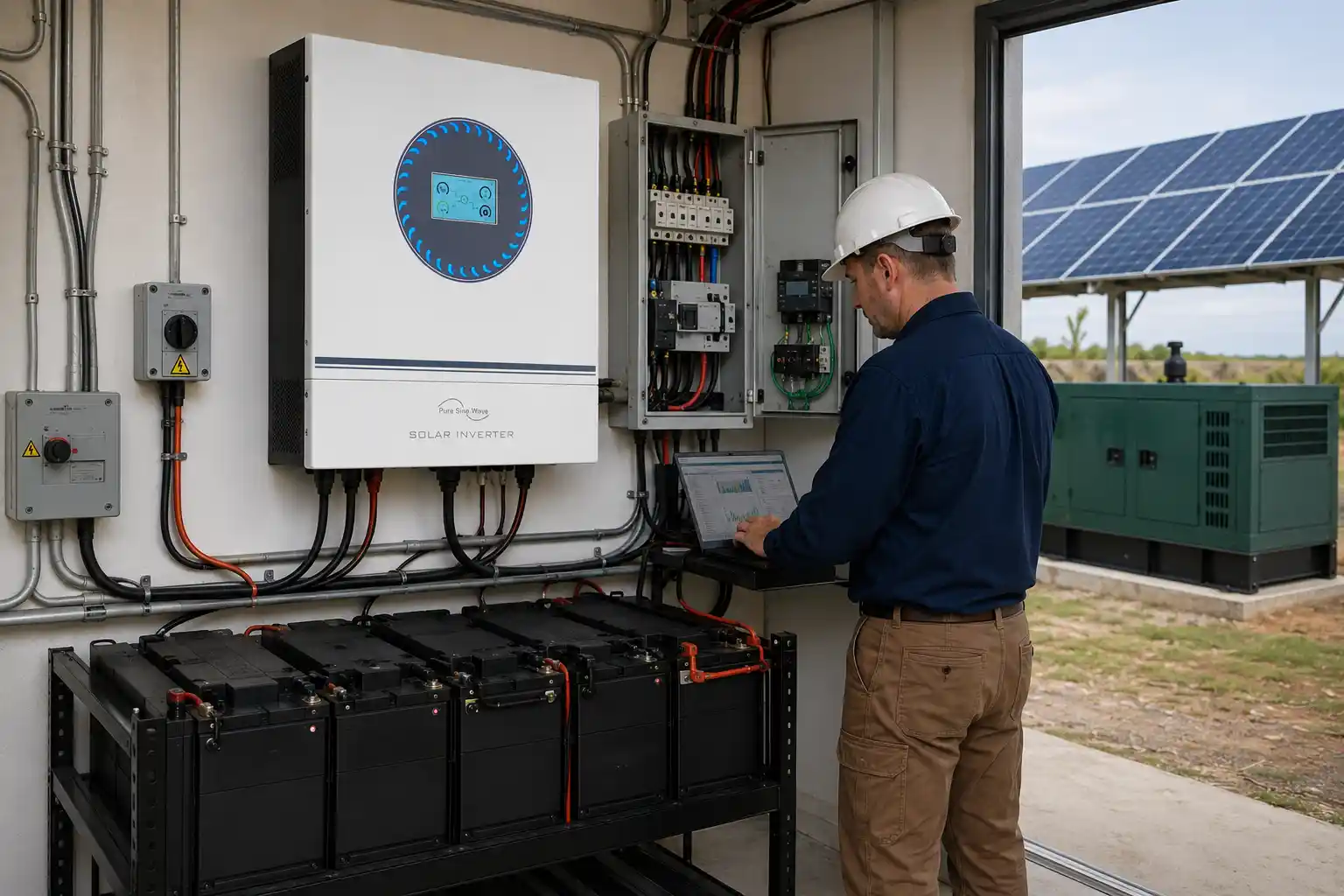
Generator Integration: What Should You Verify?
Generators remain important in many permanent off-grid systems.
A generator may be needed when:
- Solar production is low
- Battery SOC is low
- Bad weather continues for several days
- Large temporary loads appear
- Maintenance requires an alternative power source
But there is a difference between:
accepting generator AC
and
managing a generator as part of the energy system.
For generator-based projects, verify:
- Dedicated generator input
- Supported AC voltage and frequency range
- Generator charging-current limit
- Dry-contact auto-start
- SOC-based start and stop
- ATS requirements
- Backfeed prevention
- Generator power-quality tolerance
Action Item
Ask the supplier:
“Can this inverter only use generator AC, or can it automatically control the generator based on battery and load conditions?”
That distinction can significantly affect system design.
Existing Grid-Tied Solar: How Do You Add Battery Storage?
Existing PV systems are a common reason buyers start comparing inverter architectures.
Suppose a site already has:
- Solar panels
- Grid-tied inverter
- Utility connection
- No battery
Now storage and backup are required.
There are usually several possible directions.
Replace the Existing Inverter
The existing grid-tied inverter may be replaced with an appropriate hybrid inverter.
This can simplify integrated solar and battery control.
The trade-off is higher replacement and installation cost.
Add an AC-Coupled Storage System
The existing solar inverter may remain while a separate battery inverter or storage system is added.
This can reduce disruption to the existing PV installation.
But compatibility must be checked carefully.
Build a Separate Backup System
Critical loads can sometimes be separated into a dedicated battery-backed circuit while the original PV system remains largely unchanged.
The right choice depends on:
- Existing inverter
- Backup requirement
- Battery size
- Electrical layout
- Grid rules
- Budget
For retrofit projects, system architecture should be reviewed before selecting a new inverter.
What If the Grid Becomes Available Later?
Some projects start off-grid because utility service is not yet available.
That may change.
If grid connection is likely in the future, selecting an inverter today without considering future interconnection can create unnecessary replacement cost.
A hybrid inverter may provide more flexibility, but future grid connection is never automatic.
You may still need:
- A model certified for the local grid
- Utility approval
- Protection settings
- CT or smart meter
- Wiring changes
- Inspection
- Commissioning
Action Item
If future grid access is expected, confirm whether the inverter is already approved for the target market before purchase.
Grid Compliance: Do Not Confuse Connection With Permission
A product having grid terminals does not mean it can legally export power in every market.
For grid-connected projects, verify:
- Required grid certification
- Anti-islanding function
- Export control
- Zero-export mode
- CT or smart-meter topology
- Utility interconnection requirements
- Regional firmware or grid-code settings
This is particularly important for distributors selling the same inverter into multiple countries.
The electrical hardware may be similar while the approved operating modes differ by market.
Battery and BMS Compatibility Checklist
Battery compatibility deserves its own review.
Use a simple template like this before procurement:
| Item | Battery Data | Inverter Requirement | Match? |
|---|---|---|---|
| Nominal voltage | |||
| Operating voltage range | |||
| Continuous discharge current | |||
| Peak discharge current | |||
| Maximum charge current | |||
| CAN / RS485 | |||
| Communication protocol | |||
| Cable / pinout | |||
| Parallel configuration | |||
| Firmware version |
A CAN or RS485 port alone does not confirm compatibility.
The inverter and battery may also need:
- The same communication protocol
- Correct cable pinout
- Supported firmware
- Correct configuration settings
Typical Project Scenarios
Scenario 1: Permanent Off-Grid Site With Generator
Typical project: Remote farm, telecom site, rural property.
Priority: Reliable battery operation and generator backup.
Usually consider:
Dedicated off-grid inverter/charger or hybrid model explicitly approved for permanent off-grid operation.
Check first:
- Generator control
- Surge capability
- Battery black start
- Long-term off-grid support
Common mistake: Choosing a grid-focused hybrid inverter only because it has more features.
Scenario 2: Commercial Solar + Battery + Peak Shaving
Typical project: Commercial building with utility connection.
Priority: Reduce grid demand and maintain backup capability.
Usually consider:
Hybrid inverter.
Check first:
- TOU scheduling
- Peak shaving
- CT/meter support
- Zero-export
- Backup output
Common mistake: Buying an off-grid inverter that cannot provide the required grid energy-management functions.
Scenario 3: Existing Grid-Tied PV Adding Battery
Priority: Keep existing solar investment while adding storage.
Usually consider:
Hybrid replacement or compatible AC-coupled storage architecture.
Check first:
- Existing PV inverter compatibility
- Backup architecture
- Grid export
- AC coupling
- Installation cost
Common mistake: Assuming every hybrid inverter can directly work with the existing PV system.
Scenario 4: Off-Grid Today, Grid Available Later
Priority: Avoid replacing major equipment later.
Usually consider:
Hybrid inverter with suitable future grid certification, if permanent off-grid operation is also supported.
Check first:
- Off-grid capability
- Future grid certification
- Utility requirements
- Expansion
Common mistake: Assuming future grid connection only requires a firmware update.
Scenario 5: Pump or Motor-Heavy Site
Priority: Reliable startup of inductive loads.
Either architecture may work.
Check first:
- Surge power
- Surge duration
- Battery peak current
- BMS limit
- Motor starting method
Common mistake: Selecting the inverter only from continuous kW rating.
Off-Grid vs Hybrid Inverter Comparison
| Decision Factor | Off-Grid Inverter | Hybrid Inverter | Buyer Action |
|---|---|---|---|
| Utility AC | Many models accept AC input | Common | Check whether grid is input-only or interactive |
| Grid export | Usually not the main function | Often available | Verify certification |
| Backup | Core application | Common via EPS/backup | Check output limit and transfer behavior |
| Permanent off-grid | Often a core application | Model-dependent | Confirm manufacturer approval |
| Surge loads | Must be checked | Must be checked | Compare actual overload curve |
| Generator | Common | Model-dependent | Check auto-start and power-flow control |
| Battery | Core requirement | Core requirement | Verify BMS compatibility |
| Retrofit | Architecture-dependent | Often more flexible | Check AC-coupling support |
| Future grid | May require replacement | Often more flexible | Verify future grid certification |
| TOU / peak shaving | Usually limited | Common | Check EMS and metering |
| Expansion | Model-dependent | Model-dependent | Check parallel limits |
| Commissioning | Often simpler | Can be more complex | Confirm installer and supplier support |
Total Cost Matters More Than Inverter Price
A useful B2B comparison should consider more than equipment cost.
A simplified framework is:
Total Cost of Ownership = Equipment + Installation + Commissioning + Expansion + Service + Downtime + Replacement
For example, a lower-priced inverter may later require:
- Separate MPPT controller
- External transfer switch
- Additional generator controls
- More installation labor
- Difficult battery integration
- Equipment replacement during expansion
At the same time, paying more for advanced hybrid functionality adds little value if the project will never use it.
The best purchase is the architecture that meets the project requirements with the least unnecessary complexity.
Procurement Checklist Before Ordering
Before confirming an inverter, collect these project details:
- Is utility grid available?
- Is grid export required?
- Is zero-export required?
- Is backup required during outages?
- What is the continuous load?
- What is the largest startup load?
- Are pumps, compressors, or motors present?
- Will a generator be used?
- What battery voltage is planned?
- What battery capacity is planned?
- Which BMS protocol is required?
- Is there existing grid-tied PV?
- Could utility grid become available later?
- Will PV or battery capacity expand?
- Which grid certification is required?
- Who will commission and support the system?
If these answers are clear, the inverter choice usually becomes much easier.
Which One Should You Choose?
There is no universal winner between an off-grid inverter and a hybrid inverter.
A permanent remote site with generator backup, large motor loads, and no future grid connection may need a very different solution from a commercial building that requires peak shaving, grid interaction, battery backup, and future expansion.
The safest approach is to select by:
project architecture, load behavior, battery system, grid requirements, generator use, and future plans
rather than by product label alone.
For B2B solar and energy storage projects, VoltCrave Power can support inverter and battery selection based on grid conditions, load requirements, battery voltage, backup needs, generator integration, and expansion plans.
Need help matching this topic to a real battery project?
Send your target application, capacity range, certification market, and order plan. VoltCrave can recommend a practical product direction.