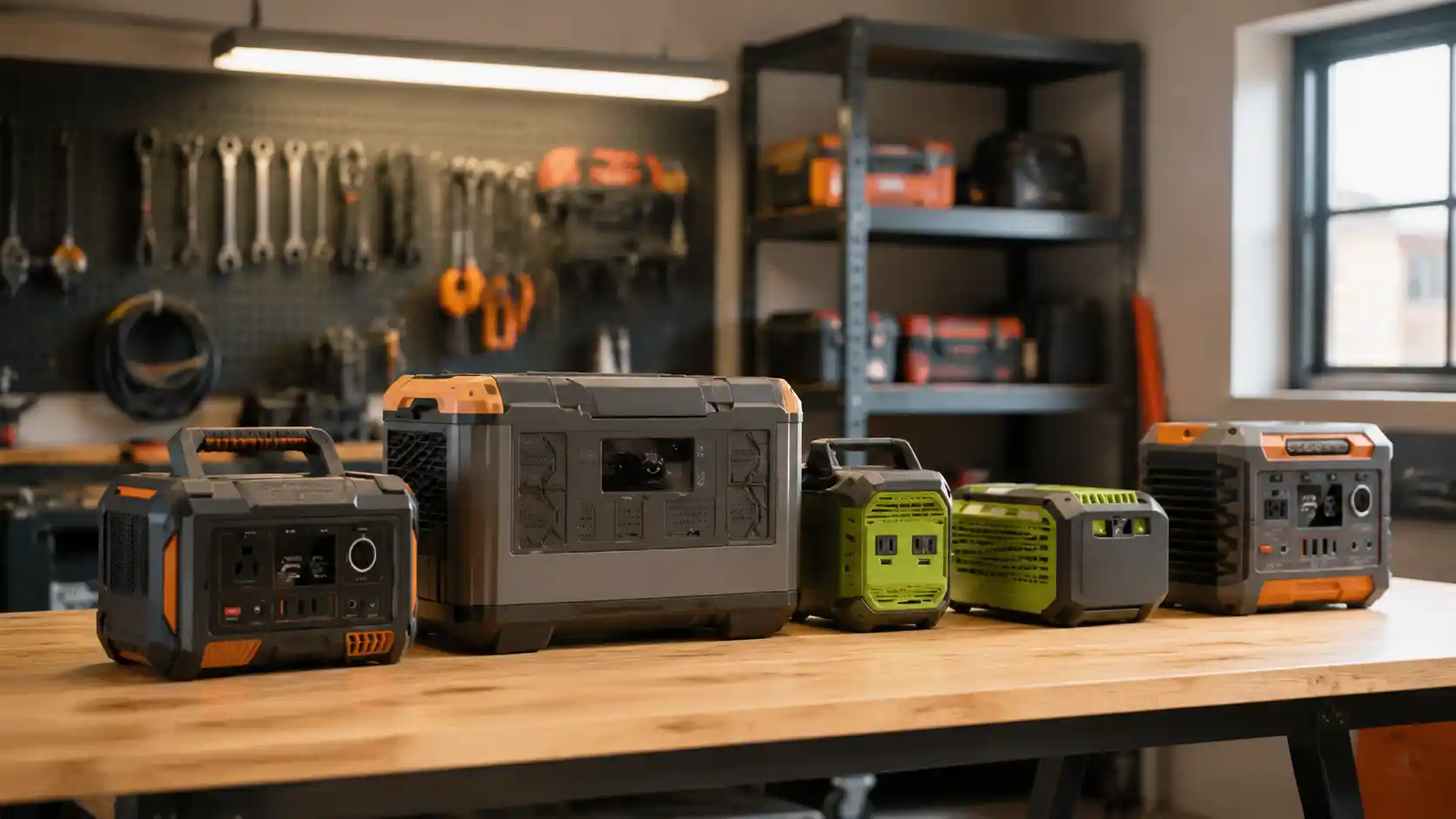
How to Maintain Portable Power Stations to Reduce Customer Returns

A practical guide for distributors and brands to reduce customer returns by improving portable power station battery life, solving portable power station problems, and maintaining portable power station quality.
How to Maintain Portable Power Stations to Reduce Customer Returns

Why Portable Power Station Maintenance Matters for B2B Buyers

For distributors, retailers, and energy solution providers, customer returns are one of the biggest challenges affecting business profitability.

A portable power station is not just a simple power device. It combines multiple critical components, including lithium battery cells, battery management systems (BMS), inverter modules, charging circuits, cooling structures, and protection systems.

When customers experience problems after purchase, the consequences extend far beyond the replacement cost.

Common business impacts include:

  • Increased warranty expenses
  • Additional logistics costs
  • Negative customer reviews
  • Reduced brand trust
  • More pressure on customer support teams

Many buyers assume that returns happen because of product defects. However, in the portable energy storage market, a large percentage of complaints are caused by improper usage, incorrect product selection, insufficient customer education, or unsuitable application scenarios.

For B2B buyers, reducing returns starts before the product reaches the end customer.

Choosing a supplier with strong manufacturing capability, reliable technical support, and clear maintenance guidance can significantly improve customer satisfaction.

At Voltcrave Power, we focus on helping global partners provide dependable energy solutions through strict quality control, application-based product design, and professional technical support.


The Real Reasons Behind Portable Power Station Problems

Understanding why customers return products is the first step toward improving product performance.

Based on common feedback from distributors and end users, most portable energy storage complaints can be divided into four categories:

Problem Category Common Customer Complaint Root Cause
Battery performance Battery capacity decreases quickly Incorrect charging or storage
Power output Device shuts down unexpectedly Overloading or wrong application
Charging issues Product cannot charge normally Charger compatibility or connection problems
Product expectations Runtime is shorter than expected Incorrect capacity selection

For suppliers and distributors, solving these issues requires more than replacing defective units.

The better approach is preventing problems before they occur.


Common Portable Power Station Problems That Increase Customer Returns

Battery Capacity Drops Faster Than Expected

One of the most common complaints is that the product does not provide the expected runtime after several months of use.

However, reduced runtime does not always mean battery failure.

Possible reasons include:

  • Customers using devices with higher power consumption than expected
  • Frequent complete battery discharge
  • Long-term storage without charging
  • Operation in extreme temperatures
  • Incorrect charging accessories

A professional supplier should provide clear usage recommendations to help customers understand product limitations.


Unexpected Shutdown During Operation

Portable power stations include multiple protection systems to prevent damage.

When customers connect devices that exceed the rated output, the system may automatically stop working.

This is often misunderstood as a product defect.

Typical causes include:

  • Overload protection activation
  • High-temperature protection
  • Short-circuit protection
  • Excessive startup power demand

Providing application guides and load calculation information can greatly reduce unnecessary return requests.


Charging Problems

Charging complaints are another frequent source of customer dissatisfaction.

Common causes include:

  • Damaged charging cables
  • Incorrect adapters
  • Unstable power sources
  • Extreme charging temperatures
  • Incorrect charging methods

A good troubleshooting process can often solve these issues without requiring product replacement.
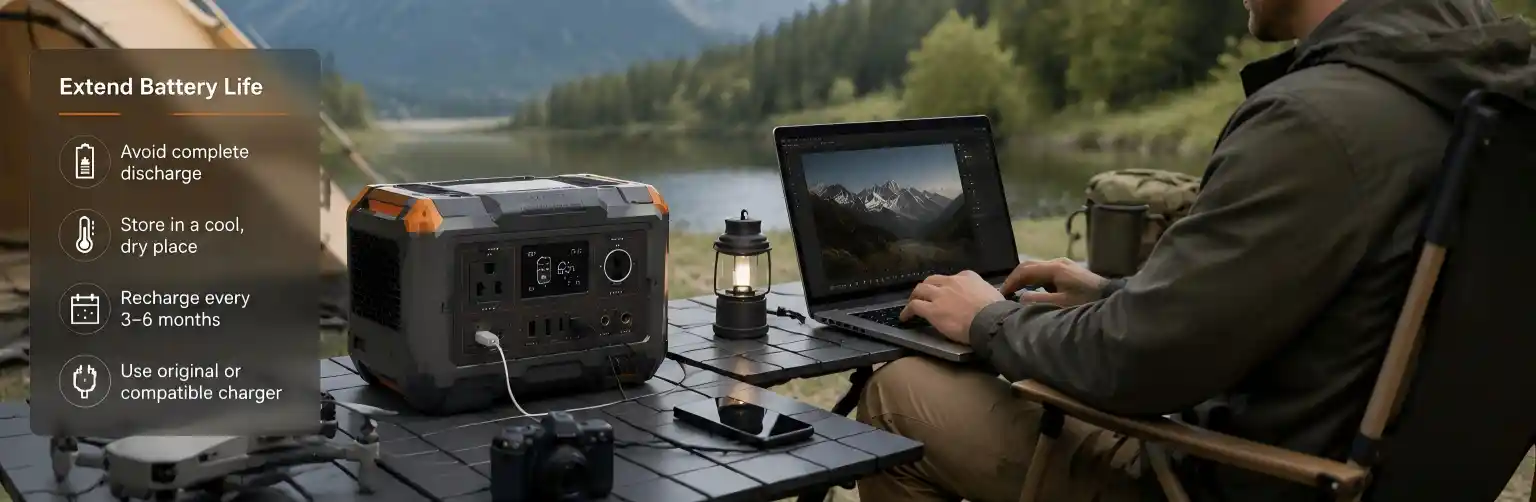

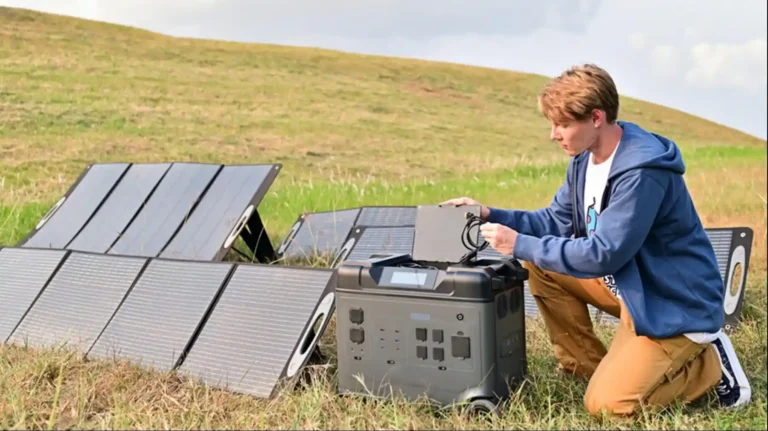
Portable power station battery life maintenance tips for outdoor usage and proper charging

How to Extend Portable Power Station Battery Life

Battery lifespan is one of the most important factors influencing customer satisfaction.

For distributors, improving portable power station battery life means fewer warranty claims and stronger customer loyalty.

Modern portable power stations commonly use lithium battery technology because of:

  • High energy density
  • Long cycle performance
  • Stable discharge capability
  • Better safety compared with traditional battery types

However, even high-quality batteries require proper maintenance.


Charging Practices That Protect Battery Performance

Incorrect charging habits are one of the main reasons battery performance declines.

Customers should be advised to:

  • Avoid leaving the battery completely empty for extended periods
  • Avoid keeping the battery at 100% for very long storage periods
  • Use compatible charging equipment
  • Recharge the unit periodically during storage

For B2B suppliers, including a clear maintenance guide inside product packaging can significantly reduce customer misunderstandings.


Temperature Management and Battery Protection

Temperature has a direct impact on battery performance.

Extreme environments may reduce efficiency and shorten battery lifespan.

Temperature Condition Possible Impact
High temperature environment Faster battery aging
Extremely cold environment Reduced output performance
Normal operating temperature Optimal efficiency

A high-quality portable power station should include intelligent protection systems that monitor operating conditions.

Important features include:

  • Temperature monitoring
  • Overheat protection
  • Charging protection
  • Battery management optimization

Proper Storage Methods for Long-Term Reliability

Many portable power stations are purchased for emergency backup but may remain unused for long periods.

Poor storage conditions can reduce battery performance.

Recommended storage practices:

Storage Recommendation Benefit
Keep in a dry environment Prevents moisture damage
Avoid direct sunlight Reduces heat stress
Maintain appropriate battery level Protects battery health
Periodically check status Prevents deep discharge

For distributors, providing these instructions helps reduce avoidable complaints.


How Portable Power Station Quality Affects Customer Satisfaction

For B2B buyers, portable power station quality directly affects brand reputation.

A product with attractive pricing but inconsistent performance can create higher costs over time.

High-quality portable power stations should provide:

  • Stable power output
  • Reliable battery performance
  • Effective safety protection
  • Consistent manufacturing standards
  • Long-term usability

When evaluating suppliers, buyers should look beyond product appearance and focus on manufacturing processes.


Supplier Quality Checklist Before Bulk Purchase

Before placing large orders, distributors should evaluate:

Evaluation Item Questions to Ask
Battery quality What battery cells are used?
Testing process Are all units tested before shipment?
Protection system Does the BMS include safety protection?
Production ability Can the supplier support repeat orders?
Documentation Are manuals and certifications available?
After-sales support Can technical issues be solved quickly?

A supplier’s ability to prevent problems is often more valuable than simply offering the lowest price.

Portable Power Station Troubleshooting Guide for Distributors

For B2B distributors and retailers, having a clear troubleshooting process is one of the most effective ways to reduce unnecessary product returns.

Many customers immediately request replacements when a portable power station does not work as expected. However, a large number of issues can be resolved through simple checks and proper guidance.

A professional supplier should provide troubleshooting resources that allow distributors to support customers quickly.

The goal is not only to fix problems but also to improve customer confidence and reduce after-sales costs.


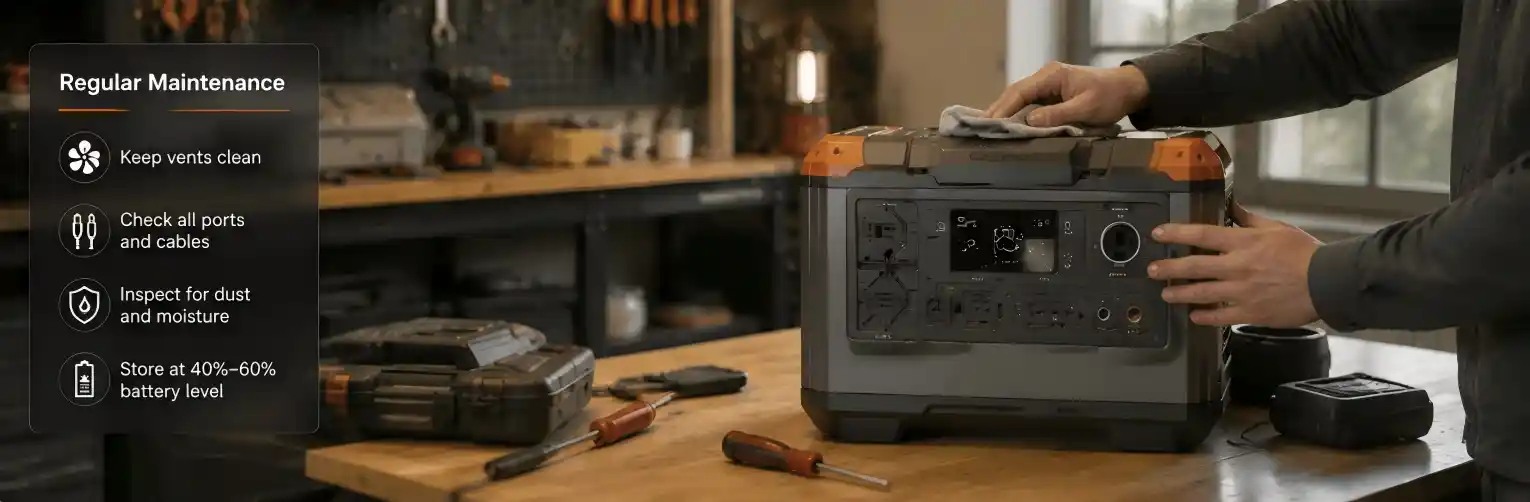
Portable power station troubleshooting and regular maintenance inspection for product reliability

Step-by-Step Portable Power Station Troubleshooting Process

Check the Power Input First

When a customer reports that a unit cannot be charged, the first step is checking the charging system.

Possible issues include:

  • Incorrect charger connection
  • Damaged charging cable
  • Unstable power source
  • Unsupported charging method

Recommended actions:

  1. Confirm the charging adapter matches product specifications.
  2. Check whether charging indicators respond normally.
  3. Test another compatible charging source.
  4. Inspect cables and connectors for damage.

Check Output Load Compatibility

Many portable power station problems are caused by connecting unsuitable devices.

Customers often focus on watt-hour capacity but ignore output power requirements.

For example:

A device may have a high startup power demand even if its normal operating power appears acceptable.

Before connecting equipment, users should confirm:

  • Rated power requirement
  • Startup surge power
  • Output port compatibility
  • Total connected load
Connected Device Common Risk
Electric heaters Excessive power consumption
Large motors High startup surge
Medical equipment Requires stable output
Small electronics Usually suitable

Clear application guidance helps customers avoid incorrect usage.


Check Battery Status

If customers report short operating time, suppliers should verify:

  • Battery percentage accuracy
  • Charging frequency
  • Connected device power consumption
  • Storage conditions
  • Operating temperature

A battery may appear to have reduced capacity when the actual issue is excessive energy consumption from connected devices.


Reset and Cooling Procedures

Some protection events are temporary.

Customers can try:

  • Disconnecting all external devices
  • Turning off the unit
  • Waiting several minutes
  • Restarting the system

If the unit experienced high temperature protection, sufficient cooling time should be provided before operation.


How Suppliers Can Reduce Customer Returns Before Shipment

Reducing returns does not begin after customers complain.

It starts during product development, manufacturing, and shipment preparation.

A professional supplier should implement preventive quality management.


Production Testing Requirements for Portable Power Stations

Before products reach customers, manufacturers should perform multiple inspection stages.

A complete testing process may include:

Testing Stage Purpose
Battery cell inspection Verify cell consistency and safety
Assembly inspection Ensure correct component installation
Charging test Confirm charging performance
Output test Verify power delivery
Protection test Check BMS safety functions
Aging test Evaluate long-term stability
Final inspection Confirm shipment quality

This process helps ensure every unit meets performance expectations.


Why Battery Management System Quality Matters

The BMS is one of the most important components affecting product reliability.

A high-quality BMS helps protect against:

  • Overcharging
  • Over-discharging
  • Overcurrent
  • Short circuits
  • Temperature abnormalities

Poor BMS performance may lead to:

  • Reduced battery lifespan
  • Unexpected shutdowns
  • Safety risks
  • Increased warranty claims

For buyers evaluating suppliers, BMS capability should be a key decision factor.


Choosing Suppliers That Support Long-Term Business Growth

For distributors, selecting a supplier is not only about receiving products.

A strong supplier should become a technical partner.

Important supplier capabilities include:

Manufacturing Stability

The supplier should have:

  • Consistent production processes
  • Reliable component sourcing
  • Quality inspection procedures
  • Stable delivery capability

Technical Support Capability

After-sales problems require fast solutions.

Suppliers should provide:

  • Product manuals
  • Troubleshooting documents
  • Technical consultation
  • Warranty support procedures

OEM and Customization Capability

Different markets have different requirements.

Professional suppliers should support:

  • Product appearance customization
  • Packaging customization
  • Brand labeling
  • Functional adjustments
  • Market-specific requirements

For businesses developing their own energy storage brands, OEM capability is essential.


MOQ and B2B Cooperation Information

To support different customer stages, Voltcrave Power provides flexible cooperation options.

Product Type MOQ Suitable Customers
Standard inventory products 10–20 units New distributors, market testing
OEM/private label products 300–500 units Brand owners and wholesalers
Customized projects Based on requirements Large-scale applications

This flexible approach allows partners to test markets while maintaining the ability to scale production.


Why Choose Voltcrave Power for Portable Energy Solutions

For global distributors and energy product companies, supplier reliability directly affects market success.

Voltcrave Power focuses on helping partners reduce product risks through:

Reliable Manufacturing Processes

We focus on stable production and consistent quality control to help customers reduce after-sales issues.


Application-Based Product Development

Different users have different requirements.

Whether the application involves:

  • Outdoor activities
  • Emergency backup
  • Mobile work
  • Off-grid scenarios

products should be designed according to real usage conditions.


Flexible OEM/ODM Support

Voltcrave Power supports partners who need customized energy solutions, including:

  • Private labeling
  • Product configuration adjustments
  • Packaging solutions
  • Market-specific requirements

Long-Term Partner Support

A successful energy storage business requires more than product supply.

Partners need:

  • Stable delivery
  • Technical communication
  • Product knowledge support
  • Continuous cooperation

This is the foundation of sustainable B2B growth.


FAQs

What are the most common portable power station problems?

The most common issues include reduced battery performance, charging failures, output shutdowns, incorrect usage, and unsuitable product selection.


How can distributors reduce portable power station returns?

Distributors can reduce returns by selecting reliable suppliers, providing clear user instructions, matching products with applications, and offering basic troubleshooting support.


How can users extend portable power station battery life?

Users can extend battery life by avoiding deep discharge, using compatible chargers, maintaining suitable storage conditions, and avoiding extreme temperatures.


What determines portable power station quality?

Portable power station quality depends on battery cells, BMS protection, manufacturing processes, testing procedures, component reliability, and supplier experience.


How should buyers evaluate portable power station suppliers?

Buyers should evaluate production capability, certifications, quality control systems, OEM capability, technical support, and after-sales service.


What MOQ does Voltcrave Power offer?

For standard inventory products, MOQ starts from 10–20 units.

For OEM branding and customized products, MOQ generally starts from 300–500 units depending on customization requirements.


Why do portable power stations fail after several months?

Failures may result from improper charging, unsuitable storage, excessive loads, environmental conditions, or insufficient product quality control.


Can troubleshooting reduce warranty costs?

Yes. A structured troubleshooting process helps identify usage issues and technical problems before unnecessary product returns are processed.


For more detailed answers about product specifications, usage guidance, battery performance, and energy storage solutions, please visit our FAQ page to learn more about common questions and professional support from Voltcrave Power.
https://voltcravepower.com/faq/


Build a More Reliable Portable Energy Business With Voltcrave Power

Reducing customer returns requires a complete approach that combines reliable manufacturing, proper product education, effective troubleshooting, and long-term supplier support.

For distributors and brands, choosing the right partner can significantly improve customer satisfaction and reduce operational costs.

Voltcrave Power provides professional portable energy solutions with flexible OEM/ODM services, stable production capabilities, and quality-focused manufacturing.

Whether you are expanding your portable energy product line, developing a private label brand, or sourcing reliable inventory products, our team can help you build a stronger energy storage business.

Partner With Voltcrave Power for Reliable Portable Power Solutions

Contact Voltcrave Power today to discuss your portable power station requirements, request product information, and explore OEM cooperation opportunities for your target market.
https://voltcravepower.com/contact/

More Posts

How to Choose the Right Energy Storage System Suppliers for Different Application Scenarios

How to Choose the Right Energy Storage System Suppliers for Different Application Scenarios

What Is a BMS for Battery Why BMS Battery Monitoring System Defines Your Supplier Choice

What Is a BMS for Battery? Why BMS Battery Monitoring System Defines Your Supplier Choice

What Is a Home Battery Energy Storage System How It Works & Key Components for Home Solar Panels and Battery Storage

What Is a Home Battery Energy Storage System? How It Works & Key Components

Send Us A Message