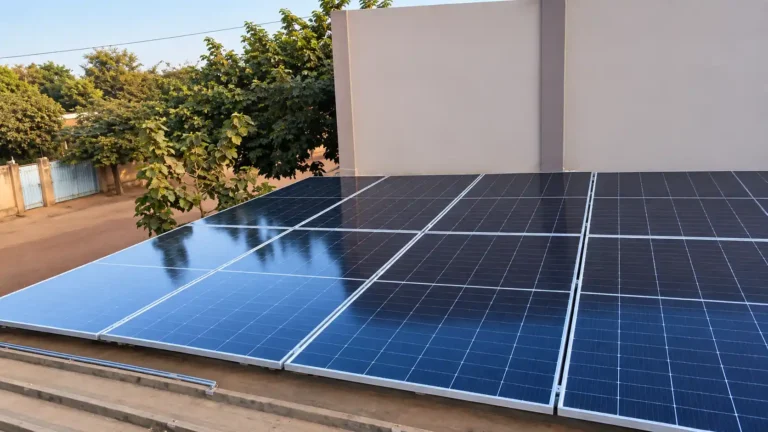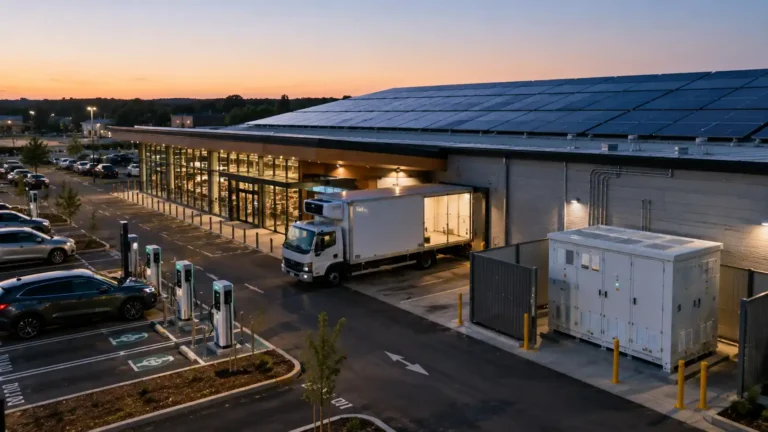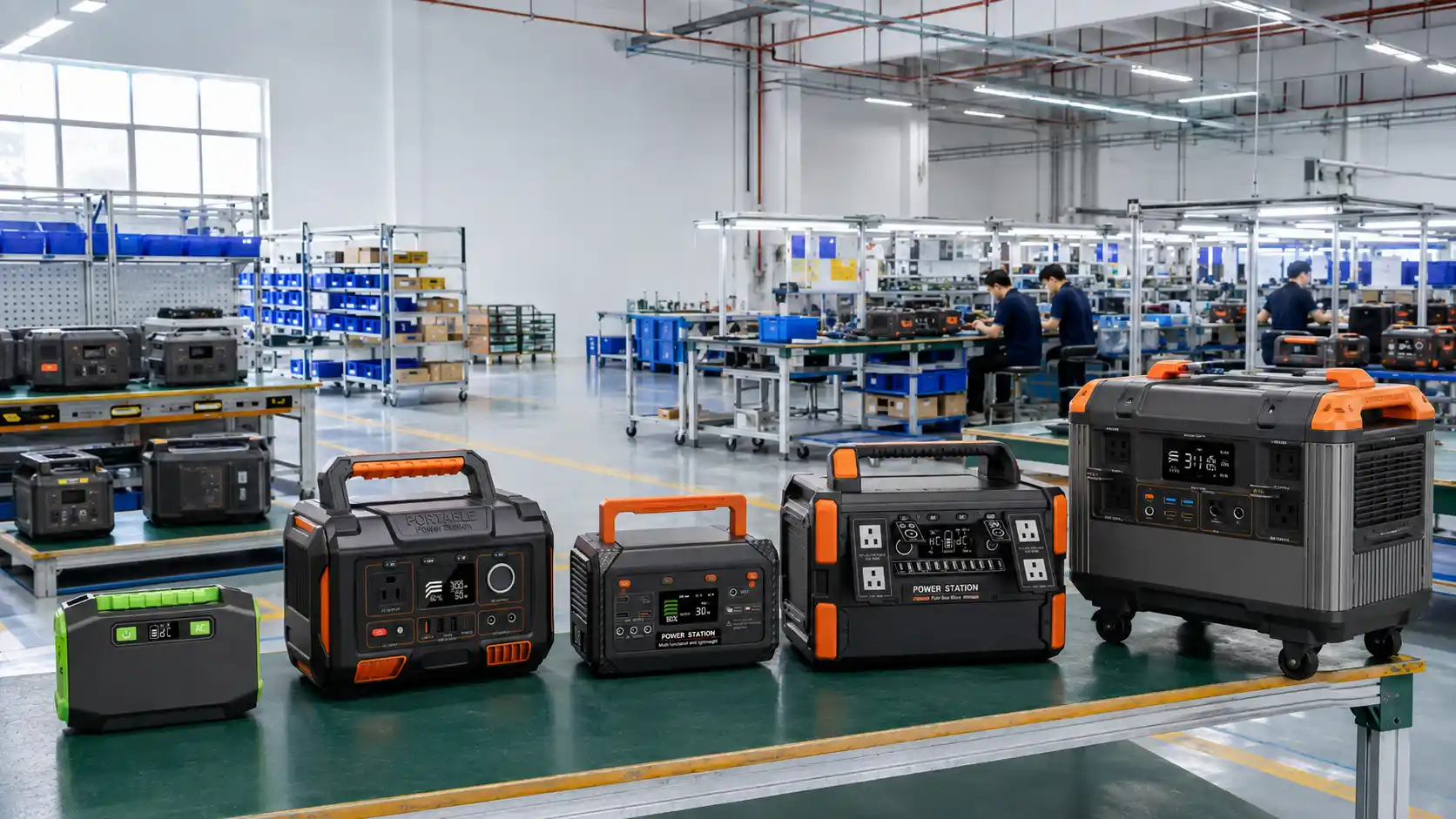
China remains one of the most important manufacturing centers for portable power stations, with companies ranging from global consumer brands to dedicated OEM and ODM energy storage manufacturers.
For distributors, wholesalers, private-label brands, solar companies, and importers, however, the term “manufacturer” can refer to very different business models. Some companies primarily develop and sell their own branded products, while others focus on contract manufacturing, private labeling, engineering customization, and long-term B2B supply.
This article compares 10 notable portable power station manufacturers and China-based energy storage companies in 2026, explains how their business models differ, and helps B2B buyers determine which type of supplier best fits their market.
Buyers looking specifically for available output ranges, battery chemistries, and current product configurations can also review VoltCrave Power’s portable power station product range.
The companies below are not ranked from best to worst. Each serves a different part of the portable energy storage market.
Top 10 Portable Power Station Manufacturers in China
| Company | Business Model | Main Focus | Most Relevant For |
|---|---|---|---|
| EcoFlow | Brand-led energy company | Portable power, solar, home energy | Branded retail and distribution |
| Jackery | Global portable power brand | Outdoor power stations, solar generators | Outdoor and consumer channels |
| VoltCrave Power | B2B energy storage manufacturer | Portable power and broader ESS solutions | Distributors, OEM buyers and project customers |
| BLUETTI | Brand + manufacturing | Portable power, home backup, ESS | Retail, solar and energy channels |
| Anker SOLIX | Brand-led energy division | Portable and residential energy | Consumer electronics channels |
| DJI Power | Technology brand | Portable power for field and professional use | Professional and technology channels |
| ALLPOWERS | Energy brand/manufacturer | Portable storage and solar | Distributors and solar retailers |
| PECRON | Energy storage brand/manufacturer | Portable, residential and C&I storage | Wholesale and distribution |
| FOSSiBOT | Technology brand | Portable power and outdoor products | Distributors and retail |
| CTECHI | OEM/ODM energy storage manufacturer | Portable power, batteries and ESS | OEM, ODM and private-label projects |
The key difference is not simply battery capacity, output power, or brand recognition.
Before comparing products, B2B buyers should determine whether they need an established branded product, a distribution partnership, or a manufacturer capable of supporting OEM, ODM, and private-label development.
1. EcoFlow
EcoFlow was founded in 2017 by a team with battery engineering backgrounds and has developed an energy ecosystem covering portable power stations, solar products, and smart home energy solutions.
Why Buyers Compare EcoFlow
EcoFlow is particularly useful as a benchmark for product design, charging technology, user experience, portable energy ecosystems, and international consumer positioning.
Its strong brand-led model makes it especially relevant to retailers and distributors evaluating established portable power products.
For businesses whose main objective is launching their own private-label portable power station, however, the sourcing process is different. A company built primarily around its own branded ecosystem should not automatically be treated as an open OEM factory.
Best fit: branded retail, distribution, and product benchmarking.
2. Jackery
Jackery has operated in portable clean energy since 2012 and focuses heavily on portable power stations and solar-generator systems for outdoor and backup applications.
The company states that it designs, manufactures, and sells its products while managing activities from R&D and manufacturing through sales and service.
Why Buyers Compare Jackery
Jackery is particularly relevant when benchmarking outdoor-product positioning, consumer-friendly industrial design, portable solar systems, and international retail strategy.
For B2B buyers, it is important to distinguish between distributing Jackery-branded products and sourcing an OEM product for your own brand. Those are fundamentally different procurement models.
Best fit: outdoor retail and branded distribution.
3. VoltCrave Power
VoltCrave Power focuses on B2B battery and energy storage manufacturing, with product categories spanning portable and outdoor power, battery systems, and broader energy storage applications.
For buyers comparing potential manufacturing partners rather than only finished consumer brands, VoltCrave Power provides dedicated resources covering its portable and outdoor power solutions, advanced battery manufacturing capabilities, and international certification documentation.
Relevant B2B Applications
VoltCrave Power is particularly relevant to importers, distributors, wholesalers, private-label customers, solar companies, and buyers sourcing more than one type of energy storage product.
For companies that have already moved beyond initial manufacturer research and are now evaluating specific factories, production capability, certifications, quality systems, and OEM support, the procurement process should move to a deeper supplier-verification stage.
At this stage, VoltCrave Power can discuss suitable portable power station options, OEM/ODM requirements, and project-specific sourcing needs.
Best fit: distributors, OEM/private-label buyers, and B2B energy storage customers.
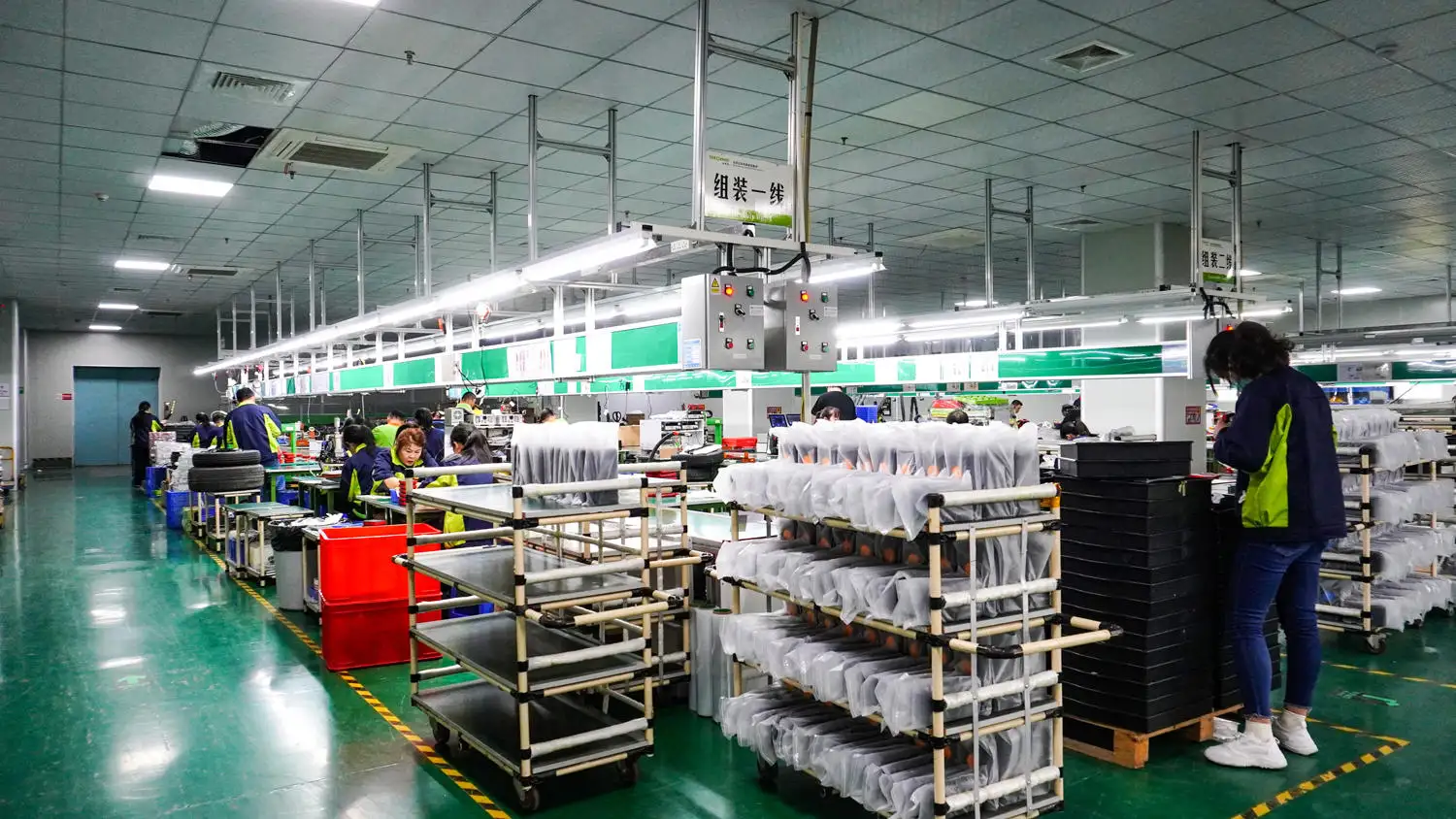
4. BLUETTI
BLUETTI has developed a broad energy storage portfolio covering portable power, off-grid use, residential energy storage, and other battery-based power applications.
Its published company milestones include the development of an independent manufacturing factory and the expansion of its product strategy from portable power into residential energy storage systems.
Why Buyers Compare BLUETTI
BLUETTI is especially useful for buyers studying how portable power products can develop into a wider energy ecosystem.
It provides a relevant benchmark for expandable battery systems, higher-capacity portable power stations, home backup, and solar-plus-storage applications.
Best fit: distributors, solar channels, and companies benchmarking broader energy storage portfolios.
5. Anker SOLIX
Anker expanded its power storage activities through Anker SOLIX, which the company officially launched as its energy storage sub-brand in 2023.
Its approach reflects Anker’s background in consumer electronics, combining portable and residential power products with strong emphasis on product design, usability, and established international sales channels.
Why Buyers Compare Anker SOLIX
Anker SOLIX is useful for benchmarking consumer electronics integration, user experience, brand positioning, charging functionality, and retail presentation.
For private-label procurement, however, buyers should again distinguish between a branded product ecosystem and an OEM-focused manufacturing relationship.
Best fit: consumer electronics and branded retail channels.
6. DJI Power
DJI has expanded into portable energy products through the DJI Power line, including portable power stations designed for conventional backup applications as well as field equipment and DJI device charging. Its current portfolio includes products such as DJI Power 500 and DJI Power 1000.
Why Buyers Compare DJI Power
DJI Power is particularly interesting for professional and technology-oriented applications.
Rather than focusing exclusively on camping, its ecosystem also makes portable power relevant to field photography, drones, production equipment, mobile work, and other professional applications.
Best fit: professional users and technology-focused distribution channels.
7. ALLPOWERS
ALLPOWERS operates in solar and portable energy storage products and describes R&D activities in Beijing, Guangzhou, and Shenzhen, together with manufacturing facilities in Shenzhen and Dongguan.
Its product strategy combines portable power stations with solar charging and broader outdoor energy applications.
Why Buyers Compare ALLPOWERS
ALLPOWERS is relevant for companies evaluating portable power stations, solar generators, outdoor energy storage, and solar-plus-storage combinations.
Compared with general consumer electronics brands, its positioning is more closely connected to portable renewable-energy applications.
Best fit: portable energy distributors and solar-product channels.
8. PECRON
PECRON was founded in 2012 and has focused on portable power and renewable energy storage products.
Its company history references manufacturing expansion in Huizhou and later factory development, while its product portfolio has expanded beyond portable power stations into residential and commercial energy storage.
Why Buyers Compare PECRON
PECRON is relevant when comparing higher-capacity portable power stations, LiFePO4-based products, solar-generator configurations, and broader energy storage portfolios.
Its public distributor and wholesale channels also make it relevant to B2B buyers evaluating suppliers for international distribution.
Best fit: wholesalers, distributors, and renewable-energy sales channels.
9. FOSSiBOT
FOSSiBOT is a China-based technology brand serving international markets. The company reports operating a manufacturing facility in China and has expanded its product portfolio across rugged technology and portable-power categories.
Why Buyers Compare FOSSiBOT
FOSSiBOT is relevant to distributors looking at outdoor-oriented technology products and portable power solutions positioned for camping, travel, backup, and mobile use.
Its market position differs from dedicated energy storage manufacturers because portable power exists within a broader rugged-technology product strategy.
Best fit: distributors and outdoor-technology retail channels.
10. CTECHI
CTECHI differs from many brand-led companies in this comparison because its public business positioning is strongly manufacturing-oriented.
The company explicitly provides OEM, ODM, and SKD services across portable power stations, battery products, and broader energy storage systems. Its portable power product pages also specifically identify OEM and ODM availability.
Why Buyers Compare CTECHI
CTECHI is particularly relevant for buyers evaluating OEM manufacturing, ODM development, private-label products, battery integration, and broader energy storage sourcing.
This makes it a different type of candidate from companies primarily focused on selling their own finished consumer products.
Best fit: OEM buyers, private-label brands, and energy-storage distributors.
China Portable Power Station Manufacturers: Brand vs OEM Factory
One of the most common mistakes in portable power sourcing is assuming that every well-known portable power brand is also an open OEM manufacturer.
They are not the same business model.
Brand-Led Portable Power Companies
Brand-led companies primarily develop products for their own branded ecosystems.
Their priorities typically include proprietary products, retail distribution, consumer marketing, dealer networks, and branded after-sales support.
They may operate sophisticated manufacturing systems and represent valuable product benchmarks, but that does not automatically mean that third-party buyers can source the same platforms under another brand.
This model is generally better suited to companies that want to distribute an established brand.
OEM and ODM Portable Power Station Manufacturers
OEM- and ODM-oriented manufacturers serve a different procurement requirement.
Depending on the supplier and project scope, cooperation can range from using an existing manufacturing platform with customized branding to deeper engineering changes involving electrical configurations, enclosures, interfaces, firmware, packaging, and compliance documentation.
This model is more relevant when an importer or distributor wants to build its own portable power station product line rather than resell an established consumer brand.
Broader Energy Storage Manufacturers
A third category includes manufacturers whose capabilities extend beyond portable power stations into battery systems, residential storage, telecom batteries, or commercial energy storage.
For B2B buyers planning a wider product portfolio, this can be important because the supplier relationship may eventually extend beyond a single portable product category.
The right manufacturer therefore depends on the buyer’s business model—not simply the popularity of a company name.
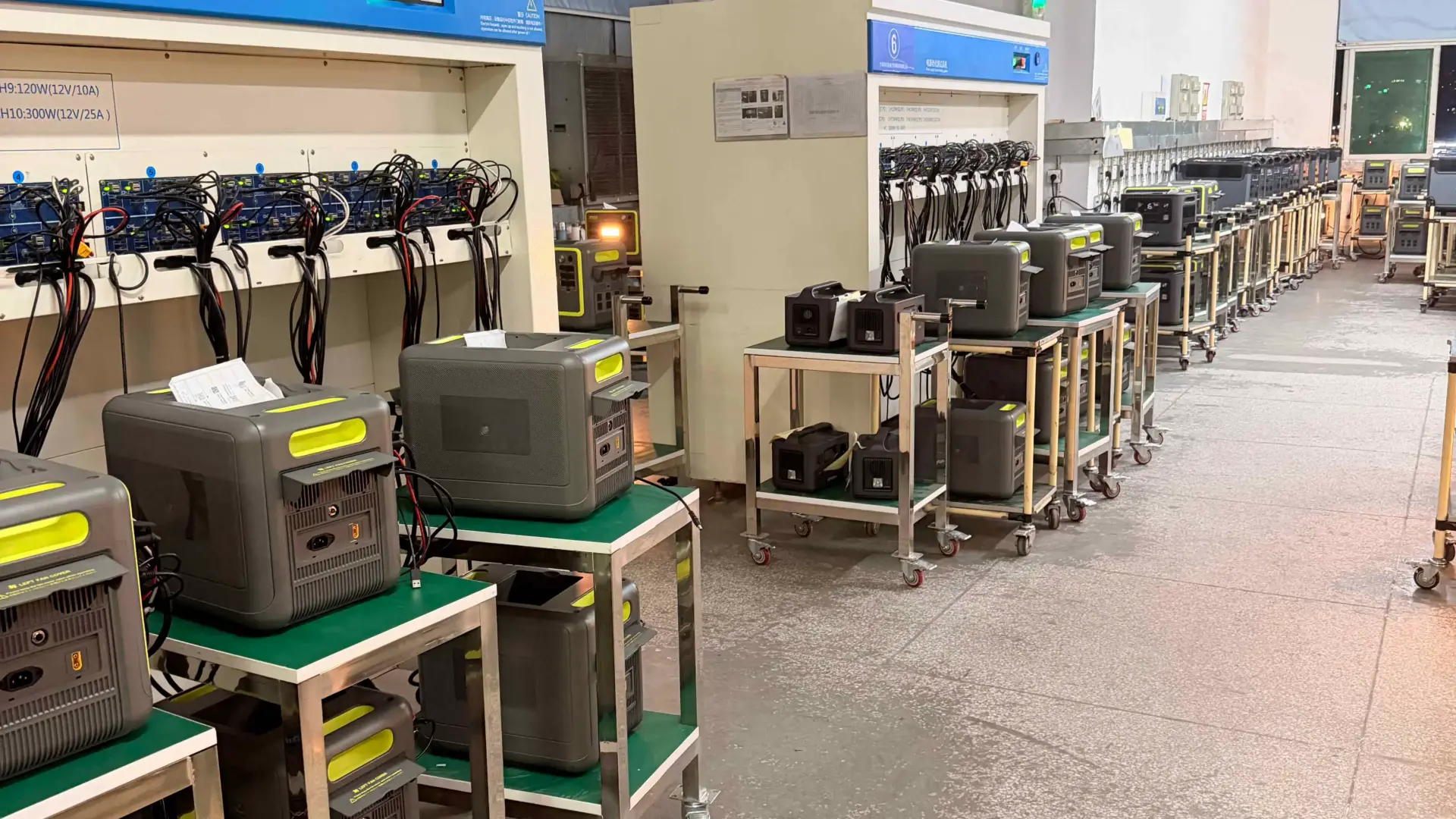
How to Compare Portable Power Station Manufacturers
Once you have identified potential suppliers, compare them using factors that affect your actual business rather than relying only on retail popularity or product appearance.
Manufacturing Model
First identify who you are actually dealing with.
A company may operate primarily as a consumer brand, an OEM manufacturer, an ODM manufacturer, an energy-storage manufacturer, or a trading company.
A famous consumer brand may be highly suitable for branded distribution but unsuitable for private labeling.
An OEM-focused manufacturer may have less consumer awareness but provide more flexibility for B2B product development.
The manufacturing model should therefore be established before buyers compare quotations.
Product Range and Battery Technology
Review whether the manufacturer’s product portfolio fits your target market.
A supplier specializing in compact camping units may not be the right partner for a distributor targeting high-output backup products.
Likewise, a company planning to expand into several energy storage categories may prefer a supplier capable of supporting portable products alongside broader battery and ESS solutions.
Buyers evaluating available power classes and battery configurations can compare VoltCrave Power’s current Portable & Outdoor product portfolio before discussing a specific sourcing project.
Certification Capability
Certification should always be reviewed at the specific model level.
A manufacturer having general experience with CE, FCC, UL, IEC, UN38.3, or other standards does not mean that every model carries every certification.
B2B buyers should verify which exact product was tested, which standard applies, whether documentation matches the offered configuration, and whether product modifications could affect existing compliance.
VoltCrave Power maintains a dedicated certification and compliance resource covering safety, EMC, transport, environmental, and regional documentation.
Detailed certificate verification, however, belongs to the factory due-diligence stage rather than the initial manufacturer-comparison stage.
OEM and ODM Capability
Private-label buyers should distinguish between basic branding and genuine product development.
Printing a logo or changing packaging is very different from a project that requires coordination between battery engineering, BMS development, inverter engineering, structural design, firmware, testing, and compliance.
Before selecting a manufacturer, define how much customization your project actually requires.
If you need an existing, proven product with your branding, a mature standard platform may be the more efficient option.
If you require significant electrical, structural, or functional changes, engineering and manufacturing capability become much more important.
Buyers who want to understand how VoltCrave Power approaches production and custom assembly can review its battery manufacturing and OEM/ODM capabilities.
Supply and After-Sales Support
The best portable power station manufacturer is not necessarily the supplier offering the lowest initial quotation.
For B2B procurement, supplier performance continues long after the first production order.
Documentation availability, repeat-order consistency, technical communication, spare-parts support, warranty handling, and future product continuity can all affect the real cost of a supplier relationship.
A lower unit cost offers little long-term advantage if inconsistent supply or product quality later creates returns, warranty expenses, or distributor complaints.
Which Type of Manufacturer Fits Your Business?
The ideal manufacturing partner depends heavily on how you intend to sell the product.
Importers and Wholesalers
Importers and wholesalers generally benefit from suppliers with stable product platforms, clear export documentation, predictable repeat-order availability, and sufficient product breadth.
When testing a new market, access to proven existing products may be more important than deep ODM development.
Distributors
Distributors should place greater emphasis on product continuity, technical documentation, after-sales support, differentiation, and supply stability.
A distributor building a long-term product portfolio needs products that can still be supported after the initial order.
Private-Label Brands
Private-label buyers should prioritize suppliers with genuine OEM or ODM capabilities.
The key question is not simply:
“Can you print our logo?”
The more important question is:
“Can your engineering, manufacturing, quality, and compliance teams support the product line we want to build?”
That distinction becomes increasingly important as order volumes and customization requirements increase.
Solar and Energy Storage Companies
Companies already working in solar, batteries, or energy storage may benefit from a manufacturer with a broader technical portfolio.
Portable power stations can then become part of a wider energy-storage offering rather than an isolated consumer category.
For businesses planning expansion across multiple energy-storage categories, supplier capability outside portable power may therefore be an important consideration.
From Manufacturer Comparison to Factory Evaluation
A list of portable power station manufacturers is only the first stage of B2B sourcing.
Initially, the buyer asks:
“Which portable power station manufacturers in China should I compare?”
After a shortlist has been created, the question changes to:
“Can this specific supplier reliably manufacture my product?”
That second question requires a very different evaluation process.
Buyers may need to verify the factory itself, production capabilities, battery sourcing, certification documents, sample quality, OEM/ODM capabilities, quality-control procedures, and pre-shipment inspection processes.
FAQs
Who are some major portable power station manufacturers in China?
The market includes global portable energy brands such as EcoFlow, Jackery, BLUETTI, and DJI Power, established portable-power companies such as ALLPOWERS and PECRON, and more manufacturing-oriented suppliers such as CTECHI and VoltCrave Power.
The right choice depends on whether your business wants branded distribution, private labeling, OEM/ODM development, or broader energy-storage cooperation.
Is a portable power station brand the same as a manufacturer?
Not necessarily.
Some companies manufacture and sell primarily under their own brand, while other factories specialize in producing products for third-party companies through OEM or ODM agreements.
B2B buyers should verify the company’s actual business model instead of assuming that every established brand provides private-label manufacturing.
How should B2B buyers compare portable power station manufacturers?
Start with manufacturing model, product and battery technology, model-specific certification capability, OEM/ODM support, and long-term supply and after-sales capability.
After creating a shortlist, move to deeper factory and supplier verification before placing a production order.
Which portable power station manufacturer is best for OEM projects?
There is no single manufacturer that is best for every OEM project.
The right supplier depends on output power, battery capacity, chemistry, target market, certification requirements, customization level, expected order volume, and long-term product strategy.
Companies that explicitly support OEM and ODM cooperation are generally more relevant than consumer brands focused mainly on their own branded retail products.
Should I choose a large brand or an OEM factory?
Choose an established brand when your objective is to distribute an existing branded product and benefit from its consumer recognition.
Choose an OEM or ODM manufacturer when your objective is to launch your own product line, customize product specifications, or develop a private-label business.
How can I verify a portable power station factory in China?
Do not rely only on a supplier’s website or quotation.
Once manufacturers have been shortlisted, buyers should evaluate production capability, company information, product-specific certification documents, samples, quality procedures, manufacturing records, and supporting documentation.
Our separate article on outdoor portable power station factory evaluation covers that procurement stage in more detail.
Conclusion
Finding the right portable power station manufacturer in China starts with understanding what type of supplier your business actually needs.
EcoFlow, Jackery, BLUETTI, Anker SOLIX, and DJI Power provide useful benchmarks for branded portable energy products and international consumer channels.
ALLPOWERS, PECRON, and FOSSiBOT may suit buyers focused on portable power distribution, while VoltCrave Power and CTECHI are more relevant to sourcing projects that require OEM/ODM cooperation, private labeling, or broader B2B energy-storage support.
Do not compare manufacturers only by brand recognition or unit price.
Instead, evaluate their business model, product range, battery technology, certification support, manufacturing capabilities, customization potential, and ability to support your business after the initial order.
If you are still building your supplier shortlist, this manufacturer comparison should be your starting point.
For buyers currently sourcing portable power stations or broader energy-storage products, you can also contact the VoltCrave Power team for B2B product matching and quotation support.
Need help matching this topic to a real battery project?
Send your target application, capacity range, certification market, and order plan. VoltCrave can recommend a practical product direction.