If you’re comparing home battery options, “5kWh” is probably the number you keep running into.
It’s the most common entry point for residential energy storage: small enough to fit a single-family home budget, large enough to matter during an outage. This guide covers what a 5kWh hybrid system actually does, how long it runs your appliances, and which specs to confirm with a supplier or installer before you commit to one.
What a 5kWh Hybrid Home Energy Storage System Actually is?
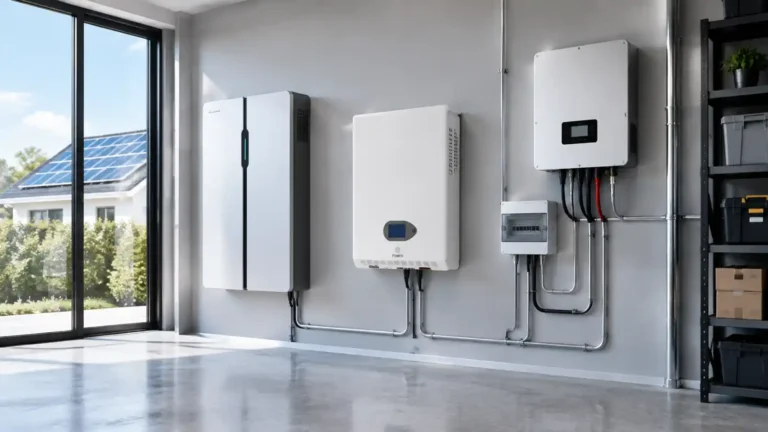
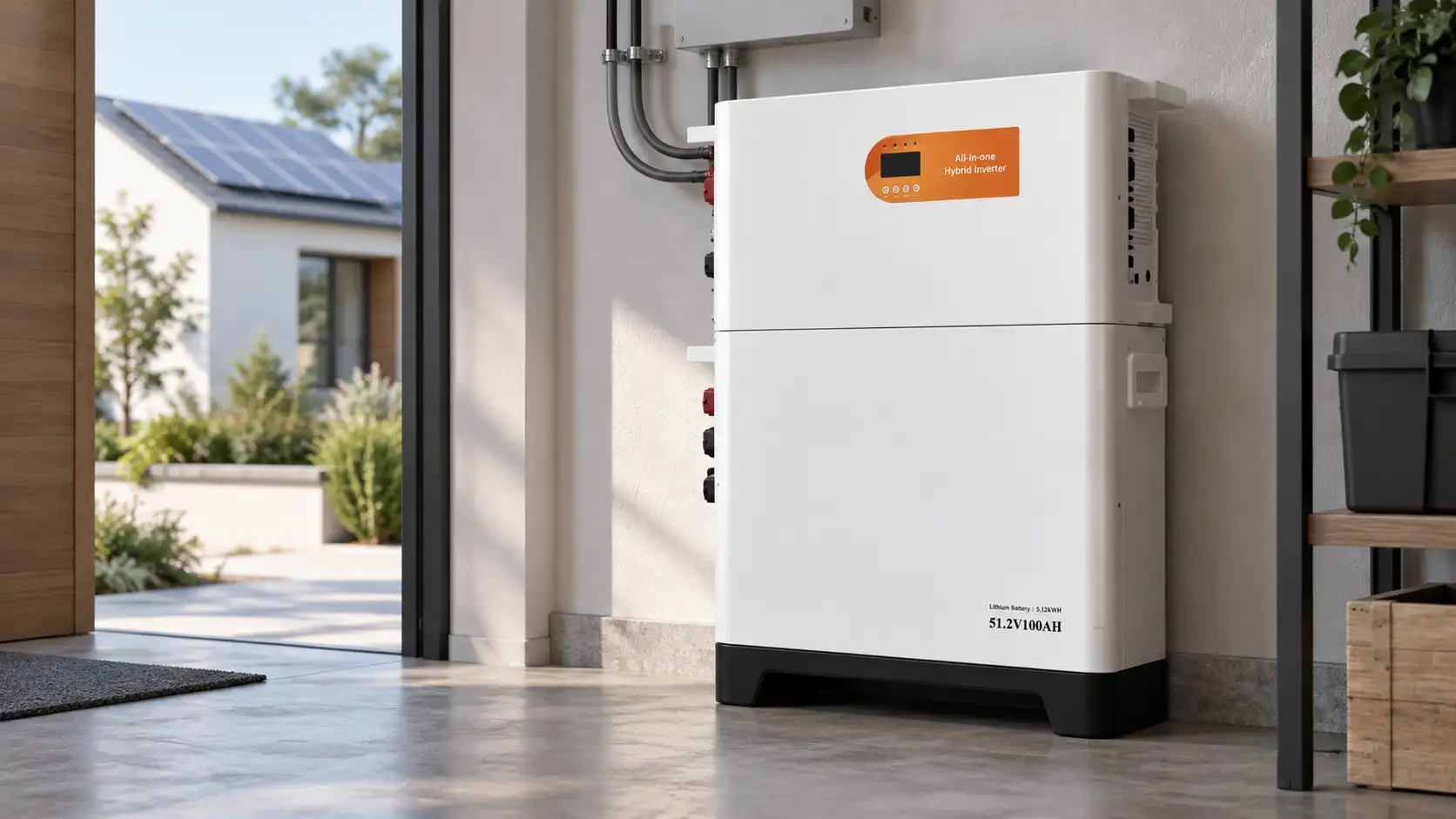
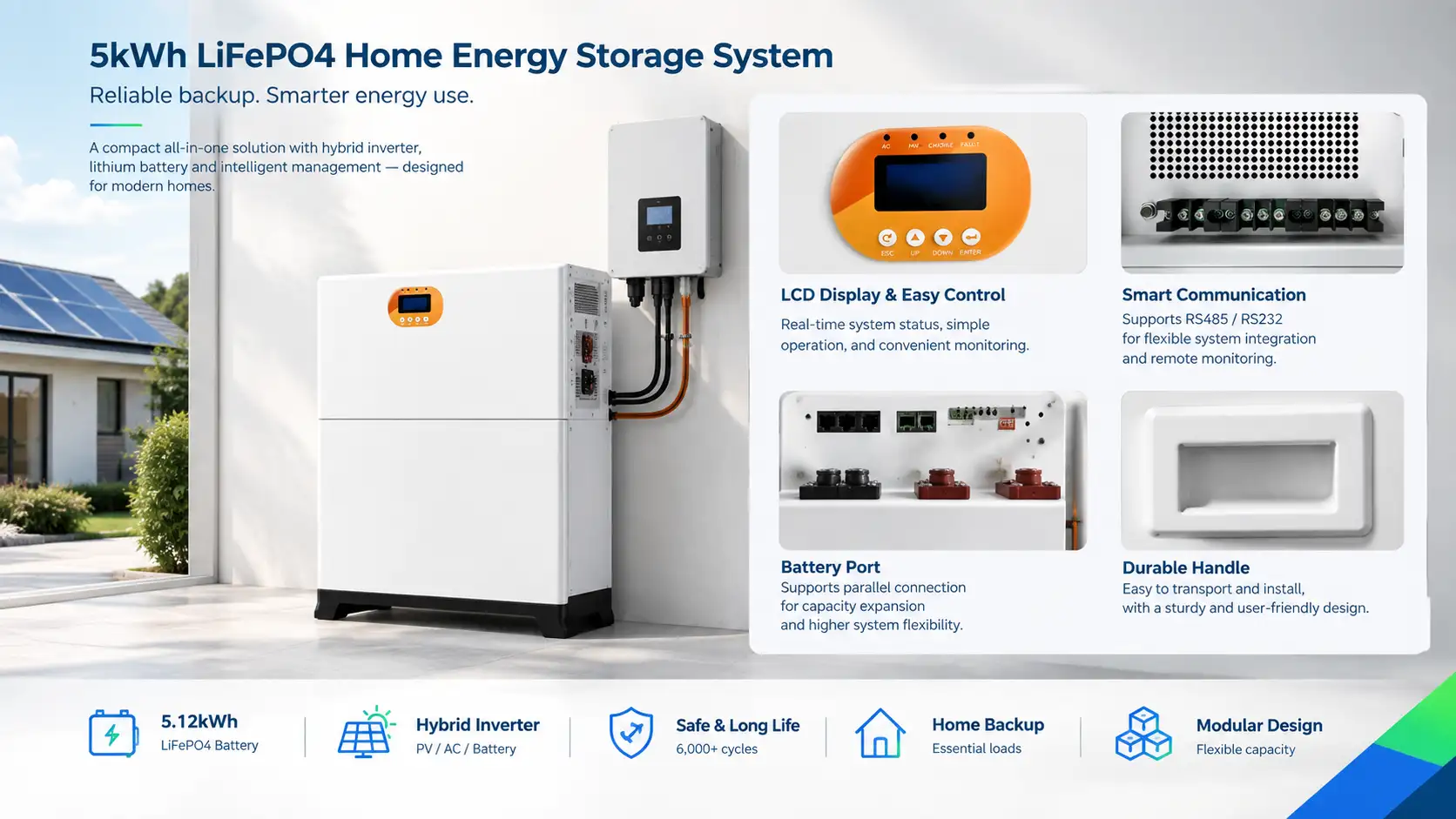
It pairs a battery, usually LiFePO4, with a hybrid inverter that can draw power from three sources: solar panels, the grid, and the battery itself. Unlike a standalone battery backup, a hybrid system charges from solar during the day, switches to battery power automatically when the grid drops, and can also charge from the grid overnight or on cloudy days, depending on the utility rate plan.
5kWh is usable energy capacity, not power output. Capacity is how much energy the battery can store. Power rating, in kW, is how much of that energy it can deliver at once. A 5kWh battery paired with a 3kW inverter runs a 3kW load until the battery empties, even though the total stored energy is only 5kWh. This distinction is worth confirming on any spec sheet, since a supplier quoting “5kW” and one quoting “5kWh” are describing two different things.
How Long a 5kWh Battery Powers Your Home?
Runtime depends entirely on what you’re powering. The table below assumes about 90% round-trip efficiency and 80-90% usable depth of discharge, typical for LiFePO4:
| Appliance | Typical wattage | Approx. runtime on a 5kWh battery |
|---|---|---|
| LED lights (5-10 bulbs) | 50-100W | 40-70 hours |
| Wi-Fi router + modem | 15-20W | 200+ hours |
| Refrigerator (compressor cycling) | 100-400W average | 12-30 hours |
| Laptop charging | 60-90W | 45-60 hours |
| Window AC unit | 900-1,500W | 2.5-4 hours |
| Electric water heater | 3,000-4,500W | Under 1 hour |
| Central air conditioning | 3,500-5,000W | Under 1 hour |
These figures assume the appliances run continuously. A refrigerator only draws its full wattage when the compressor cycles on, which is why it can often run for a full day or more even though its nameplate wattage looks high next to the battery’s capacity.
Keeping a refrigerator running on 5kWh
A standard refrigerator uses about 1-2 kWh per day once you average out the compressor cycles. A 5kWh battery, on its own, can keep a refrigerator running for roughly two to three days if it’s the only load connected. Add a few lights and a phone charger, and you’re still well past 24 hours of backup for the essentials most households care about during an outage.
Is 5kWh Enough for Your Home?
5kWh is enough for:
- Keeping the refrigerator, Wi-Fi, and basic lighting running through a multi-hour outage
- Short-duration backup in areas with infrequent, brief power interruptions
- Pairing with a small solar array (2-4kW) for daily self-consumption and modest backup
5kWh usually isn’t enough for:
- Running central air conditioning or electric heating during an outage
- Powering an entire household through a multi-day grid failure
- Homes that want several charge/discharge cycles a day to fully offset a larger electricity bill
If outages are short and infrequent, and the main goal is protecting the refrigerator, medical equipment, and connectivity, a single 5kWh unit is often the right starting size. Households that want whole-home backup, or that live somewhere with multi-day outages, usually need to stack multiple 5kWh modules or step up to a 10kWh+ system.
Specs to Confirm Before Buying a 5kWh Hybrid System
Not every 5kWh system is built the same way, and the difference often doesn’t show up until installation or the first outage. Confirm the following with the supplier before signing off on a system.
Battery chemistry
LiFePO4 (lithium iron phosphate) is the standard for home ESS because of its thermal stability and long cycle life. Lead-acid systems cost less up front but need replacing far more often and only give about 50% usable depth of discharge, so a 5kWh lead-acid battery behaves more like a 2.5kWh LiFePO4 battery in practice. Confirm which chemistry the quoted price is actually built around.
Cycle life
A quality LiFePO4 battery should be rated for 6,000+ cycles at 80% depth of discharge, which works out to more than 16 years at one cycle a day. Ask for the test conditions the cycle rating was measured under, not just the headline number.
Round-trip efficiency
Look for 90% or higher. A lower number means more of the solar generation you paid to install is lost to heat during charging and discharging, which changes the real payback period.
Battery-inverter compatibility
A 5kWh battery doesn’t automatically work with every hybrid inverter. Voltage window, communication protocol (CAN or RS485, most commonly), and connector type all need to match, or the battery and inverter need to be sold as a matched pair. Mismatches here are one of the more common causes of installation delays.
Certifications
UL 1973 (battery safety) and IEC 62619 (industrial cell and battery safety) are the baseline for a residential battery. Ask about UL 9540A fire propagation test data if the local authority having jurisdiction requires it for permitting; see VoltCrave’s UL 9540 vs UL 9540A guide for what that testing actually covers.
Warranty and end-of-life capacity
A 10-year warranty period alone doesn’t say much on its own. Ask for the guaranteed cycle count and the end-of-life capacity the warranty is based on, often 70-80% of original capacity. Two batteries with the same “10-year warranty” label can carry very different real-world guarantees.
5kWh vs. Larger Home Battery Systems
5kWh is a starting size, not a fixed ceiling. VoltCrave’s residential line is stackable, so a household or installer can start at 5kWh and add battery modules on the same inverter later instead of replacing the whole system. Common next steps are 10kWh, roughly double the backup window, and 15-20kWh for households that want multi-day coverage or higher-draw appliances like AC units. For the installation and inventory case for going modular instead of fixed-capacity, see VoltCrave’s stackable energy storage systems guide.
Before placing an order, confirm capacity, chemistry, cycle rating, round-trip efficiency, inverter compatibility, required certifications, and the warranty’s end-of-life capacity directly with the supplier. If you’re sizing from scratch rather than starting at a fixed 5kWh, VoltCrave’s guide to home battery backup without solar walks through the essential-loads method installers use to size a system from zero.
VoltCrave’s 5kWh Hybrid Home ESS Lineup
VoltCrave Power has manufactured lithium battery systems since 2011, across 32 production lines, with certifications including IEC 62619, UL 1973, and UL 9540A. Our residential line includes 5kWh hybrid systems built around LiFePO4 cells, sold as a standalone starter unit or as part of a modular setup that scales with the installation.
If you’re sourcing 5kWh home ESS units for a project, a distribution catalog, or a single installation, get in touch with our team for specs, certifications, and pricing, or browse the full home & residential ESS range.
FAQ
Is 5kWh enough to run a refrigerator all day?
Yes. A standard refrigerator uses about 1-2 kWh per day, so a 5kWh battery can keep it running for two to three days on its own.
What’s the difference between a 5kWh battery and a 5kWh hybrid system?
The battery is the storage component. A hybrid system adds a hybrid inverter that manages solar input, grid connection, and battery charge/discharge automatically.
Can I add more capacity to a 5kWh system later?
In most modular systems, yes, provided the inverter and battery model are designed to support additional units on the same system. Confirm this with the manufacturer before the first purchase, since not every 5kWh unit is stackable.
How long does a 5kWh LiFePO4 battery last before it needs replacing?
A quality LiFePO4 battery rated for 6,000+ cycles at 80% depth of discharge can last more than 15 years at one full cycle a day.
Need help matching this topic to a real battery project?
Send your target application, capacity range, certification market, and order plan. VoltCrave can recommend a practical product direction.