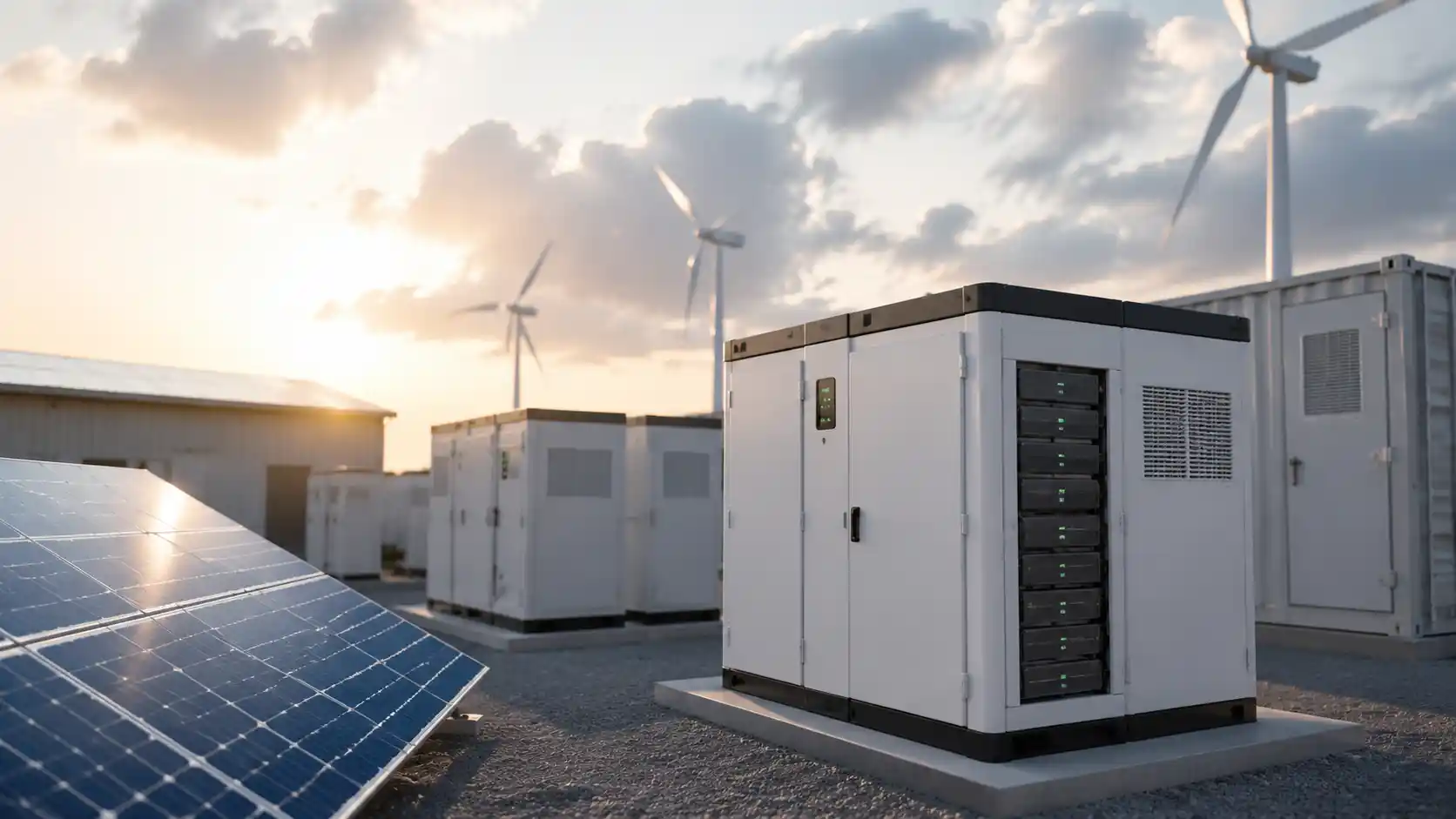
Understanding the Basic Working Principle of a Battery Storage System

As global demand for renewable energy continues to grow, battery storage technology has become an essential solution for managing electricity supply, improving energy efficiency, and supporting stable power systems.

Many businesses, distributors, and project developers understand the importance of energy storage but still have questions about how the technology actually works.

Common questions include:

  • How is electricity stored inside a battery system?
  • How does stored energy become usable power?
  • What components are required to build a complete energy storage solution?
  • How can buyers select a reliable supplier for international projects?

Understanding how does a battery storage system work helps companies make better purchasing decisions and avoid selecting unsuitable products for their applications.

A battery storage system works by converting electrical energy into chemical energy during charging and converting it back into electrical energy when power is required.

The complete process involves multiple technologies working together, including battery cells, battery management systems, inverters, control systems, and safety protection devices.

For companies looking for reliable solutions, choosing an experienced supplier is equally important as understanding the technology itself. Voltcrave Power provides energy storage solutions designed for residential, commercial, and portable applications, helping global customers build reliable energy systems.
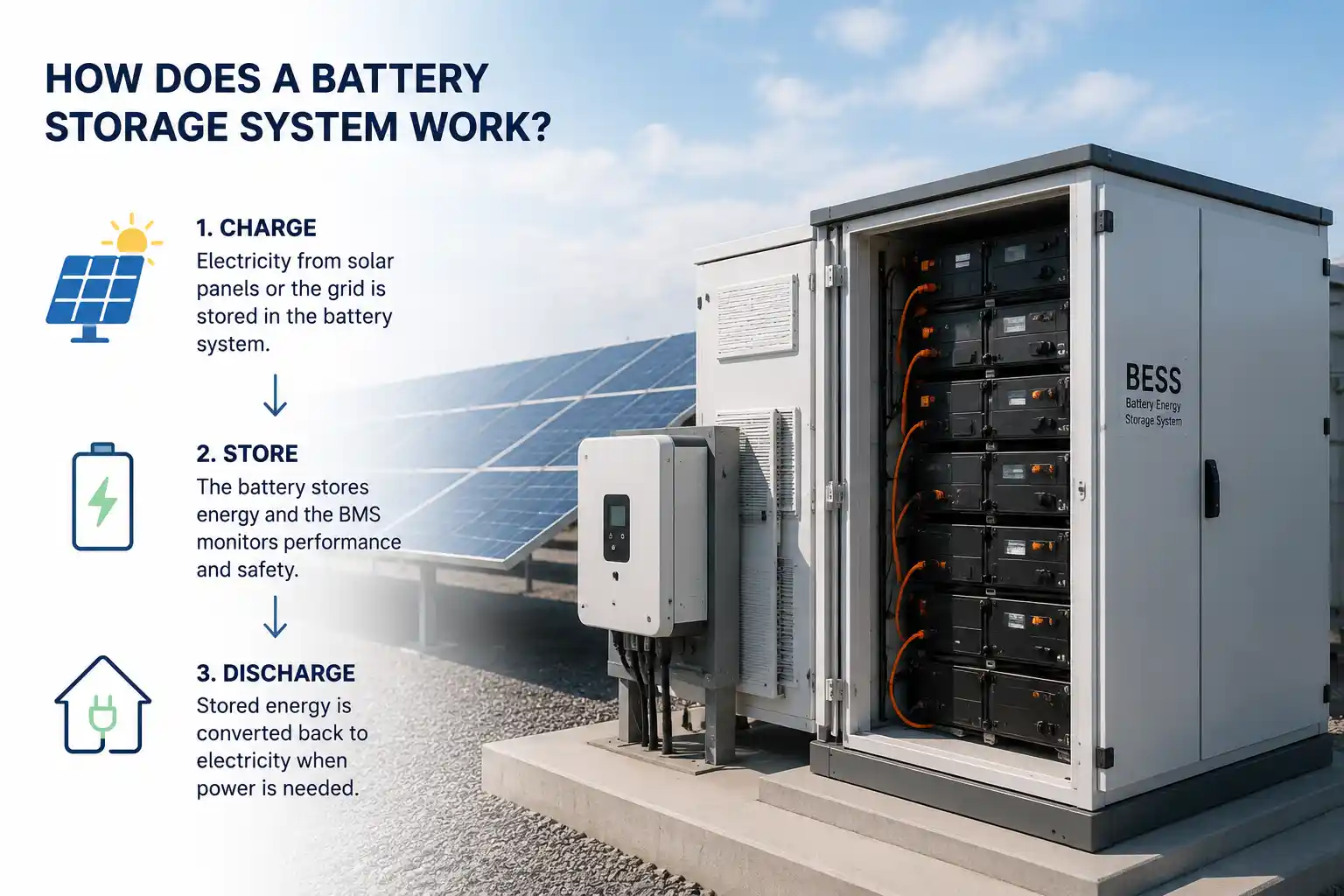

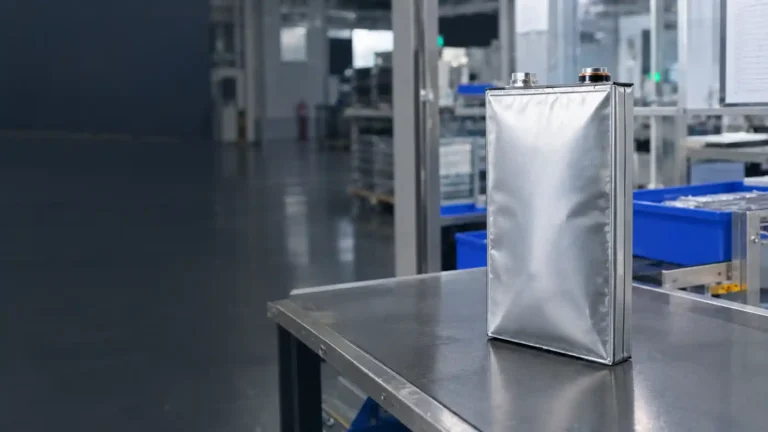
Battery Storage System Working Process ExplainedBattery Storage System Working Process Explained

The Main Process: How a Battery Storage System Stores and Releases Energy

A battery storage system operates through three primary stages:

1. Energy Charging Process

During the charging stage, electricity from sources such as solar panels, the grid, or generators enters the storage system.

The inverter converts electricity into a suitable form that the battery can store.

Inside the battery cells, electrical energy is converted into chemical energy.

This stored energy remains available until it is needed.


2. Energy Storage Management

During storage, the system continuously monitors:

  • Battery voltage
  • Temperature
  • Current flow
  • Charging level
  • Battery health status

The Battery Management System (BMS) controls the charging and discharging process to improve safety and extend battery lifespan.

A high-quality BMS is one of the most important factors affecting system reliability.


3. Energy Discharging Process

When electricity demand increases or power becomes unavailable, the battery releases stored energy.

The inverter converts the stored DC electricity into AC electricity that can power:

  • Household appliances
  • Commercial equipment
  • Industrial devices
  • Emergency backup systems

This complete cycle allows users to store electricity when it is available and use it when needed.


Energy Storage System Components Explained

Understanding the major energy storage system components helps buyers evaluate product quality and supplier capability.

A complete battery storage solution usually includes several key parts.

Component Function Why It Matters for Buyers
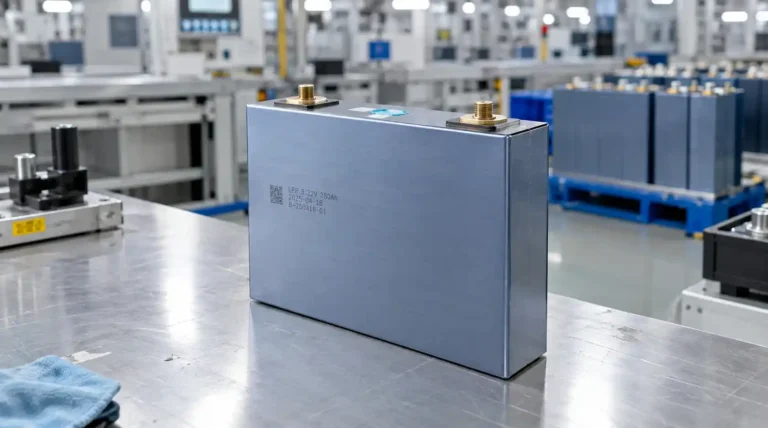
Battery Cells Store electrical energy Determines capacity, lifespan, and safety
Battery Management System (BMS) Controls battery operation Protects against overcharging and overheating
Inverter Converts DC and AC power Determines system compatibility
Energy Management System (EMS) Controls energy flow Improves efficiency and smart operation
Thermal Management System Controls temperature Ensures stable operation
Protection System Provides safety protection Reduces operational risks
Monitoring Platform Tracks system performance Helps maintenance and troubleshooting

When purchasing an energy storage system, buyers should evaluate not only battery capacity but also the quality of all supporting components.

A system with high-quality battery cells but poor control components may experience performance issues over time.


Why Battery Management System Quality Matters

The Battery Management System is often considered the “brain” of an energy storage system.

It manages battery safety by monitoring real-time operating conditions.

A reliable BMS can:

  • Prevent overcharging
  • Avoid deep discharge damage
  • Balance battery cells
  • Monitor temperature changes
  • Improve battery cycle life

For commercial and residential projects, BMS performance directly affects:

  • System reliability
  • Maintenance requirements
  • Long-term operating costs

When comparing suppliers, buyers should ask about BMS technology instead of focusing only on battery capacity or price.
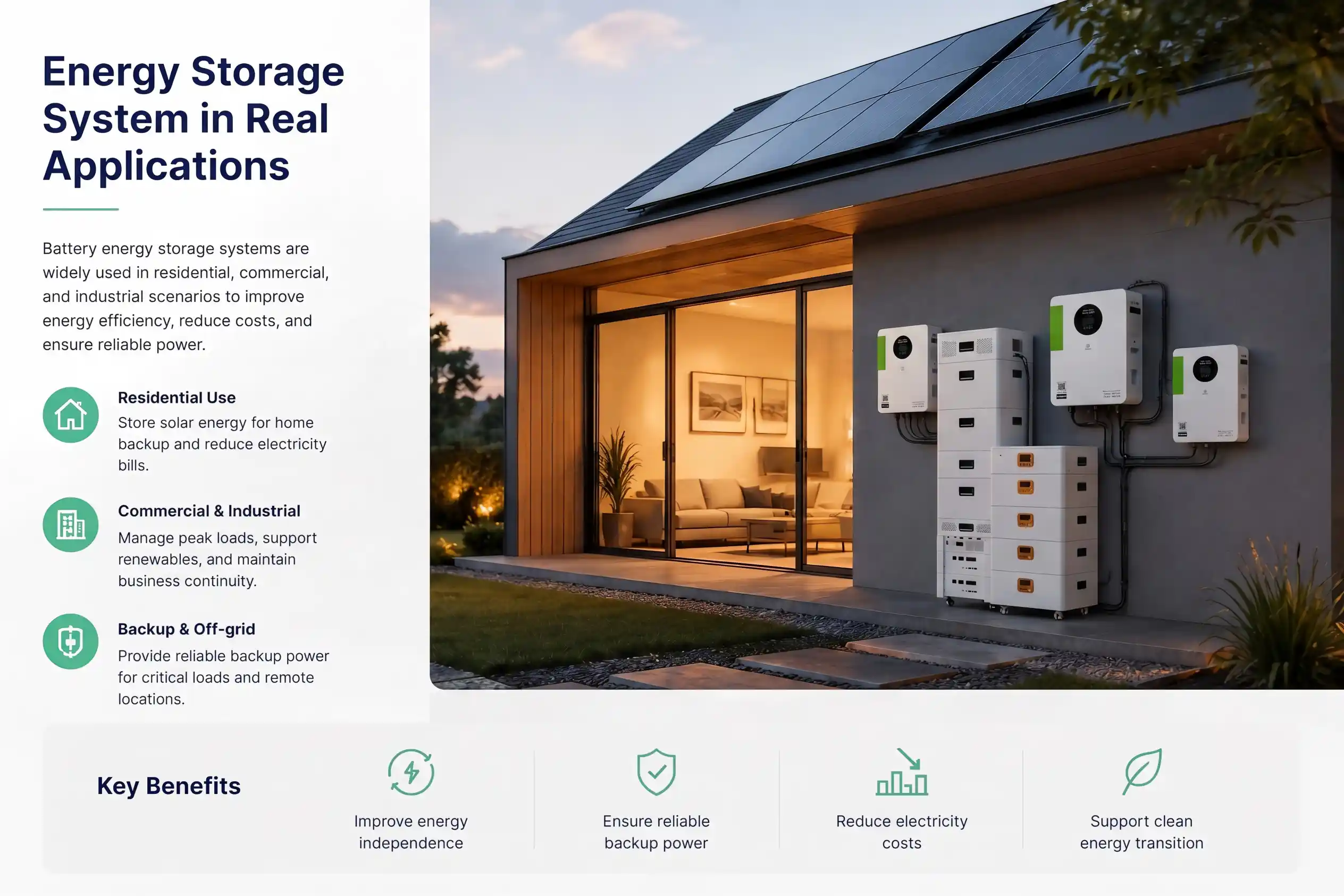

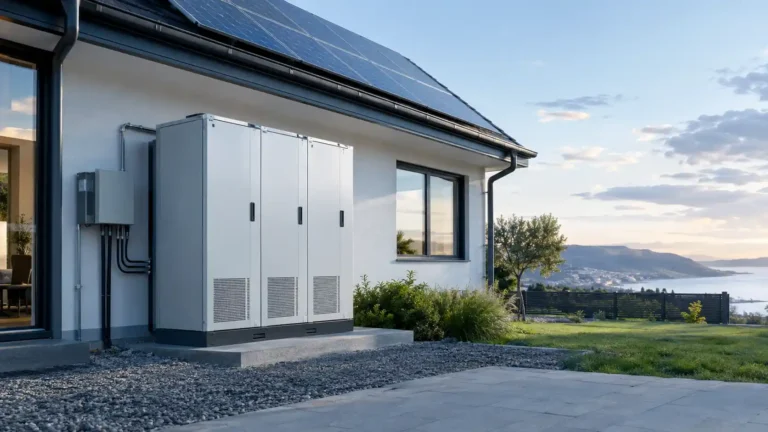
Battery energy storage system applications for residential, commercial, and off-grid power solutions

Different Applications of Battery Storage Systems

Battery storage technology can be used in multiple scenarios depending on customer requirements.

Residential Energy Storage

Residential systems help homeowners:

  • Store solar energy
  • Reduce electricity costs
  • Maintain backup power during outages

Typical applications include:

  • Home solar systems
  • Emergency backup
  • Off-grid living

Commercial Energy Storage

Businesses use storage systems to improve energy management.

Common applications include:

  • Peak load shifting
  • Factory energy management
  • Backup power
  • Renewable energy integration

Commercial customers usually require higher capacity, stronger safety protection, and longer operational life.


Portable Energy Storage Solutions

Portable systems provide flexible power solutions for outdoor and emergency scenarios.

Applications include:

  • Camping
  • Outdoor work
  • Remote locations
  • Emergency situations

Portable solutions require special attention to:

  • Weight
  • Battery safety
  • Charging speed
  • Output compatibility

    How to Choose the Right Battery Energy Storage System Supplier in China

    For global buyers, understanding how does a battery storage system work is only the first step. The next challenge is selecting the right manufacturing partner.

    Many distributors and project developers face similar problems during procurement:

    • The supplier provides limited technical information
    • Product specifications do not match actual applications
    • Certification documents are incomplete
    • After-sales support is difficult after shipment
    • Low-cost products create high return rates

    Choosing a reliable battery energy storage system supplier in China requires evaluating more than product price.

    A professional supplier should have strong manufacturing capability, quality control processes, technical support, and experience serving international markets.


    Key Factors to Evaluate Before Selecting an Energy Storage Supplier

    When comparing suppliers, buyers should focus on several important areas.

    Evaluation Factor Questions Buyers Should Ask Why It Matters
    Manufacturing Experience How long has the supplier produced energy storage products? Reduces product reliability risks
    Battery Technology What battery chemistry and cells are used? Affects lifespan and safety
    Quality Control What inspections are performed during production? Ensures product consistency
    Certification Support Can the supplier provide required documents? Helps market approval
    Customization Capability Can products be modified for different applications? Supports brand differentiation
    After-Sales Service Is technical support available after delivery? Reduces operation problems

    For B2B buyers, supplier capability directly affects customer satisfaction and long-term business growth.


    Why Many Global Buyers Choose Chinese Energy Storage Manufacturers

    China has become one of the world’s major energy storage manufacturing centers because of its complete supply chain.

    A mature energy storage ecosystem includes:

    • Battery cell manufacturers
    • Battery pack factories
    • Electronic component suppliers
    • Inverter manufacturers
    • Testing laboratories
    • System integration companies

    This integrated supply chain allows manufacturers to provide competitive solutions while maintaining production efficiency.

    However, not every manufacturer offers the same level of quality.

    Buyers should focus on suppliers that combine:

    • Advanced production processes
    • Reliable components
    • International compliance experience
    • Stable quality management

    How Voltcrave Power Helps Global Customers Build Reliable Energy Solutions

    When choosing an energy storage partner, customers need more than a product supplier.

    They need a partner that understands application requirements and market challenges.

    Voltcrave Power focuses on providing energy storage solutions for global customers, including:

    • Residential energy storage systems
    • Commercial energy storage solutions
    • Portable power stations
    • Customized OEM energy products

    Our approach focuses on helping customers select suitable solutions according to:

    • Application scenarios
    • Power requirements
    • Market regulations
    • Customer expectations

    OEM and Customization Support for Energy Storage Buyers

    Different markets have different customer requirements.

    Distributors may need:

    • Customized appearance design
    • Private label solutions
    • Different capacity options
    • Packaging customization
    • Product configuration adjustments

    A flexible supplier can help businesses create differentiated products instead of selling identical products in competitive markets.

    Voltcrave Power supports flexible cooperation models:

    Cooperation Model MOQ Requirement Suitable Customers
    Standard inventory products 10–20 units Testing market demand
    OEM/private label products 300–500 units Brands and distributors
    Customized projects Based on requirements Large-scale energy projects

    This flexible approach allows customers to expand gradually while controlling investment risks.


    Common Mistakes Buyers Make When Purchasing Battery Storage Systems

    Even experienced buyers can encounter problems if they focus only on price.

    Choosing Based Only on Low Cost

    The cheapest product may have:

    • Lower-quality battery cells
    • Limited protection systems
    • Shorter service life
    • Higher failure rates

    For energy storage products, total ownership cost is often more important than initial purchase price.


    Ignoring Application Requirements

    Different applications require different system designs.

    For example:

    A home backup system does not have the same requirements as a commercial energy storage project.

    Important factors include:

    • Required capacity
    • Output power
    • Installation environment
    • Charging method
    • Operating temperature

    A professional supplier should recommend solutions based on actual usage scenarios.


    Not Checking Long-Term Supplier Capability

    Energy storage is a long-term business.

    Before cooperation, buyers should evaluate:

    • Production capacity
    • Quality management
    • Technical support
    • Warranty policy
    • Communication efficiency

    A reliable partnership is more valuable than a single transaction.


    The energy storage industry continues to evolve as renewable energy adoption increases.

    Several trends are shaping the future:

    Higher Energy Density

    Manufacturers are improving battery technology to provide:

    • More stored energy
    • Smaller system size
    • Better transportation efficiency

    Smarter Energy Management

    Modern systems increasingly integrate:

    • Intelligent monitoring
    • Remote management
    • Cloud platforms
    • Automatic energy optimization

    These technologies help users improve efficiency and reduce operating costs.


    Greater Demand for Flexible Solutions

    Customers increasingly require customized systems for different markets.

    Future suppliers will need stronger capabilities in:

    • Product customization
    • Application engineering
    • Global compliance support

    FAQs

    What is a battery energy storage system and how does it work?

    A battery energy storage system stores electricity when energy is available and releases it when power is needed. The system uses battery cells, an inverter, a battery management system, and control components to manage energy conversion and storage.

    For more detailed product questions, customers can also visit the Voltcrave Power FAQ page:
    https://voltcravepower.com/faq/


    What are the main energy storage system components?

    The main energy storage system components include battery cells, BMS, inverter, EMS, thermal management system, protection devices, and monitoring systems.

    Each component affects system safety, efficiency, and service life.


    How long does a battery storage system usually last?

    The lifespan depends on battery technology, usage conditions, charging cycles, and maintenance.

    High-quality lithium battery systems are commonly designed for thousands of charge and discharge cycles when properly managed.


    How do I choose a reliable battery energy storage system supplier in China?

    Buyers should evaluate supplier experience, product certifications, manufacturing capability, quality control processes, customization ability, and after-sales support.

    A reliable supplier should provide transparent technical information and consistent product quality.


    What certifications should energy storage systems have?

    Certification requirements depend on the target market and application.

    Common requirements may include:

    • Battery safety certifications
    • Transportation certifications
    • Electrical compliance standards
    • Regional market approvals

    Buyers should confirm requirements before mass production.


    Can energy storage suppliers provide OEM services?

    Yes. Many professional suppliers provide OEM and private label services, including appearance customization, packaging, capacity adjustments, and product configuration changes.

    Voltcrave Power supports OEM cooperation with MOQ starting from 300–500 units depending on customization requirements.


    What MOQ does Voltcrave Power support?

    For standard inventory products, MOQ typically starts from 10–20 units.

    For OEM/private label products, MOQ usually starts from 300–500 units depending on product specifications and customization requirements.


    Choose a Reliable Energy Storage Partner for Your Global Market

    Understanding how does a battery storage system work helps buyers make better purchasing decisions, but selecting the right manufacturing partner determines long-term success.

    A complete energy storage solution depends on:

    • Reliable battery technology
    • Advanced energy storage system components
    • Stable manufacturing processes
    • Strong technical support

    For companies searching for a professional battery energy storage system supplier in China, working with an experienced partner can reduce procurement risks and improve market competitiveness.


    Partner With Voltcrave Power for Your Energy Storage Projects

    Whether you are a distributor, system integrator, installer, or brand owner, Voltcrave Power can provide reliable energy storage solutions with flexible OEM support and customized product options.

    Contact our team today to discuss your energy storage requirements, product specifications, and cooperation opportunities. Build a stronger energy storage portfolio with a supplier focused on quality, safety, and long-term partnership.
    https://voltcravepower.com/contact/

Need help matching this topic to a real battery project?

Send your target application, capacity range, certification market, and order plan. VoltCrave can recommend a practical product direction.