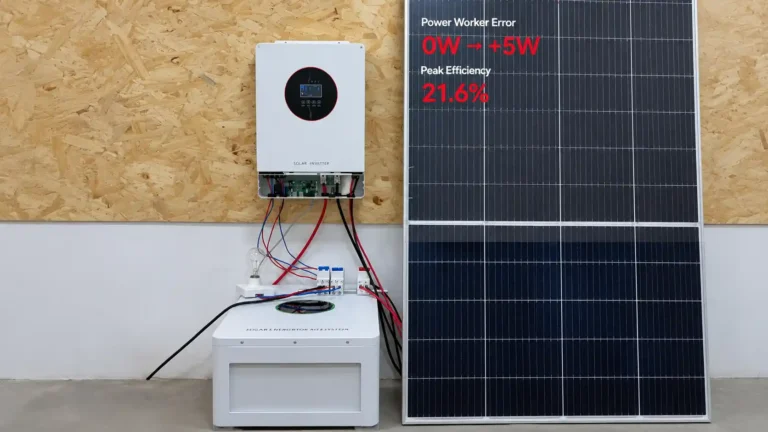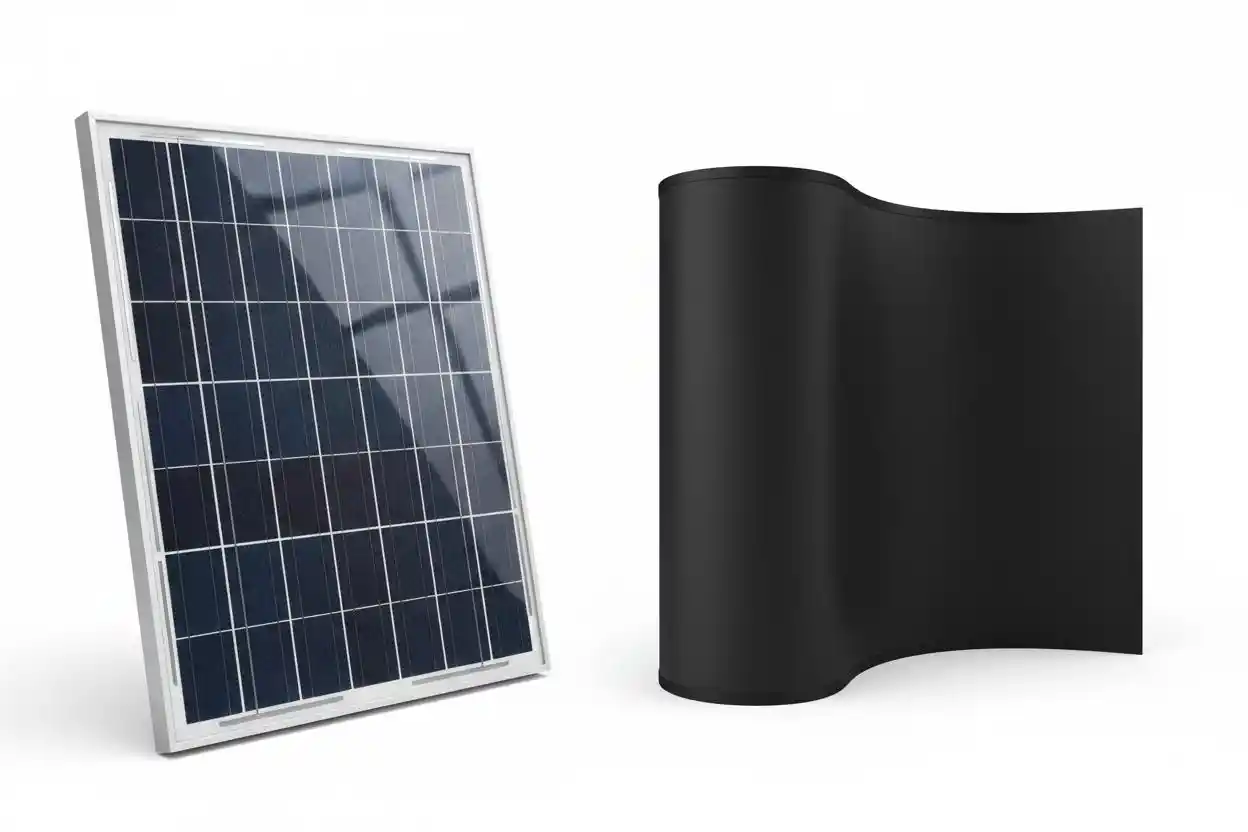
The choice between semi-flexible and rigid solar panels comes down to two constraints that usually conflict: the shape of the surface you can mount to, and the power you need from a given area. Rigid panels win on output per square meter and service life. Semi-flexible panels win wherever the mounting surface is curved, weight-limited, or too weak to carry an aluminum frame and glass.
For a B2B buyer, the decision is rarely “which is better.” It is which structure the project’s mounting surface and power budget actually allow, followed by a second question about whether the selected panel will survive the environment for the warranty period. This guide compares the two structures on the parameters that decide that outcome, using published figures from VoltCrave Power’s semi-flexible and rigid product lines rather than generic industry numbers.
Semi-Flexible vs Rigid Solar Panels: Key Structural Differences
Both products often use the same cell technology and do the same job. What separates them is the packaging around the cells, and that packaging drives every downstream difference in weight, durability, and mounting method.
Cell technology and encapsulation
Both panel types can use monocrystalline silicon cells. The difference is not the cell itself but how it is protected. A rigid panel laminates cells between a glass front sheet and a polymer back sheet, then bonds the laminate into an aluminum frame. A semi-flexible panel replaces the glass with a thin polymer front sheet and a flexible backing, which is what allows the panel to bend.
This matters for buyers who assume “flexible means thin-film.” That assumption was reasonable when flexible panels were mostly amorphous silicon, and it is no longer reliable. VoltCrave Power’s semi-flexible panels use monocrystalline cells, which is why their specified cell efficiency reaches 22.5% on the 100W semi-flexible solar panel. A supplier quoting “flexible panels are 10 to 15 percent efficient” is describing an older or lower-grade product, not the category.
Backsheet, frame, and structural rigidity
A rigid panel owes its stiffness to two things: the glass laminate and the aluminum frame. The frame carries the mechanical load, provides the mounting points, and holds the laminate flat so the cells stay in plane. Remove the frame and the glass, and you get a semi-flexible panel that weighs a fraction as much but can no longer support its own span without a substrate.
The practical consequence is that a semi-flexible panel is not self-supporting. It needs a continuous surface underneath, or a purpose-built mounting rail system. A rigid panel can span between two rails with nothing beneath the middle. That distinction decides the mounting method, and the mounting method is covered further down.
Bend radius and load distribution
Semi-flexible panels bend to a defined minimum radius, and that radius is a specification, not a marketing claim. Bending below it stresses the cell interconnects and the encapsulation, and the damage shows up later as cracked cells or delamination rather than an immediate failure.
A rigid panel does not bend at all. Its mounting surface therefore has to be flat, or the panel has to be mounted on a rack that presents a flat plane. On a gently curved RV roof, a rigid panel can sometimes be mounted on standoffs that bridge the curve. On a tightly curved boat deck or a fabric surface, that approach stops working and the semi-flexible panel becomes the only option.
Junction box and ingress protection
Both structures carry a junction box and a cable assembly, and the ingress protection rating is the specification to check. VoltCrave Power’s semi-flexible panels use an IP65-rated junction box with MC4 connectors, the same connection standard used on rigid panels. That means the two panel types are interchangeable at the wiring level, which simplifies a mixed installation where one roof section takes rigid panels and another takes semi-flexible.
The junction box is also a known failure point on flexible panels generally, because a rigid box bonded to a panel that flexes can work loose over time. Buyers should ask how the box is bonded and whether the bond is rated for the panel’s bend cycle, not just its IP rating. This is a detail that shows up in field returns rather than in a specification sheet, and it is worth asking about directly.
Efficiency, Weight, Heat, and Long-Term Durability
These four parameters decide whether a panel meets a project’s power target and how long it stays there. They interact, so it is worth reading them together rather than in isolation.
Module and cell efficiency
Efficiency determines how much power a given area produces, which is the binding constraint on any roof, deck, or vehicle where area is fixed. Rigid monocrystalline panels in commercial sizes reach roughly 21 to 23 percent module efficiency. VoltCrave Power’s 550W 144-cell monocrystalline panel is specified at 21.3% module efficiency.
Semi-flexible panels sit in a wider band because the category includes everything from thin-film products to monocrystalline units like ours. VoltCrave Power’s semi-flexible range is specified at 21.5% on the 200W and 220W units and 22.5% cell efficiency on the 100W unit. A buyer comparing a high-grade semi-flexible panel against a rigid panel at the same wattage should expect similar efficiency, not a large gap. The gap opens up in the low-cost segment, where flexible panels are often built from lower-grade cells.
Weight and power density
Weight is where the two structures separate decisively. A 200W semi-flexible panel from VoltCrave Power weighs 3.8 kg. The equivalent rigid panel in the 200W class is a glass-and-frame assembly that weighs several times that, before any mounting hardware is added.
On a vehicle or a vessel, that difference compounds. Every kilogram on a roof reduces payload and shifts the center of gravity, and the mounting hardware for a rigid panel adds more weight on top. For a van conversion, a boat, or any weight-sensitive platform, the semi-flexible panel often wins on total system weight even before the panel price is compared.
Heat and thermal behavior
Heat is the trade-off that semi-flexible panels accept. A rigid panel mounted on brackets has open air behind it, so convective cooling keeps cell temperature down. A semi-flexible panel bonded flat to a surface has no air gap, so heat builds up and module temperature rises. Higher cell temperature reduces voltage output, which is why a semi-flexible panel can underperform its rated figure on a hot day when mounted directly to a dark roof.
There are two mitigations. One is to mount the panel with a small standoff or on a substrate that allows some airflow. The other is to accept the derating and size the array accordingly. Either way, a buyer should derate a flush-mounted semi-flexible panel rather than assume nameplate output.
Lifespan and warranty expectations
Rigid panels routinely carry 20 to 25 year performance warranties, backed by glass and aluminum construction that resists UV and mechanical stress. Semi-flexible panels generally carry shorter warranties because the polymer front sheet and backing degrade faster under UV and heat cycling.
This is a real limitation, and buyers should plan around it rather than expect parity. A semi-flexible panel on a boat or an RV may need replacement within the life of the vehicle, while a rigid panel on the same vehicle may outlast it. The correct response is to treat the semi-flexible panel as a wear item with a defined replacement interval, and to specify a warranty that matches the intended service life.
Which Solar Panel Type Works Best for Different Applications?
Application is usually the deciding factor, because it sets both the mounting surface and the acceptable weight. The sections below work through the four application keywords a buyer is most likely to search against.
Solar panels for RV
An RV roof is a compromise between flat and curved. Most are gently curved and walkable, which means they can carry either panel type. Rigid panels mounted on standoffs give the best output per unit area and the longest life, and they are the usual choice for full-time RV installations where roof area is maximized.
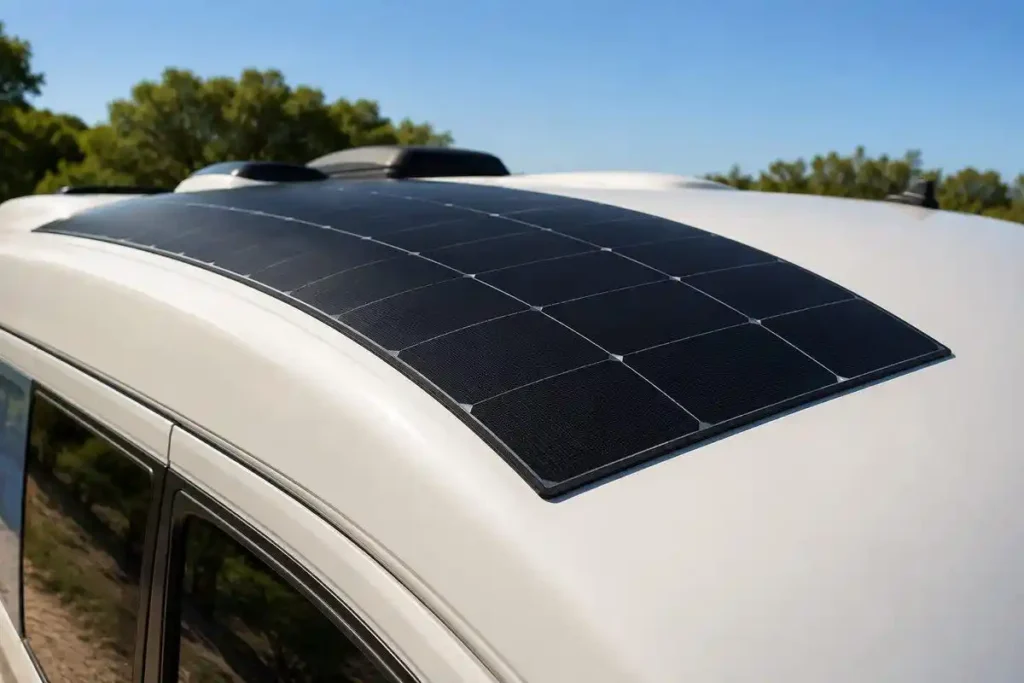
Semi-flexible panels suit RV roofs that are heavily curved, not designed to carry walking loads, or where the owner wants a low-profile installation without drilling. The trade-off is the heat derating discussed above and a shorter service life. Many RV builds use a mix, with rigid panels on the flat sections and semi-flexible panels on the curved ends.
Solar panels for a van
Van conversions have the most constrained mounting options of any common application. Roof real estate is limited, roof curvature varies by model, and many van roofs are not rated for the point loads that rigid panel brackets impose. Semi-flexible panels address all three: they follow the roof curve, they distribute load across the whole surface rather than at four brackets, and they keep the vehicle’s height and profile low.
Weight matters more on a van than on a house, because every kilogram comes out of payload. This is where semi-flexible panels justify their shorter life. A van that cannot carry a rigid panel array without exceeding its roof rating is a van that needs semi-flexible panels, regardless of the durability comparison.
Solar panels for a boat
A boat deck combines curvature, salt exposure, and motion, which makes semi-flexible panels the default for most marine installations. A rigid panel on a boat needs a rack, and a rack on a deck with limited clear space is often impractical. Semi-flexible panels bond directly to a fiberglass or painted deck and add almost no windage.
Marine buyers should look specifically for panels rated for the environment. The keywords a buyer searches, such as “flexible marine solar panels,” reflect this. Check the junction box sealing, the cable jacket material, and whether the supplier publishes a UV or salt-spray test. A panel that is fine on an RV roof may not survive a deck that is regularly washed with saltwater.
Solar panels for a tiny home
A tiny home has more in common with a house than with a vehicle. It has a fixed roof, it can carry structural loads, and output per unit area matters more than weight. The default recommendation is rigid panels, mounted on rails, for the same reasons a conventional home uses them: best efficiency per square meter, longest life, and mature mounting hardware.
Semi-flexible panels make sense on a tiny home only where the roof is curved, or where the structure is weight-limited, such as a tiny home built on a trailer frame with a tight weight budget. In those cases the same trade-offs apply as on a vehicle.
Curved and irregular surfaces
Wherever the mounting surface is not flat, the choice is effectively made for you. A rigid panel requires a flat plane, and forcing one onto a curved surface either leaves the panel stressed or requires a custom rack that may cost more than the panel. Semi-flexible panels exist precisely because some surfaces cannot be flattened, and the minimum bend radius is the specification that decides whether a given panel fits a given curve.
Mounting Requirements for Semi-Flexible and Rigid Solar Panels
Mounting is where the structural differences turn into installation labor, and labor is where a B2B project’s cost estimate usually goes wrong.
Adhesive mounting for semi-flexible panels
Semi-flexible panels are typically bonded to the mounting surface with an adhesive, which eliminates drilling and preserves the integrity of the surface underneath. On a boat deck or a vehicle roof, that is a significant advantage because every drilled hole is a potential leak.
The method has real requirements. The surface has to be clean, dry, and prepared according to the adhesive manufacturer’s instructions. The adhesive has to be compatible with both the panel backing and the substrate. On a fiberglass deck or a painted metal roof, the wrong adhesive fails at the bond line, and a panel that lifts in motion becomes a safety issue rather than a power loss. Adhesive mounting also makes the panel difficult to remove without damaging it, so it should be treated as a semi-permanent installation.
Bracket and rail mounting for rigid panels
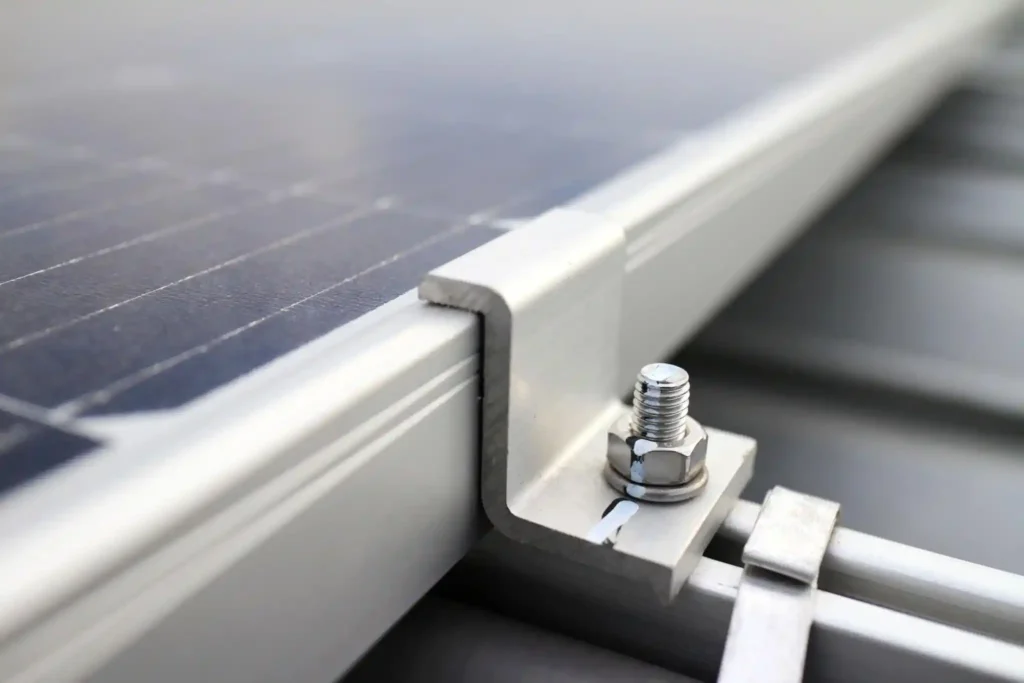
Rigid panels mount on brackets, rails, or a purpose-built frame. This adds hardware cost and installation time, but it produces several benefits: the panel can be tilted toward the sun, it can be removed and reinstalled, and the air gap beneath it improves cooling.
For ground mounts and large arrays, rail mounting is the only practical method, because the array needs to be held in a plane and oriented for yield. The mounting structure also has to be designed for wind and snow loads, which is an engineering requirement rather than a product selection.
Wiring, cable routing, and ventilation clearance
Both panel types use the same MC4 connection standard, so the wiring side is not a differentiator. What differs is routing. A rigid panel on rails has space beneath for cable management, which keeps wiring out of the sun and away from standing water. A flush-mounted semi-flexible panel has no such space, so cable routing has to be planned on the surface and protected from abrasion.
Electrical matching is a separate exercise from structural selection. If the panels will charge a portable power station rather than feed a fixed array, the voltage and current limits of the station govern the choice more than the panel structure does. That matching process is covered in the guide to choosing the right solar panel for a portable power station.
Ventilation clearance is the other consideration. A rigid panel’s air gap is both a thermal benefit and a dirt trap. A semi-flexible panel’s flush mount eliminates the dirt trap but loses the cooling. Neither is universally better; the project determines which trade-off is acceptable.
How to Select the Right Panel Structure for a B2B Project
For a distributor, integrator, or OEM, the selection process should follow the same order each time, because the constraints eliminate options faster than any preference does.
Start with the power and area budget
Define the watts required and the area available before looking at products. If the area is generous and flat, rigid panels deliver more power per unit area and more power per dollar over the system life. If the area is small, curved, or weight-limited, the calculation shifts toward semi-flexible. Running this step first prevents the common mistake of selecting a panel type and then discovering the mounting surface cannot take it.
Assess the mounting surface and load limits
Confirm what the surface can physically accept. A roof rated for walking loads can take rigid panels and their hardware. A thin vehicle roof, a fabric surface, or a fiberglass deck with no internal framing cannot. The load limit is a hard constraint, and a rigid panel installation that exceeds it is not a design choice, it is a defect waiting to be discovered.
Match the environment to the durability specification
Match the panel’s environmental ratings to where it will be installed. Salt, UV, heat, and vibration each place different demands on the encapsulation and the junction box. A panel that is adequate on a temperate rooftop may fail early on a marine deck or in a high-UV climate. Ask for the specific ratings rather than relying on the general product category, and ask whether the supplier has installed the same panel in a comparable environment.
Check certification and warranty terms
Confirm the certifications the target market requires and read the warranty terms rather than the headline years. Pay attention to what voids coverage: adhesive mounting, non-approved mounting hardware, and installation by unqualified personnel are common exclusions. For a B2B project, the warranty is a contract term, and the exclusions matter more than the duration.
Confirm supply, customization, and MOQ
For a product line or a project with a defined specification, confirm the supplier can hold the specification across production runs and that the MOQ is workable. A supplier with in-house cell, BMS, and pack assembly capability can typically accommodate more configuration than a reseller. VoltCrave Power builds both semi-flexible and rigid panels in-house, which means the two structures can be specified together for a single project rather than sourced from separate suppliers. Buyers comparing suppliers across the whole panel category can benchmark against the top solar panel manufacturers overview.
Final Comparison: When to Choose Semi-Flexible or Rigid Panels
The table below puts the two structures side by side on the parameters that decide a project. Figures are VoltCrave Power’s published specifications for representative products in each line.
| Parameter | Semi-flexible panel | Rigid panel |
|---|---|---|
| Cell technology | Monocrystalline silicon | Monocrystalline or polycrystalline silicon |
| Front sheet | Polymer, flexible | Tempered glass |
| Frame | None, bonded directly | Aluminum frame |
| Representative product | 200W, 21.5% cell efficiency | 550W, 21.3% module efficiency |
| Weight | ~3.8 kg at 200W | Several times higher per panel before hardware |
| Bend capability | Bends to a defined radius | Does not bend |
| Heat behavior | Traps heat when flush-mounted, lower voltage output | Open air gap, better cooling |
| Typical service life | Shorter, treated as a wear item | 20–25 year performance warranty |
| Mounting method | Adhesive, no drilling | Brackets, rails, or frame |
| Ingress protection | IP65 junction box, MC4 connectors | IP-rated junction box, MC4 connectors |
| Best suited to | Curved, weight-limited, or non-structural surfaces | Flat, load-bearing surfaces where output per m² matters |
Choose semi-flexible panels when the surface is curved or irregular, the platform is weight-limited, the surface cannot take drilled mounting hardware, or a low profile is a requirement. Vehicles, vessels, and light structures fall into this group.
Choose rigid panels when the surface is flat and load-bearing, output per square meter is the priority, and the installation should last as long as the structure it is mounted to. Fixed roofs and ground arrays fall into this group.
Choose a mix when a single project has both types of surface. A boat with a flat cabin top and a curved foredeck, or a van with a flat cargo roof and a curved cab, is better served by specifying both structures than by forcing one type onto both surfaces.
FAQs
Are flexible solar panels as good as rigid?
For output per unit area, a good semi-flexible panel using monocrystalline cells can match or nearly match a rigid panel. VoltCrave Power’s 100W semi-flexible unit is specified at 22.5% cell efficiency, and the 550W rigid unit at 21.3% module efficiency. The gap opens in service life and heat behavior, not in cell quality. A semi-flexible panel mounted flush runs hotter and generally lasts less long than a rigid panel, so it is not “as good” in every respect even when efficiency is comparable.
What are the disadvantages of flexible solar panels?
The main disadvantages are shorter service life, heat buildup when mounted flush with no air gap, the need for a continuous supporting surface, and a higher risk of junction box failure on panels that flex. They also cost more per watt than rigid panels in most markets, and adhesive mounting makes replacement more difficult.
How long will a flexible solar panel last?
It depends on the mounting method and the environment. A semi-flexible panel bonded flat to a dark surface in a hot climate will degrade faster than one mounted with some airflow in a temperate climate. Rigid panels commonly carry 20 to 25 year performance warranties, and semi-flexible panels generally carry shorter terms. Treat the semi-flexible panel as a wear item and plan a replacement interval rather than expecting parity.
Is a semi-flexible panel the same as a flexible panel?
The terms are often used interchangeably, but semi-flexible usually describes a panel that bends to a defined radius while retaining a monocrystalline cell structure and a rigid junction box. Fully flexible panels may bend further and may use different cell and encapsulation technologies. For a project specification, ask for the minimum bend radius and the cell technology rather than relying on the label.
Can I use rigid and semi-flexible panels in the same system?
Yes, provided the electrical parameters match. Both use the MC4 connection standard, and string design depends on voltage and current compatibility rather than panel structure. A common approach is rigid panels on flat sections and semi-flexible panels on curved sections, wired as separate strings if their electrical characteristics differ.
Which is better for a boat or an RV?
Semi-flexible panels are usually the better fit on a boat deck, because of deck curvature, limited space for racks, and windage. On an RV, the answer depends on the roof: a walkable, relatively flat roof takes rigid panels well, while a heavily curved or load-limited roof favors semi-flexible panels. For a marine or RV installation, confirm the salt spray, UV, and vibration ratings before committing.
Semi-Flexible and Rigid Solar Panels for Your Project
VoltCrave Power manufactures both semi-flexible and rigid solar panels, which means a project can specify the right structure for each mounting surface rather than compromising across the whole installation. The semi-flexible range covers 100W, 200W, and 220W units with monocrystalline cells, IP65 junction boxes, and MC4 connectors. If your project mixes flat and curved surfaces, or if you need a semi-flexible panel built to a specific voltage and dimension, an OEM/ODM development enquiry will get you a configured answer rather than a catalog compromise.
Need help matching this topic to a real battery project?
Send your target application, capacity range, certification market, and order plan. VoltCrave can recommend a practical product direction.