instant, quiet, and short-duration power, while the generator supplies long-duration energy,
supports heavier loads, and can recharge the battery when necessary. For homes, small businesses,
remote properties, and critical facilities, this combination can provide a better balance of
reliability, comfort, and cost than relying on only one backup source.
What Is a Hybrid Backup System?
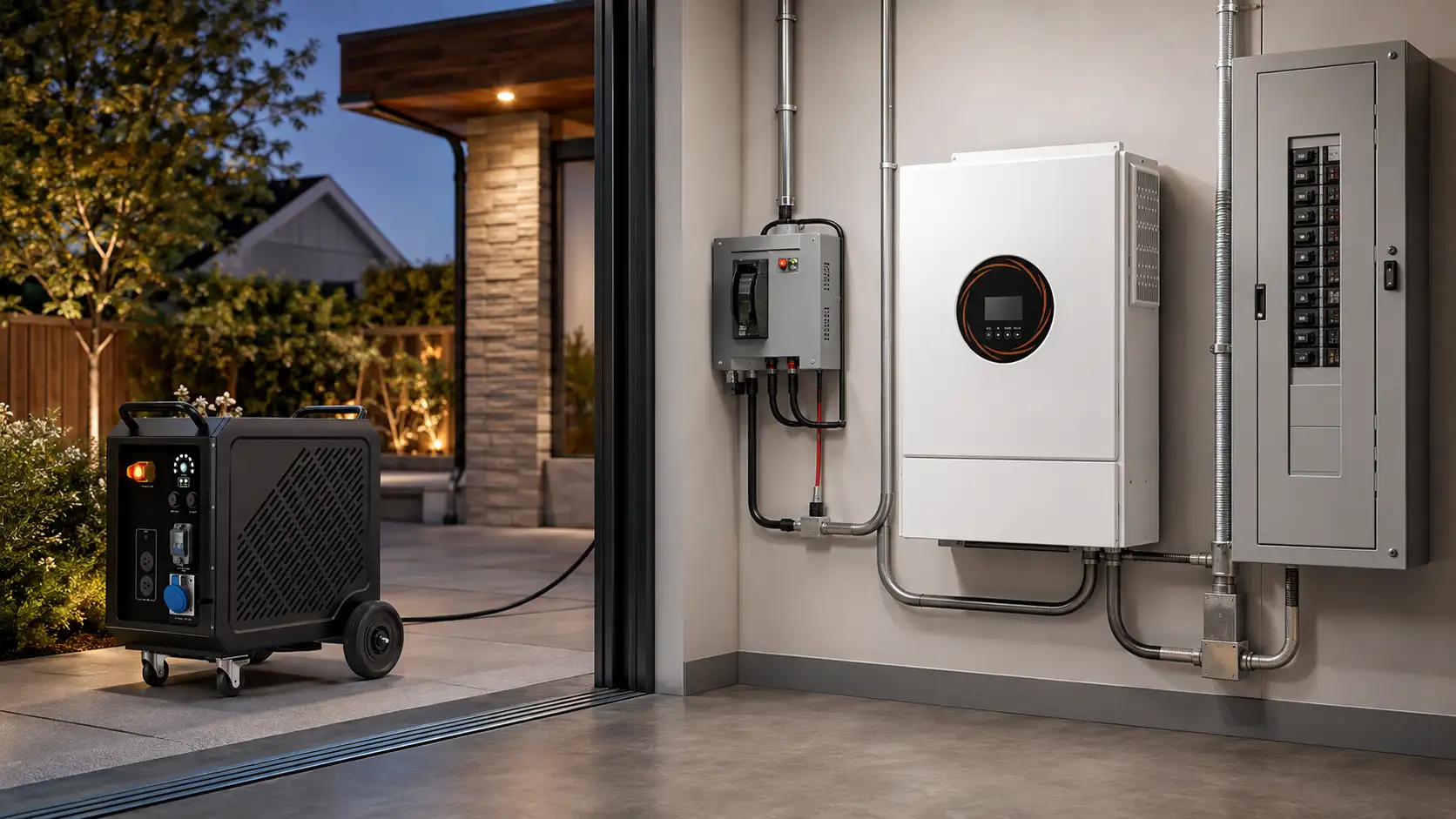
A typical hybrid backup system may include:
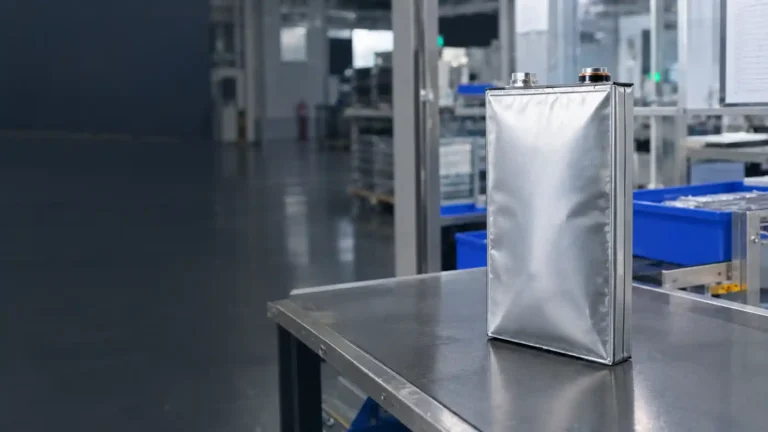
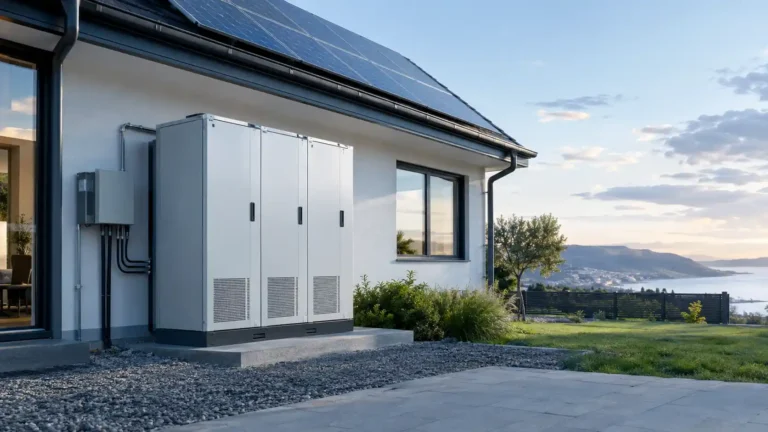
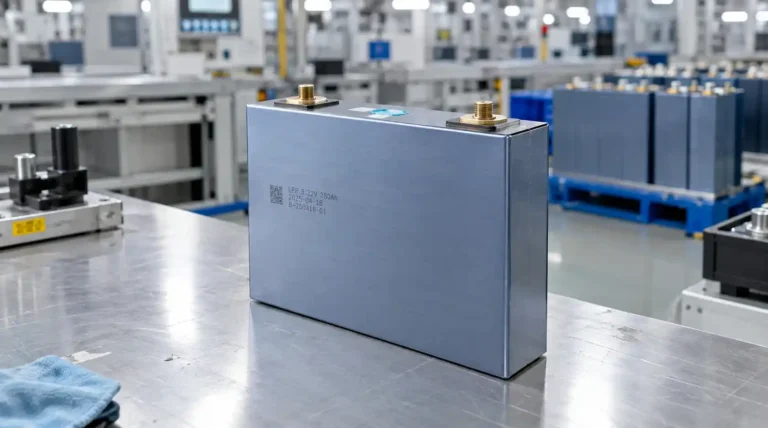
- A battery energy storage system.
- A hybrid inverter or inverter/charger.
- A standby generator.
- An automatic transfer switch (ATS).
- A critical-loads panel.
- A generator controller.
- Monitoring and energy-management software.
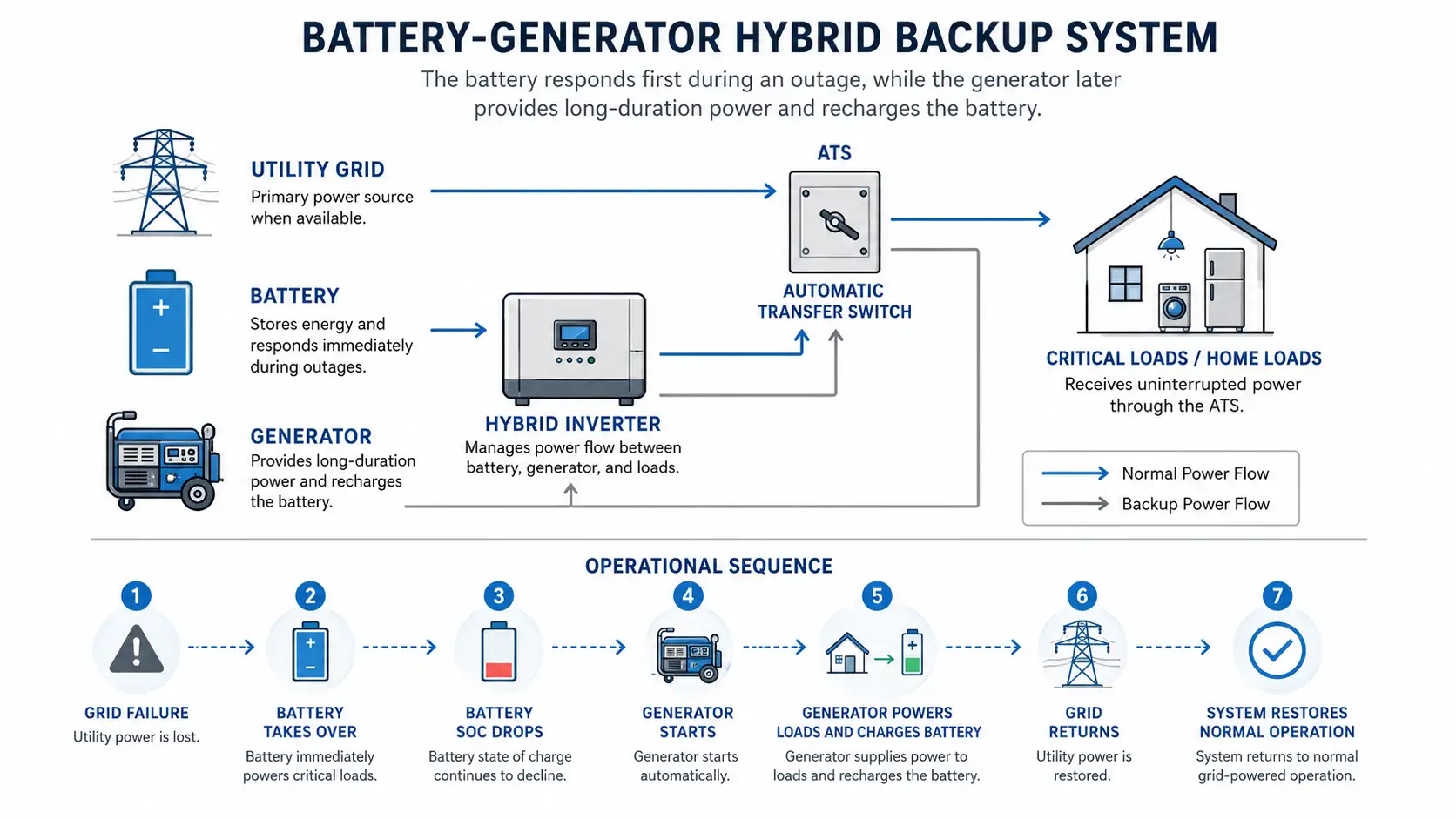
Each component has a different role. The battery responds first when the utility supply fails.
The inverter powers the selected backup loads. If the outage continues or the battery reaches a
predefined reserve level, the controller starts the generator. The generator then supplies the
loads and, when capacity allows, recharges the battery.
A typical operating sequence looks like this:
- Normal operation: The grid supplies the site, while the battery remains at
its reserve setting. - Grid failure: The inverter switches to backup mode and immediately supplies
the critical loads. - Extended outage: The generator starts when the battery reaches its start
threshold, the outage exceeds a set time, or the load becomes too high for battery-only operation. - Generator operation: The generator supports the critical loads and may
recharge the battery. - Grid restoration: After the utility supply is confirmed stable, the system
transfers back to the grid and the generator shuts down according to its cooldown sequence.
The objective is not to make the generator replace the battery. It is to make each source
operate where it performs best.
Why Battery-Only Backup May Not Be Enough
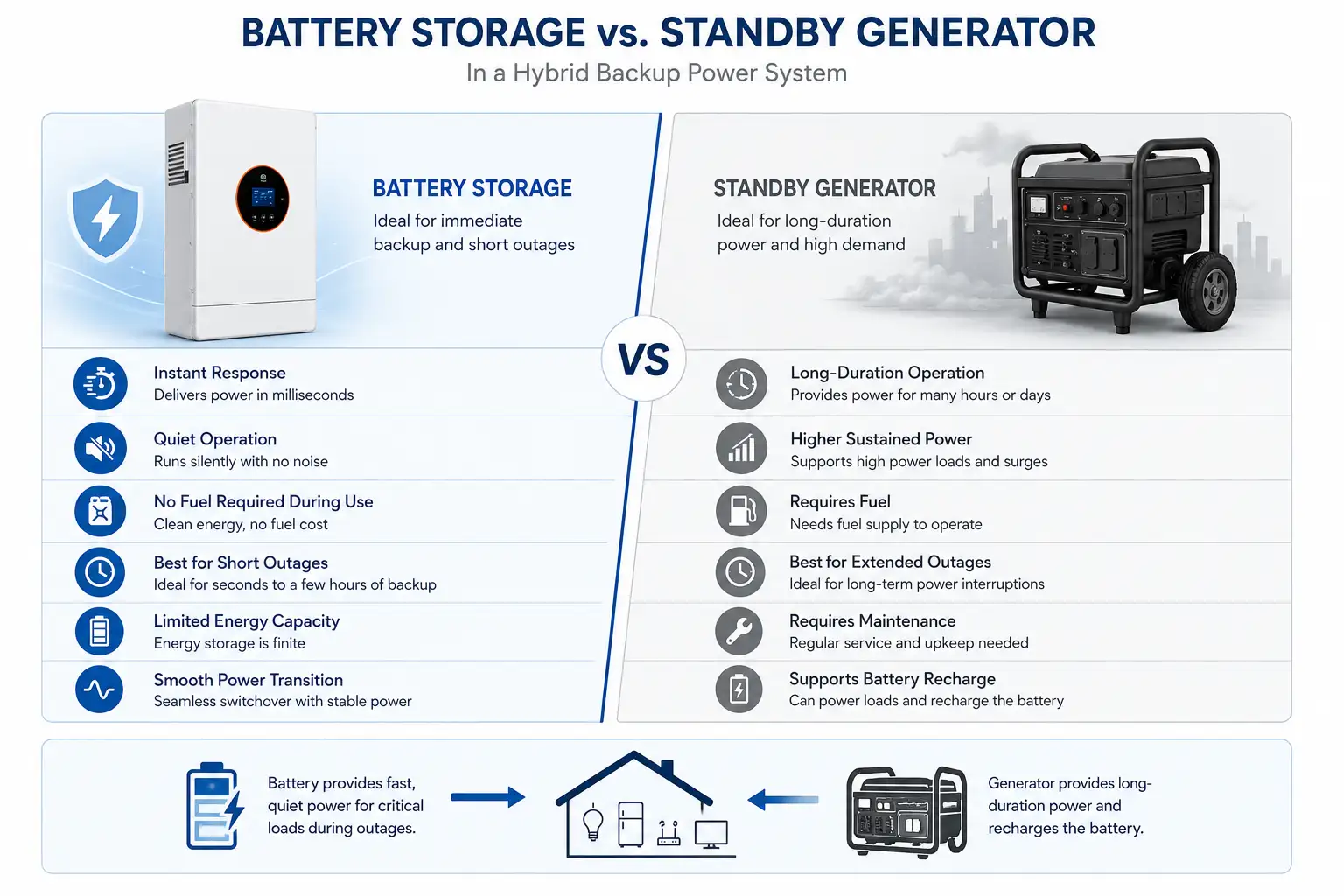
Battery-only backup is attractive because it is quiet, fast, and produces no local emissions
during operation. It is well suited for refrigerators, lighting, networking equipment, security
systems, medical devices, and other essential loads.
However, battery capacity can be consumed quickly during a long outage. This is especially true when the system must support:
- HVAC equipment or heat pumps.
- Well pumps and sump pumps.
- Large refrigeration systems.
- Electric water heaters.
- Cooking equipment.
- Workshop tools.
- Multiple occupants using ordinary household loads.
Battery sizing must consider both power and energy.
- Power, measured in kW, determines how many devices can operate at the same time.
- Energy, measured in kWh, determines how long those devices can operate.
How to Estimate Battery Backup Runtime
A simple runtime estimate can be calculated using the following formula:
Backup runtime = (Battery capacity × Usable discharge percentage × System efficiency) ÷ Average critical loadFor example, assume a system has:
- Battery capacity: 20 kWh.
- Usable discharge percentage: 90%.
- System efficiency: 90%.
- Average critical load: 2 kW.
The calculation would be:
Backup runtime = (20 kWh × 90% × 90%) ÷ 2 kWEstimated backup runtime = 8.1 hoursThis is only an estimate. Actual runtime may vary depending on temperature, battery age,
changing loads, inverter losses, and motor-starting surges.
If a site requires several days of resilience, adding a generator may be more practical than
continually increasing battery capacity.
Why Generator-Only Backup May Not Be Enough
Generators are well suited to long outages, but they also have limitations:
- They require time to start and transfer power.
- They produce noise, vibration, and exhaust.
- They require fuel storage and fuel management.
- They need regular servicing and exercise cycles.
- They may not provide the quiet, seamless experience expected by modern users.
- They can be inefficient when operated continuously at very low loads.
The battery addresses many of these weaknesses. It provides immediate ride-through power,
supports sensitive electronics, reduces generator starts during short interruptions, and allows
the generator to run only when extended energy is actually needed.
In this arrangement, the battery acts as the system’s fast-response layer, while the generator
serves as the long-duration energy source.
Start with Load Priorities
The first step in a hybrid project should be identifying which loads must remain powered during
an outage. Equipment should be divided into priority levels before the battery or generator is selected.
| Load priority | Typical equipment | Backup strategy |
|---|---|---|
| Critical loads | Medical equipment, refrigeration, communications, security, essential lighting | Battery-first backup with the highest protection |
| Important loads | Routers, office equipment, selected outlets, garage doors, water pumps | Operate according to battery reserve and generator availability |
| Interruptible loads | Laundry equipment, dishwashers, EV chargers, workshop tools | Normally disconnected during backup mode |
| Conditional high-power loads | HVAC, heat pumps, electric water heaters, ovens, compressors | Operate only when inverter and generator capacity permit |
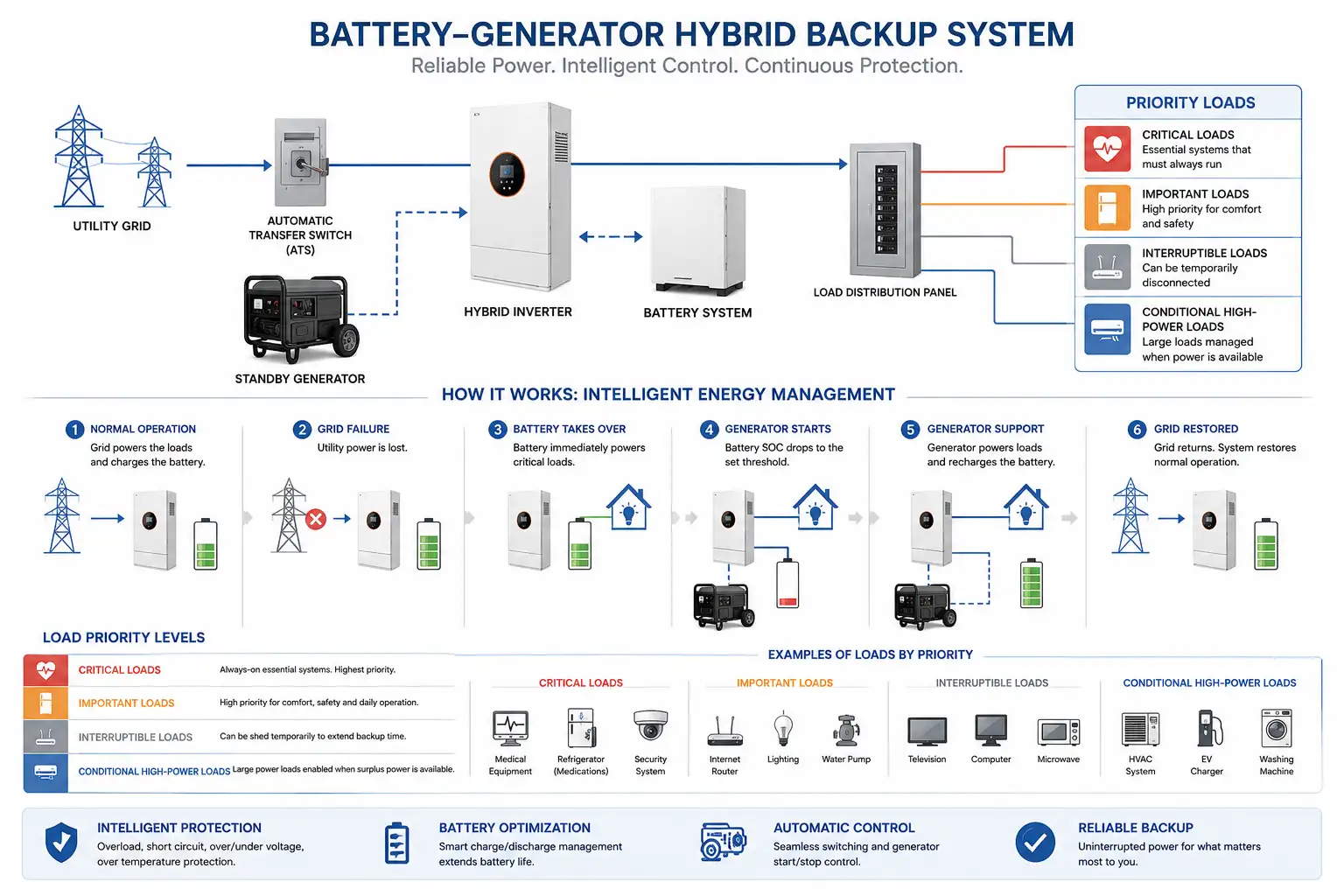
This classification prevents nonessential equipment from draining the battery before the
generator starts. It also prevents the generator from wasting fuel on loads that are not
important during an emergency.
Load planning should include both normal running power and starting power. Pumps, compressors,
air conditioners, and other motor-driven equipment may draw several times their normal operating
power during startup. A system sized only for steady-state consumption may trip when a motor starts.
Generator Start Logic Matters
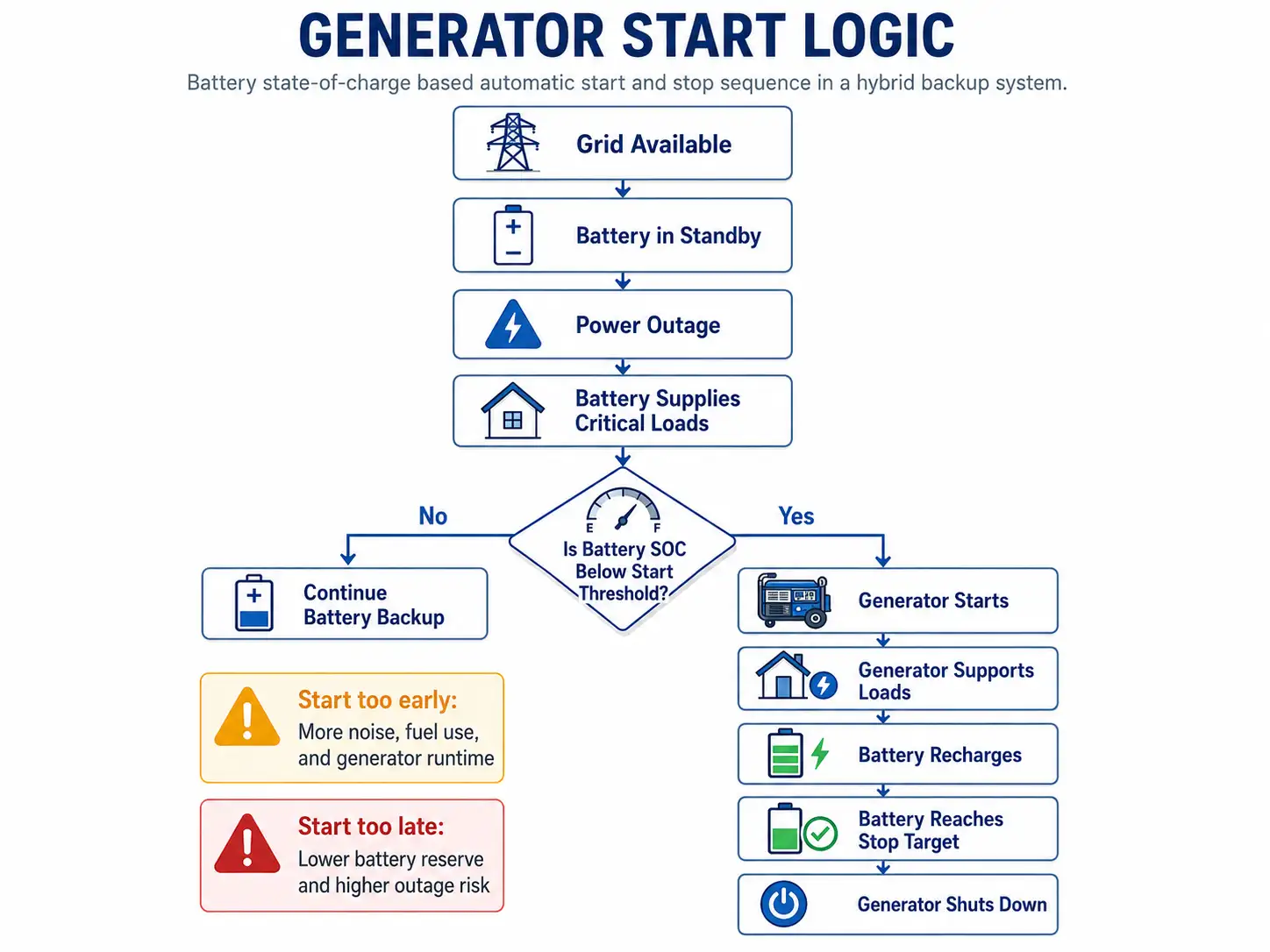
The generator start threshold is one of the most important settings in a hybrid system.
If the generator starts too early, the system loses much of the battery’s quiet and fuel-saving
benefit. If it starts too late, the battery may be deeply discharged and leave too little reserve
for unexpected load changes.
Common generator-start triggers include:
-
- Battery state of charge falling below a defined threshold.
- The outage lasting longer than a preset period.
- Critical load demand remaining above a certain level.
- The controller predicting that the battery will not last through a required period.
- Low temperatures or other site conditions requiring additional reserve.
- A remote site needing a higher reserve because no operator is present.
A robust control strategy may include several settings:
- Generator start state of charge.
- Minimum battery reserve.
- Minimum generator runtime.
- Generator stop or battery recharge target.
- Generator cooldown period.
- Load-shedding sequence.
- Manual override and emergency-start functions.
For example, a system could start the generator when the battery reaches 40% state of charge,
recharge the battery to 75%, and maintain a 20% emergency reserve. These values are examples
only. The correct settings depend on the load profile, generator capability, battery specifications,
fuel availability, and outage risk.
How to Size the Generator
The generator must support more than the current load. It may also need to charge the battery
at the same time.
A simplified sizing relationship is:
Required generator output = Peak critical load + Planned battery charging power + Starting-surge marginFor example, if the critical load can reach 5 kW and the battery is intended to charge at 3 kW,
an 8 kW generator may not provide enough practical capacity if the site also has pumps or
compressors with high starting current.
The design should consider:
- Continuous generator output.
- Short-term overload capability.
- Motor-starting requirements.
- Power factor.
- Inverter charging limits.
- Whether the generator and battery can operate stably together.
- Whether high-power loads must be started sequentially.
- Whether the generator can operate efficiently at the expected load.
The final selection should be based on a documented load schedule and operating sequence,
not only on a single nameplate rating.
AC-Coupled and DC-Coupled Architectures
Hybrid systems can use different electrical architectures. The best choice depends on the
existing equipment, solar plans, installation constraints, and control requirements.
| Architecture | Basic configuration | Potential advantages | Key questions |
|---|---|---|---|
| AC-coupled | Battery inverter, generator, and grid coordinate on the AC side | Flexible for existing electrical systems and retrofit projects | Can the generator and inverter maintain stable voltage and frequency together? |
| DC-coupled | Battery and solar equipment connect on the DC side before conversion to AC | May reduce certain conversion steps in integrated solar-plus-storage systems | Are the battery, charge controller, protection devices, and inverter compatible? |
| Integrated hybrid inverter | A central platform manages the battery, grid, generator, and possibly solar | Centralized control and simpler user monitoring | What are the generator-input limits, charging limits, and bypass modes? |
For most buyers, the specific architecture is less important than the operating result.
However, the supplier should be able to provide:
- A single-line diagram.
- A normal-operation sequence.
- An outage-operation sequence.
- A generator-start sequence.
- A grid-restoration sequence.
- Fault and bypass behavior.
- Battery-charging and load-shedding logic.
If a supplier cannot explain these functions in plain language, the system may not be fully engineered.
Best Use Cases
Battery–generator hybrid backup is particularly useful for:
- Homes with frequent but unpredictable outages.
- Properties that require quiet overnight backup.
- Homes with medical equipment or refrigeration requirements.
- Rural properties, farms, cabins, and remote residences.
- Small offices, retail sites, and workshops.
- Telecom and network infrastructure.
- Clinics and medical offices.
- Unstaffed or lightly staffed facilities.
- Sites that need multiple days of resilience but cannot justify a very large battery.
- Projects planning to add solar in the future.
The combination is especially valuable when the owner wants both a comfortable user experience
and reliable long-duration protection.
When a Hybrid System May Not Be Necessary
A hybrid system is not automatically the best choice for every project.
A simpler solution may be sufficient when:
- Outages are rare and usually last only a few minutes.
- Only a small number of low-power devices require protection.
- The property cannot safely accommodate a generator.
- No one is available to maintain the generator and fuel supply.
- Local noise, emissions, fuel-storage, or zoning rules restrict generator installation.
- The customer wants to run every high-power appliance for several days but does not have the
budget for the required equipment.
In these situations, a UPS, battery-only system, generator-only system, or a smaller
critical-loads solution may be more appropriate.
Questions to Ask Before Buying
- Which circuits will be backed up?
- What are the continuous and peak loads?
- Which devices have high starting surges?
- How long can the battery support the critical loads without the generator?
- What are the inverter’s continuous, surge, and off-grid ratings?
- Can the generator power live loads and charge the battery simultaneously?
- What conditions start and stop the generator?
- Are the state-of-charge thresholds adjustable?
- What happens if the grid returns while the generator is running?
- Have the battery, inverter, ATS, and generator been tested together?
- What fuel, ventilation, exhaust, clearance, and noise-control requirements apply?
- Who is responsible for maintenance, testing, troubleshooting, and warranty service?
- Will the supplier provide a single-line diagram and control sequence?
- Can the system be expanded with more battery capacity or solar later?
Additional Questions for OEM and ODM Buyers
- Is the control logic built into the product or engineered externally?
- Which generator brands and communication protocols are supported?
- Can the supplier customize the ATS, monitoring interface, or operating thresholds?
- Who owns the system integration responsibility?
- What test reports and field references are available?
- How are firmware updates and remote diagnostics handled?
Safety, Commissioning, and Maintenance
A hybrid backup system combines high electrical energy with fuel, exhaust, heat, and automatic
switching. It should be designed and installed by qualified professionals in accordance with
applicable electrical, fire, fuel-storage, emissions, and building requirements.
Particular attention should be paid to preventing generator backfeed into the utility network.
The transfer equipment must isolate the generator from the grid in a controlled and verifiable manner.
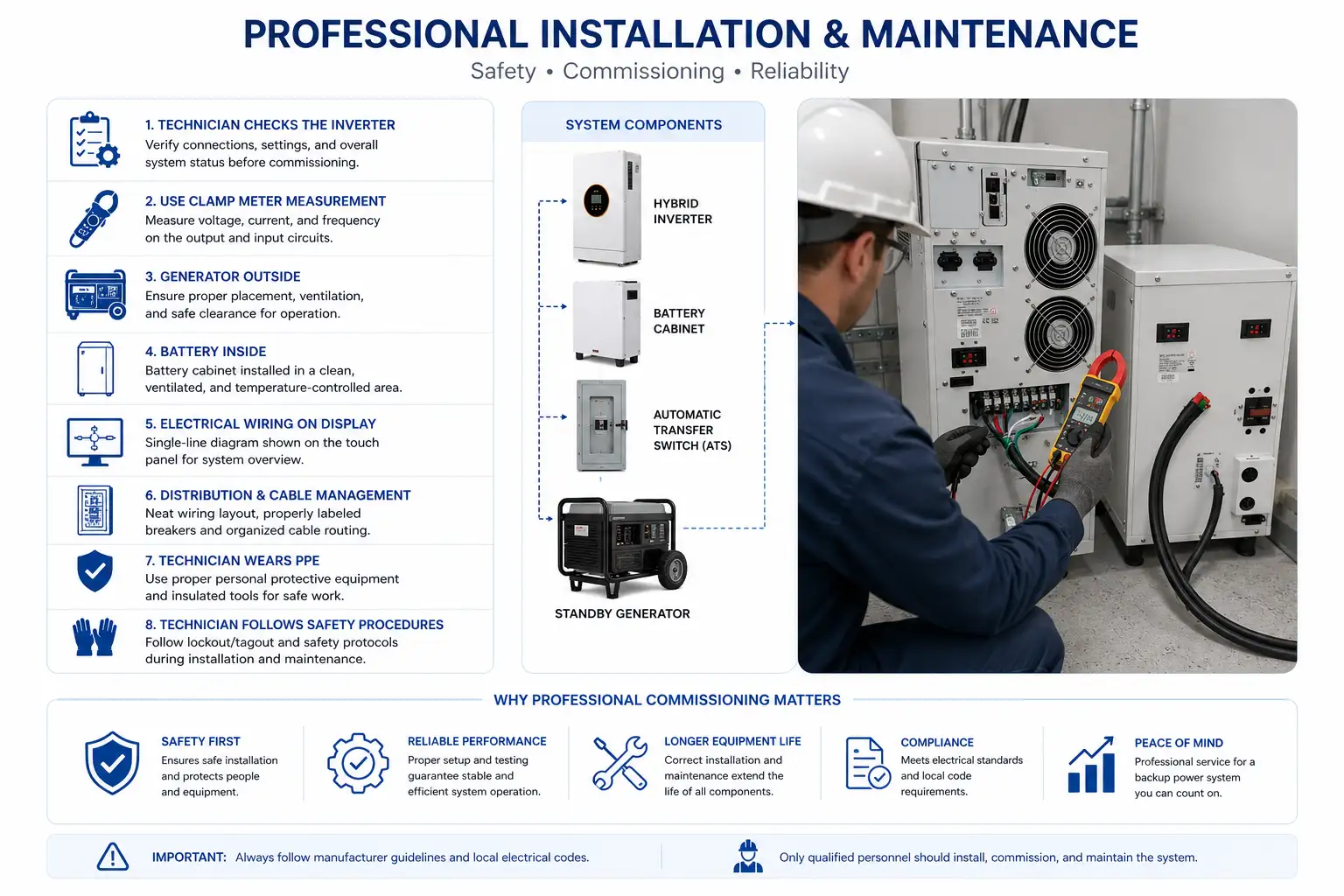
Before handover, the system should be tested under realistic conditions:
- Simulated utility failure.
- Battery takeover of critical loads.
- Automatic generator start.
- Generator operation under load.
- Simultaneous load support and battery charging.
- Starting of pumps, compressors, and other surge loads.
- Load shedding.
- Utility restoration and transfer back.
- Alarm, monitoring, manual bypass, and emergency-stop functions.
Battery-Side Maintenance
- Alarm and event review.
- Terminal and cable inspection.
- Firmware and communications checks.
- State-of-charge verification.
- Temperature and enclosure inspection.
- Periodic capacity or performance testing where appropriate.
Generator-Side Maintenance
- Fuel-quality and fuel-level checks.
- Starting-battery inspection.
- Exercise cycles.
- Oil and filter replacement.
- Cooling-system inspection.
- Exhaust-system inspection.
- Periodic load-bank or real-load testing.
A hybrid system is only as dependable as its least-maintained component.
Conclusion
Battery and generator systems work best when they are designed as partners rather than competitors.
The battery handles the first moments and shorter periods of an outage with fast, quiet, and
clean power. The generator handles the long tail of the outage by supplying sustained energy
and reducing the need for an oversized battery.
The quality of a hybrid backup system depends on more than battery capacity or generator size.
The most important factors are clear load prioritization, correct power and energy sizing,
proper treatment of starting surges, compatible controls, well-designed generator logic,
complete commissioning, and a realistic maintenance plan.
For projects that require both immediate reliability and long-duration resilience, a properly
engineered battery–generator hybrid system can provide a more practical and efficient solution
than forcing one technology to do everything.
Need help matching this topic to a real battery project?
Send your target application, capacity range, certification market, and order plan. VoltCrave can recommend a practical product direction.