How to Choose the Right Energy Storage System Suppliers for Different Application Scenarios

This guide explains how to select energy storage system suppliers based on application scenarios, including residential energy storage system, commercial energy storage system, and portable power station outdoor solutions.
How to Choose the Right Energy Storage System Suppliers for Different Application Scenarios

Why Choosing the Right Energy Storage Supplier Matters More Than Ever

The global energy market is undergoing a major transformation. Businesses, homeowners, and outdoor solution providers are increasingly looking for reliable energy storage solutions to improve energy independence, reduce electricity costs, and maintain power availability during unexpected outages.

However, selecting the right supplier has become more challenging.

Many buyers focus only on product price and technical specifications but overlook critical factors such as:

  • Whether the supplier understands different application scenarios
  • Whether the battery system matches actual energy requirements
  • Whether the manufacturer can provide stable quality at scale
  • Whether certifications meet target market requirements
  • Whether after-sales support is available after delivery

For distributors, installers, project developers, and brand owners, choosing suitable energy storage system suppliers directly affects customer satisfaction, warranty costs, and long-term business growth.

A reliable supplier should not only provide products but also offer technical expertise, customization capability, and continuous support throughout the product lifecycle.

At Voltcrave Power, we work with global partners to develop flexible energy storage solutions designed for residential, commercial, and outdoor applications.


The Biggest Mistakes Buyers Make When Selecting Energy Storage Solutions

Before choosing a supplier, many businesses make decisions based on incomplete information.

Understanding these common mistakes can help buyers avoid unnecessary losses.


Choosing Products Before Understanding the Application

One of the most common purchasing mistakes is selecting a battery system first and considering the application later.

Different scenarios require completely different solutions.

For example:

A homeowner may need backup power for essential appliances, while a commercial customer may require daily energy management and peak shaving.

An outdoor equipment distributor may focus more on portability, charging speed, and durability.

A supplier that only sells standard products may not provide the right solution for every market.


Comparing Price Instead of Total Value

Low purchase prices can be attractive, but they often create hidden costs.

Common problems include:

Low-Cost Supplier Risk Business Impact
Poor battery quality Higher warranty claims
Limited testing Product failures
Missing certifications Import delays
Weak technical support Customer complaints
Unstable production Delivery problems

Professional buyers evaluate the total ownership value instead of only the initial purchase price.


Ignoring Supplier Manufacturing Capability

Many companies claim to be manufacturers but operate mainly as trading companies.

Before cooperation, buyers should evaluate:

  • Factory ownership
  • Production capacity
  • Quality control process
  • Engineering capability
  • OEM experience
  • Export experience

A qualified supplier should be able to provide transparent information about production processes and quality management.


Understanding Different Energy Storage Application Scenarios

The correct solution depends heavily on where and how the system will be used.

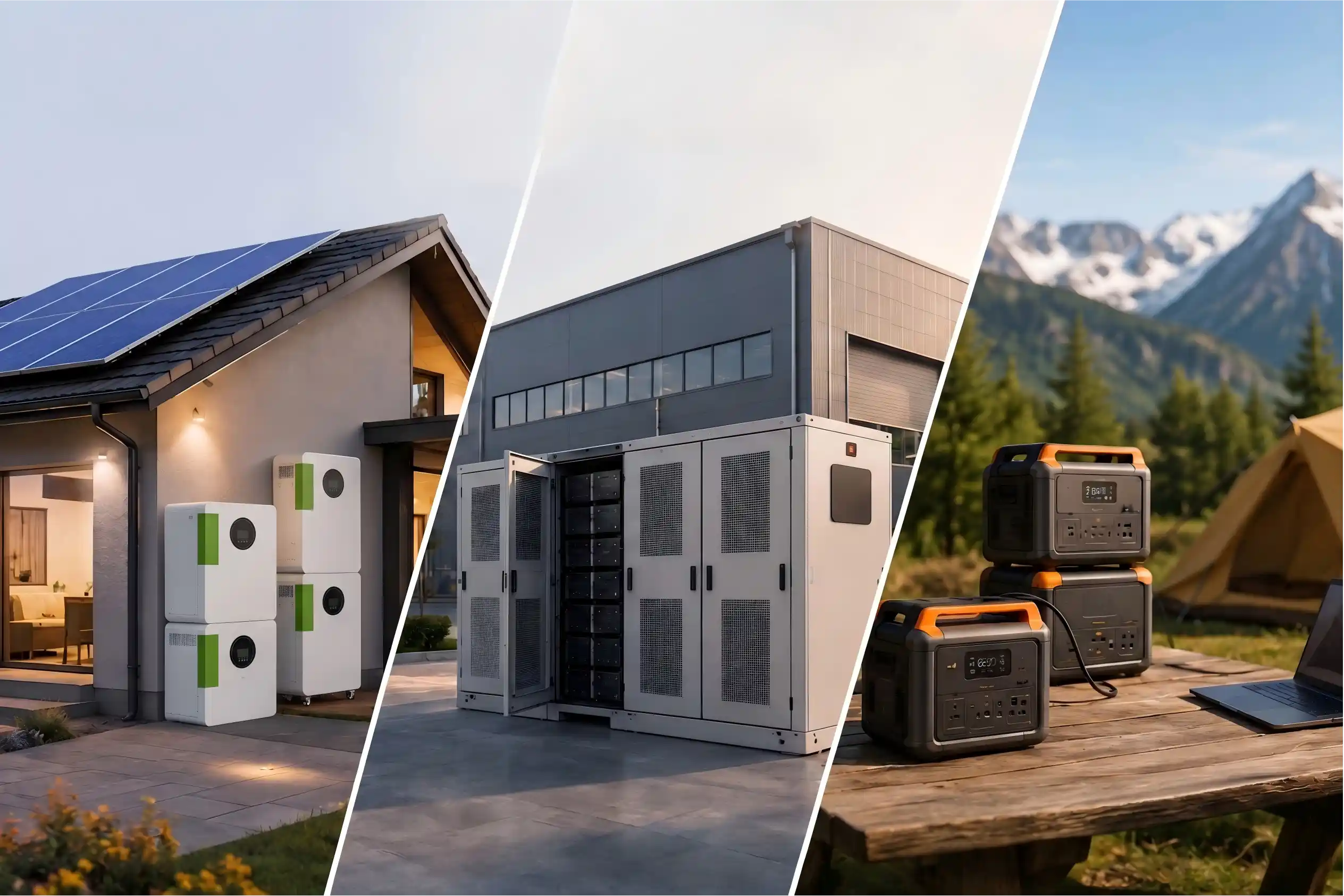
The three major application categories include:

  • Residential energy storage
  • Commercial energy storage
  • Portable outdoor power solutions

Each scenario has different technical requirements.
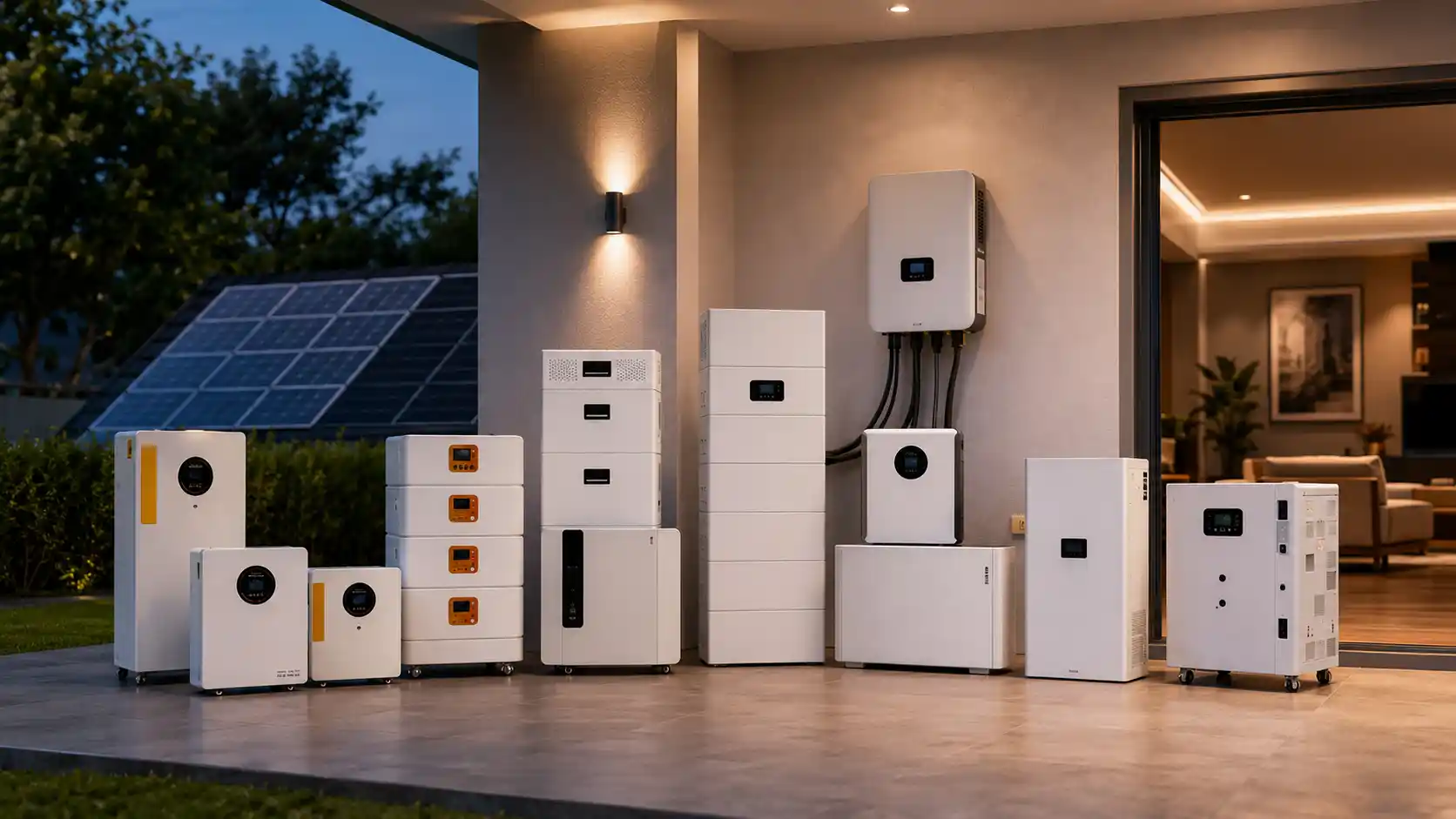

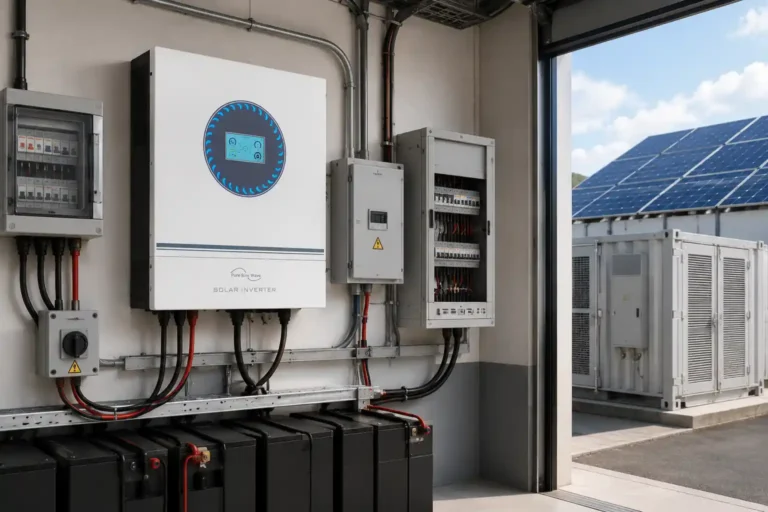
Illustrations for articles on residential energy storage systems

Residential Energy Storage System: Supporting Energy Independence at Home

A residential energy storage system is designed to store electricity generated from solar panels or the grid and provide power when needed.

Typical applications include:

  • Home backup power
  • Solar energy storage
  • Reducing electricity bills
  • Energy independence
  • Emergency power supply

For residential projects, buyers usually focus on:

  • Safety
  • Long battery lifespan
  • Compact design
  • Easy installation
  • Solar compatibility

Key Requirements for Residential Buyers

Requirement Why It Matters
LiFePO4 battery technology Longer lifespan and improved safety
Intelligent BMS Protects battery performance
Modular design Allows future expansion
Solar compatibility Improves energy efficiency
Quiet operation Suitable for home environments

A supplier experienced in residential applications should understand not only battery technology but also household energy consumption patterns.
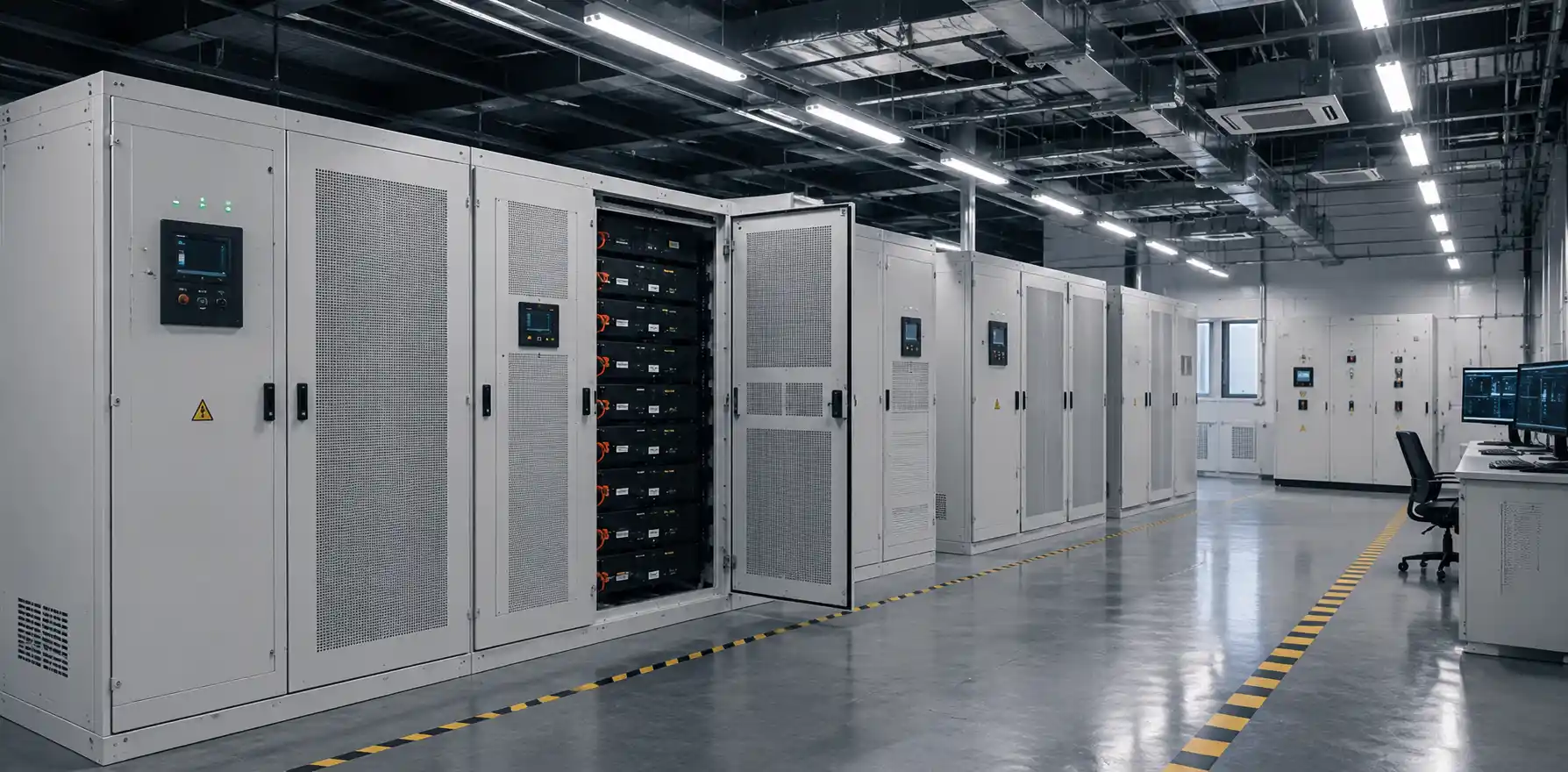

Illustrations for Commercial Energy Storage System Articles

Commercial Energy Storage System: Improving Business Energy Management

A commercial energy storage system serves businesses that need larger-scale energy management.

Typical applications include:

  • Factories
  • Retail stores
  • Office buildings
  • Data centers
  • Commercial facilities

Commercial customers usually have different priorities compared with residential users.

They focus on:

  • Higher capacity
  • Stable operation
  • Lower operating costs
  • Remote monitoring
  • System scalability

Commercial Energy Storage Selection Factors

Factor Buyer Consideration
System capacity Can it support business loads?
Scalability Can capacity expand later?
Reliability Can it operate continuously?
Monitoring Is remote management available?
Maintenance Are replacement services available?

Choosing the wrong supplier can result in expensive downtime for commercial projects.
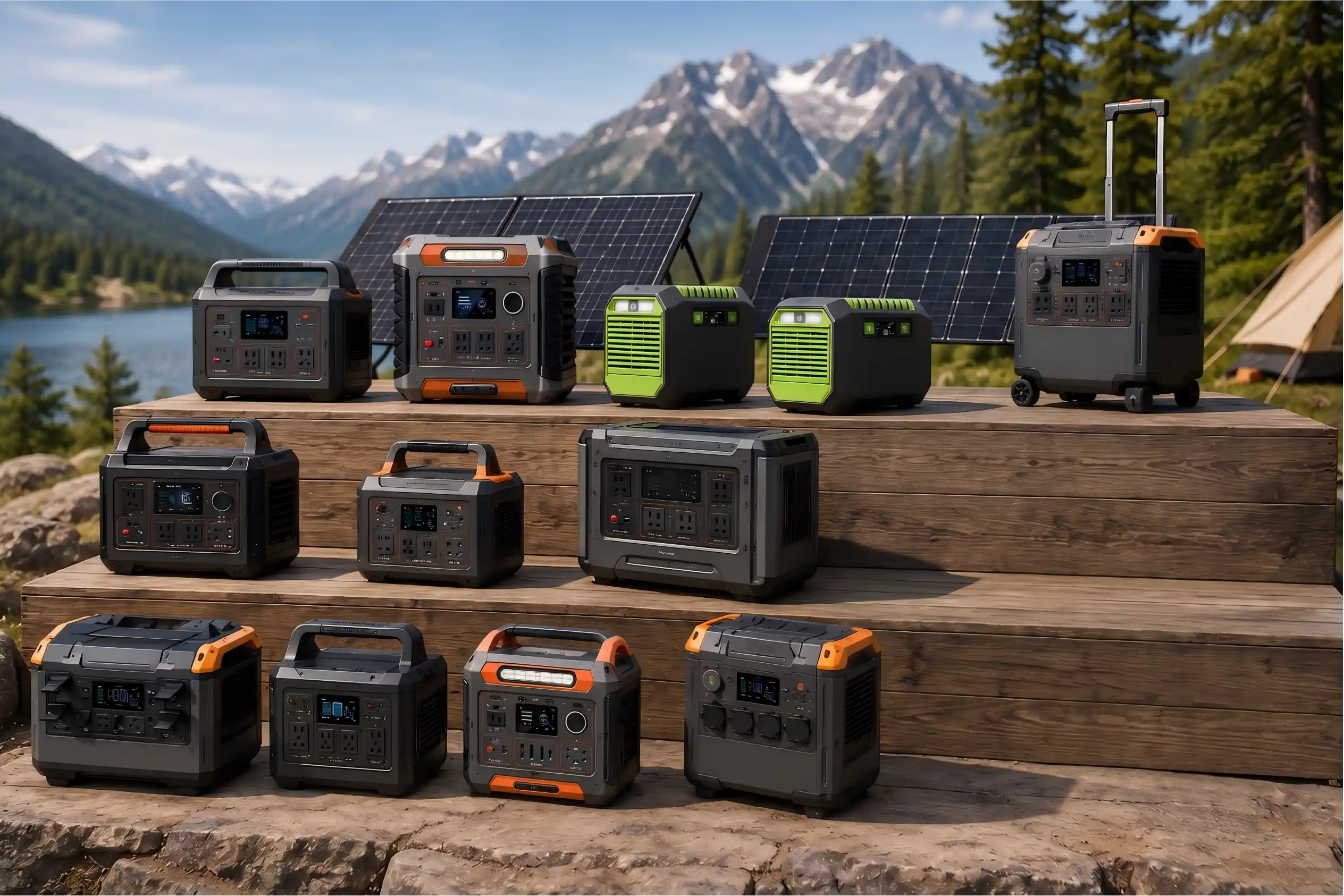

Illustrations for portable power station article sections

Portable Power Station Outdoor: Flexible Energy for Mobile Applications

The demand for portable power station outdoor solutions continues growing due to outdoor recreation, emergency preparedness, mobile work, and off-grid applications.

Common users include:

  • Camping equipment brands
  • RV suppliers
  • Outdoor retailers
  • Emergency supply companies
  • Professional photographers
  • Construction teams

What Buyers Should Evaluate for Outdoor Power Solutions

Feature Importance
Battery capacity Determines usage time
Output power Supports different devices
Charging speed Reduces downtime
Weight Affects portability
Durability Handles outdoor conditions
Safety protection Prevents operational risks

A reliable outdoor energy supplier should provide products designed for real-world environments rather than only laboratory specifications.


How to Match Energy Storage Solutions with Customer Needs

Before selecting suppliers, buyers should define:

1. Target Market

Ask:

  • Who is the end customer?
  • What region will the product enter?
  • What regulations apply?

2. Energy Requirement

Calculate:

  • Required power output
  • Expected operating hours
  • Backup duration
  • Expansion requirements

3. Business Model

Different customers require different cooperation models.

Business Type Recommended Supplier Capability
Distributor Stable inventory and pricing
Brand Owner OEM/ODM customization
Installer Technical support
Project Developer System integration capability

How to Evaluate Professional Energy Storage System Suppliers

Choosing the right supplier is one of the most important decisions for companies entering the energy storage market.

A reliable supplier does not simply provide batteries or power products. They should understand application requirements, provide engineering support, maintain consistent production quality, and help customers reduce business risks.

For distributors, installers, and brand owners, working with experienced energy storage system suppliers creates long-term advantages in product reliability, customer satisfaction, and market competitiveness.


Manufacturing Capability Should Be the First Evaluation Factor

Many buyers compare suppliers based only on quotation prices. However, manufacturing capability is often the most important factor affecting long-term cooperation.

Before selecting a supplier, buyers should evaluate:

  • Factory production capacity
  • Manufacturing equipment
  • Engineering team experience
  • Quality control procedures
  • Supply chain stability
  • Previous export experience

A supplier with strong manufacturing capability can maintain consistent quality even when order volumes increase.


Supplier Evaluation Checklist for B2B Buyers

Evaluation Area Questions Buyers Should Ask
Factory capability Does the supplier own production facilities?
Production capacity Can they support large-volume orders?
Quality control Are products tested during production?
Certifications Can they provide required export documents?
Customization Do they support OEM and ODM projects?
Technical support Can they solve installation and integration problems?
After-sales service Is there a clear warranty process?

Battery Technology and Safety Standards

Battery quality directly determines the performance and lifespan of an energy storage system.

Professional suppliers should focus on:

LiFePO4 Battery Technology

Most modern energy storage applications use LiFePO4 batteries because they provide:

  • Longer cycle life
  • Better thermal stability
  • Higher safety performance
  • More reliable operation

For residential, commercial, and outdoor applications, battery chemistry is a key factor that directly impacts customer experience.


Battery Management System (BMS) Capability

A reliable BMS protects the battery by monitoring:

  • Voltage levels
  • Current flow
  • Temperature conditions
  • Cell balancing
  • Charging and discharging status

Poor BMS design can lead to:

  • Reduced battery lifespan
  • Safety risks
  • Performance instability

Therefore, buyers should evaluate whether suppliers have professional battery management technology.


OEM and ODM Capability for Global Markets

For many B2B buyers, standard products are not enough.

Different markets require different solutions:

  • Different certifications
  • Different packaging requirements
  • Different product configurations
  • Different customer preferences

Professional suppliers should provide OEM and ODM services including:

Customization Service Application
Logo customization Brand development
Packaging design Retail markets
Product configuration Different application needs
User manual customization Regional markets
Certification support International compliance

Voltcrave Power supports global partners with flexible OEM and ODM solutions designed for different market requirements.


Quality Control Process Buyers Should Expect

Reliable manufacturers should have quality inspections throughout the entire production process.

A professional quality control system includes:

Production Stage Inspection Purpose
Incoming materials Verify battery cells and components
Assembly process Ensure manufacturing accuracy
Functional testing Confirm system performance
Charging test Check battery operation
Aging test Verify long-term stability
Final inspection Ensure shipment quality

This approach reduces product failure rates and protects distributors from unnecessary after-sales costs.


Certifications and Compliance Requirements

Different countries have different requirements for energy storage products.

Before importing, buyers should confirm whether suppliers can provide appropriate certification documents.

Common requirements include:

  • CE certification
  • FCC certification
  • RoHS compliance
  • UN38.3 transportation testing
  • MSDS documentation
  • Regional battery safety standards

A professional supplier should understand export requirements and help customers prepare necessary documentation.


MOQ and Cooperation Models for Global Buyers

Different customers have different purchasing requirements.

To support various business stages, Voltcrave Power provides flexible order models.

Product Type MOQ Suitable Customers
Standard stock products 10–20 units Small distributors, testing orders
OEM/private label products 300–500 units Brand owners and wholesalers
Customized projects Discussed according to requirements Large energy projects

This flexible MOQ structure helps new businesses enter the market while allowing established companies to scale efficiently.


Why Choose Voltcrave Power as Your Energy Storage Partner

Selecting a supplier is not only about purchasing products—it is about building a reliable supply chain.

Voltcrave Power focuses on providing professional energy storage solutions for global B2B customers, including distributors, wholesalers, installers, and project developers.

Our capabilities include:

Advanced Product Development

We focus on developing practical energy storage solutions based on real application requirements, including:

  • Residential backup solutions
  • Commercial energy applications
  • Portable outdoor power solutions

Flexible OEM and ODM Services

For businesses building their own brands, Voltcrave Power provides customization support including:

  • Product branding
  • Packaging customization
  • Product configuration adjustment
  • Market-specific requirements

Reliable Quality Management

Our manufacturing process focuses on:

  • Stable production
  • Strict testing procedures
  • Consistent product performance
  • Long-term reliability

Global B2B Cooperation Experience

Energy storage markets have different requirements across regions.

A professional supplier should understand:

  • Import regulations
  • Customer expectations
  • Application differences
  • Market trends

This experience helps customers reduce risks when entering new markets.


How to Select the Right Supplier Based on Your Business Goal

Different companies should evaluate suppliers differently.

Business Goal Supplier Capability Needed
Start energy storage distribution Low MOQ + stable inventory
Build private label products OEM/ODM capability
Develop residential projects System integration experience
Supply commercial projects High-capacity solutions
Sell outdoor products Portable product expertise

The best supplier is not always the largest one—it is the supplier whose capabilities match your business requirements.


Future Trends in Energy Storage Market

The energy storage industry will continue evolving with several important trends:

More Integrated Solar and Storage Solutions

Customers increasingly prefer complete solutions instead of separate products.

Smarter Energy Management

Energy systems are becoming more intelligent through monitoring platforms and automated control.

Modular Expansion

Flexible systems allow users to increase capacity as energy demand grows.

Global Demand Growth

Residential, commercial, and outdoor applications will continue expanding as more markets prioritize energy independence.

Companies that establish reliable supplier relationships early will have stronger advantages in future competition.


FAQs

What should I consider when choosing energy storage system suppliers?

Buyers should evaluate manufacturing capability, battery technology, certifications, customization ability, quality control systems, and after-sales support instead of focusing only on price.


How do I find a reliable residential energy storage system supplier?

Look for suppliers with proven manufacturing experience, export certifications, OEM capabilities, and technical support. Request samples and review production processes before placing bulk orders.


What is the difference between residential and commercial energy storage systems?

A residential energy storage system focuses on home backup, solar energy storage, and household electricity management, while a commercial energy storage system is designed for larger loads, business operations, and energy cost optimization.


What applications use portable power station outdoor products?

Portable power station outdoor solutions are commonly used for camping, RV travel, emergency backup, outdoor work, photography, and off-grid applications.


What MOQ does Voltcrave Power support?

For standard stock products, MOQ starts from 10–20 units. For OEM/private label and customized products, MOQ generally starts from 300–500 units depending on requirements.


How can buyers verify energy storage supplier quality?

Buyers can verify quality through factory audits, sample testing, certification reviews, production inspection reports, and after-sales service evaluation.


Why should distributors work directly with manufacturers?

Direct cooperation with manufacturers usually provides better customization options, clearer communication, stronger technical support, and more stable supply compared with indirect sourcing channels.


What certifications are needed for importing energy storage products?

Certification requirements depend on the target market but commonly include CE, FCC, RoHS, UN38.3, and MSDS documentation.


Conclusion

Build a Reliable Energy Storage Business with the Right Partner

Choosing suitable energy storage system suppliers is a strategic decision that affects product quality, customer satisfaction, and business growth.

Whether you are developing a residential energy storage system, expanding a commercial energy storage system product line, or sourcing portable power station outdoor solutions, the right supplier should provide more than competitive pricing.

A professional partner should offer:

  • Stable manufacturing capability
  • Reliable battery technology
  • Flexible OEM/ODM support
  • Strong quality control
  • Long-term technical assistance

With industry experience, flexible production capabilities, and customer-focused solutions, Voltcrave Power helps global partners develop reliable energy storage products for different market applications.


Start Your Energy Storage Project with Voltcrave Power

Looking for reliable energy storage system suppliers for your next project?

Whether you need a residential energy storage system, a scalable commercial energy storage system, or customized portable power station outdoor solutions, Voltcrave Power provides professional OEM/ODM services, stable manufacturing capacity, and long-term technical support.

Contact Voltcrave Power today to discuss your application requirements, request product information, and build a reliable energy storage solution for your target market.|
https://voltcravepower.com/contact/

More Posts

How to Choose the Right Energy Storage System Suppliers for Different Application Scenarios

How to Choose the Right Energy Storage System Suppliers for Different Application Scenarios

What Is a BMS for Battery Why BMS Battery Monitoring System Defines Your Supplier Choice

What Is a BMS for Battery? Why BMS Battery Monitoring System Defines Your Supplier Choice

What Is a Home Battery Energy Storage System How It Works & Key Components for Home Solar Panels and Battery Storage

What Is a Home Battery Energy Storage System? How It Works & Key Components

Send Us A Message