A “1 MW battery” is not a single price point. A 1 MW rating defines the system’s maximum power output, but it does not tell you how much energy the battery can store, how long it can operate at full power, or what is included in the project quote.
For C&I buyers and EPC contractors, this distinction is critical. Two suppliers can both quote a “1 MW BESS” while offering very different energy capacities, equipment scopes, delivery terms, commissioning services, warranties, and site responsibilities.
At VoltCrave Power, we regularly work with buyers and EPC partners comparing BESS quotations with significantly different scopes and pricing. The biggest pricing differences usually come from four factors: energy duration, project scope, site conditions, and the definition of what the quoted price actually includes.
What Does “1MW BESS” Actually Tell You?
MW and MWh measure two different things, and mixing them up is the single biggest reason buyers misjudge a project budget.
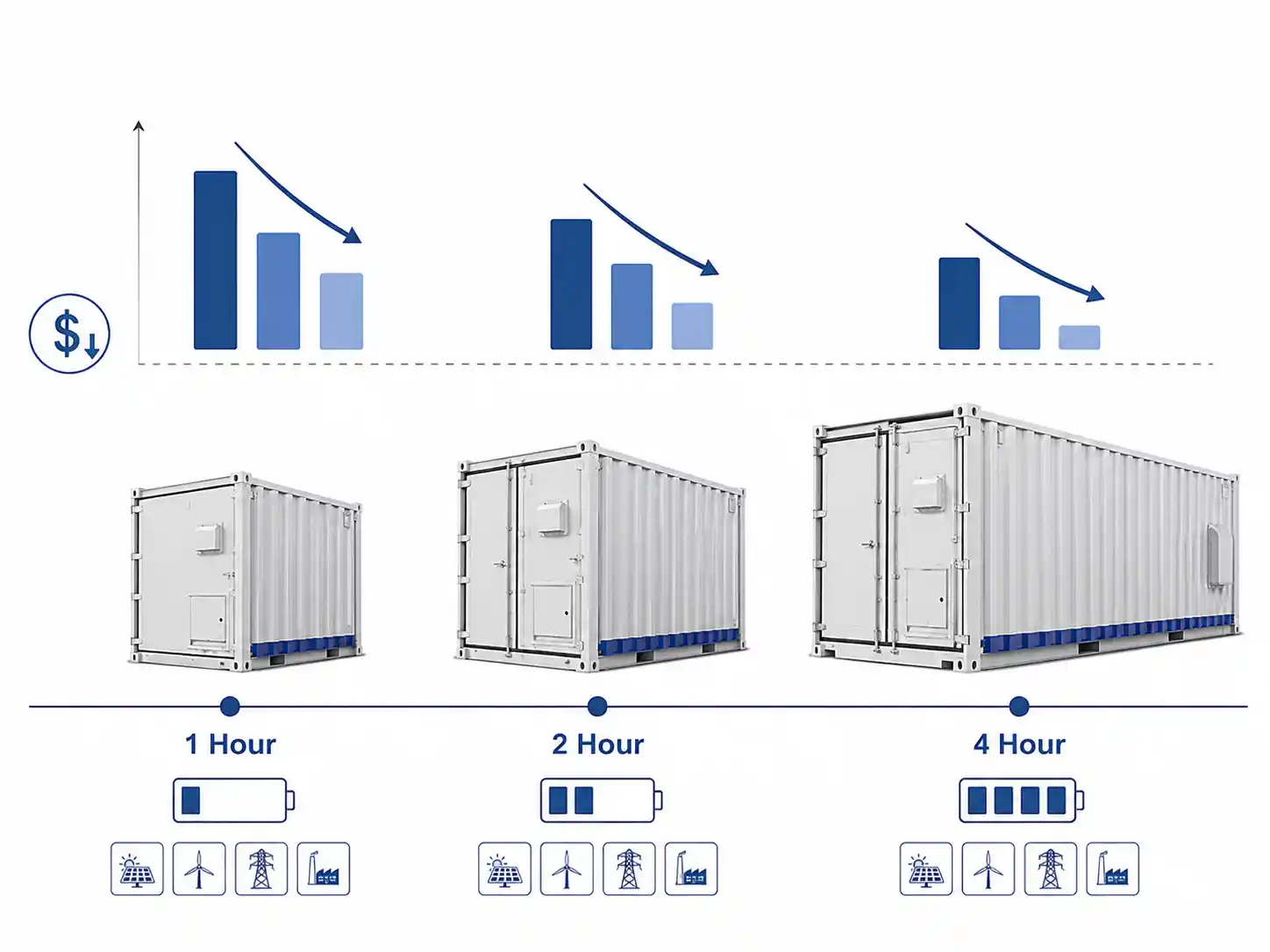
Power (MW) is the maximum rate at which the system can charge or discharge — think of it as the size of the “tap.” Energy (MWh) is the total volume of electricity stored — the size of the “tank.” A 1MW rating only tells you the tap size. Without knowing the tank size, no supplier can give you an accurate number.
| Configuration | Rated Power | Energy Capacity | Typical Full-Power Duration |
|---|---|---|---|
| 1MW / 1MWh | 1 MW | 1 MWh | 1 hour |
| 1MW / 2MWh | 1 MW | 2 MWh | 2 hours |
| 1MW / 4MWh | 1 MW | 4 MWh | 4 hours |
This is why two suppliers quoting “1MW systems” can land far apart on price — they may be pricing completely different tank sizes.
How Much Does a 1MW BESS Cost in 2026? What Public Data Shows
Rather than relying on a single vendor’s price list, it’s more reliable to start from independently published cost benchmarks and adjust for project-specific scope.
NREL’s 2025 cost projections for utility-scale battery storage put a 4-hour lithium-ion system at roughly $334/kWh on a component-cost basis, with power and energy costs broken out separately so the figure can be recalculated for other durations. BloombergNEF’s battery price survey reported a global volume-weighted average lithium-ion pack price of $115/kWh in 2024, with cell-level pricing around $78/kWh — the benchmark most industry EPC estimates use as a starting point for hardware cost. Compiled industry data for commercial and industrial systems in 2026 shows installed costs spanning roughly $110/kWh for large 4-hour systems up to $580/kWh for smaller, shorter-duration commercial configurations, with U.S. turnkey EPC pricing for 4-hour, front-of-meter LFP systems generally landing between $230/kWh and $320/kWh.
Applying these public benchmarks to common 1 MW configurations gives the following planning reference range:
| Configuration | Rated Power | Energy Capacity | Planning Cost Range* |
|---|---|---|---|
| 1MW / 1MWh | 1 MW | 1 MWh | $350,000 – $580,000 |
| 1MW / 2MWh | 1 MW | 2 MWh | $600,000 – $840,000 |
| 1MW / 4MWh | 1 MW | 4 MWh | $920,000 – $1.3 million |
*Derived from NREL and BloombergNEF benchmark data plus compiled 2025–2026 commercial EPC pricing, adjusted for typical short-duration C&I premiums. These are planning ranges for containerized LFP systems under relatively straightforward site conditions — not a fixed quote. Regional pricing varies meaningfully: publicly compiled 2025–2026 EPC data shows 4-hour turnkey systems running roughly $90–$130/kWh in China, $180–$260/kWh in Europe, and $230–$320/kWh in the U.S., largely reflecting labor, tariffs, and domestic-content requirements.
Important: BESS pricing should always be compared on the same cost basis. An equipment-only quote cannot be compared directly with a delivered, commissioned, or turnkey project price.
| Cost Basis | Typical Scope |
|---|---|
| Equipment-only | Battery system, PCS, BMS/EMS and defined auxiliary equipment |
| Delivered | Equipment plus freight and delivery to the project site |
| Delivered & commissioned | Equipment, delivery, and commissioning support |
| Installed | Above plus electrical and site installation work |
| Turnkey | Full EPC/project delivery within the agreed scope |
| Grid-connected project | Turnkey scope plus site-specific interconnection and utility requirements |
The planning ranges above sit closest to a delivered-and-commissioned cost basis. A turnkey, grid-connected project — with interconnection studies, permitting, and civil work included — should be budgeted higher, as outlined below.
How BESS Costs Are Calculated: $/kW vs $/kWh
BESS pricing is often expressed in both /kW and $/kWh, because a battery storage project has two different cost dimensions: power capacity and energy capacity. NREL’s methodology separates these explicitly — component costs are reported as a power cost ( /kW) plus an energy cost ($/kWh), so a system’s total price can be recalculated for any duration rather than assumed from a single per-kWh figure.
$/kW is primarily associated with the system’s power capability. Costs such as the PCS, transformer, switchgear, protection equipment, and other power-related components scale with the required MW output.
$/kWh is primarily associated with the amount of energy the system can store. Battery cells, racks, DC equipment, and other energy-related components increase as MWh capacity increases.
This distinction explains why a 1MW/1MWh BESS and a 1MW/4MWh BESS can share the same rated power but carry very different total project costs — and why a longer-duration system can have a higher total cost while achieving a lower cost per stored kWh.
For buyers, the better question is not simply “What is the price of a 1MW BESS?” It’s “What is the total cost of my required MW and MWh capacity, and what is included in that price?”
What’s Actually Included in a Turnkey 1MW BESS Quote?
A complete, commercial-ready system involves far more than battery cells. A typical VoltCrave Power commercial energy storage system quote covers:
- Battery equipment — LiFePO4 cells, racks, busbars, battery management system (BMS)
- Power conversion system (PCS) — sized from 100kW up to 1,250kW depending on configuration
- Thermal management — air or liquid cooling, temperature and gas sensors
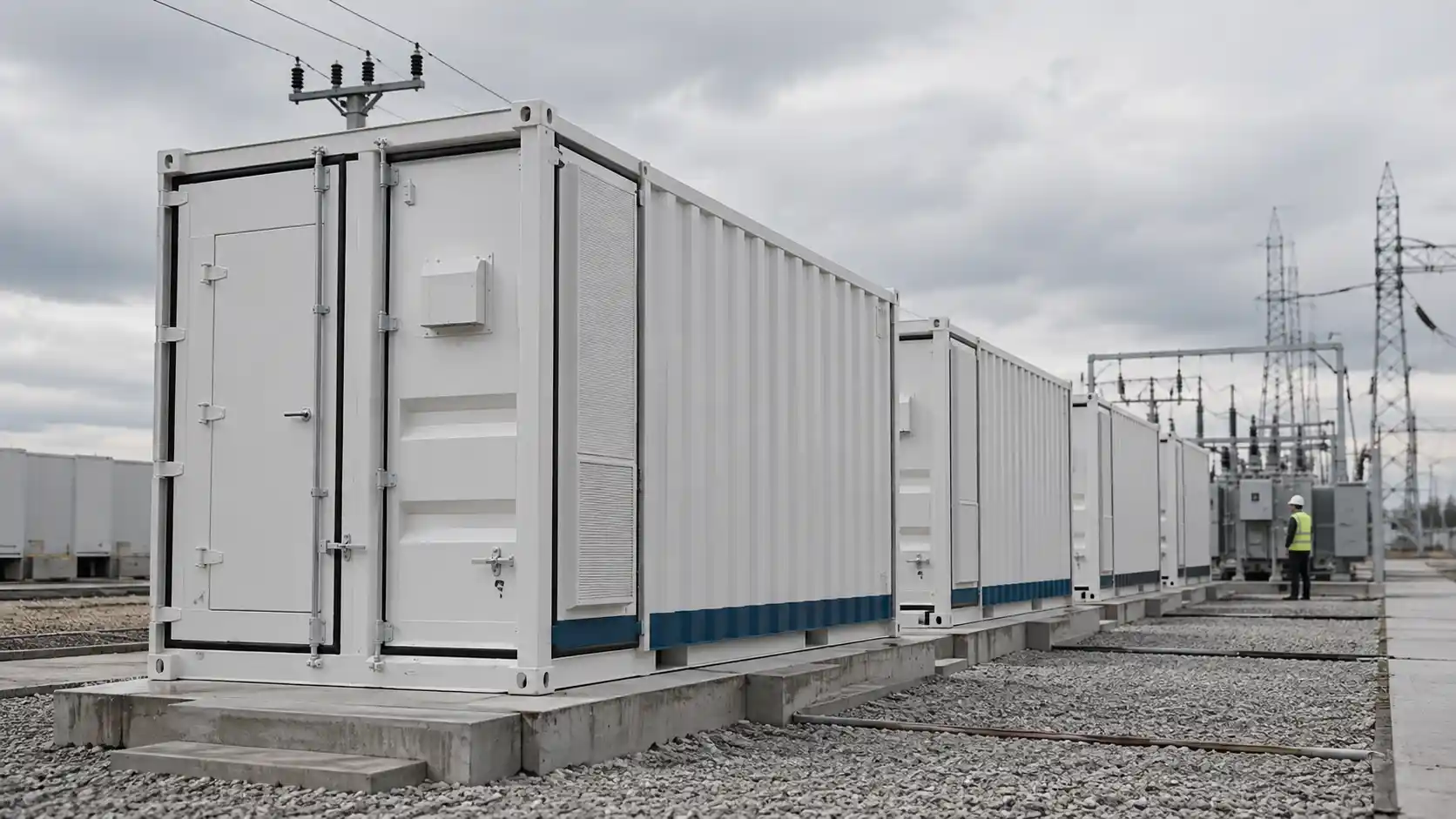
- Enclosure — containerized or cabinet-based, rated for outdoor deployment
- Controls and software — BMS, EMS, and site controller integration
- Fire detection and suppression systems
- Engineering, factory testing, and commissioning support
What it usually does not include — and where budgets go wrong — is covered next.
The Hidden Costs Suppliers Often Leave Out
This is the section most 1MW BESS pricing guides skip, and it’s the one that causes the most budget surprises during procurement.
Grid interconnection. Utility feasibility studies, protection coordination studies, dedicated transformers, and feeder upgrades can add significant cost, depending on whether the project is behind-the-meter or front-of-the-meter.
Permitting and fire code compliance. Requirements vary by jurisdiction and depend on battery chemistry, enclosure design, and site location. Fire-testing evidence, equipment spacing, and ventilation reviews all take time and budget.
Site and civil work. Foundations, trenching, fencing, drainage, and cable runs are rarely included in an equipment-only quote, especially for sites with poor access or difficult soil conditions.
Financing and development costs. Legal work, environmental review, interconnection applications, and contingency reserves typically sit outside an equipment supplier’s scope entirely.
Before comparing quotes, request three separate numbers from any supplier: an equipment-only price, a delivered-and-commissioned price, and a full turnkey price. This structure quickly reveals whether a low bid has quietly excluded transformers, civil work, or commissioning.
Why Do 1MW BESS Supplier Quotes Differ So Much?
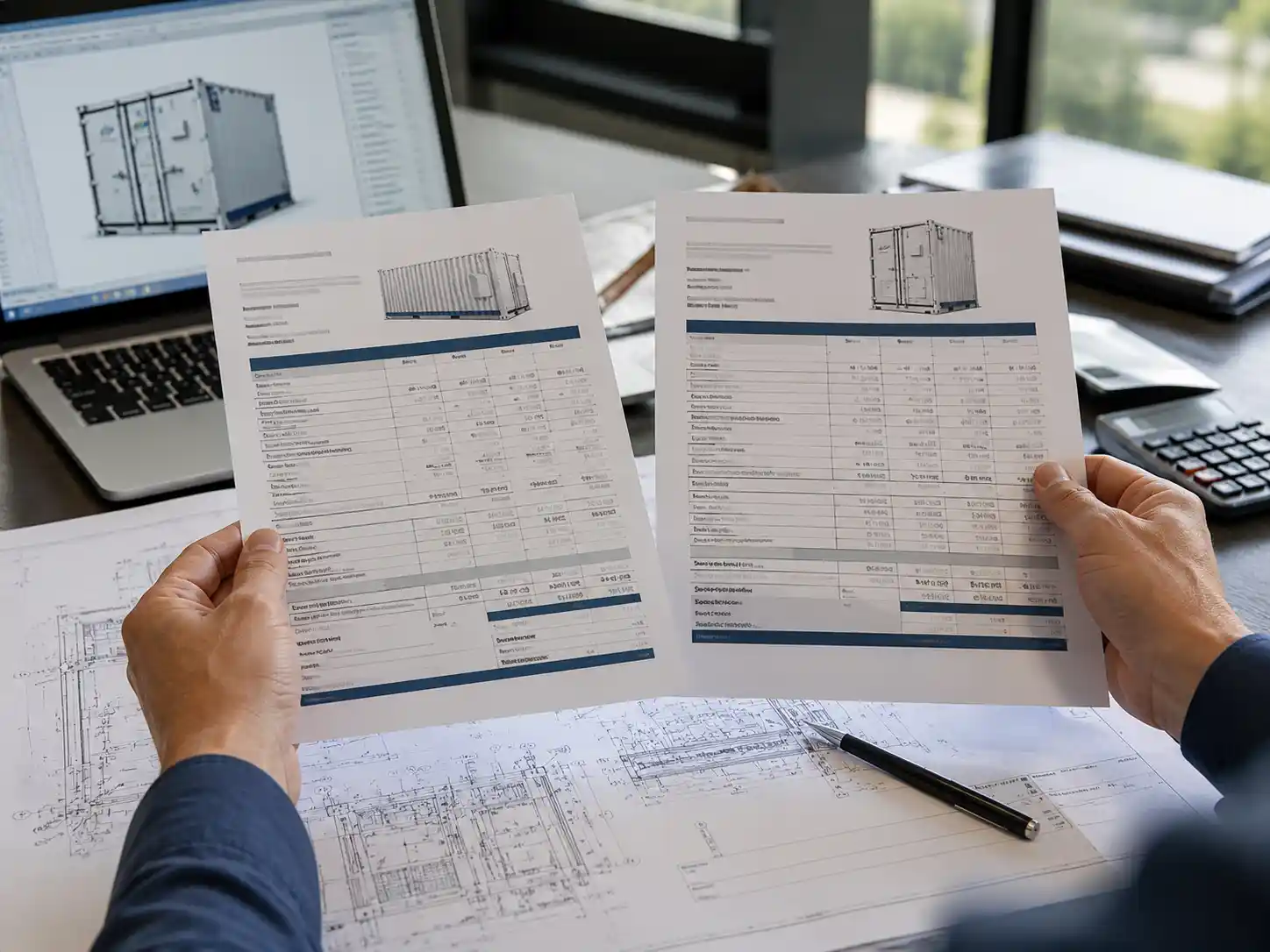
A large price gap between BESS suppliers does not necessarily mean one supplier is overcharging. In many cases, the quotations are simply based on different technical and commercial scopes.
Before comparing prices, check at least the following items across every quote:
| Quote Item | What to Check |
|---|---|
| Energy capacity | Rated MWh vs usable MWh |
| Power capacity | Continuous MW vs peak output |
| PCS | Rated power, efficiency, and operating limits |
| Battery system | Cell chemistry, configuration, and usable capacity |
| Cooling | Air-cooled or liquid-cooled architecture |
| Fire protection | Detection, suppression, and compliance scope |
| Transformer | Included, optional, or excluded |
| Switchgear | Included in equipment price or EPC scope |
| EMS / SCADA | Included software and integration scope |
| Delivery | Shipping, insurance, and destination costs |
| Commissioning | Factory commissioning vs on-site commissioning |
| Warranty | Warranty period and guaranteed capacity |
| Degradation | Guaranteed end-of-life capacity and assumptions |
| Augmentation | Included, optional, or owner responsibility |
| O&M | Preventive maintenance, monitoring, and service response |
| Interconnection | Utility studies, transformer upgrades, and site work |
The most important rule when comparing BESS quotes: never compare suppliers using the headline price alone. Compare the same MW rating, the same usable MWh capacity, the same delivery scope, the same warranty assumptions, and the same site responsibilities. A lower headline price can end up more expensive once excluded electrical, commissioning, warranty, or interconnection costs are added back in.
1MW/2MWh vs 1MW/4MWh: Which Duration Fits Your Project?
Duration should be driven by what the system needs to do, not by which configuration looks cheapest per MW.
- 1-hour systems (1MW/1MWh) suit facilities focused on short, sharp demand spikes and voltage stabilization rather than sustained energy shifting.
- 2-hour systems (1MW/2MWh) are a common reference configuration for C&I projects, balancing peak shaving with a few hours of solar-shifting or backup capability.
- 4-hour systems (1MW/4MWh) fit projects with heavier solar integration, longer backup requirements, or participation in energy arbitrage markets — and, per NREL’s data, generally achieve the lowest cost per stored kWh of the three.
VoltCrave Power‘s commercial energy storage system line is built on a modular container platform scaling from 200kWh to 10MWh, which lets project developers start with a 1MW/2MWh footprint and expand capacity later without redesigning the electrical architecture from scratch.
Does Liquid Cooling Change the Cost Equation?
Cooling architecture affects both the upfront cost and the long-term operating profile of a BESS.
Air-cooled systems can offer a simpler, potentially lower-cost thermal management approach, while liquid-cooled systems can provide tighter temperature control and more uniform thermal conditions across battery cells.
However, the economic advantage of liquid cooling is project-specific. Whether the higher initial cost is justified depends on factors such as ambient temperature, operating C-rate, cycling frequency, enclosure design, target service life, warranty requirements, and augmentation strategy.
For buyers, the right comparison isn’t simply “Air cooling vs. liquid cooling — which is cheaper?” A better question is: “Which thermal management architecture delivers the required performance and lifecycle economics for this operating profile?” Any claim about lower long-term cost should be supported by a project-specific degradation, augmentation, and O&M model rather than assumed from the cooling technology alone.
Battery Life, Warranty and Guaranteed Capacity Are Not the Same
One of the most common mistakes in BESS procurement is treating the battery’s design life, warranty period, and guaranteed capacity as if they were the same thing. They are not.
- Design life describes the expected service life of the system under defined operating conditions.
- Warranty period defines the timeframe during which the supplier or warranty provider covers specified defects or performance obligations.
- Guaranteed capacity defines how much usable energy the system is expected to retain under the conditions specified in the contract.
A system described as having a long design life does not automatically mean the supplier guarantees the same usable capacity throughout that period. Before comparing suppliers, ask:
- What usable capacity is guaranteed at the beginning of operation?
- What capacity is guaranteed at year 5, year 10, or the contractual end-of-life point?
- What operating assumptions apply to the warranty?
- What happens if the battery falls below guaranteed capacity?
- Is augmentation included in the contract, and who pays for replacement modules or added capacity?
These terms can materially affect the long-term economics of a BESS project and should be evaluated alongside the initial purchase price, not after the contract is signed.
Operating Cost and Payback Period
The initial BESS purchase price is only one part of the project’s lifecycle economics. NREL’s utility-scale storage model, for reference, estimates fixed O&M at roughly 2.5% of capital cost per year, covering scheduled maintenance and the augmentation reserve needed to keep the system at rated capacity over its design life. Buyers should also evaluate software and monitoring, insurance, spare parts, warranty coverage, and other site-specific operating costs.
Annual operating expenses vary by service scope — a supplier quotation should state clearly what is included in O&M and what remains the project owner’s responsibility.
Payback is even more application-specific:
| Application | Primary Value Driver |
|---|---|
| Peak shaving | Reduced demand charges |
| Solar + storage | Energy shifting and increased self-consumption |
| EV charging | Demand management and grid capacity deferral |
| Backup power | Reduced cost of downtime and improved resilience |
A BESS project can have a very different payback profile depending on local electricity tariffs, demand charges, incentives, financing structure, cycling frequency, degradation, installed cost, and operating strategy. Any payback period shown in a proposal should be treated as a project-specific financial model, not a universal industry benchmark.
Before approving a project, model at minimum: initial CAPEX + annual O&M + augmentation + financing + expected savings/revenue + degradation + end-of-life assumptions.
How VoltCrave Power Helps Buyers Build a Clearer BESS Budget
VoltCrave Power provides containerized LiFePO4 energy storage solutions for commercial and industrial applications, working with EPC contractors, distributors, and project developers on application-specific system configurations backed by UN38.3, CE, and IEC 62619 compliance documentation.
Rather than comparing suppliers on headline price alone, we recommend defining the project around four key inputs:
- Required power in MW
- Required usable energy in MWh
- Primary application and operating profile
- Required delivery and commissioning scope
This approach allows the BESS configuration, PCS rating, thermal management, warranty requirements, and project scope to be evaluated together, rather than reverse-engineered from a single headline number.
For projects under development, VoltCrave Power can provide a scoped budget based on the required power, energy capacity, application, and delivery location, with equipment and project-related costs identified separately where applicable. Explore the full commercial energy storage system range for available configurations from 200kWh to 10MWh.
FAQs
How much does a 1MW/2MWh battery storage system cost?
Based on public NREL and BloombergNEF benchmark data, a 1MW/2MWh system on a delivered-and-commissioned basis generally falls in the $600,000–$840,000 planning range, though this varies by battery configuration, PCS, cooling system, warranty, delivery terms, and site requirements. A quoted price should always specify whether it is equipment-only, delivered, commissioned, installed, or turnkey.
Why can a 1-hour BESS cost more per kWh than a 4-hour BESS?
Because a large portion of BESS power-related equipment is sized according to MW output rather than stored energy. A 1MW system requires roughly the same power-conversion capability whether it stores 1MWh or 4MWh, so shorter-duration systems can carry a higher cost per stored kWh — a pattern confirmed in NREL’s published power-vs-energy cost breakdown.
What should I compare when reviewing BESS quotations?
Compare usable MWh, continuous MW output, PCS specifications, cooling architecture, included electrical equipment, delivery and commissioning scope, warranty terms, degradation assumptions, augmentation responsibility, O&M scope, and grid-interconnection responsibilities — not just the headline price.
Is liquid cooling always worth the higher upfront cost?
Not necessarily. Liquid cooling can provide tighter thermal control, but the financial benefit depends on the project’s ambient conditions, operating profile, cycling frequency, warranty requirements, degradation assumptions, and augmentation strategy.
Does a long BESS design life mean the supplier guarantees that many years of capacity?
No. Design life, warranty period, and guaranteed capacity are different contractual concepts. Buyers should review the guaranteed usable capacity and end-of-life performance specified in the warranty or supply agreement, not just the stated design life.
Conclusion
The cost of a 1 MW BESS cannot be determined from the MW rating alone. Public benchmarks from NREL and BloombergNEF put installed 4-hour lithium-ion costs in a roughly $115–$334/kWh range depending on whether the figure reflects cell/pack pricing or a fully specified utility-scale system — and project-specific factors like duration, equipment scope, site conditions, interconnection requirements, warranty structure, and commissioning responsibilities can move the final budget well outside that range in either direction.
For this reason, buyers should define both power and energy requirements first, then compare supplier quotations on the same commercial and technical basis. The most useful comparison isn’t “Which supplier offers the lowest 1MW price?” — it’s “Which supplier provides the required usable capacity and performance with the clearest total project scope and lifecycle cost?”
For a project-specific budget, VoltCrave Power can evaluate the required MW/MWh configuration, application, and delivery scope to provide a clearer basis for comparing equipment, delivery, and commissioning costs. Explore our commercial energy storage systems or browse more procurement guides on the VoltCrave Power blog.
Need help matching this topic to a real battery project?
Send your target application, capacity range, certification market, and order plan. VoltCrave can recommend a practical product direction.