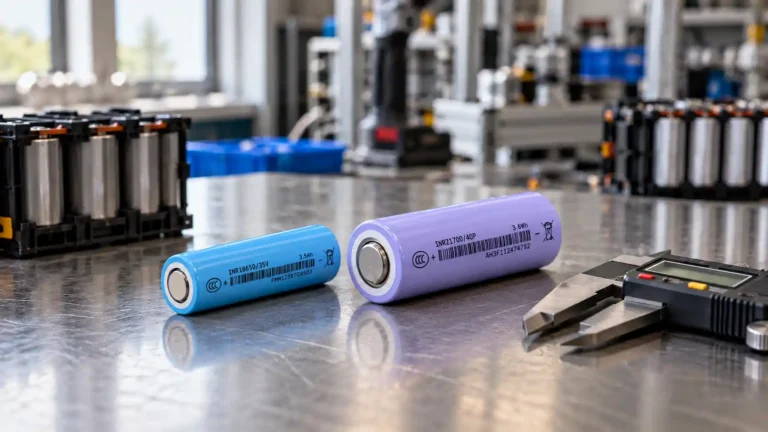
The 18650 is the most common cylindrical lithium-ion cell in circulation, and it is also the one most often charged incorrectly. The cell itself is simple: 18 mm diameter, 65 mm length, 3.6V nominal, charged to a fixed voltage limit. What causes trouble is that three different people ask three different questions about it.
One wants to know how to charge the cells already in their hand. Another wants to buy rechargeable 18650 cells and needs to know which ones can be charged safely and how to tell. A third is building packs and needs the charge parameters that go into a specification. The charging procedure overlaps across all three, but the decisions do not.
This guide works through the charging method first, then the current and time calculations, then temperature and what to do when no dedicated charger is available, and finally how to identify a cell worth charging in the first place.
What safe charging means for an 18650 cell
Safe charging for any lithium-ion cell comes down to three controlled variables. The first is a voltage ceiling that is never exceeded. The second is a current that stays inside the cell’s rating. The third is a temperature window that stays inside the chemistry’s limits. Everything else is detail.
The 4.2V limit and why tolerance matters
A standard lithium-ion 18650 charges to 4.20V, with a tolerance of roughly ±50mV per cell. That figure is not a target to reach for. It is a ceiling, and the margin around it is narrow because overcharge is what starts the failure chain: metallic lithium plating on the anode, cathode instability, gas generation, rising internal pressure.
Battery University documents what happens above the limit. Prolonged charging above 4.30V on a cell designed for 4.20V plates metallic lithium, the cathode loses stability and produces CO2, and cell pressure climbs. The cell’s internal current interrupt device is designed to disconnect somewhere around 1,000 to 1,380 kPa if pressure keeps rising. That is a last-resort device, not a charging control.
The practical consequence: a charger that outputs 4.2V ± 1% is fine, and a charger that drifts to 4.35V is not. This is the single specification worth checking before anything else.
CC/CV: the two stages every charger runs
Lithium-ion charging is a two-stage process, and the name for it is constant current / constant voltage.
Stage one, constant current. The charger pushes a fixed current into the cell while the voltage rises. This is where most of the capacity arrives.
Stage two, constant voltage. Once the cell reaches 4.20V, the charger holds that voltage and lets the current fall on its own. Current tapers as the cell fills.
Charging is complete when the current drops to a set fraction of the rated capacity, commonly 3% to 5% of the Ah rating. On a 3,400mAh cell that is roughly 100 to 170mA.
Two things follow from this. First, the last part of the charge is slow by design, and no charger can rush it without exceeding the voltage limit. Second, there is no trickle charge stage. A lithium-ion cell cannot absorb overcharge, so a charger that keeps pushing current after full is doing harm, not maintenance. Battery University is explicit on this point: continuous trickle charging causes lithium plating.
If a charger has no CV stage and simply cuts off at a voltage, the cell will be somewhere around 85% charged, not full. That is not a fault. It is a different design choice, and for long cell life it is arguably the better one.
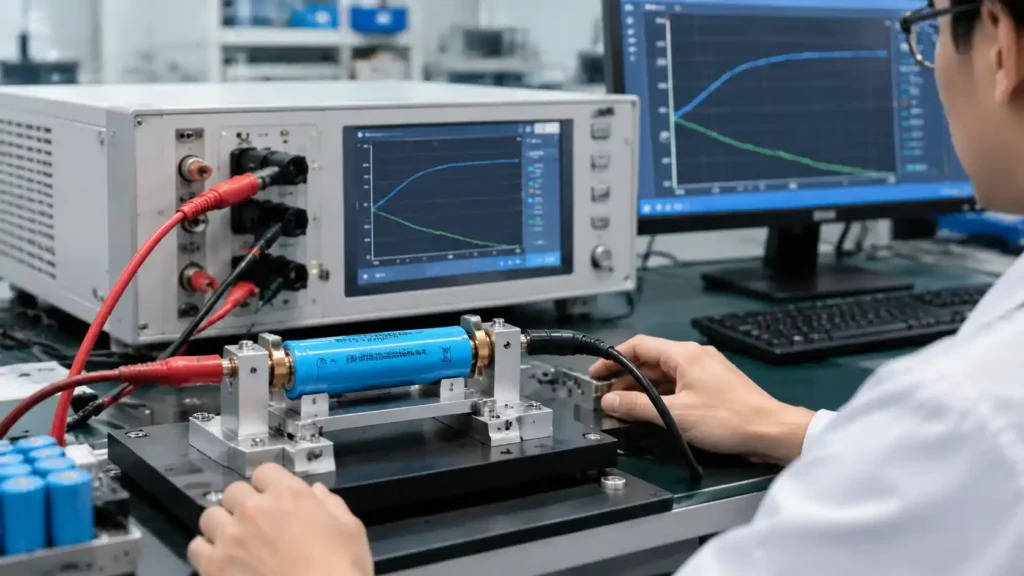
Charge current: how many amps an 18650 should get
Charge current is where most of the confusion sits, because the honest answer is “it depends on the cell” and most sources answer with a number instead.
Working from C-rate to amps
C-rate expresses current as a multiple of capacity, which is the only way to compare cells of different sizes. For a cell of capacity Q in amp-hours, a charge rate of nC means a current of n × Q amps.
Work it through for the two common 18650 capacities:
| Cell capacity | 0.5C | 1C | 2C | 3C |
|---|---|---|---|---|
| 2,000mAh | 1.0A | 2.0A | 4.0A | 6.0A |
| 3,000mAh | 1.5A | 3.0A | 6.0A | 9.0A |
| 3,300mAh | 1.65A | 3.3A | 6.6A | 9.9A |
| 3,500mAh | 1.75A | 3.5A | 7.0A | 10.5A |
The standard advice for energy-type lithium-ion cells is to charge between 0.5C and 1C, with manufacturers of energy cells generally recommending 0.8C or less to preserve cycle life. On a 3,400mAh 18650, that band runs from about 1.7A to 2.7A, with 2.7A being the ceiling rather than the default.
This is why the widely repeated “0.5A to 2A” advice is not wrong but is incomplete. On a 2,000mAh cell, 2A is already 1C. On a 3,500mAh cell, 2A is only 0.57C. The same charger setting is a different stress level depending on the cell it is connected to.
Check the cell datasheet first. The C-rate figure there is the real limit, and it can be far above 1C on power-type cells.
Fast charging and what it costs in cycle life
Here is the part the general guides leave out. Increasing charge current does not shorten the total charge time as much as the arithmetic suggests.
Battery University’s measurements show why. At higher current the cell reaches the voltage ceiling faster, but the constant-voltage stage then takes longer, because the cell has not absorbed the same amount of charge in stage one. A high-current charge will fill a cell to roughly 70% quickly, and the remaining 30% still has to be done slowly.
The cost is on the cell. Charging above the recommended rate generates heat and accelerates ageing, and the effect compounds over hundreds of cycles rather than showing up once.
There is a second trade-off in cell selection that matters more than any charger setting. Capacity and cycle life do not always move together. A VoltCrave Power 18650 in the 3300mAh configuration is specified for 1,000 cycles; the 3500mAh configuration is specified for 800. The larger cell stores more energy (12.775Wh against 11.88Wh) and accepts fewer cycles over its life. For a pack that will be cycled daily, the smaller cell may deliver more total energy throughput than the bigger one.
That is a specification decision made at design time, not a charging decision, but it determines what the charging profile should be. How a cell’s cycle count responds to charge rate and depth of discharge is covered in the guide to what determines lithium battery cycle life.
How long an 18650 takes to charge
Charge time questions are the second most common after current, and the arithmetic is straightforward once the losses are accounted for.
Calculating charge time from capacity and current
Divide capacity by charge current, adjust for the fact that the constant-voltage stage tapers:
| Cell | Charge current | C-rate | Approximate time to full |
|---|---|---|---|
| 3,300mAh | 1.65A | 0.5C | ~2.5 h |
| 3,300mAh | 3.3A | 1C | ~1.5 h |
| 3,500mAh | 1.75A | 0.5C | ~2.5 h |
| 3,500mAh | 3.5A | 1C | ~1.6 h |
Battery University puts the complete charge time for an energy cell at 0.5C to 1C at about 2 to 3 hours, with charge efficiency around 99%. The cell stays cool through the process, which is the normal condition. A cell that warms noticeably during charge is being pushed, or has high internal resistance.
Why the last 20 percent takes longest
The taper is not linear. Roughly 70% of capacity arrives during the constant-current stage, and the remaining portion is delivered at steadily falling current. The last few percent can take as long as everything before it.
This has a practical consequence for anyone charging multiple cells: a charger that reports a cell as ready at the point the voltage ceiling is reached is telling you the cell is around 85% full, not full. If the application needs the full capacity, leave the cell in the charger through the CV stage. If it does not, taking it out early is better for the cell.
There is no benefit to leaving a fully charged cell on the charger. Lithium-ion has no float stage, and the cell should come off once charging terminates.
Temperature: the constraint people ignore
Voltage and current get all the attention. Temperature is what actually causes most charging failures, and it has a hard limit rather than a soft one.
Charging below 0°C and lithium plating
Charging a lithium-ion cell below 0°C causes lithium plating. The mechanism is straightforward: at low temperature the anode cannot absorb lithium ions fast enough, so metallic lithium deposits on the surface instead of intercalating into the structure. The deposit is permanent, it reduces usable capacity, and it creates a condition that can lead to internal short circuit.
The damage is done during the charge. A cell charged below freezing does not recover when it warms up, and unlike simple capacity fade, plating is a safety issue rather than only a performance one.
The 0°C to 45°C window in practice
VoltCrave Power 18650 cells specify charging from 0°C to 45°C. The 3500mAh configuration lists charging at 0°C to 45°C and discharging at -20°C to 66°C; the 3300mAh configuration specifies an operating range of -20°C to 65°C.
Two things follow from the asymmetry between charge and discharge limits. Discharging below freezing is generally acceptable, which is why a tool can run in winter. Charging below freezing is not. A cell that has been sitting in a cold van overnight is at a temperature that permits discharge and forbids charge.
Above 45°C the pressure inside the cell rises, the electrolyte breaks down, and gas forms. That is the start of the swelling pathway, which has its own guide covering why lithium battery packs bulge and how to prevent it.

Charging an 18650 without a dedicated charger
This is a real search query with real volume behind it, and it is also where most of the genuinely dangerous advice circulates. The honest answer is narrow.
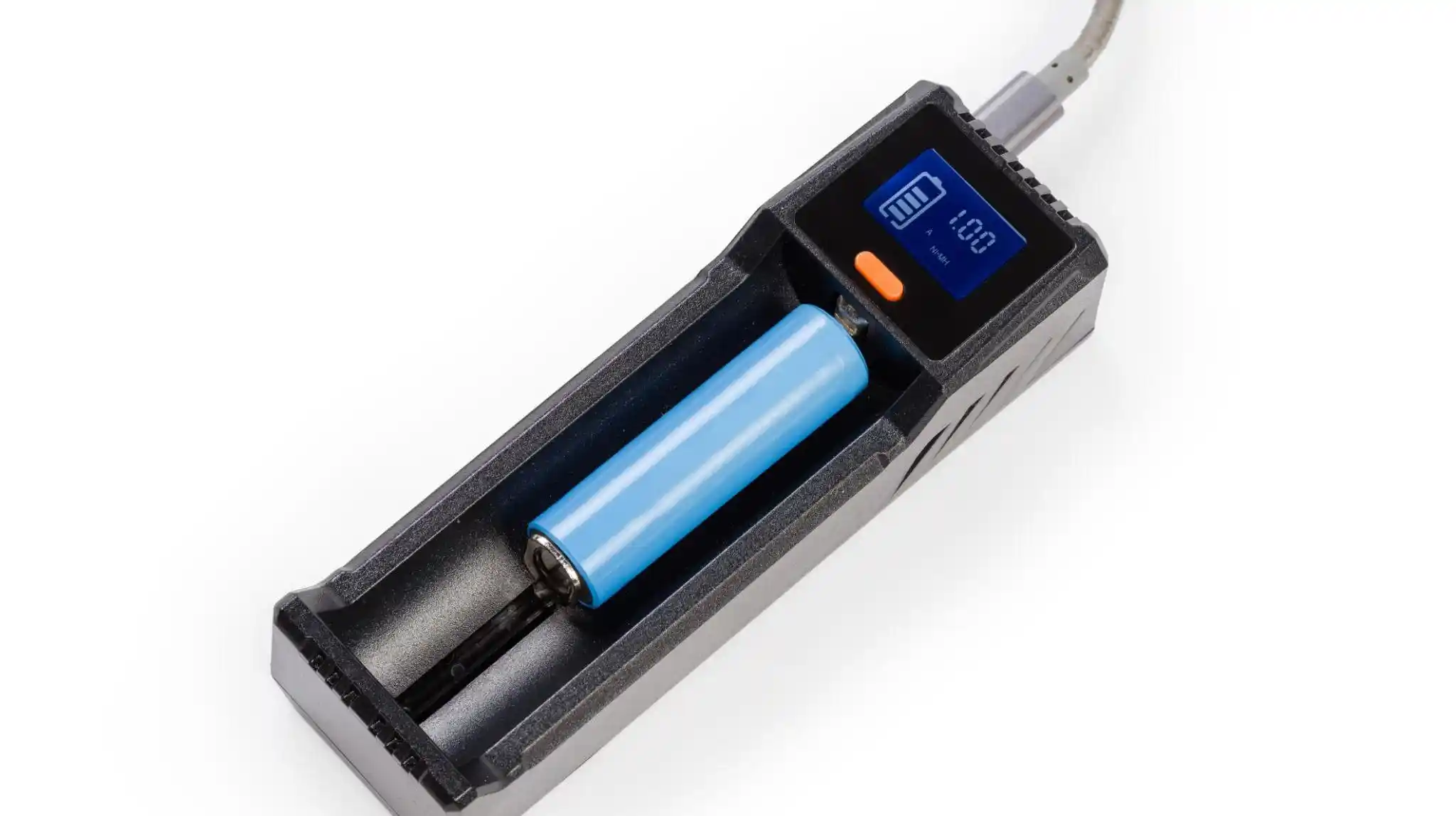
What a dedicated charger provides is not convenience. It provides a fixed voltage ceiling, a current limit, a CV stage, and termination. Any substitute has to provide the same four things or it is not a charger.
What does not work, and why:
- Direct connection to a USB port. A USB port supplies 5V. An 18650 accepts 4.2V. Connecting the two directly puts 5V across a cell rated for 4.2V, with no current limit and no termination. There is no correct wiring of this that makes it safe.
- A phone charger connected to bare cell terminals. Same problem, plus the cell is now relying on the phone charger’s negotiation protocol, which the cell cannot participate in.
- Cutting a USB cable and touching the wires to the cell. No voltage regulation, no current limit, no protection. This is how cells vent.
- A LiFePO4 charger. LiFePO4 cells charge to 3.65V, not 4.2V. A charger set for LiFePO4 will undercharge an 18650; an 18650 charger set to 4.2V will overcharge a LiFePO4 cell. The two are not interchangeable.
- A nickel or lead-acid charger. Wrong voltage profile, and typically no accurate voltage ceiling.
What does work is a bench power supply with adjustable voltage and current limiting, set to 4.20V and to a current inside the cell’s C-rate limit, with the current limit set before the cell is connected. The supply must be attended, the voltage setting verified with a meter rather than trusted from the display, and the charge stopped when current falls to the termination level. This is a workaround for someone who already owns the equipment and understands what the settings mean. It is not a substitute for a charger, and it offers no protection if anything fails.
A single-cell charger costs less than the cell it protects. For anyone charging 18650 cells more than once, the dedicated charger is the answer. The “without a charger” question is really a question about what to do while waiting for one to arrive.
How to tell a chargeable 18650 from a non-rechargeable one
The highest-volume searches on this topic are commercial, not instructional. People are looking for rechargeable 18650 cells, and the failure mode they run into is buying cells that do not match the claim on the wrapper.
The claims that need checking
| Claim on the wrapper | What to verify | Why it matters |
|---|---|---|
| Capacity in mAh | Measured capacity at a stated discharge rate | Unbranded cells commonly claim 5,000mAh or more. A genuine 18650 tops out around 3,500mAh. |
| “3.7V” or “3.6V” | Nominal voltage, and the charge voltage separately | Nominal is not the charge limit. The cell still charges to 4.20V. |
| Max discharge current | Continuous rating, not pulse | A cell rated 10A pulse may be 3A continuous. |
| Cycle life | Test conditions behind the number | A cycle count without a depth of discharge and temperature is not comparable. |
| Certification | IEC 62133-2, UL 1642, UN38.3 | These are the documents a B2B buyer needs, and they are the ones counterfeit cells cannot produce. |
The capacity claim is the one to treat with most suspicion. The 18650 format has a practical energy ceiling, and a cell advertised well above 3,500mAh at a low price is either mislabelled or not the chemistry it claims.
Internal resistance and matching
For a single cell, internal resistance affects how much the voltage sags under load. For a pack, it decides whether the pack works at all.
Cells wired in series carry the same current, and cells wired in parallel share it. If one cell in a parallel group has materially higher internal resistance than its neighbours, it takes less of the load and the others take more. Over cycles, the imbalance grows. This is why pack builders measure and group cells by capacity and internal resistance before assembly rather than using whatever comes out of the box.
A reasonable threshold for 18650 cells is ≤30mΩ initial AC internal resistance, which is the figure VoltCrave Power publishes for its 18650 range. Cells above that, or cells that vary widely within a batch, are not suitable for a matched pack.
When a 21700 is the better choice
The 18650 is a format, not a requirement. Where a design needs more energy in a similar footprint, the 21700 offers more per cell. VoltCrave Power’s INR21700 50E is rated 5,000mAh at 3.65V nominal for 18.25Wh, with 1,000 cycles at ≤20mΩ. Its published fast charge specification is 2.5A to 4.20 ± 0.05V with a 250mA cutoff.
| 18650 (3500mAh) | 21700 50E | |
|---|---|---|
| Nominal energy | 12.775Wh | 18.25Wh |
| Energy density | up to 263Wh/kg | 264Wh/kg |
| Cycle life | 800 | 1,000 |
| Internal resistance | ≤30mΩ | ≤20mΩ |
| Charge cutoff | Per cell datasheet | 4.20 ± 0.05V, 250mA cutoff |
The energy gain per cell is roughly 43%, which reduces cell count, spot welds, and BMS channel count for the same pack energy. The trade-off is a larger cell diameter, which changes the pack envelope and the mechanical design. For packs where the enclosure is already fixed and the cell count is the constraint, 21700 cells for higher-capacity packs are the more direct route.
How VoltCrave Power 18650 cells are specified for charging
The charging parameters above are only useful if the cell is specified precisely enough to apply them. VoltCrave Power’s 18650 range is published in two capacity configurations.
| Parameter | 3300mAh | 3500mAh |
|---|---|---|
| Cell format | 18650 | 18650 |
| Chemistry | Lithium-ion | Lithium-ion |
| Nominal voltage | 3.6V | 3.6V |
| Energy | 11.88Wh | 12.775Wh |
| Energy density | up to 263Wh/kg | up to 263Wh/kg |
| Cycle life | 1,000 cycles | 800 cycles |
| Max continuous charge / discharge | 3C / 3C | 3C / 3C |
| Initial AC internal resistance | ≤30mΩ | ≤30mΩ |
| Charge temperature | 0°C to 45°C | 0°C to 45°C |
| Discharge temperature | -20°C to 65°C | -20°C to 66°C |
| Weight | 46 ± 2g | 49g |
| Dimensions | 18 × 65 mm | 18 × 65 mm |
Two figures in that table decide the charging setup. The 3C continuous charge rating sets the absolute ceiling, which works out to 9.9A on the 3300mAh cell and 10.5A on the 3500mAh cell. That is a capability limit, not a recommendation. Staying at 0.5C or below remains the right default for cycle life, and the 1,000 against 800 cycle comparison between the two capacities shows how much cell life is sensitive to how it is treated.
The 0°C to 45°C charge window rules out cold-weather charging entirely. There is no low-temperature charging provision on these cells, so a pack design that charges outdoors in winter needs a heating strategy at the pack level rather than a workaround at the cell level.
Safety and compliance documentation covers IEC 62133-2, UL 1642 as a cell-level component document, UN38.3 for transport, CE/EMC, RoHS and MSDS. The full parameter table, including test conditions, sits on the 18650 3300-3500mAh cell page.
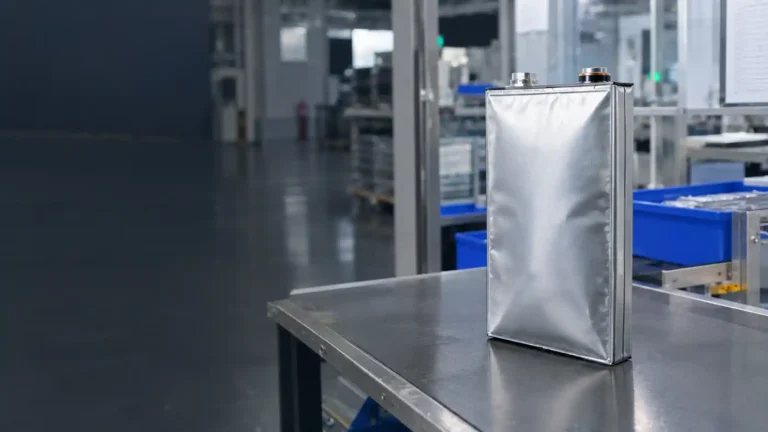
Cylindrical, prismatic and pouch formats for other pack designs are listed under battery cells and components.
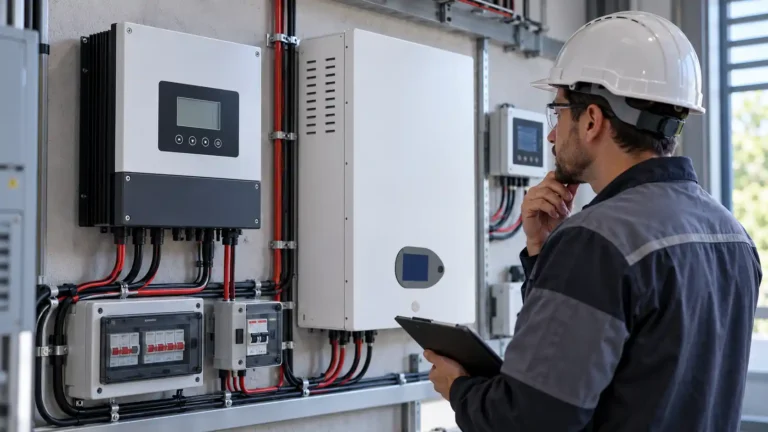
Where a project needs cells selected and matched into a finished pack, including BMS charge cutoff configuration and temperature protection, that work sits in custom battery pack assembly and OEM/ODM services.
FAQs
What voltage should I charge an 18650 battery at?
4.20V per cell, with a tolerance of about ±50mV. Confirm the figure on the cell datasheet rather than assuming, because some high-capacity variants specify a different ceiling. Never charge above the specified voltage, even briefly.
How many amps should I charge an 18650 at?
Between 0.5C and 1C of the cell’s capacity, and manufacturers of energy cells generally recommend 0.8C or less for cycle life. On a 3,400mAh cell that is roughly 1.7A to 2.7A. The datasheet ceiling governs, and many power-type cells allow more.
How long does it take to charge an 18650?
About 2 to 3 hours at 0.5C to 1C. A 3,300mAh cell at 1.65A takes around 2.5 hours; at 3.3A, around 1.5 hours. The final portion is delivered at falling current, so increasing the charge rate does not shorten total time proportionally.
Can I charge an 18650 with a USB cable?
Not directly. A USB port supplies 5V and an 18650 accepts 4.2V, and a USB port has no charge termination for a bare cell. A USB-based charger designed for 18650 cells is a different device and is fine; a USB cable connected to cell terminals is not.
Can I charge an 18650 below freezing?
No. Charging below 0°C causes lithium plating on the anode, which permanently reduces capacity and creates a short-circuit risk. Let the cell reach room temperature first. Discharging below freezing is a separate case and is generally permitted within the discharge range.
Does a higher-capacity 18650 last longer?
Not necessarily. VoltCrave Power’s 3500mAh 18650 stores more energy than the 3300mAh version but is specified for 800 cycles against 1,000. For a pack cycled daily, the smaller cell can deliver more total energy over its life. Compare energy throughput, not capacity alone.
Final verdict
Safe charging of an 18650 comes down to four numbers and one habit. The numbers are 4.20V, the C-rate limit from the datasheet, the 0°C to 45°C window, and the termination current. The habit is checking the cell specification before connecting it to anything.
Most of the failures attributed to 18650 cells are not cell failures. They are a charger set to the wrong voltage, a charge delivered at a rate the cell was never rated for, a charge started on a frozen cell, or a cell bought on a capacity claim that was never true. Each of those is checkable in advance.
The cell is a component with a published specification. Reading it is the whole method.
Need help matching this topic to a real battery project?
Send your target application, capacity range, certification market, and order plan. VoltCrave can recommend a practical product direction.