Home battery storage has evolved from a backup-power accessory into a core part of residential solar and energy management. For distributors, installers, solar companies, private-label brands, and energy-storage buyers, however, comparing home battery manufacturers requires more than looking at battery capacity or brand recognition.
The companies in this list represent different business models. Some provide tightly integrated residential energy ecosystems, some specialize in batteries or modular storage, and others are more relevant to B2B and OEM sourcing.
This is not a strict global shipment ranking. The manufacturers are compared based on their residential storage focus, technology approach, business model, and relevance to different types of buyers in 2026.
Top 10 Home Battery Manufacturers in 2026
| Company | Business Model | Home Battery Focus | Best Fit For |
|---|---|---|---|
| Tesla | Integrated energy brand | Powerwall and solar-integrated home backup | Installers, homeowners, branded energy channels |
| BYD | Battery manufacturer + storage platform | Modular high- and low-voltage residential batteries | Solar installers, distributors, inverter partners |
| LG Energy Solution | Global battery manufacturer | Residential ESS cells, modules and battery systems | Battery/system integrators and established energy companies |
| Enphase Energy | Residential energy system provider | AC-coupled batteries, microinverters and energy management | Solar installers and integrated residential solar channels |
| Panasonic | Established energy technology brand | EVERVOLT residential battery platform | Existing installer networks and technology benchmarking |
| Huawei Digital Power | Integrated PV + ESS provider | Smart String residential battery and inverter ecosystem | Solar installers and integrated PV/ESS projects |
| sonnen | Residential energy system specialist | Intelligent home storage and energy management | Installers and premium residential energy channels |
| Generac | Home energy and backup provider | Battery storage, load management and generator integration | Whole-home backup and installer channels |
| Pylontech | Battery and ESS manufacturer | Modular LFP residential storage | Distributors, installers and multi-inverter projects |
| VoltCrave Power | B2B energy storage manufacturer | Residential LFP batteries and customizable ESS platforms | Distributors, OEM buyers and private-label brands |
The most important point is that these companies do not offer the same type of business relationship.
A solar installer looking for a complete branded ecosystem has different requirements from a distributor developing its own residential ESS line. Understanding that distinction makes the manufacturer comparison much more useful.
1. Tesla
Business Model
Tesla operates as an integrated energy and technology brand rather than a conventional OEM battery supplier.
Its residential storage strategy centers on Powerwall, which combines battery storage with Tesla’s broader solar, energy-management, and home-backup ecosystem.
Residential Battery Focus
Powerwall is designed to store energy from solar or the grid and supply the home during outages, at night, or when electricity prices make stored energy more valuable.
The current Powerwall 3 integrates an inverter and system controller and supports system expansion, making Tesla particularly strong as an example of a tightly integrated residential energy platform. Tesla also states that more than one million Powerwall units have been installed globally.
B2B Relevance
For installers and energy companies, Tesla is an important benchmark for:
- Integrated battery and inverter architecture
- Home-backup positioning
- Energy-management software
- Installation ecosystem
- Consumer-facing product design
It is less relevant to businesses seeking conventional white-label or OEM manufacturing because Tesla’s model is centered on its own ecosystem.
Best fit: branded residential energy channels, certified installation networks, and companies benchmarking integrated home energy systems.
2. BYD
Business Model
BYD combines large-scale battery manufacturing capabilities with dedicated stationary energy-storage products.
For residential applications, the BYD Battery-Box platform is particularly relevant because it operates as a modular battery system designed to work with compatible third-party inverters.
Residential Battery Focus
The Battery-Box Premium HVS and HVM families use modular high-voltage architecture and LFP chemistry. BYD provides compatibility documentation for multiple inverter platforms and supports system expansion through additional modules or compatible parallel configurations.
This makes BYD structurally different from companies that sell a completely closed battery-and-inverter ecosystem.
B2B Relevance
BYD is particularly useful for buyers evaluating:
- Modular residential battery architecture
- High-voltage storage
- LFP battery systems
- Inverter interoperability
- Distributor and installer ecosystems
For solar installers that already work with selected hybrid inverter brands, battery compatibility can be especially important.
Best fit: solar distributors, installers, inverter partners, and companies prioritizing modular battery platforms.
3. LG Energy Solution
Business Model
LG Energy Solution is fundamentally a global battery manufacturer rather than a residential solar brand built around one consumer-facing home battery.
Its broader business covers battery technologies and energy-storage applications across residential, C&I, grid, and other markets.
Residential Battery Focus
LG Energy Solution officially identifies residential ESS as part of its energy-storage portfolio and offers storage products across cell, module, pack/rack, and larger system formats.
Its current ESS portfolio also spans multiple cell chemistries, including LFP and nickel-based technologies depending on product architecture.
B2B Relevance
LG Energy Solution is particularly relevant as a benchmark for:
- Battery manufacturing capability
- Cell and module technology
- Large-scale supply structures
- Energy-density and thermal-management development
- Integration into broader ESS platforms
Unlike a pure residential system brand, its role in the value chain is much more battery-technology oriented.
Best fit: established battery-system companies, integrators, and buyers evaluating upstream battery manufacturing capability.
4. Enphase Energy
Business Model
Enphase is best understood as a residential energy-system provider.
Its ecosystem connects solar microinverters, battery storage, system controllers, energy management, monitoring, and other residential electrical products.
Residential Battery Focus
Enphase currently offers several IQ Battery generations, including the IQ Battery 10C.
The 10C integrates Enphase microinverter technology into the battery system, while Enphase’s broader platform supports residential solar-plus-storage and backup applications. In August 2026, Enphase also expanded support for adding the IQ Battery 10C and whole-home backup to existing third-party solar systems in the United States and Canada.
B2B Relevance
Enphase is especially useful for installers evaluating:
- AC-coupled storage
- Microinverter-based solar ecosystems
- Retrofit residential storage
- Installer software and monitoring
- Integrated backup systems
Its strength is therefore less about offering a standalone battery to any inverter and more about system-level integration.
Best fit: residential solar installers and businesses already operating within integrated solar-plus-storage channels.
5. Panasonic
Business Model
Panasonic has a long history in battery and residential energy technologies and developed the EVERVOLT Home Battery platform as part of its solar-plus-storage offering.
Residential Battery Focus
EVERVOLT was designed as a modular residential storage platform with AC- and DC-coupled configurations, battery storage, inverter functionality, and home energy management.
However, B2B buyers should consider the company’s current regional position rather than relying only on historical brand recognition.
Panasonic’s North American website now states that the company no longer sells solar panels or batteries in the United States, while continuing to support active product warranties.
B2B Relevance
This distinction matters.
Panasonic remains useful for:
- Residential battery technology benchmarking
- Existing installed-base support
- Studying established solar-plus-storage product design
- Understanding installer-oriented warranty models
But buyers considering new distribution should confirm product availability in their exact market rather than assuming that every historical Panasonic residential storage product remains actively sold everywhere.
Best fit: existing installer networks, regional buyers where products remain available, and companies benchmarking established residential energy platforms.
6. Huawei Digital Power
Business Model
Huawei Digital Power approaches residential energy storage as part of a complete smart PV and energy-management ecosystem.
Its residential portfolio connects solar generation, hybrid inverters, batteries, backup hardware, monitoring, and digital energy-management technologies.
Residential Battery Focus
Huawei’s current LUNA2000 S1 Smart String Energy Storage System provides modular residential storage configurations and works within the company’s FusionSolar residential ecosystem.
Huawei’s residential solution combines its Smart String ESS with energy controllers and other PV equipment rather than treating the battery as an isolated component.
In July 2026, Huawei also announced that the LUNA2000 S1 received TÜV Rheinland’s highest-level Safety Mark certification for residential ESS.
B2B Relevance
Huawei is particularly relevant to businesses evaluating:
- Integrated PV + storage
- High-voltage modular ESS
- Energy-management platforms
- Smart inverter and battery integration
- Solar installer ecosystems
For B2B buyers, the main attraction is system integration rather than simply purchasing an independent battery cabinet.
Best fit: solar installers, PV distributors, and businesses developing integrated residential solar-storage offerings.
7. sonnen
Business Model
sonnen has built its business specifically around residential energy storage and intelligent home-energy management.
This makes it different from companies that entered home batteries from automotive, consumer electronics, or general battery manufacturing.
Residential Battery Focus
Current sonnen documentation includes the sonnenBatterie 10 family and the newer sonnenHome Battery 11, alongside energy-management and backup products.
The sonnenBatterie platform has historically emphasized modular storage, LFP chemistry, intelligent energy management, and integration into a connected residential energy ecosystem.
B2B Relevance
sonnen provides a strong benchmark for:
- Premium residential storage
- Smart home energy management
- Installer-oriented ESS
- Modular home batteries
- Distributed-energy business models
Its value to B2B buyers lies primarily in its residential specialization and software-integrated approach.
Best fit: residential installers, premium solar-storage channels, and businesses studying intelligent home energy ecosystems.
8. Generac
Business Model
Generac approaches battery storage from a broader home-backup and energy-management perspective.
Unlike companies focused only on lithium batteries, Generac combines storage with backup generators, solar equipment, load management, smart controls, and home energy systems.
Residential Battery Focus
The current PWRcell 2 system is an AC-coupled residential storage platform. Generac positions it as part of a wider home-energy architecture incorporating battery storage, solar, intelligent load management, and optional generator integration.
B2B Relevance
Generac is especially relevant to markets where buyers prioritize:
- Whole-home backup
- High household loads
- Generator integration
- Intelligent load management
- Installer-based home energy solutions
This makes it a particularly interesting comparison for North American residential backup markets.
Best fit: installers, backup-power specialists, and businesses serving whole-home resilience applications.
9. Pylontech
Business Model
Pylontech is an energy-storage-focused battery and system manufacturer with a broad portfolio covering residential, C&I, grid, telecom, and other storage applications.
Residential Battery Focus
Its residential portfolio includes modular stacked and rack-style systems.
Pylontech’s current home ESS platform emphasizes LFP battery technology, modular capacity expansion, and compatibility with mainstream inverter platforms. Its official product portfolio continues to position residential storage as one of its core application categories.
B2B Relevance
Pylontech is especially relevant to:
- Solar distributors
- Residential ESS installers
- Battery wholesalers
- Multi-inverter product ecosystems
- Buyers seeking modular battery-only platforms
Compared with closed consumer energy ecosystems, its battery-focused positioning makes it particularly useful for businesses that integrate batteries with other inverter brands.
Best fit: distributors, installers, and solar-storage companies prioritizing modular battery integration.
10. VoltCrave Power
Business Model
VoltCrave Power is positioned differently from most consumer-facing brands in this comparison.
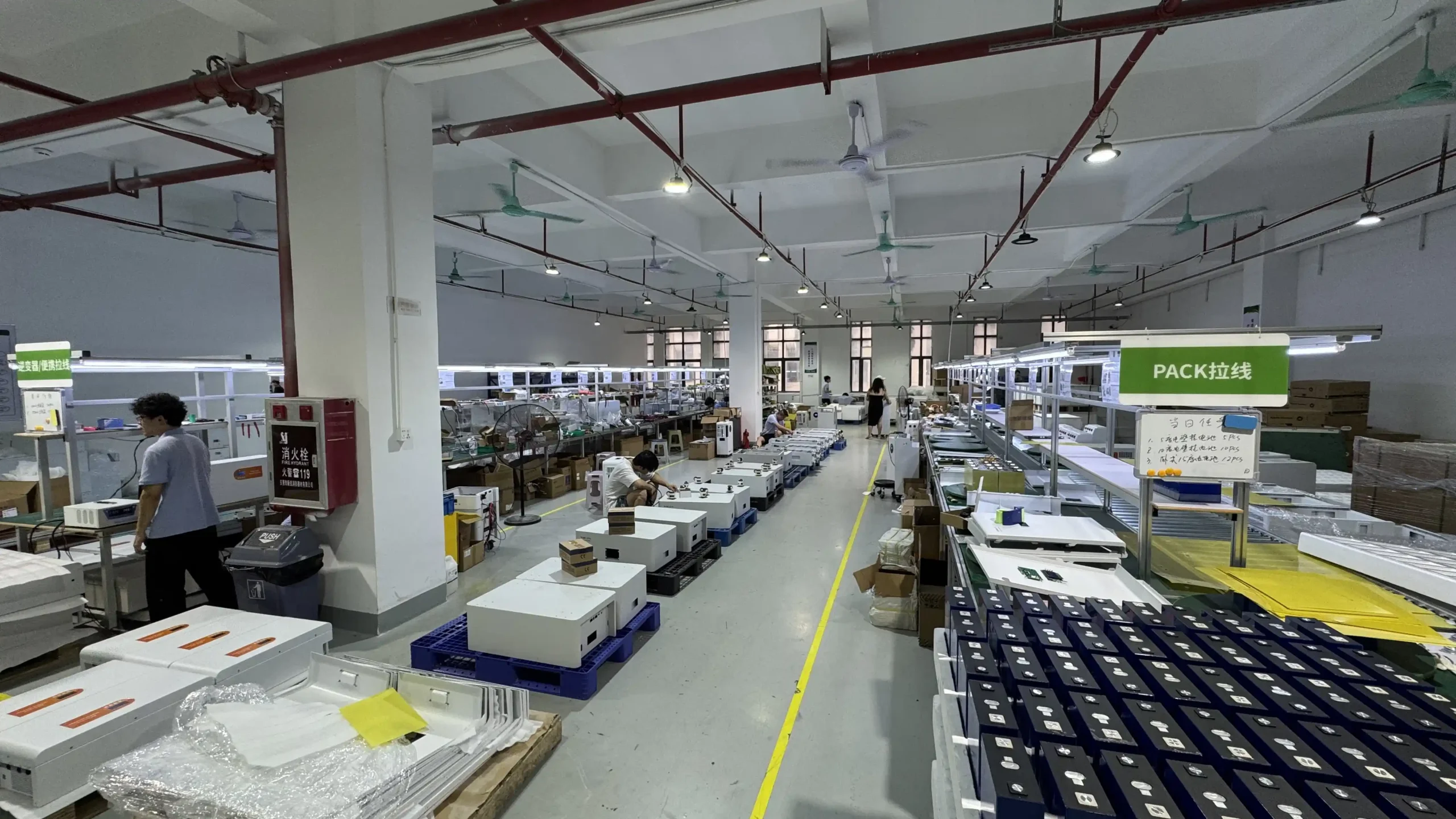
Its focus is B2B battery and energy-storage manufacturing for distributors, solar companies, private-label brands, and OEM/ODM customers.
Residential Battery Focus
The residential portfolio covers LiFePO4 battery systems across several product architectures, including wall-mounted, stackable, high-voltage, and integrated residential ESS formats.
Buyers looking at actual product configurations can review VoltCrave Power’s home residential energy storage solutions.
B2B Relevance
For distributors and private-label customers, the important distinction is that the business relationship is built around product sourcing and manufacturing cooperation rather than distributing a fixed consumer brand ecosystem.
This can be relevant when buyers require:
- Private-label residential batteries
- Multiple product architectures
- Market-specific configurations
- Battery and inverter integration
- Long-term product-line development
Best fit: distributors, OEM/ODM buyers, private-label energy brands, solar companies, and B2B ESS customers.
Home Battery Manufacturer vs Energy Storage System Provider
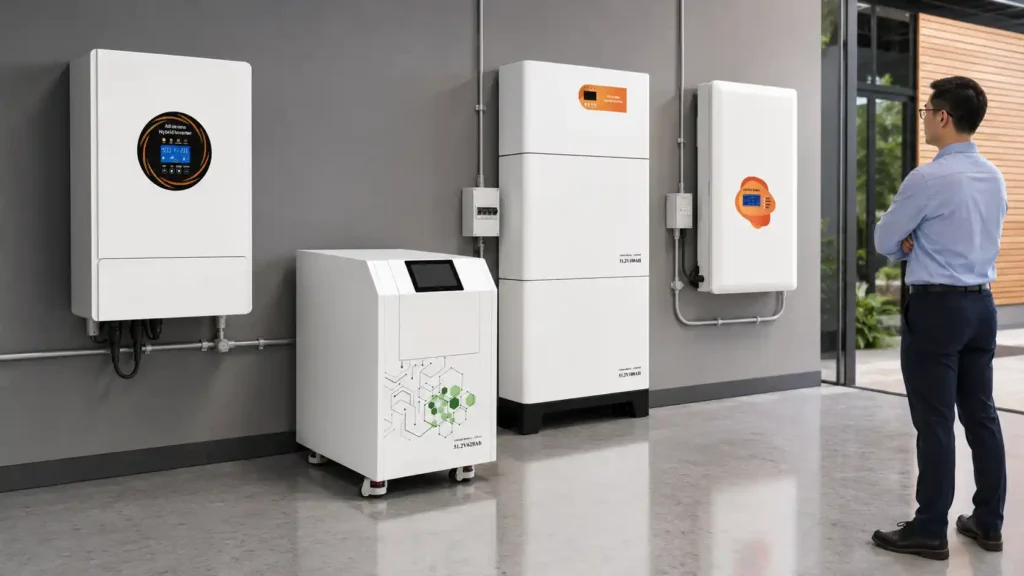
The term home battery manufacturer can describe several very different businesses.
Understanding these differences is more useful than treating every company on a Top 10 list as interchangeable.
Battery Manufacturers
Companies with deep battery manufacturing backgrounds typically focus strongly on cell, module, pack, battery-management, and battery-platform technology.
LG Energy Solution and BYD represent examples where battery expertise extends well beyond residential storage.
Their value may be strongest for buyers interested in battery technology, system integration, scalability, and established energy-storage platforms.
Integrated Residential Energy Brands
Tesla, Enphase, Huawei, sonnen, and Generac place greater emphasis on a complete residential energy ecosystem.
Depending on the company, this can combine:
- Battery storage
- Inverters
- Solar
- Backup controls
- Energy management
- Monitoring
- Smart loads
- Installer platforms
For installers, an integrated ecosystem can simplify system design.
For distributors wanting to combine batteries with multiple third-party products, however, a more open architecture may sometimes be preferable.
Modular Battery and ESS Providers
Companies such as Pylontech provide residential battery platforms designed to work within a wider solar-storage ecosystem.
Compatibility with external inverter platforms becomes especially important in this business model.
B2B and OEM-Oriented Manufacturers
A B2B manufacturer addresses a different buyer requirement.
The customer may not want to distribute another company’s brand. Instead, the objective may be to build a residential battery product line under the buyer’s own brand or configuration.
In that case, manufacturing flexibility, technical communication, compatibility, certification support, and long-term product availability become more relevant than consumer brand recognition.
How to Compare Home Battery Manufacturers
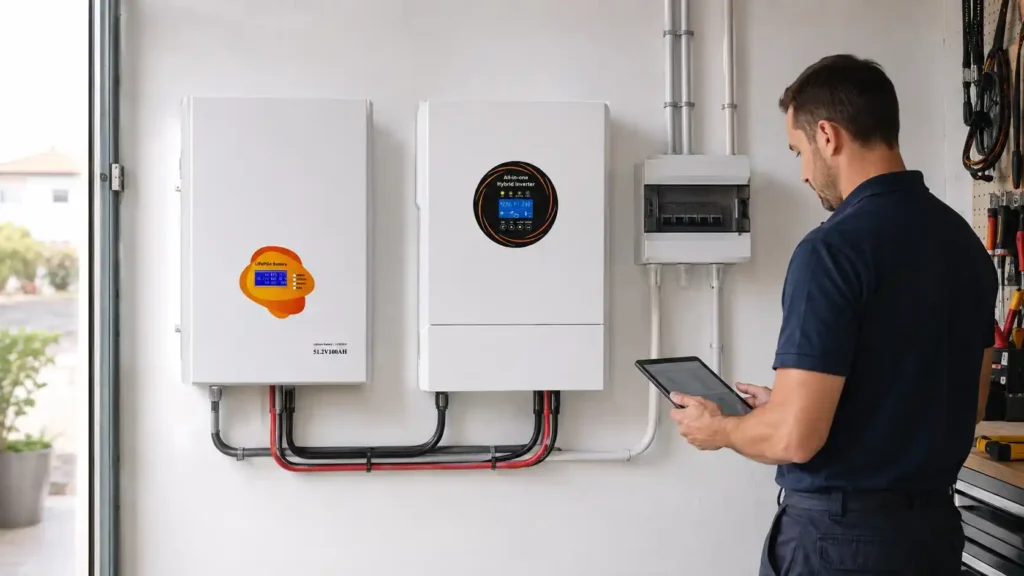
Brand visibility alone does not identify the right residential storage partner.
For B2B buyers, five areas provide a more useful comparison framework.
Product and System Portfolio
Start with the type of residential storage the company actually offers.
Important distinctions include:
- Low-voltage vs high-voltage batteries
- Wall-mounted vs stackable architecture
- Battery-only vs integrated ESS
- AC-coupled vs DC-coupled design
- Single-phase vs three-phase applications
- Modular capacity expansion
- Backup capability
- Solar integration
The right platform depends on your target market and customer type.
An installer may prefer a tightly integrated system, while a distributor serving multiple inverter brands may place greater value on battery compatibility.
Battery Technology
LiFePO4 is now widely used across residential storage because of its cycle-life potential and thermal stability.
However, battery chemistry alone does not determine product quality.
Buyers should also consider:
- Cell consistency
- BMS architecture
- Thermal design
- Pack construction
- Operating conditions
- Charging and discharging strategy
- Product-specific cycle-life test conditions
Avoid comparing manufacturers solely using a headline cycle-life number unless the test conditions are also known.
Inverter and System Compatibility
This factor becomes particularly important when the battery and inverter come from different manufacturers.
Check whether the battery platform has validated compatibility with the inverter brands used in your market.
Communication protocols, battery voltage range, current capability, BMS communication, firmware, and approved compatibility lists can all affect system integration.
A technically strong battery does not automatically create a reliable residential ESS if the inverter and battery cannot communicate correctly.
Certification Capability
Certification requirements vary by product architecture and market.
Instead of asking whether a manufacturer simply “has certifications,” B2B buyers should determine whether the specific product model and configuration have the documentation required for the intended country and sales channel.
Relevant documentation can include battery safety, system safety, EMC, transportation, environmental, and regional requirements depending on the product.
VoltCrave Power maintains a dedicated overview of its energy storage certification and compliance resources.
Detailed document verification should be completed later during supplier evaluation rather than turning the initial manufacturer comparison into a full compliance audit.
B2B and OEM Support
OEM capability is not simply the ability to print a logo.
For deeper residential ESS programs, buyers may require support across:
- Battery configuration
- BMS communication
- Inverter compatibility
- Enclosure options
- Firmware
- Packaging
- Documentation
- Product validation
Customization depth should match the actual business requirement.
A mature existing platform may be more appropriate for a distributor entering a new market, while an established private-label brand may require deeper product differentiation.
Manufacturing-oriented buyers can review VoltCrave Power’s advanced battery and ESS manufacturing capabilities for additional context.
Which Home Battery Manufacturer Type Fits Your Business?
There is no universal “best” home battery manufacturer.
The best fit depends on how your company intends to sell, install, or integrate the product.
Distributors
Distributors should generally prioritize:
- Stable product availability
- Product-range continuity
- Technical documentation
- Multiple capacity options
- After-sales support
- Market compatibility
If the distributor intends to build its own brand, OEM capability becomes substantially more important.
Residential Installers
Installers usually benefit from:
- Straightforward commissioning
- Battery-inverter compatibility
- Clear installation documentation
- Monitoring tools
- Local technical support
- Reliable replacement and warranty processes
Integrated ecosystems from companies such as Tesla, Enphase, Huawei, sonnen, and Generac can be attractive in this context.
Private-Label Brands
Private-label companies should look beyond consumer brand recognition.
Their priorities are more likely to include:
- Existing manufacturing platforms
- Customization options
- BMS and inverter integration
- Certification support
- Packaging and documentation
- Long-term manufacturing cooperation
The ideal supplier may therefore be very different from the manufacturer that dominates consumer search results.
Solar and Energy Storage Companies
Companies already selling solar equipment, inverters, or batteries should examine how easily a home battery can fit into their existing ecosystem.
An open modular battery platform may be preferable where multiple inverter brands must be supported.
An integrated ESS can be more appropriate where the objective is to deliver a standardized complete home-energy package.
From Manufacturer Comparison to Supplier Evaluation
A Top 10 list should help buyers answer the first question:
Which home battery manufacturers should we compare?
Once several potential suppliers have been identified, the next question becomes much more specific:
Can this manufacturer reliably support our actual B2B project?
That stage requires deeper review of engineering capability, production processes, quality control, certifications, OEM/ODM scope, system compatibility, samples, and after-sales support.
Rather than duplicating that procurement process here, the next step is our detailed resource on how to evaluate a home battery storage manufacturer.
This separation is intentional:
This article → identifies and compares manufacturers.
Supplier evaluation article → verifies shortlisted manufacturing partners.
FAQs
Who are the leading home battery manufacturers in 2026?
Major companies in residential energy storage include Tesla, BYD, LG Energy Solution, Enphase, Huawei Digital Power, sonnen, Generac, Pylontech, Panasonic, and B2B-oriented manufacturers such as VoltCrave Power.
They should not be treated as identical suppliers because their business models range from integrated consumer energy ecosystems to battery manufacturing and OEM/ODM production.
What should B2B buyers look for in a home battery manufacturer?
Start with the manufacturer’s residential product portfolio, battery technology, inverter compatibility, model-specific certification support, business model, technical support, and ability to serve your intended distribution or installation channel.
Is a home battery manufacturer the same as an ESS provider?
Not always.
A battery manufacturer may specialize in cells, modules, packs, or battery cabinets, while an ESS provider can integrate batteries with inverters, energy-management software, switching equipment, and monitoring.
Some companies operate across both categories.
Is LiFePO4 the best battery chemistry for residential energy storage?
LiFePO4 is widely used in residential ESS because of its thermal-stability characteristics and cycle-life potential.
However, actual product performance depends on the complete system, including cell quality, BMS, thermal management, pack design, operating temperature, depth of discharge, and charging strategy.
Should distributors choose an established brand or an OEM manufacturer?
That depends on the business model.
A distributor that wants to sell an established branded ecosystem may prefer a recognized residential energy brand.
A distributor building its own product line will generally place greater importance on OEM/ODM capability, customization, documentation, manufacturing support, and product continuity.
How important is inverter compatibility for a home battery?
It is critical whenever the battery and inverter are supplied separately.
Battery voltage, current capability, communication protocol, BMS firmware, and inverter settings must all be compatible. Buyers should review the manufacturer’s approved compatibility information for the exact product combination.
Do all home battery models from the same manufacturer have the same certifications?
No.
Certification and compliance documentation should be reviewed at the exact model and configuration level. A company’s general certification experience does not mean every product automatically carries the same approvals.
How do I evaluate a home battery manufacturer after creating a shortlist?
Move from manufacturer comparison to supplier due diligence. Review engineering capability, manufacturing processes, quality systems, documentation, product samples, compatibility, certification support, after-sales processes, and the actual scope of OEM or ODM cooperation.
Conclusion
The home battery market in 2026 includes several very different types of manufacturers.
Tesla, Enphase, Huawei, sonnen, and Generac emphasize integrated residential energy ecosystems.
BYD, LG Energy Solution, and Pylontech bring stronger battery or modular storage specialization.
Panasonic remains an important residential storage reference, although buyers should now verify regional availability carefully.
VoltCrave Power represents a different B2B model for distributors, solar companies, private-label brands, and buyers seeking residential battery manufacturing cooperation.
The correct choice therefore depends less on which company is “number one” and more on what your business needs:
an established branded ecosystem, a modular battery platform, an integrated residential ESS, or an OEM manufacturing partner.
For buyers ready to move from general manufacturer research into a specific residential ESS project, you can contact VoltCrave Power for B2B residential energy storage sourcing.
Need help matching this topic to a real battery project?
Send your target application, capacity range, certification market, and order plan. VoltCrave can recommend a practical product direction.