
Quick Answer: What Is a Commercial Battery Energy Storage System?
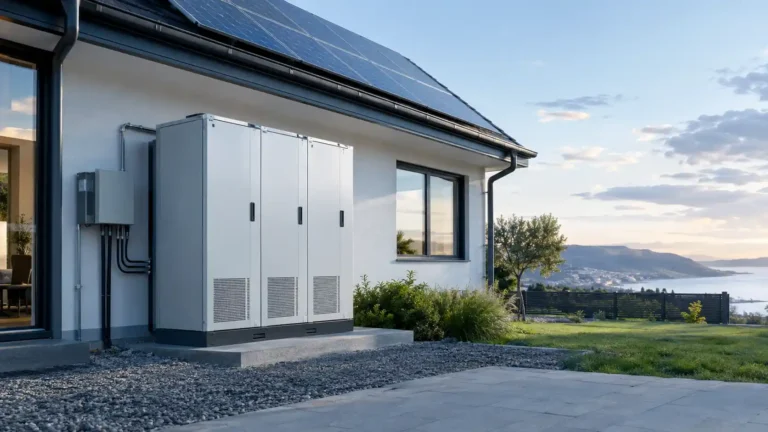
A commercial battery energy storage system, often called commercial BESS, is a battery-based system designed to store electrical energy for commercial buildings, factories, solar projects, EV charging stations, microgrids, and industrial facilities.
Unlike small residential batteries, a commercial BESS is normally designed around a site’s load profile, grid connection, tariff structure, power quality requirements, and operating strategy. It may charge from the grid, solar PV, wind, generators, or other distributed energy resources, then discharge when the site needs power, cost reduction, backup, or grid support.
Commercial BESS projects are usually evaluated by three practical questions:
- Can the system deliver the required power in kW?
- Can it store enough usable energy in kWh?
- Can the control system dispatch the battery at the right time without damaging the battery or disrupting site operations?
For B2B buyers, the best commercial BESS is not always the largest system. It is the system that matches the application, performs reliably under real operating conditions, and is supported by a supplier with proven engineering, documentation, testing, and after-sales capability.
Why Commercial BESS Demand Is Growing
Commercial and industrial users are adopting battery storage because electricity cost and power reliability are becoming more complex. Many businesses now face higher peak demand charges, time-of-use tariffs, grid constraints, solar export limitations, and stricter resilience requirements.
A commercial BESS can support several business goals:
- Reduce demand charges by discharging during peak load events
- Shift energy consumption from high-price periods to lower-price periods
- Store excess solar energy for later use
- Provide backup power for critical loads
- Support EV fast charging where grid capacity is limited
- Reduce diesel generator runtime in hybrid power systems
- Improve power availability for remote or weak-grid sites
- Support microgrid operation with solar, storage, and generator assets
The U.S. Department of Energy notes that battery energy storage can be used for peak shaving, load shifting, and other utility bill management functions. For commercial buyers, these use cases are often the starting point for a BESS business case.
How a Commercial BESS Works
A commercial BESS charges, stores, and discharges energy according to a defined operating strategy.
Charging
The system may charge from:
- The utility grid during low-cost periods
- Solar PV when generation exceeds site consumption
- Wind or other renewable generation
- A generator in hybrid power applications
- A microgrid controller during optimized dispatch
During charging, the PCS converts AC electricity into DC electricity suitable for the battery. The BMS monitors cell voltage, current, temperature, SOC, and protection limits.
Storage
Energy is stored in battery modules or racks. For commercial BESS, LiFePO4 chemistry is widely used because of its thermal stability, long cycle life, and suitability for stationary energy storage applications.
The system does not usually use the full nameplate capacity. A supplier may define a usable SOC window to protect battery life, maintain reserve capacity, or meet warranty conditions.
Discharging
When the site requires power, the PCS converts DC battery power into AC power. The EMS decides when to discharge based on load, tariff, solar production, backup reserve, demand target, or operator commands.
For example:
- During a demand peak, the BESS discharges to keep grid import below a target level.
- During evening hours, the BESS discharges stored solar energy to reduce grid purchases.
- During an outage, the BESS supplies selected critical loads if the system is designed for backup or islanding.
Key Components of a Commercial Battery Energy Storage System
Battery cells and modules
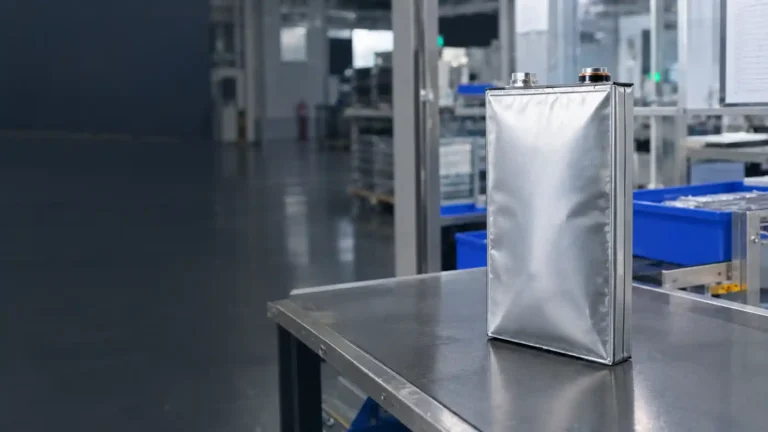
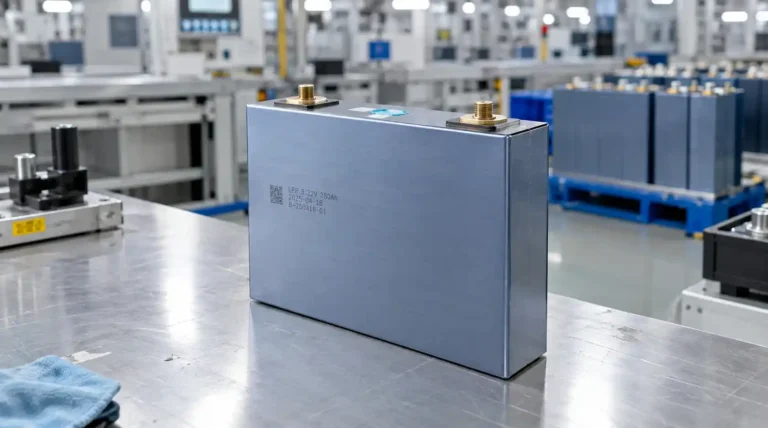
Battery cells are the core energy storage units. Commercial BESS projects commonly use LiFePO4 cells because they offer strong safety characteristics, long service life, and predictable behavior in stationary systems.
Buyers should verify:
- Cell chemistry
- Cell grade and traceability
- Cycle life conditions
- Capacity consistency
- Supplier qualification process
- Test reports and inspection records
For projects requiring battery cell procurement or pack customization, review VoltCrave Power’s LiFePO4 battery cell products and custom battery solution capabilities.
Battery racks or cabinets
Battery modules are assembled into racks, cabinets, or containers. The mechanical design affects:
- Installation efficiency
- Maintenance access
- Thermal performance
- Safety separation
- Cable layout
- Future expansion
- Transportation and site handling
A good cabinet design should not only look organized. It should also support airflow, sensor placement, fire safety integration, and safe service procedures.
BMS
The battery management system monitors and protects the battery. It tracks cell voltage, temperature, current, SOC, SOH, and alarm conditions.
The BMS should communicate battery limits to the PCS and EMS. If the BMS only provides basic protection but does not share dynamic operating limits, the system may suffer from poor dispatch accuracy or unexpected derating.
For a deeper technical explanation, see the BMS vs PCS vs EMS guide.
PCS
The power conversion system converts electricity between the DC battery side and the AC site or grid side. It determines the system’s charge and discharge power capability.
Important PCS specifications include:
- AC rated power
- DC voltage range
- Conversion efficiency
- Continuous and peak output
- Reactive power capability
- Temperature derating
- Grid connection requirements
- Protection functions
- Communication interface
The PCS should be selected together with the battery, not after the battery has already been chosen.
EMS
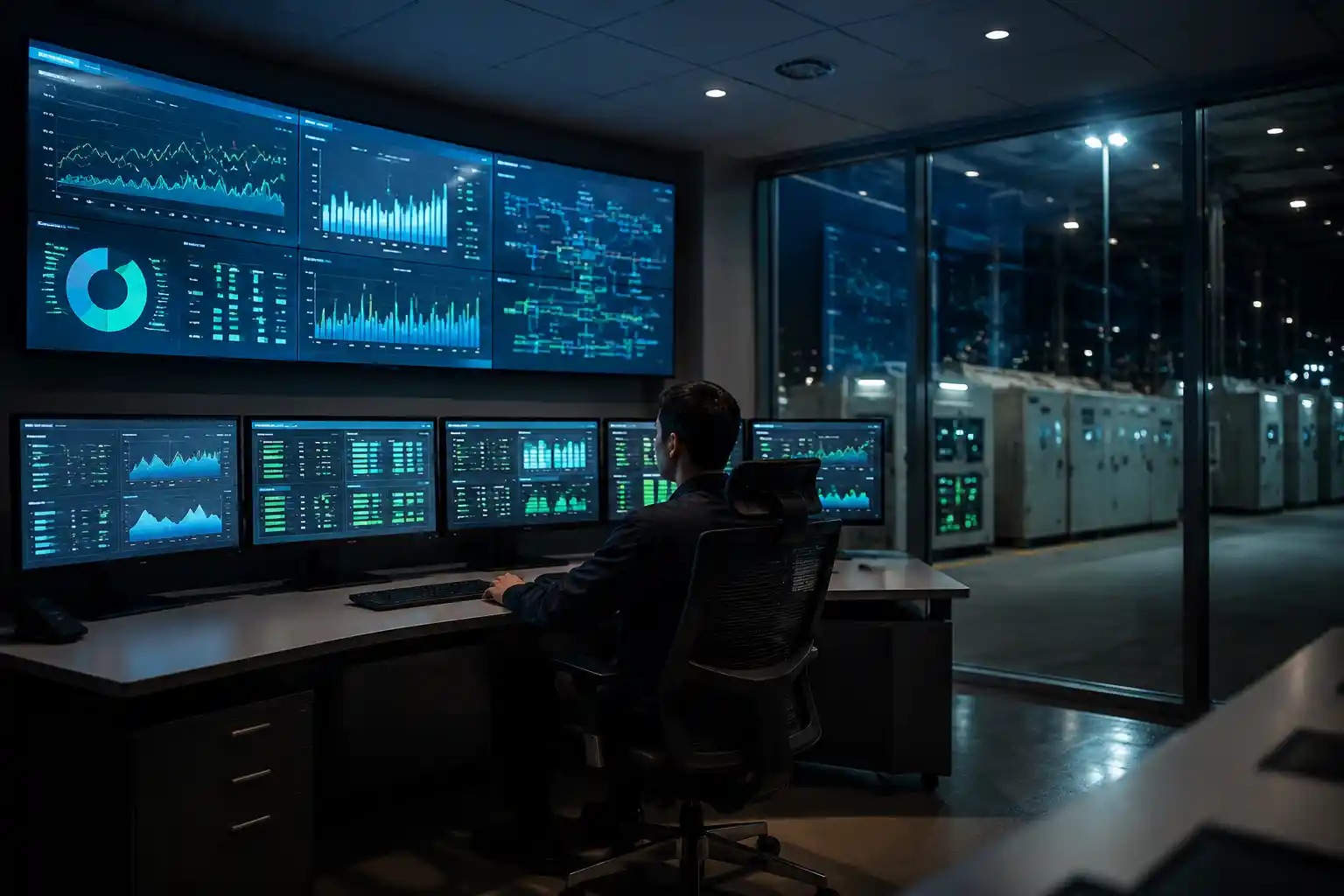
The energy management system coordinates the entire BESS. It decides when the battery should charge, discharge, hold reserve, or stop operation.
The EMS may use:
- Site load data
- Utility tariff settings
- Solar production data
- Battery SOC
- PCS availability
- Demand targets
- Backup reserve rules
- Operator settings
For commercial projects, the EMS is often the difference between a battery that merely stores energy and a system that actually delivers financial value.
Thermal management
Commercial BESS performance depends heavily on temperature. The thermal management system may use air cooling, liquid cooling, HVAC, fans, ducts, sensors, or cabinet-level thermal controls.
Ask the supplier for:
- Operating temperature range
- Power derating curve
- Cooling strategy
- Auxiliary power consumption
- Temperature sensor locations
- Maintenance requirements
Fire safety and protection
Commercial BESS projects require careful safety design. The supplier should provide documentation for electrical protection, fire detection, emergency stop, fault isolation, system shutdown, and applicable certifications.
Important safety-related items include:
- DC protection
- AC protection
- Insulation monitoring
- Overcurrent protection
- Emergency stop logic
- Fire detection
- Thermal runaway mitigation strategy
- System-level test documentation
- Installation and maintenance procedures
Monitoring and communication
A commercial BESS should provide clear data for operators and owners. Useful monitoring includes:
- Charge and discharge power
- SOC and SOH
- Energy throughput
- Alarm history
- Temperature data
- Availability
- Peak shaving performance
- Solar self-consumption
- Efficiency
- Maintenance events
Remote monitoring is valuable, but local control and fallback behavior should also be defined. A system should not become uncontrollable just because cloud communication is interrupted.
Commercial BESS Applications
Peak shaving
Peak shaving reduces facility demand by discharging the battery when load approaches a target threshold. This can reduce demand charges in tariff structures where customers pay based on maximum power demand.
Peak shaving requires accurate load data and fast control. If the EMS reacts too slowly or the battery lacks sufficient power, the site may still set a new billing peak.
See the detailed Peak Shaving Energy Storage guide for a deeper discussion.
Time-of-use energy shifting
In time-of-use applications, the battery charges during lower-cost periods and discharges during higher-cost periods. The value depends on the price spread, available battery capacity, system efficiency, and cycle cost.
This application works best when the tariff spread is large enough to cover energy losses, battery degradation, and operating costs.
Solar self-consumption
Commercial buildings with solar PV may generate more power than they consume during some daytime periods. A BESS stores excess solar energy and discharges later when the building load increases or solar output decreases.
Buyers should compare:
- PV generation profile
- Site consumption profile
- Export compensation
- Battery charge power
- Evening load
- Seasonal production changes
Backup power
Commercial BESS can provide backup power for selected critical loads. However, backup operation requires more than battery capacity. The design must include appropriate switchgear, controls, islanding functions, and protection coordination.
Critical-load backup should define:
- Which loads must remain online
- Required backup duration
- Transfer time
- Motor starting requirements
- Whether solar or generators operate during outage mode
- Minimum SOC reserve
EV charging support
Battery storage can support EV fast charging where grid capacity is limited or demand charges are high. The battery can charge at a lower rate and discharge during high-power charging events.
For EV charging sites, buyers should model:
- Charger power
- Daily charging sessions
- Queue behavior
- Utility service capacity
- Demand charges
- Battery recharge window
- Future charger expansion
Microgrids and weak-grid sites
In microgrids, a BESS can work with solar PV, generators, loads, and controllers to improve power reliability. The system may reduce fuel consumption, stabilize renewable output, and support critical operations.
For weak-grid or remote sites, the supplier must understand more than the battery cabinet. The complete system design should include grid conditions, generator operation, load priority, and control hierarchy.
Commercial BESS Sizing Factors
Sizing should start with the application and site data. The main variables are:
- Required power in kW
- Required usable energy in kWh
- Discharge duration
- Charge time
- Daily or annual cycles
- Depth of discharge
- Round-trip efficiency
- Temperature conditions
- Degradation over warranty life
- Backup reserve
- Future expansion
For a full sizing method, use the Commercial BESS Sizing Guide.
Common Buyer Mistakes
Comparing only nameplate kWh
Nameplate capacity does not equal usable AC energy. Buyers should ask for usable capacity, SOC window, efficiency, temperature assumptions, and end-of-warranty capacity.
Ignoring the load profile
A monthly bill is rarely enough for commercial BESS design. Peak shaving, solar shifting, and backup applications require interval data and operating simulation.
Treating the battery and PCS separately
A battery system may have enough energy but not enough power conversion capacity. The PCS must match the battery voltage range, site voltage, power requirement, and control strategy.
Underestimating EMS importance
Many BESS projects fail financially because dispatch logic is weak. The EMS must understand load data, tariff rules, SOC reserve, battery limits, and project priorities.
Choosing a supplier based only on price
Low-cost systems can become expensive if they lack documentation, certifications, warranty clarity, spare parts, or engineering support. Commercial BESS is a long-term operating asset, not a one-time equipment purchase.
How to Evaluate a Commercial BESS Supplier
Manufacturing capability
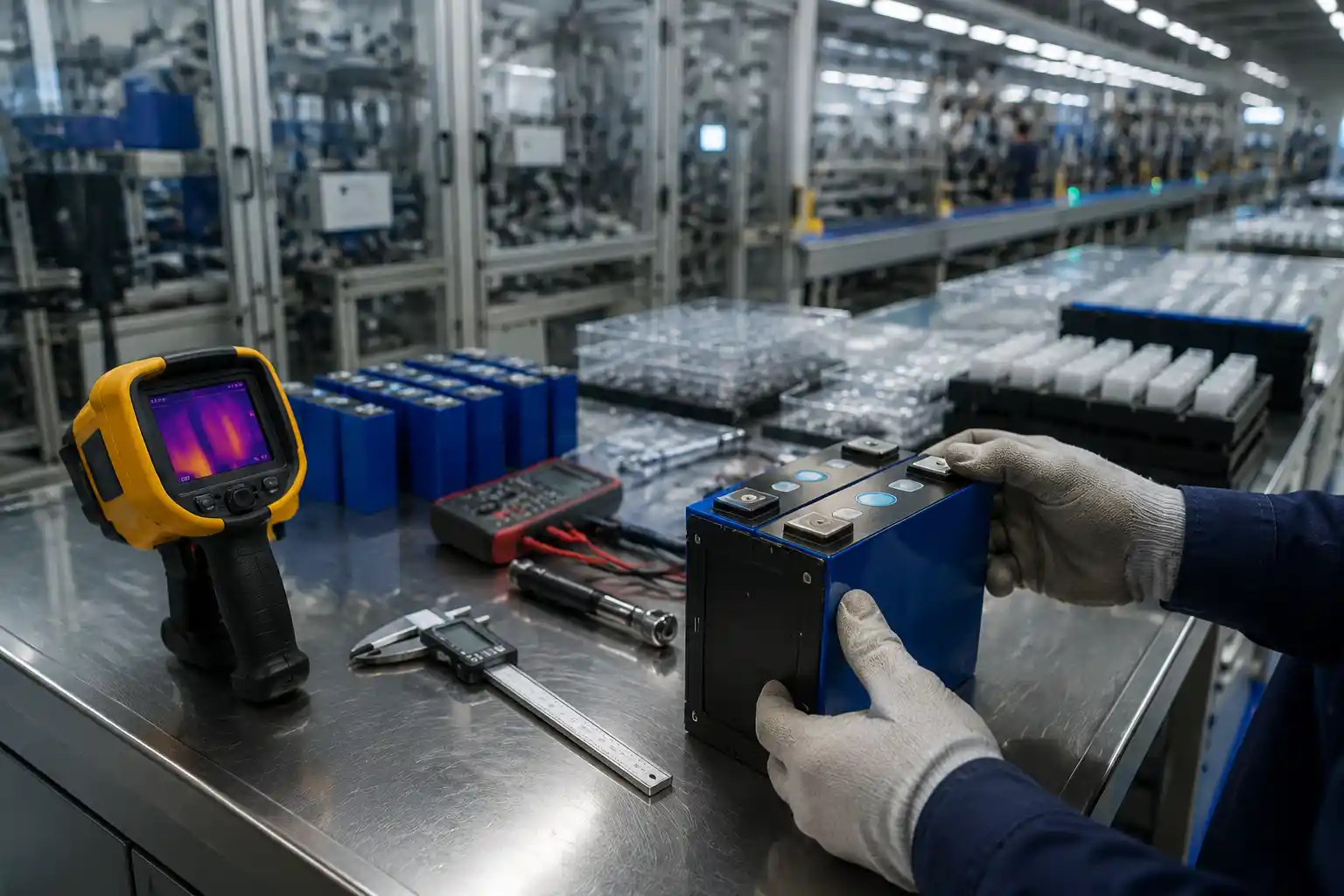
Confirm whether the supplier has direct control over battery cell selection, pack assembly, system integration, testing, and quality control. A trading company may offer attractive pricing but limited responsibility when integration problems occur.
Engineering support
A qualified supplier should help evaluate:
- Load profile
- Power and energy requirements
- Battery and PCS matching
- EMS dispatch strategy
- Installation environment
- Thermal design
- Communication protocols
- Safety and protection
Documentation quality
Request:
- Datasheets
- Single-line diagram
- Control architecture
- Communication map
- Installation manual
- Operation manual
- Maintenance schedule
- Test reports
- Warranty terms
- Certification documentation
Testing and validation
Ask about:
- Incoming cell inspection
- Module testing
- Rack testing
- BMS validation
- PCS integration testing
- Thermal testing
- Factory acceptance test
- Site commissioning support
Warranty and after-sales
Commercial buyers should clarify:
- Warranty period
- Capacity retention guarantee
- Cycle and throughput assumptions
- Response time
- Spare parts
- Remote diagnostic support
- On-site support availability
- Responsibility for integrated system failures
Commercial BESS RFQ Checklist
Before requesting a quote, prepare:
- Project location and grid voltage
- Primary application
- Load profile data
- PV generation data, if applicable
- Utility tariff and demand charges
- Required power in kW
- Required usable energy in kWh
- Backup duration, if needed
- Installation environment
- Expansion requirements
- Certification requirements
- Communication requirements
- Monitoring requirements
- Warranty expectations
- Commissioning and after-sales requirements
A clear RFQ helps suppliers propose a real solution rather than a generic product model.
Why VoltCrave Power for Commercial Energy Storage Projects
VoltCrave Power supports global energy storage buyers with LiFePO4 battery cells, custom battery packs, portable power stations, residential ESS products, and commercial energy storage solutions.
For commercial BESS projects, buyers need more than battery capacity. They need a supplier that understands battery selection, BMS integration, PCS matching, EMS coordination, manufacturing quality, and long-term support.
VoltCrave Power can support:
- LiFePO4 battery cell supply
- Custom battery pack development
- Commercial energy storage system design support
- OEM and ODM cooperation
- Battery system integration
- Project-specific product recommendations
- Global buyer communication and documentation
Explore the Battery Energy Storage System Manufacturer guide or contact VoltCrave Power to discuss a commercial energy storage project.
FAQs
What is the difference between commercial BESS and residential battery storage?
Commercial BESS is usually larger, more application-specific, and more dependent on site load data, tariff rules, PCS capacity, EMS dispatch, and safety documentation. Residential systems are often standardized around home backup and solar self-consumption.
What battery chemistry is commonly used in commercial BESS?
LiFePO4 is widely used for stationary energy storage because of its thermal stability, cycle life, and safety advantages compared with many other lithium battery chemistries.
How do I know what size commercial BESS I need?
Start with the application, then analyze the load profile, required power, required discharge duration, usable SOC, efficiency, temperature, degradation, and future expansion needs.
Can commercial BESS work with solar PV?
Yes. A commercial BESS can store excess solar energy and discharge it later. The system design must match PV output, site load, inverter architecture, export limits, and the desired dispatch schedule.
Is commercial BESS suitable for backup power?
Yes, if the system is designed for backup operation. Backup requires the correct switchgear, control logic, critical-load separation, reserve SOC, and protection coordination.
What should buyers ask a BESS supplier first?
Ask for a complete system proposal based on your load profile and application, including battery capacity, PCS power, EMS functions, usable energy, efficiency, operating limits, warranty, and documentation.
Final Takeaway
A commercial battery energy storage system is not just a large battery. It is an integrated power asset combining battery cells, racks, BMS, PCS, EMS, thermal management, protection, monitoring, and supplier engineering.
The strongest projects start with the site application and load profile, then match the battery size, power conversion capacity, control strategy, and warranty conditions to the actual business case.
For B2B buyers, the right supplier should be able to explain not only what the system is, but how it will perform, how it will be tested, how it will be supported, and how it will create value over time.
References
- Battery Energy Storage System Evaluation Method – U.S. Department of Energy
- On-Site Energy Storage Decision Guide – U.S. Department of Energy Better Buildings
- Battery Energy Storage Systems Report – U.S. Department of Energy
Need help matching this topic to a real battery project?
Send your target application, capacity range, certification market, and order plan. VoltCrave can recommend a practical product direction.