Growing Demand for Safer and Longer-Lasting Portable Energy Solutions
For distributors, outdoor equipment brands, and energy solution providers, battery chemistry is an important factor when selecting portable power stations. It affects product safety, expected service life, product positioning, and the potential cost of after-sales support.
LiFePO4 (lithium iron phosphate) batteries have attracted attention because they offer higher thermal stability than many other lithium-ion chemistries and are commonly selected for applications requiring frequent charging and discharging. These characteristics make LiFePO4 portable power stations relevant to outdoor power supply, emergency backup, camping, RV travel, and mobile working environments.
Market research also indicates that portable power stations are becoming an established product category. According to Grand View Research’s Portable Power Station Market Report, the global market was estimated at USD 4.2 billion in 2025, with a projected value of USD 19.9 billion by 2033. The report identifies emergency power as the largest application segment, accounting for 48.6% of market revenue in 2025.
These figures cover the overall portable power station market, rather than LiFePO4 products alone. However, they provide useful context for distributors evaluating opportunities across backup power and outdoor energy applications.
For businesses entering this market, selecting a suitable battery technology is only one part of the decision. Buyers also need to evaluate product specifications, manufacturing consistency, safety documentation, and the supplier’s ability to support long-term orders.

What Makes LiFePO4 Battery Technology Different From Other Lithium-Ion Chemistries?
LiFePO4 batteries use lithium iron phosphate as their cathode material. They are a type of lithium-ion battery, just like NMC batteries, which use nickel, manganese, and cobalt in the cathode.
The two chemistries have different performance characteristics. LiFePO4 is generally associated with higher thermal stability and longer cycle life, while NMC typically offers higher energy density.
A comparative review published in Future Batteries in December 2024 examines these differences in terms of electrochemical properties, thermal behavior, cycle life, and cost. See Navigating Battery Choices: A Comparative Study of Lithium Iron Phosphate and Nickel Manganese Cobalt Battery Technologies.
Key Differences Between LiFePO4 and NMC Batteries
| Comparison Factor | LiFePO4 (LFP) | NMC |
|---|---|---|
| Cathode material | Lithium iron phosphate | Nickel manganese cobalt oxide |
| Thermal stability | Generally higher | Generally lower than LFP |
| Energy density | Generally lower | Generally higher |
| Cycle life | Often preferred for applications requiring frequent cycling | Depends on cell chemistry and operating conditions |
| Main advantage | Thermal stability and cycle-life characteristics | Higher energy density and compact design |
| Application priorities | Long-term cycling and safety-focused applications | Applications prioritizing energy density and weight |
For portable power station manufacturers, this difference affects product design. An LFP battery may require more physical space to provide the same nominal energy as an NMC battery, depending on the cells selected. NMC can be advantageous when weight and enclosure size are major design constraints.
For B2B buyers, neither chemistry is automatically the better choice for every product. The decision should reflect the intended application, required capacity, product weight, expected cycling frequency, and target selling price.
Understanding these differences also helps distributors explain why two portable power stations with similar capacities may have different weights, dimensions, and prices.
Why Are LiFePO4 Portable Power Stations Becoming More Popular?
The growing interest in LiFePO4 portable power stations is connected to several practical requirements in the portable energy market. Battery durability, thermal stability, and suitability for repeated use are particularly relevant to buyers developing products for outdoor and backup power applications.
1. Longer Lifespan Can Reduce Replacement Costs
Battery degradation affects how much energy a portable power station can deliver over time. For products used frequently, the number of charge and discharge cycles a battery can withstand is an important purchasing consideration.
LiFePO4 batteries are commonly selected for applications requiring repeated cycling because of their cycle-life characteristics.
For distributors and retailers, longer battery service life can help reduce the likelihood of premature battery replacement and associated after-sales costs. It can also make a product more attractive to customers who expect to use their equipment regularly.
However, cycle-life figures should not be compared without examining their test conditions.
Buyers should ask manufacturers to specify:
- The stated number of charge and discharge cycles.
- Depth of discharge (DoD) during testing.
- Charge and discharge rates.
- Testing temperature.
- Remaining battery capacity or SOH at the end of the test.
A 2024 study, Life Cycle Testing and Reliability Analysis of Prismatic Lithium-Iron-Phosphate Cells, investigated how ambient temperature, discharge rate, and depth of discharge affect LiFePO4 cell degradation.
The findings reinforce an important point for procurement teams: battery lifespan depends on operating conditions, not simply the chemistry printed on a product specification sheet.
A supplier should therefore provide cycle-life data with clearly stated testing conditions instead of presenting a cycle count without supporting information.
2. Improved Thermal Stability Supports Safety-Focused Applications
Safety is another reason LiFePO4 technology is widely used in portable energy products.
Compared with many NMC chemistries, LiFePO4 has a more thermally stable cathode structure. This can reduce certain thermal risks, although it does not eliminate the possibility of overheating, internal short circuits, or thermal runaway.
A comparative battery safety study published by researchers from Underwriters Laboratories and Stress Engineering Services, available through NASA’s technical document archive, examined lithium-ion cells with different cathode chemistries under thermal and electrical abuse conditions. The study found that tested LFP cells exhibited superior thermal stability, while also showing that cell quality and protective design affect safety performance.
For portable power station manufacturers, battery chemistry must work together with an appropriate Battery Management System (BMS).
The BMS monitors battery operating conditions and manages functions such as:
- Overcharge and over-discharge protection.
- Cell voltage monitoring.
- Charge and discharge current limits.
- Temperature monitoring.
- Cell balancing.
- Fault protection and system interruption.
Sandia National Laboratories’ technical material on battery management systems explains how voltage, current, temperature, and charge management functions contribute to battery safety and longevity.
For B2B buyers, these details are important when evaluating portable power station suppliers. A battery chemistry specification alone does not demonstrate that the finished product has adequate protection.
3. Better Suitability for Outdoor and Backup Power Applications
Portable power stations are used in environments where conventional electricity may not be readily available.
Common applications include:
- Camping and outdoor recreation.
- RV and camper power supply.
- Emergency electricity backup.
- Outdoor photography and mobile workstations.
- Construction and field operations.
- Temporary power for outdoor events.
- Solar-powered off-grid applications.
LiFePO4 battery technology is suitable for many of these applications because of its thermal stability and cycle-life characteristics.
However, the actual performance of a portable power station depends on the complete electrical system. Battery capacity, inverter output, charging methods, and protection functions all influence what the product can support.
For example, a portable power station with a large battery capacity may store substantial energy but still have a limited continuous AC output. Buyers should evaluate both watt-hours (Wh) and watts (W) when selecting products for different applications.
Solar charging is another consideration. A solar-compatible model must support the panel’s open-circuit voltage, operating voltage, current, and maximum input power. These parameters should be checked before connecting solar panels.
For outdoor equipment brands and distributors, offering different capacity and output configurations can help address the requirements of camping, RV, emergency backup, and professional users without relying on a single product configuration.
For distributors and wholesalers developing their product portfolios, explore our portable and outdoor power products to review solutions for different outdoor and backup power applications.
4. Growing Demand From Global Energy and Outdoor Markets
Portable power stations serve several markets, including emergency backup, outdoor recreation, off-grid applications, and professional field operations.
The Grand View Research market report identifies emergency power as the leading application segment in 2025, with a 48.6% revenue share. This indicates the importance of backup applications within the overall portable power station market.
Outdoor recreation also provides a relevant market indicator. According to the U.S. Bureau of Economic Analysis, the outdoor recreation economy contributed USD 704.2 billion in value added to the U.S. economy in 2025, representing 2.3% of national GDP. RVing, boating, fishing, and other outdoor activities contribute to this sector.
Source: BEA Outdoor Recreation Economic Statistics, U.S. and States, 2025.
Although outdoor recreation statistics do not directly measure portable power station sales, they help illustrate the size of the wider market in which outdoor power products are used.
For distributors and wholesalers, several product opportunities are worth considering:
Outdoor equipment distribution
Portable power stations can complement camping equipment, outdoor appliances, lighting products, and RV accessories.
Emergency backup products
Customers looking for backup electricity may prioritize battery capacity, continuous output, charging flexibility, and product reliability.
Solar energy applications
Solar-compatible portable power stations can be included in off-grid product portfolios, provided the charging input matches the intended solar panel configuration.
Private-label product development
Brands entering the portable power market may require different capacities, output configurations, product appearances, and packaging to suit their target customers.
For businesses developing these product lines, the next step is finding a supplier capable of delivering the required configuration consistently.
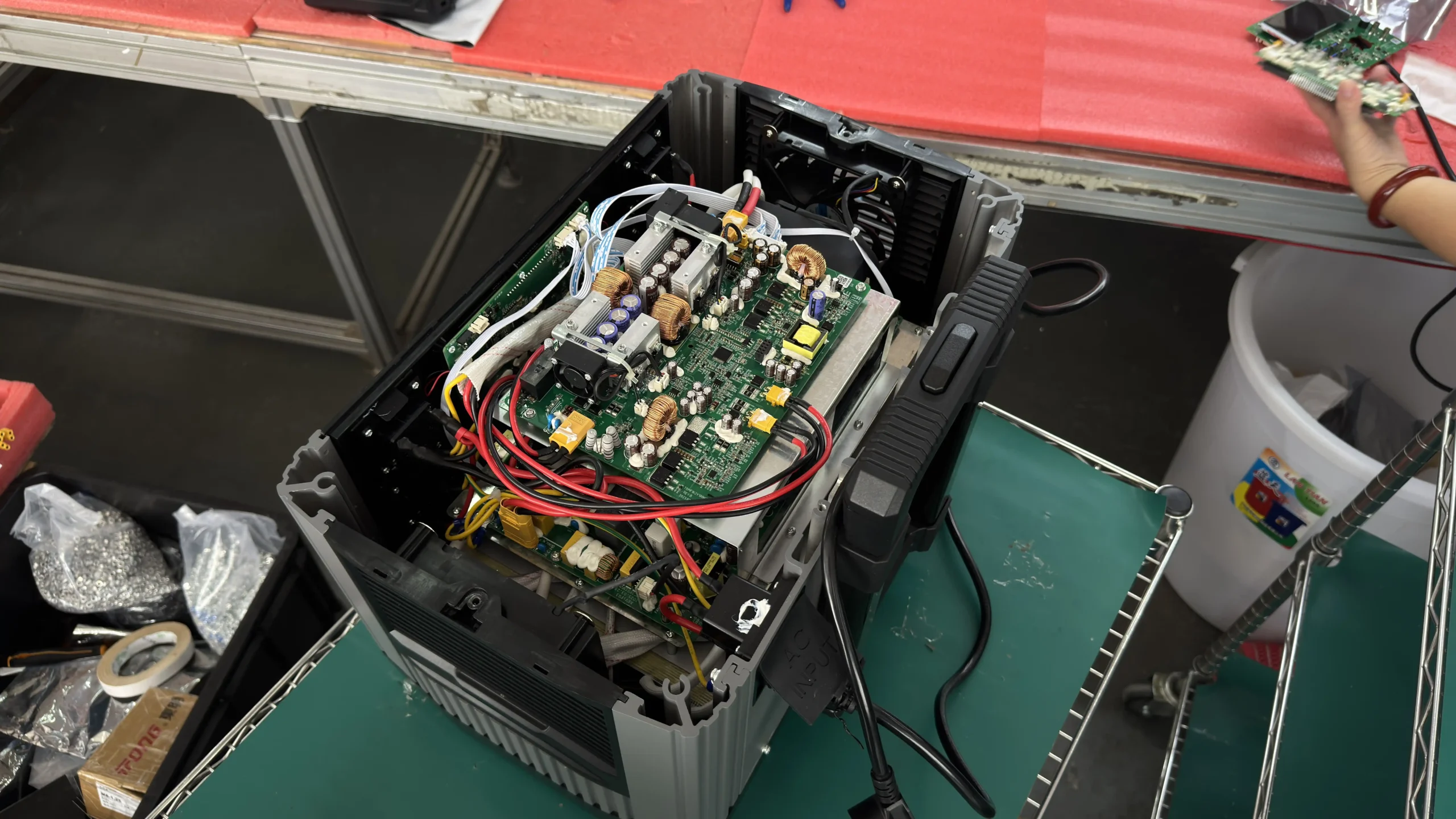
How to Choose a Reliable LiFePO4 Portable Power Station Supplier
Battery chemistry and product specifications determine whether a portable power station suits an application. The supplier’s manufacturing and quality management capabilities determine whether the product can be delivered consistently.
For distributors, importers, and private-label brands, supplier evaluation should cover battery technology, OEM/ODM support, and product-specific quality documentation.
Battery Technology and Manufacturing Capability
A reliable supplier should be able to explain the battery configuration and the electrical design of the portable power station.
Before placing an order, buyers should review:
- Battery cell chemistry and specifications.
- Battery pack configuration and nominal capacity.
- BMS protection functions.
- Charging and discharging limits.
- Inverter rated output and peak output.
- AC and DC interface specifications.
- Solar charging compatibility.
- Operating and storage temperature ranges.
It is also important to understand how the manufacturer controls battery quality during production.
Relevant inspection and testing procedures may include battery cell inspection, charging and discharging tests, BMS protection testing, output performance testing, and aging evaluation.
VoltCrave Power focuses on battery technology development and system integration for portable energy products, supporting distributors and brands with standard products and customized manufacturing services.
OEM and Private Label Support
Many international brands, distributors, and retailers prefer to sell portable power stations under their own branding.
A supplier’s OEM/ODM capabilities should match the actual customization requirements of the project.
Typical requirements include:
- Product appearance customization.
- Logo and packaging customization.
- Firmware optimization.
- Functional configuration adjustments.
- Market-specific product requirements.
There is a difference between adding a private-label logo to an existing product and developing a customized electrical configuration. Buyers should confirm which changes are available on an existing platform and which require additional engineering, testing, or tooling.
For businesses starting with standard products, VoltCrave Power provides inventory-based solutions with a minimum order quantity starting from 10–20 units.
For companies requiring OEM branding, private-label products, or customized solutions, the typical MOQ starts from 300–500 units, depending on product specifications and customization requirements.
This allows both smaller distributors and established brands to evaluate suitable purchasing arrangements according to their business requirements.
Quality Control and Certification Standards
Portable power stations contain rechargeable lithium batteries and electrical power conversion components. Buyers should therefore review relevant product and battery safety documentation before importing or distributing products.
Several standards and requirements may be relevant, depending on the product design and destination market.
IEC 62133-2
IEC 62133-2 specifies safety requirements and tests for portable sealed secondary lithium cells and batteries under intended use and reasonably foreseeable misuse.
Buyers should check whether the supplied test documentation covers the actual battery configuration used in the product.
UL 2743
The U.S. Consumer Product Safety Commission lists UL 2743, Standard for Portable Power Packs, among the relevant voluntary battery and power-pack safety standards.
For products entering the U.S. market, buyers should confirm which standards and certification requirements apply to the complete portable power station.
UN 38.3
Lithium batteries transported internationally are subject to applicable dangerous-goods transport requirements. Section 38.3 of the United Nations Manual of Tests and Criteria contains testing requirements for lithium cells and batteries.
UN 38.3 transport testing should not be confused with product safety certification. Buyers should request the relevant test summary and confirm that it corresponds to the battery type being shipped.
A supplier should also be able to provide relevant production quality records and model-specific testing documents.
For international buyers, the applicable requirements depend on the product configuration, destination country, and sales channel. A general statement that a supplier supports international certifications is not a substitute for checking the actual documents.
Comparing Manufacturers Before Placing an Order
After establishing the technical requirements, B2B buyers should compare manufacturers according to their business models, product focus, OEM/ODM capabilities, and long-term supply arrangements.
A company that mainly sells branded products may be suitable for distribution, while an OEM/ODM-oriented manufacturer may be more appropriate for businesses developing their own product lines.
For a more detailed comparison, see our article on portable power station manufacturers in China, which examines manufacturer business models, product focus, OEM/ODM capabilities, and supplier suitability for different B2B buyers.
This helps buyers move from understanding product requirements to identifying potential manufacturing partners.
Why LiFePO4 Battery Advantages Matter for Long-Term Business Growth
For businesses operating in the portable energy market, battery selection affects both product positioning and long-term operating costs.
A portable power station with LiFePO4 battery technology may be suitable for brands targeting customers who value repeated use, thermal stability, and longer battery service life.
However, the commercial value depends on the complete product configuration.
A distributor should consider whether the battery capacity matches the intended application, whether the inverter output supports the required equipment, and whether the supplier can maintain consistent specifications across repeat orders.
A product with a longer cycle-life rating may offer better lifecycle value, but buyers should also compare its initial purchase price, product weight, charging performance, warranty conditions, and after-sales requirements.
For private-label businesses, these factors influence product differentiation and the ability to maintain a competitive product range.
The most suitable product is therefore the one that balances battery performance, application requirements, manufacturing quality, and target-market expectations.
Why Choose VoltCrave Power as Your Portable Power Partner?
VoltCrave Power provides portable energy products and manufacturing support for global distributors, wholesalers, and brand partners.
Our portable power business focuses on:
- LiFePO4 battery technology.
- Battery management system integration.
- Portable energy product development.
- OEM and ODM customization.
- Production quality control.
- Flexible MOQ arrangements.
- Standard inventory and customized product options.
For businesses developing outdoor power products or expanding their portable energy portfolios, VoltCrave Power supports both standard inventory purchases and customized private-label projects.
Before requesting a quotation, buyers can prepare their target battery capacity, rated output power, charging requirements, application scenarios, expected order quantity, and branding requirements. This information helps establish a suitable product configuration and customization scope.
FAQs
What is a LiFePO4 Portable Power Station?
A LiFePO4 Portable Power Station is a rechargeable energy storage device that uses lithium iron phosphate battery cells to store electricity and supply AC or DC power. It is commonly used for camping, outdoor activities, emergency backup, RV applications, and mobile work.
Why are LiFePO4 portable power stations becoming more popular?
LiFePO4 portable power stations are gaining attention because LFP chemistry offers higher thermal stability than many NMC chemistries and is commonly selected for applications requiring frequent charging and discharging. These characteristics make it suitable for outdoor power and backup applications.
What are the main advantages of LiFePO4 batteries?
The main advantages include higher thermal stability, favorable cycle-life characteristics, and suitability for repeated charging and discharging. Actual battery performance depends on cell quality, temperature, charging conditions, and BMS design.
Is LiFePO4 better than NMC for portable power stations?
The choice depends on product requirements. LiFePO4 is often preferred when thermal stability and cycle life are priorities. NMC offers higher energy density in many designs, which can be useful when reducing product size and weight is important.
How long does a LiFePO4 Portable Power Station last?
Its service life depends on cell quality, depth of discharge, charge and discharge rates, operating temperature, and usage frequency. Buyers should request cycle-life test results with clearly stated test conditions and remaining-capacity thresholds.
Can LiFePO4 portable power stations be charged using solar panels?
Yes. Many models support solar charging, provided the solar panel’s voltage, current, and power ratings fall within the portable power station’s PV input specifications.
Can VoltCrave Power provide OEM portable power solutions?
Yes. VoltCrave Power supports OEM and private-label projects, including product appearance, logo and packaging customization, and agreed functional or configuration adjustments. The available scope depends on the selected product and project requirements.
What is the MOQ for portable power station orders?
For standard inventory products, the MOQ starts from 10–20 units. For OEM branding and customized products, the typical MOQ starts from 300–500 units, depending on product specifications and customization requirements.
Build Your Portable Energy Business With VoltCrave Power
LiFePO4 portable power stations are attracting attention from global energy buyers because their battery chemistry suits applications that prioritize thermal stability and repeated cycling.
For distributors, wholesalers, and private-label brands, selecting the right product requires evaluating battery chemistry, capacity, output performance, charging compatibility, safety documentation, and manufacturing capability.
VoltCrave Power supports businesses with standard portable energy products and OEM/ODM manufacturing services.
Whether you are expanding an existing product portfolio or developing a new private-label range, contact VoltCrave Power to discuss your portable power station requirements.
Need help matching this topic to a real battery project?
Send your target application, capacity range, certification market, and order plan. VoltCrave can recommend a practical product direction.