Most buyers arrive at “powerwall cost” from the same direction. They have seen the name, they have a rough idea of the price, and they want to know whether the number is reasonable. The question underneath is narrower than it looks. A Powerwall is one product built around one set of assumptions, and the quoted cost covers more than a battery. Separate the hardware from the system around it and comparing alternatives stops being guesswork.
This guide breaks down what goes into a Powerwall cost, what the commonly cited figures include, and how to evaluate the alternatives without giving up the specs that matter. It is written for installers, distributors, and energy companies specifying home battery storage for a project or a product line, not only for a single homeowner.
What a Powerwall actually is, and what the name covers now
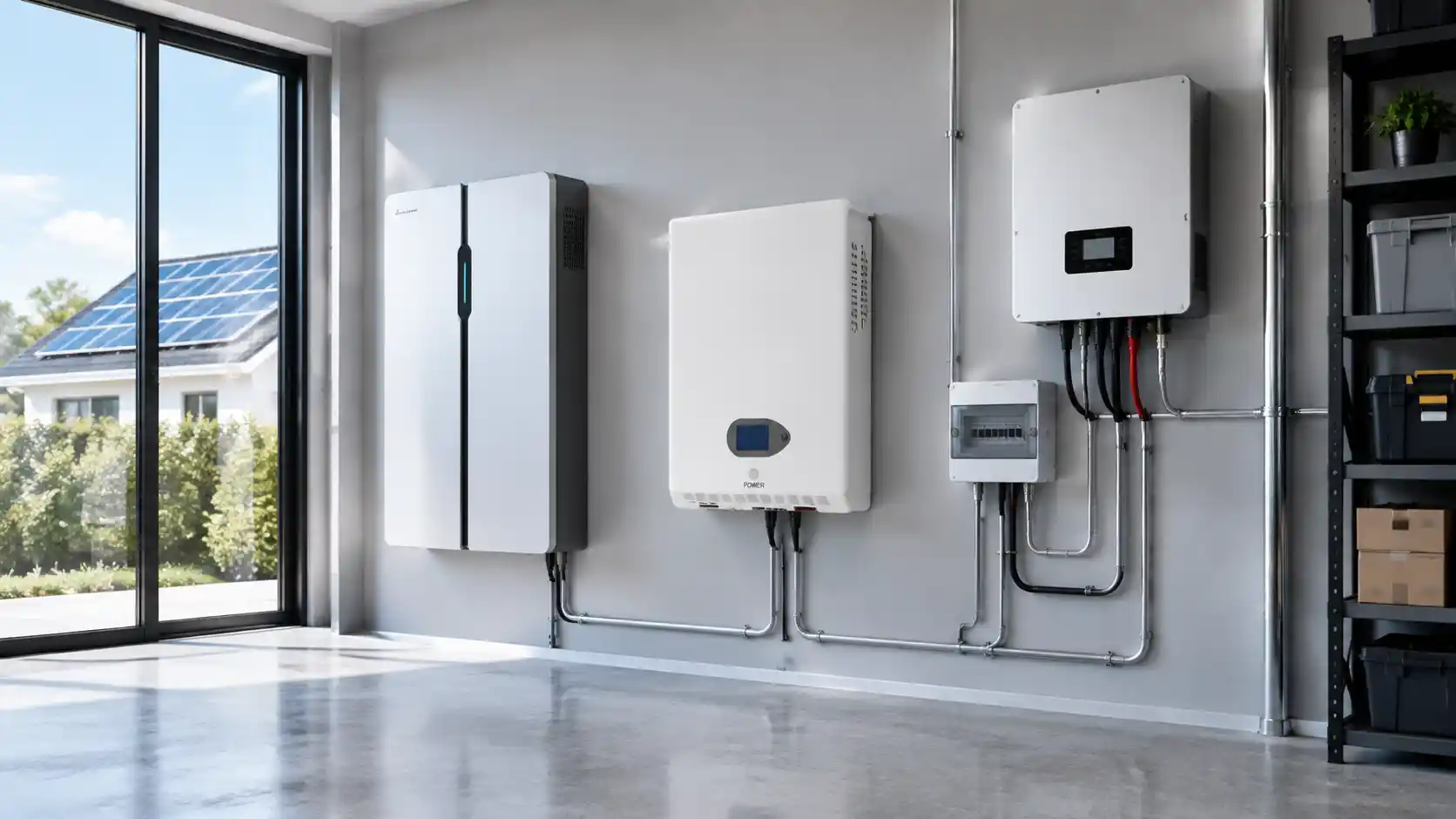
“Powerwall” started as a product name and has become a category shorthand, which is where most confusion begins. The current generation, Powerwall 3, is a wall-mounted lithium iron phosphate (LFP) battery with an integrated hybrid inverter, so the unit both stores energy and converts DC solar input to AC output. That integration is the main reason the product is priced and discussed differently from a bare battery pack.
The commonly cited figures are a useful reference point. A single Powerwall 3 is generally quoted around $7,700 to $10,500 for hardware (unit, gateway, and accessories) and roughly $13,000 to $18,000+ fully installed, depending on electrical work, permits, and local labor rates. Those are market estimates, not list prices, and they move by region and installer. An add-on DC expansion unit, which increases storage without adding inverter capacity, is widely quoted in the $5,900 to $6,200 hardware range.
When a buyer says “Powerwall cost,” they are usually comparing one installed, permitted, commissioned residential system against another. That framing matters for B2B buyers. If you are sourcing storage for a project, a product catalog, or a private-label line, the relevant comparison is rarely one brand’s installed retail price. It is the cost of the equivalent system built from the storage, inverter, and controls you can actually source.
What drives Powerwall cost
The retail figure is a bundle. Unbundling it is the fastest way to see which parts of the cost are inherent to home battery storage and which are specific to how the Powerwall is sold.
Battery capacity and cell chemistry
Storage capacity sets the floor for cost. Powerwall 3 provides 13.5 kWh of usable capacity, built on LFP cells. LFP is selected for cycle life and thermal stability rather than energy density, which is a large part of why the unit lasts as long as it does. Cost scales with kWh, but not in a straight line. The second and third units in a stack cost less per kWh than the first because the inverter and gateway are already in place.
The integrated inverter
Powerwall 3 bundles an 11.5 kW continuous inverter with a solar input rated for the same class of array. That is a substantial piece of power electronics folded into a battery enclosure. A bare battery pack has no inverter, no MPPT, and no grid-interactive controls, so its price looks much lower while doing a different job. Before comparing headline prices on any wall-mounted alternative, check whether the inverter is included.
Installation complexity
Installation is where quotes diverge most. A straightforward install against an existing panel is one case. A project that needs a main panel upgrade, a long conduit or wire run, load controllers, or utility interconnection review is another. Labor, permits, and inspection are location-dependent, and each can move a project by thousands of dollars.
Certification and compliance
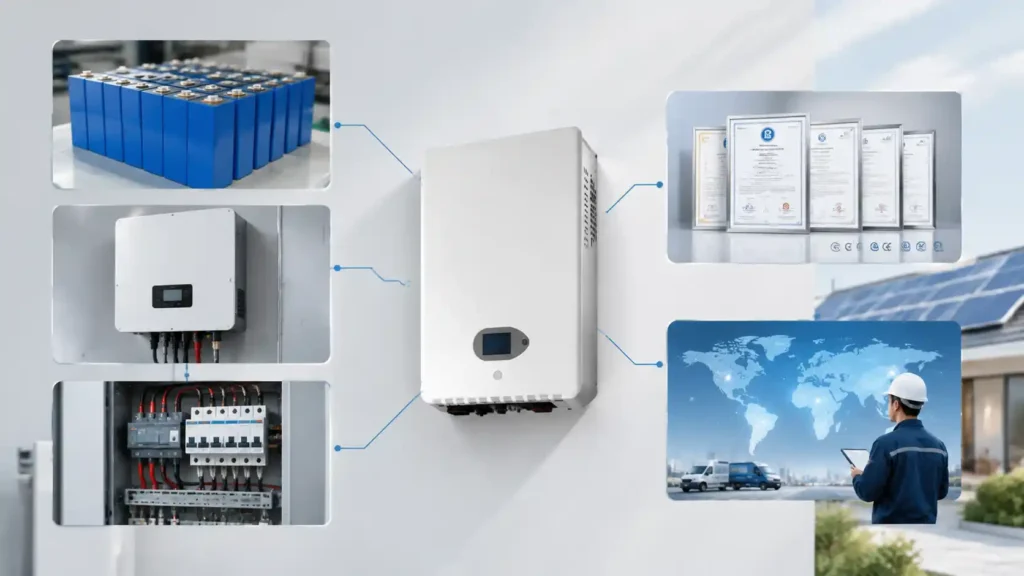
A grid-tied residential battery has to be certified for the market it is sold into. UL 9540 and UL 9540A cover the energy storage system and its thermal runaway behavior, UL 1973 covers the battery modules, and IEEE 1547 and UL 1741 govern grid interconnection. Compliance testing is a fixed cost that a certified system carries and an uncertified one does not. For buyers sourcing for a regulated market, that cost is the price of being installable at all.
Brand and channel markup
Part of the installed price is distribution. When a product is sold through a certified installer network with branded service and a published warranty program, that structure is paid for in the retail number. It buys accountability and a service path. It does not change the underlying cell and inverter costs, which is why a comparable system sourced directly can carry a different price for the same class of hardware.
Powerwall cost vs. the alternatives
The table below compares the Powerwall 3 against other wall-mounted residential storage options on the specifications that decide fit and total cost. Retail figures are market estimates for reference, and manufacturer specs are as published. Confirm current data with the supplier before quoting a project.
| System | Usable capacity | Inverter | Chemistry | Warranty | Approx. installed cost |
|---|---|---|---|---|---|
| Tesla Powerwall 3 | 13.5 kWh | Integrated 11.5 kW hybrid | LFP | 10 years | ~$13,000–$18,000+ |
| Enphase IQ Battery 5P | 5 kWh | Integrated AC-coupled | LFP | 15 years | ~$7,000–$10,000 |
| FranklinWH aPower 2 | 15 kWh | Integrated 10 kW | LFP | 15 years | ~$15,000–$20,000 |
| SolarEdge Home Battery | 9.7 kWh | Paired with SolarEdge inverter | NCM | 10–15 years | ~$10,000–$14,000 |
| VoltCrave Power 10.24 kWh wall-mounted ESS | 10.24 kWh (51.2V 200Ah) | Integrated 10 kW hybrid | LiFePO4 | 5 years | Project-based, quote on request |
The pattern is consistent. Wider integration and longer warranty push the installed cost up. A 15 kWh unit with a 15-year warranty costs more than a 5 kWh unit in the same warranty class because there is more storage to buy. A system sold as a project-specified unit, without a retail installer network built into the price, will price differently again. None of these options is automatically better than the others. They sit at different points on a curve between turnkey retail convenience and specified, project-based sourcing.
Why buyers look for Powerwall alternatives
Buyers move away from a single branded system for a handful of practical reasons, and none of them require a problem with that system.
Availability and lead time. A single-brand product follows that brand’s supply chain. When demand spikes, project timelines can slip regardless of who is selling it.
Voltage, capacity, and form factor. Standard residential units come in fixed capacities. A project that needs a specific voltage, a specific enclosure, or a capacity that does not land on a 5 kWh or 13.5 kWh increment may need something built to spec.
Price sensitivity and margin. Distributors and installers work to a margin. A system with a large retail markup baked in leaves less room, and a directly sourced equivalent can change the economics of a project.
Customization and white-label requirements. OEM and private-label buyers need a product they can specify, brand, and support on their own terms. A closed retail product cannot be reconfigured for that.
How to compare a Powerwall alternative properly
Comparing alternatives on price alone is how buyers end up with a system that cannot do the job. These are the specifications that decide whether two systems are comparable at all.
Usable capacity, not nameplate
Check usable kWh, not nominal. Usable capacity is what the system can deliver under its depth-of-discharge limits. Two systems with the same nameplate kWh can differ in usable energy, and for a spec-driven buyer this is the first number to pin down. For our own 10.24 kWh wall-mounted Powerwall unit, that means specifying the 51.2V 200Ah pack and its charge and discharge cut-offs, not only the headline figure.
Inverter matching
Confirm the inverter is included and sized to the load. Continuous output, peak output, and solar input range all matter. A system that integrates the hybrid inverter avoids a separate purchase and a compatibility question, so check that the inverter’s AC output matches the loads you intend to back up.
Cycle life and warranty
Cycle life tells you how long the storage holds up under daily cycling. LFP packs in this class commonly run into the thousands of cycles, and the warranty is the manufacturer’s commitment behind that number. A 5-year warranty and a 15-year warranty are not interchangeable selling points. They carry different assumptions about the cells and the application, and the price difference usually reflects that. Our own 5.12 kWh wall-mounted unit carries a 5-year warranty with a 6000+ cycle rating, which states the class it is built for and lets a project decide whether that fits.
Certification for your market
Match the certification to where the system will be installed and interconnected. A system certified for one grid code is not automatically certified for another. For B2B sourcing, ask for the test reports, not only the certificate number.
Customization capability
If you need a specific voltage, capacity, enclosure, or branding, confirm the supplier can build it. A catalog unit with no configuration path is a dead end for a private-label project. This is where a manufacturer with its own pack assembly and OEM/ODM development differs from a reseller of a fixed product.

What a wall-mounted system should include
A specification-ready wall-mounted energy storage system should state its scope up front. In practice, that means an integrated hybrid inverter, a BMS with documented charge and discharge limits, a defined usable capacity and voltage, and clear cycle life and warranty terms. It should also state its operating temperature range and its parallel-expansion capacity, because a system that cannot be stacked later is a decision you cannot undo.
For project buyers, the enclosure and installation method matter as much as the electrical spec. A wall-mounted unit that fits the space and the wiring plan installs on schedule. A unit that needs modification to fit becomes a change order. Our full range of residential storage options is collected on the home and residential solutions page, and the residential energy storage solutions guide walks through how to size capacity and runtime against real load profiles.
Where VoltCrave Power fits
VoltCrave Power manufactures wall-mounted LiFePO4 energy storage systems and builds packs to specification, so a project can specify capacity, voltage, enclosure, and branding instead of taking a fixed retail configuration.
The range covers a 5.12 kWh (51.2V 100Ah) wall-mounted unit with a 5 kW hybrid inverter and a 10.24 kWh (51.2V 200Ah) wall-mounted unit with a 10 kW hybrid inverter. Both are LFP with a built-in BMS, WiFi monitoring, and parallel expansion up to 16 units. Cells, BMS, and pack assembly are handled in-house, and OEM and ODM development is available for buyers who need a configured product rather than a catalog item.
For B2B buyers, the next step is the same as with any component. Define the capacity, the inverter match, the certification market, and the warranty expectation, then compare quotes on those terms. Our advanced manufacturing page covers how the packs are built and tested. When benchmarking across suppliers, the home battery storage manufacturer evaluation checklist and the overview of leading home battery manufacturers are useful starting points for building a shortlist.
FAQs
Is a Powerwall worth the cost compared to alternatives?
It depends on whether you are buying a turnkey installed system or sourcing storage for a project. A Powerwall packages hardware, inverter, certification, and installer-network support into one price, which suits a homeowner who wants a single point of accountability. A project buyer comparing on specification may find a configured system at a different cost for the same class of hardware. Compare on usable capacity, inverter match, cycle life, and certification, then decide.
How much does a home battery storage system cost without the Powerwall name?
System prices vary widely with capacity, inverter, and installation. As a reference, entry wall-mounted systems commonly sit in the $7,000 to $10,000 installed range, while larger 13–15 kWh systems run $13,000 to $20,000 installed. Project-specified systems sourced directly are quoted per requirement rather than published as retail prices.
What is the cheapest way to add home battery storage?
The lowest total cost usually comes from matching capacity to actual load rather than oversizing. A smaller system that covers critical loads and cycles efficiently often beats a larger system that is rarely fully used. Sourcing directly from a manufacturer for a project removes retail markup, and specifying only the capacity you need removes the cost of unused storage.
Do Powerwall alternatives work with existing solar?
Yes. AC-coupled systems work with most existing solar inverters, and hybrid systems can accept solar input directly. The main check is that the system’s inverter and interconnection method match your existing array and grid setup.
What warranty should I expect from a home battery?
Residential warranties commonly range from 5 to 15 years. Longer warranties generally correspond to higher cycle-life ratings and higher cost. Match the warranty term to how hard the system will cycle in the application, and read the retention clause rather than the headline years.
Can I get a wall-mounted home battery system built to my specifications?
Yes, from manufacturers that offer OEM and ODM development. Specify capacity, voltage, enclosure, BMS configuration, and branding, then confirm certification for the target market. A supplier with in-house pack assembly can usually accommodate more configuration than a reseller of a fixed product.
Final checklist
Before committing to a home battery system or an alternative, confirm these points:
- Usable capacity in kWh, not only nameplate, and the depth-of-discharge limits behind it.
- Inverter included, with continuous and peak output matched to the loads being backed up.
- Chemistry stated explicitly, with its implications for cycle life and thermal behavior understood.
- Cycle life rating and warranty term, including the retention clause and what voids coverage.
- Certification for the exact market and grid code where the system will operate.
- Operating temperature range appropriate to the installation environment.
- Parallel expansion capacity, if the system may need to grow later.
- Enclosure and mounting method matched to the installation space.
- Customization and branding options, if the product needs to carry your own label.
- A supplier with in-house manufacturing and test documentation, not only a reseller listing.
Get those ten points answered and a Powerwall cost figure stops being a single number to react to. It becomes one data point in a comparison you control.
Need help matching this topic to a real battery project?
Send your target application, capacity range, certification market, and order plan. VoltCrave can recommend a practical product direction.