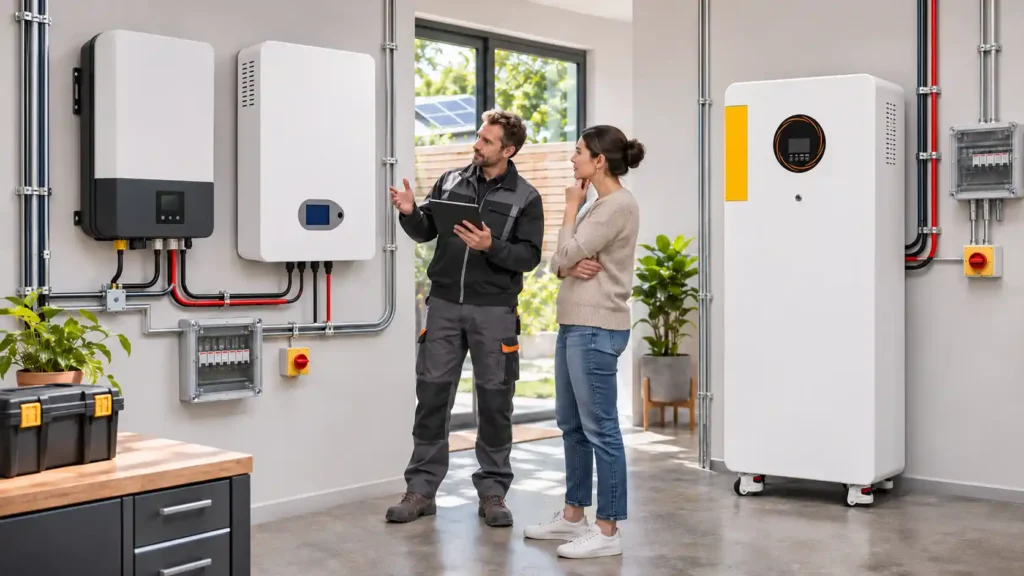
Tesla Powerwall Is Popular, but It Is Not the Only Solution
Tesla Powerwall has become one of the most recognizable names in residential energy storage. Its combination of battery storage, inverter technology, monitoring software, and backup capabilities has made it an attractive option for homeowners looking to improve energy independence.
The official Tesla Powerwall product page provides a useful starting point for understanding what the system offers.
For example, the US version of Powerwall 3 features:
-
13.5 kWh battery energy capacity
-
11.5 kW continuous on-grid power
-
Integrated solar inverter
-
Six solar inputs with Maximum Power Point Trackers
-
Expandable storage capacity
-
10-year limited warranty
These features make Powerwall a competitive residential energy storage solution. Its integrated design can also reduce the number of separate components required during installation.
Tesla+2
Its market position is also supported by industry data.
According to the 2025 SolarReviews Solar Industry Survey, 92% of surveyed solar installers offered energy storage installations, while 30% reported that new solar installations included batteries. Tesla Powerwall was used by 68% of surveyed installers, and 42% considered it the easiest residential battery to install.
frontend-cdn.solarreviews.com+1
These figures demonstrate that Tesla has established a strong position in the residential battery market.
However, a popular product does not automatically become the right solution for every project.
Homeowners have different electricity consumption patterns, solar configurations, backup requirements, and budgets. Installers and distributors also need to consider product availability, local technical requirements, and the flexibility of their product portfolios.
For these reasons, a Powerwall alternative is not necessarily a replacement for an inferior product. It can simply be a better match for a particular installation, market, or business model.
7 Reasons Buyers Look for Tesla Powerwall Alternatives
The decision to explore other home battery storage systems usually comes from several practical considerations rather than one specific product disadvantage.
Here are seven factors that can influence a buyer’s decision.
1. Initial Investment and Total Installation Cost
The purchase price of a home battery is only one part of the total project cost.
Buyers also need to consider inverter equipment, electrical installation, backup gateway requirements, labor, permits, and potential modifications to an existing solar system.
An integrated solution may reduce the number of components required, while a separately configured battery and inverter system may provide more purchasing flexibility.
Neither configuration is automatically cheaper.
According to EnergySage’s 21st Solar & Storage Marketplace Report, residential storage prices increased by 4% in the first half of 2025 compared with the previous six-month period. This illustrates why buyers should evaluate current installed costs rather than rely on outdated product prices.
EnergySage
When comparing a Powerwall alternative, buyers should request a complete quotation that includes:
-
Battery and inverter costs
-
Installation and electrical equipment
-
Backup system configuration
-
Permitting and grid connection expenses
-
Warranty and maintenance arrangements
The most affordable battery purchase does not necessarily represent the lowest total project cost.
2. Different Battery Capacity Requirements
Not every household needs the same amount of energy storage.
A home that only needs to maintain essential loads during short outages has different requirements from a property that wants whole-home backup, nighttime solar consumption, or extended outage protection.
For example:
-
5 kWh: May suit smaller backup applications and essential household loads.
-
10 kWh: Provides more storage for evening consumption and longer backup periods.
-
15–20 kWh or more: May be appropriate for larger households, higher energy consumption, or extended backup requirements.
These are illustrative capacity ranges, not guarantees of backup duration. Actual performance depends on connected loads, inverter output, usable battery energy, and operating conditions.
Tesla Powerwall 3 provides 13.5 kWh of battery energy, which may be suitable for many residential applications.
However, buyers who need a different storage configuration may prefer a system with smaller individual battery units, multiple capacity options, or additional expansion possibilities.
The important question is not simply how much energy a battery stores, but whether its capacity matches the household’s actual consumption and backup objectives.
3. Greater Flexibility in System Configuration
Some buyers prefer an integrated battery and inverter system, while others want to select these components separately.
An integrated system combines battery storage, inverter functions, and other control components into one product. This can simplify equipment selection and installation planning.
A modular configuration offers another approach.
For example, buyers can select a LiFePO4 battery based on their required capacity and match it with a compatible hybrid inverter according to the project’s power requirements.
This approach may be useful for:
-
Solar installers working with different residential projects.
-
Distributors supplying multiple battery configurations.
-
Contractors who already work with particular inverter platforms.
-
OEM brands developing their own residential energy storage products.
However, system flexibility must be supported by actual electrical and communication compatibility. Not every battery can operate with every inverter.
4. Compatibility with Existing Solar Systems
Compatibility is particularly important when homeowners already have solar panels installed.
Replacing or expanding an existing energy storage system may involve different electrical configurations.
Two common approaches are:
AC-coupled systems
The battery system connects to the AC side of an existing solar installation. This configuration can be useful when retaining an existing solar inverter is a priority.
DC-coupled systems
Solar panels connect to the battery system through a compatible DC charging and inverter architecture. This can reduce conversion stages in certain system designs.
Tesla Powerwall 3 supports both DC-coupled solar and compatible AC-coupled configurations. However, the exact equipment and installation requirements still need to be checked.
Tesla Energy Library+1
For buyers considering another manufacturer, the same checks are necessary:
-
Does the inverter support the existing solar configuration?
-
Are the battery and inverter communication protocols compatible?
-
Does the system support the required backup arrangement?
-
Can the installation meet local electrical and grid requirements?
A battery with attractive specifications is not a suitable alternative if it cannot integrate with the existing installation.
5. Battery Chemistry and Long-Term Performance
Battery chemistry is another important consideration when evaluating residential energy storage.
Lithium iron phosphate (LiFePO4 or LFP) batteries are widely used in stationary energy storage applications because of their thermal stability and cycle-life characteristics.
When evaluating an LFP home battery, buyers should look beyond the chemistry name and examine:
-
Rated battery capacity
-
Charge and discharge current
-
Cycle-life rating
-
Depth of discharge
-
Operating temperature
-
Battery Management System (BMS)
-
Warranty and end-of-warranty capacity retention
For example, a manufacturer may advertise 6,000 cycles, but buyers should also ask about the testing temperature, charge and discharge rates, depth of discharge, and end-of-life capacity threshold.
A cycle-life figure without these conditions does not provide a complete picture of long-term performance.
The same principle applies when comparing Tesla with other manufacturers: battery chemistry alone should not determine the purchasing decision.
6. Availability and Local Installation Support
Product availability and after-sales service can influence the suitability of a home battery just as much as its technical specifications.
For installers and distributors, a storage product must be supported by a dependable supply chain.
Important considerations include:
-
Product availability and delivery lead times
-
Local installation capabilities
-
Technical documentation
-
Spare parts availability
-
Warranty claim procedures
-
Communication and technical support
A product may offer attractive specifications, but if replacement components or technical assistance are difficult to obtain, the project can become more complicated over time.
The 2025 SolarReviews survey also highlights the importance of after-sales support: 70% of surveyed solar installers reported receiving service calls from system owners.
frontend-cdn.solarreviews.com
This makes service arrangements an important part of supplier evaluation, particularly for distributors and installation companies managing multiple residential projects.
7. OEM, ODM, and Private-Label Opportunities
For homeowners, brand recognition may be a major purchasing consideration.
For distributors, installers, and energy storage brands, the decision can involve a different set of priorities.
They may want to develop their own product portfolio, establish a private-label offering, or source systems that better match the technical requirements of their target markets.
This is where OEM and ODM manufacturing becomes relevant.
Instead of purchasing only a finished branded product, business buyers can explore manufacturing partnerships that support:
-
Customized battery capacities
-
Different inverter configurations
-
Product appearance and branding requirements
-
Communication and monitoring options
-
Packaging and documentation customization
-
Market-specific electrical configurations
For these buyers, finding a Powerwall alternative is not simply about replacing one battery brand with another.
It can also be an opportunity to develop a more flexible residential energy storage business.
What Types of Home Battery Systems Can Serve as a Powerwall Alternative?
Before comparing individual products, it is useful to understand the main types of residential energy storage systems available.
Not every alternative follows the same design philosophy as Tesla Powerwall.
1. All-in-One Home Energy Storage Systems
Typical configuration: Battery + hybrid inverter + built-in MPPT.
An all-in-one ESS integrates several energy storage components into one cabinet.
This configuration can simplify equipment selection and provide a relatively straightforward installation approach.
It may be suitable for homeowners who prefer an integrated system rather than sourcing individual battery and inverter components.
2. Modular LiFePO4 Battery Systems
Typical configuration: Separate battery modules + compatible inverter.
Modular systems allow buyers to select battery capacity and inverter output according to their requirements.
Depending on the product architecture, multiple batteries can be connected in parallel to expand storage capacity.
This approach can be attractive for installers and distributors who need several configurations for different projects.
3. Battery Systems with AC-Coupled Integration
Typical configuration: Battery storage + compatible AC-side power conversion equipment.
AC-coupled systems can be useful when adding storage to an existing solar installation.
Rather than redesigning the entire solar system, installers may be able to integrate a compatible battery system into the existing AC infrastructure.
The appropriate solution depends on inverter compatibility, backup requirements, and local electrical regulations.
The main difference between these alternatives is their system architecture. Buyers should select a configuration based on the installation requirements rather than assuming that one design is universally better.
What Should Buyers Compare Before Choosing a Powerwall Alternative?
A meaningful comparison should cover the complete energy storage system, not just its advertised battery capacity.
The following checklist can help homeowners, installers, and distributors evaluate different suppliers.
| Evaluation factor | What buyers should check |
|---|---|
| Battery capacity | Nominal and usable kWh |
| Output power | Continuous and peak output |
| Battery chemistry | LFP or other chemistry |
| Inverter | Integrated or separate hybrid inverter |
| Solar compatibility | AC-coupled or DC-coupled configuration |
| Expandability | Supported parallel units and maximum capacity |
| BMS | Battery monitoring and protection functions |
| Cycle life | Test conditions and end-of-life capacity |
| Warranty | Duration, coverage and exclusions |
| Certifications | Applicable product and market certifications |
| Installation | Voltage, frequency, phase and grid compatibility |
| After-sales support | Technical assistance, spare parts and warranty procedures |
A few of these factors deserve particular attention.
Usable Capacity vs. Rated Capacity
A battery advertised as 10 kWh does not necessarily provide 10 kWh of usable energy.
Buyers should confirm the manufacturer’s specified usable capacity, depth of discharge, and energy available under normal operating conditions.
Continuous Power vs. Peak Power
Battery capacity and inverter output are different measurements.
A system with sufficient energy storage may still be unable to support certain appliances if its inverter output is insufficient.
For example, air conditioners, pumps, and other motor-driven appliances may require additional starting power.
Certifications and Market Compatibility
Certification requirements vary by country and application.
For North American projects, buyers may need to verify applicable UL standards, grid-interconnection requirements, and local electrical codes. European and Middle Eastern projects may have different certification and installation requirements.
A certificate for a battery cell should not automatically be treated as certification for the complete residential energy storage system.
Total System Cost
Compare the full installed cost, expected operating performance, warranty, and maintenance requirements.
This provides a more realistic basis for evaluating one Powerwall alternative against another.
An Alternative Worth Considering: Modular LiFePO4 Home Storage Systems
For buyers who want more flexibility in residential energy storage, modular LiFePO4 battery systems offer another approach.
Rather than selecting a single standardized configuration, buyers can evaluate battery capacity, inverter output, and system architecture according to their specific requirements.
From a manufacturer’s perspective, this approach is particularly relevant for installers, distributors, and businesses serving different residential markets.
VoltCrave Power offers several residential energy storage configurations that illustrate these options.
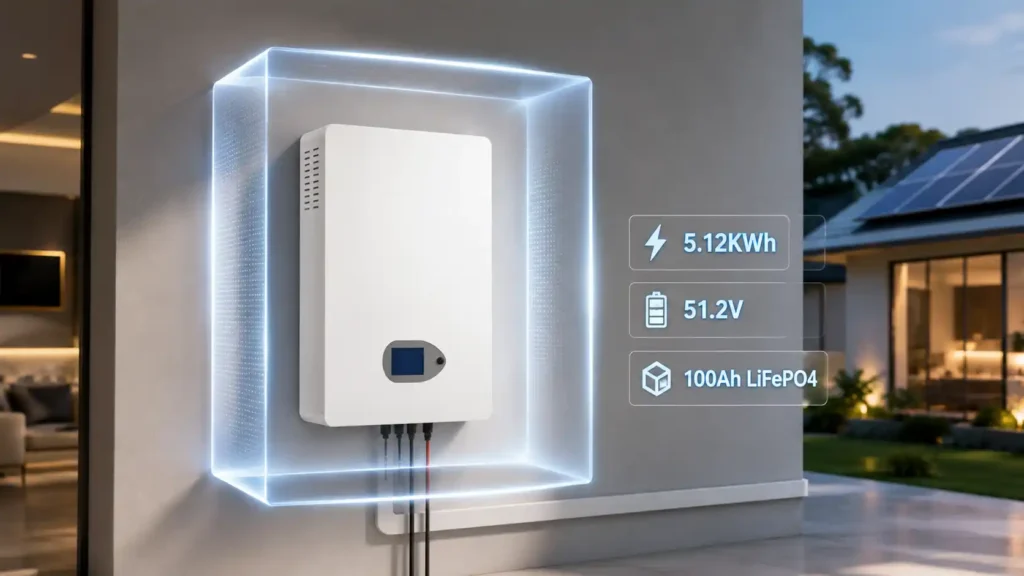
1. 5.12kWh LiFePO4 Home Battery with 5kW Hybrid Inverter
The 5kW 5.12kWh LiFePO4 Powerwall is designed for residential applications requiring a relatively compact battery storage configuration.
Key specifications include:
-
Battery capacity: 5.12kWh
-
Battery voltage: 51.2V
-
Battery capacity rating: 100Ah
-
Inverter output: 5kW
-
Battery chemistry: LiFePO4
-
Cycle life: 6,000+ cycles
-
Parallel expansion: Up to 16 batteries
-
Warranty: 5 years
This configuration can be considered for smaller residential storage projects, essential-load backup applications, and buyers who prefer a smaller initial battery capacity with the option to expand.
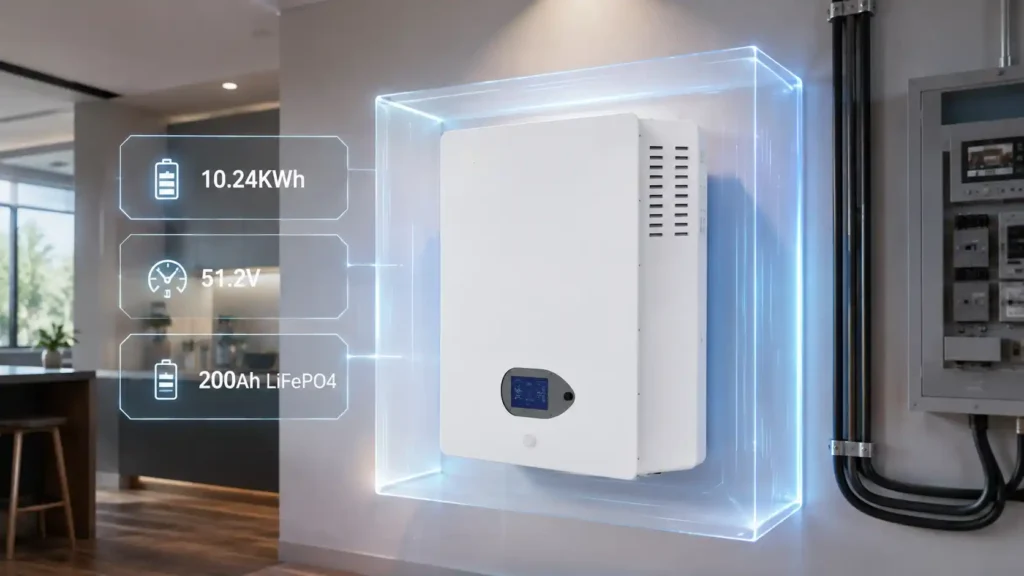
2. 10.24kWh LiFePO4 Home Battery with 10kW Hybrid Inverter
For projects requiring higher inverter output and greater battery capacity, the 10kW 10.24kWh LiFePO4 Powerwall provides another configuration.
Its published specifications include:
-
Battery capacity: 10.24kWh
-
Battery voltage: 51.2V
-
Battery capacity rating: 200Ah
-
Inverter output: 10kW
-
Battery chemistry: LiFePO4
-
Cycle life: 6,000 cycles
-
Parallel expansion: Up to 16 batteries
-
Warranty: 5 years
The combination of a 10.24kWh battery and 10kW hybrid inverter may suit residential projects with higher power requirements.
For distributors and installers, this configuration also provides another product option when developing different residential storage packages.
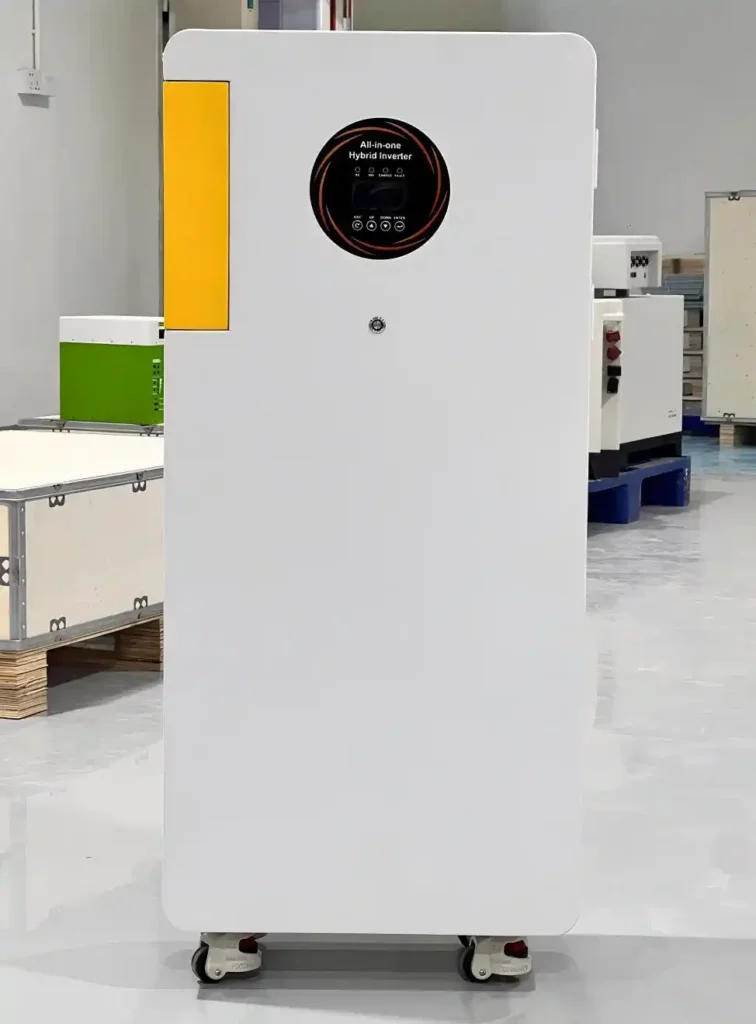
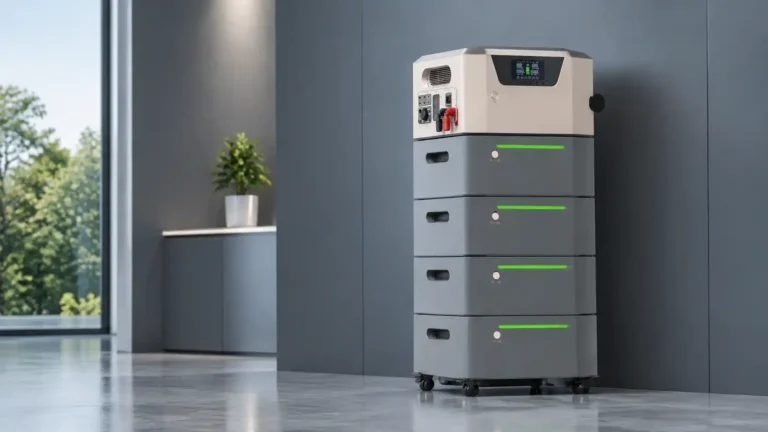
3. 10.24kWh LiFePO4 All-in-One ESS with 6kW Hybrid Inverter
Another option is the 10.24kWh LiFePO4 All-in-One ESS.
Unlike the two wall-mounted configurations, this system integrates the battery and hybrid inverter into one cabinet.
Its published specifications include:
-
Battery capacity: 10.24kWh
-
Battery specification: 51.2V 200Ah
-
Hybrid inverter: 6kW
-
Built-in MPPT: 6kW
-
PV charging voltage: 60–450V
-
AC output: 220–240V, 50Hz / 60Hz
-
Integrated cabinet with mobile rollers
-
Intelligent BMS protection
This configuration is worth considering for buyers who prefer an integrated residential energy storage system with fewer separately installed components.
6kW Hybrid Inverter+2
An important technical consideration for international buyers:
The 5kW and 10kW wall-mounted systems currently list 210–230V AC, 50Hz output. The all-in-one system lists 220–240V AC, 50/60Hz.
These specifications should not be interpreted as automatic compatibility with every country’s electrical infrastructure. In particular, North American buyers must confirm 120/240V split-phase compatibility, grid-interconnection requirements, applicable certifications, and the exact configuration before selecting a system.
For international distributors and OEM customers, the ability to discuss market-specific configurations is an important part of supplier evaluation.
Who Should Consider a Different Home Battery Solution?
Not every buyer evaluates residential energy storage from the same perspective.
The most suitable Powerwall alternative depends on the buyer’s role, technical requirements, and purchasing objectives.
Homeowners
Homeowners should begin with their actual electricity consumption.
Important questions include:
-
How much electricity does the household consume daily?
-
Which appliances need backup power?
-
How long should the system provide backup?
-
Is the existing solar inverter compatible?
-
Is future battery expansion necessary?
A smaller battery may be sufficient for essential loads, while larger homes may require multiple batteries or a higher-capacity system.
The right configuration should be based on energy consumption and power requirements rather than brand popularity alone.
Solar Installers
Installers often work with different home layouts, solar systems, and customer budgets.
Having access to multiple battery capacities and inverter configurations can make it easier to develop suitable system proposals.
For installers, supplier evaluation should include technical documentation, inverter compatibility, installation requirements, warranty procedures, and ongoing engineering support.
Distributors
Distributors may prioritize product availability, purchasing costs, product consistency, and the ability to serve different customer segments.
Working with a manufacturer that offers several residential storage configurations can help distributors develop a broader product portfolio.
OEM and ODM services may also provide opportunities to build products under their own brands.
OEM Brands and Energy Storage Businesses
Businesses developing their own residential energy storage brands may need more than a standard finished product.
They may require customized battery specifications, inverter configurations, branding, packaging, and technical documentation.
In these situations, a manufacturing partnership can offer more flexibility than relying entirely on a single branded product ecosystem.
For these buyers, evaluating a Powerwall alternative is also about finding a supplier that can support their long-term product and market development plans.
When Is Tesla Powerwall Still the Right Choice?
An objective comparison should also recognize the situations where Tesla Powerwall remains a strong option.
Powerwall 3 may be particularly suitable for buyers who:
-
Prefer an integrated battery and solar inverter system.
-
Want to use Tesla’s energy management ecosystem.
-
Need a system designed around North American residential electrical standards.
-
Have access to qualified Tesla installation and service support.
-
Prefer a product with an established 10-year warranty.
-
Want to expand an existing compatible Powerwall installation.
Tesla’s integration of battery storage, solar conversion, and energy management is a significant product advantage.
Its official technical documentation also provides detailed information about supported solar configurations and installation requirements. Buyers can review the Tesla Powerwall 3 technical specifications before comparing other systems.
Tesla Energy Library+2
The purpose of exploring alternatives is not to suggest that every homeowner should avoid Tesla.
Instead, buyers should determine whether the product’s features, installation requirements, and overall system architecture match their particular project.
Final Thoughts: The Best Battery Is the One That Fits the Project
Tesla Powerwall has established a strong position in residential energy storage, and its integrated system design makes it an attractive choice for many homeowners.
However, residential energy storage requirements are not identical across households, installers, and distribution markets.
Some buyers prioritize integrated equipment and a familiar brand ecosystem. Others need different battery capacities, more flexible inverter configurations, modular expansion, or OEM and ODM manufacturing opportunities.
A good Powerwall alternative should therefore be evaluated through several factors: usable battery capacity, continuous output power, battery chemistry, inverter compatibility, certification, installation requirements, warranty, and total project cost.
From our perspective as a battery manufacturer and OEM/ODM partner, the search for a Powerwall alternative is not necessarily about finding a more famous brand or a cheaper battery. It is about finding a system that matches the buyer’s energy requirements, installation environment, budget, and long-term business goals.
VoltCrave Power provides different residential LiFePO4 energy storage configurations and OEM/ODM customization options for international buyers.
Need help matching this topic to a real battery project?
Send your target application, capacity range, certification market, and order plan. VoltCrave can recommend a practical product direction.